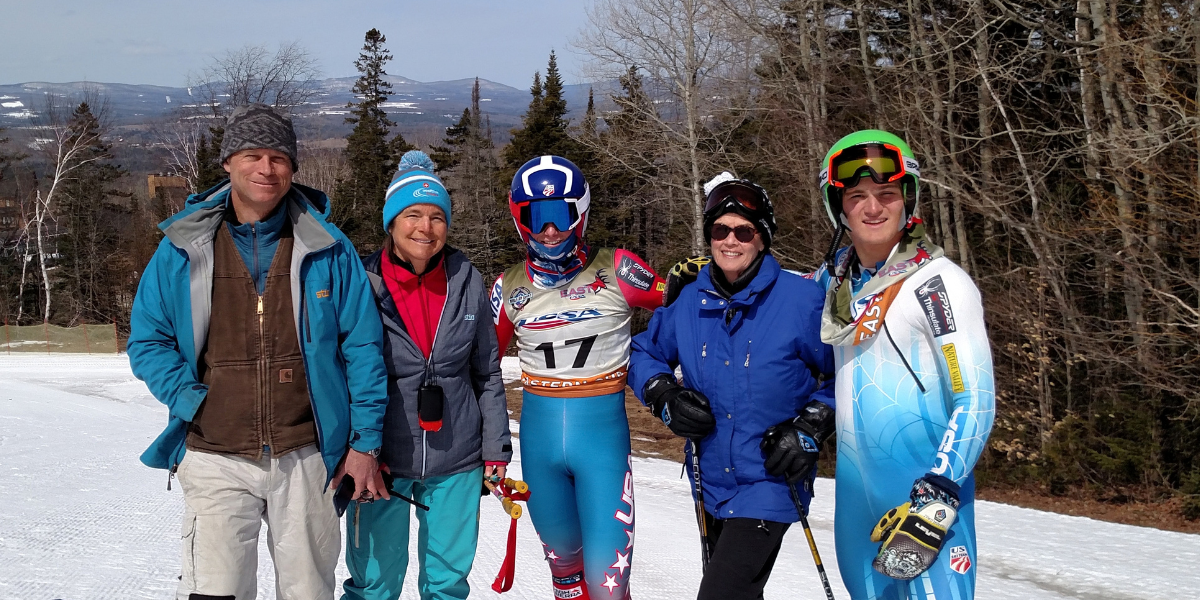
Chan Morgan, Edie Thys Morgan, Oliver Morgan, Tania Evans (Chan’s mom), Chauncey Morgan. Burke Mountain
If ski racing had never been part of your life, what would be missing?
“Everything,” Emily Creek said.
For Katie Brust, imagining that life was nearly impossible. “It’s unfathomable, actually. I don’t know what my life would look like without skiing.”
Roger Brown distilled his answer to two things: “Friends. Skiing with people I’ve known since I was 7.”
Edie Thys Morgan started with the physical toll.
“A lot of bone spurs,” she said.
Michael Ankeny offered his own list of medical souvenirs: herniated discs, a damaged shoulder, insurance claims and, he joked, more than a few brain cells. Then he turned serious. Ski racing gave him a mental approach he can apply almost anywhere: Set emotion aside, focus on what he can control and execute.
Leif Kristian Nestvold-Haugen arrived at a similar place. His World Championship and Olympic medals matter, but they aren’t part of his conversations with former teammates. They talk about the experiences, the people and the moments that seemed insignificant at the time.
That was the pattern across six former racers from different generations, regions and competitive levels. Results mattered while they were competing. Years later, however, the deepest value lies elsewhere.
Ski racing gave them lifelong friends, self-knowledge, perspective and a way to meet difficult moments. It also gave them a community they never truly had to leave.

Different starting gates
Click on the images to enlarge
Their paths began in places that helped shape the sport.
Brown grew up in Vermont’s Cochran family, often called the first family of U.S. ski racing. Olympians, national team members and coaches surrounded him. As a child, competing in the Olympics did not seem like an extraordinary ambition.
“Of course I’m going to race in the Olympics,” he remembers thinking. “Basically everyone I know raced in the Olympics.”
Thys Morgan learned at Squaw Valley, now Palisades Tahoe, where demanding terrain and a deep racing culture produced generations of leading American skiers.
Ankeny came through Buck Hill, the small Minnesota area known as the “Slalom Factory.” Brust began at Welch Village before moving to Buck Hill during her senior year of high school.
Creek grew up in Colorado and raced for Team Summit, Vail, Eldora and Winter Park before attending Northern Michigan University.
Nestvold-Haugen’s road began in Norway. It later brought him to the University of Denver, where he became an NCAA giant slalom champion and first-team All-American before returning to the World Cup full time. He considers college one of the best decisions he made, primarily because of the people it brought into his life.
Their starting points were different. So were their competitive destinations. That range matters because the value of the journey did not depend on reaching the same level.
The people who remain
Every athlete returned to relationships.
Thys Morgan formed some of her closest friendships with teammates she might never have known in ordinary life. Ski racing placed people with different personalities and backgrounds in vans, hotel rooms and high-pressure situations.
“Bonds forged in the heat of competition are strong,” she said.
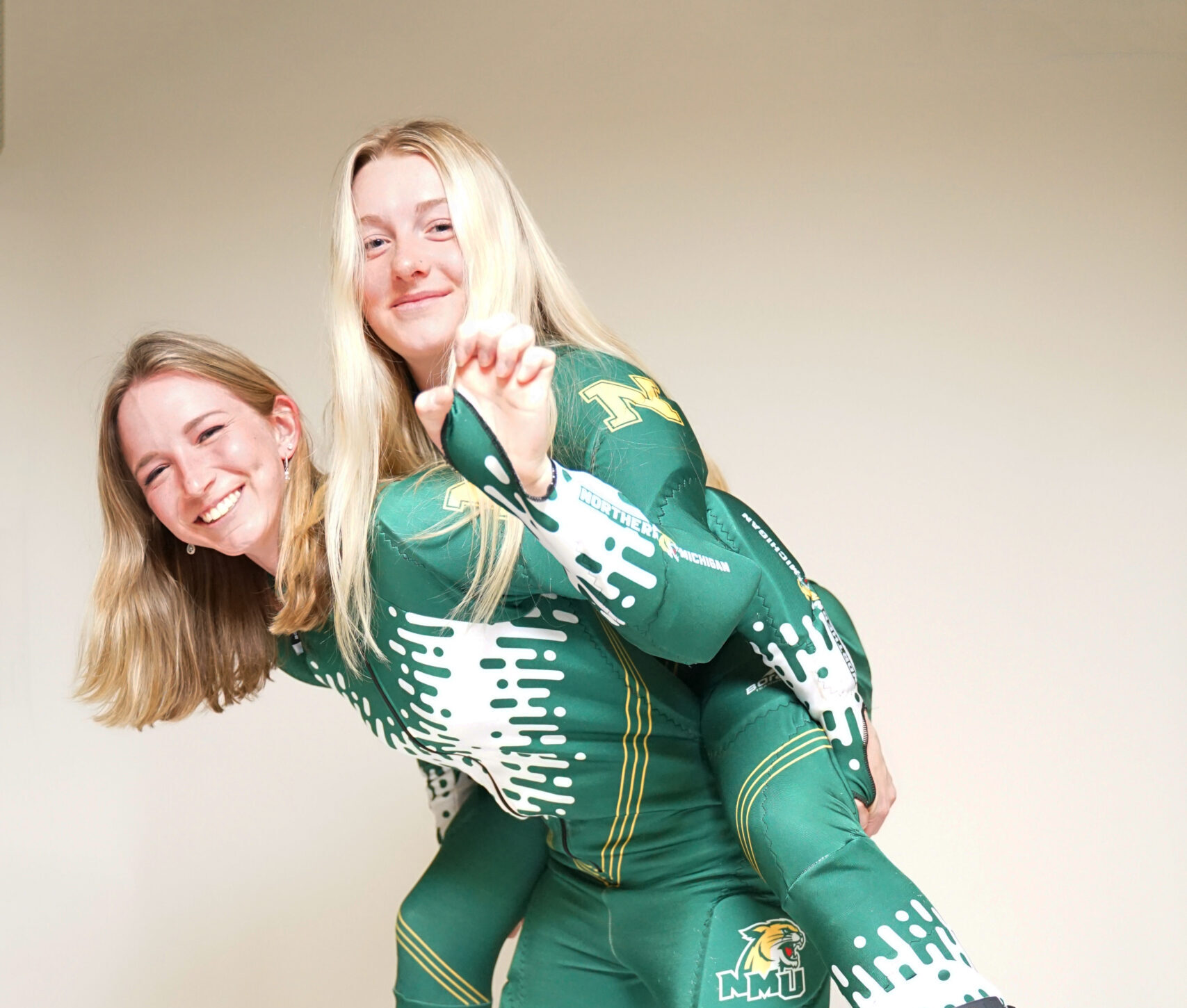
Creek and Brust found one another at Northern Michigan. Creek spent all four collegiate seasons there. Brust raced independently while attending the University of South Dakota before joining Northern Michigan during graduate school.
Their friendship outlasted the team. Creek, an only child, describes Brust as the sister she never had. Their families became close, and Creek expects Brust will someday stand beside her at her wedding.
Brown’s friendships stretch across decades and continents. Many of his closest friends came through racing, and many of his newer friends are parents of the young athletes he coaches.
Nestvold-Haugen misses what he calls the locker room more than he misses racing. World Cup teammates spent close to 250 days a year together. They ate every meal together and endured long drives between races, including eight-hour trips from Val d’Isère to Alta Badia.
“The small, meaningless things,” he said, are often what he remembers most.
Failure was part of the education
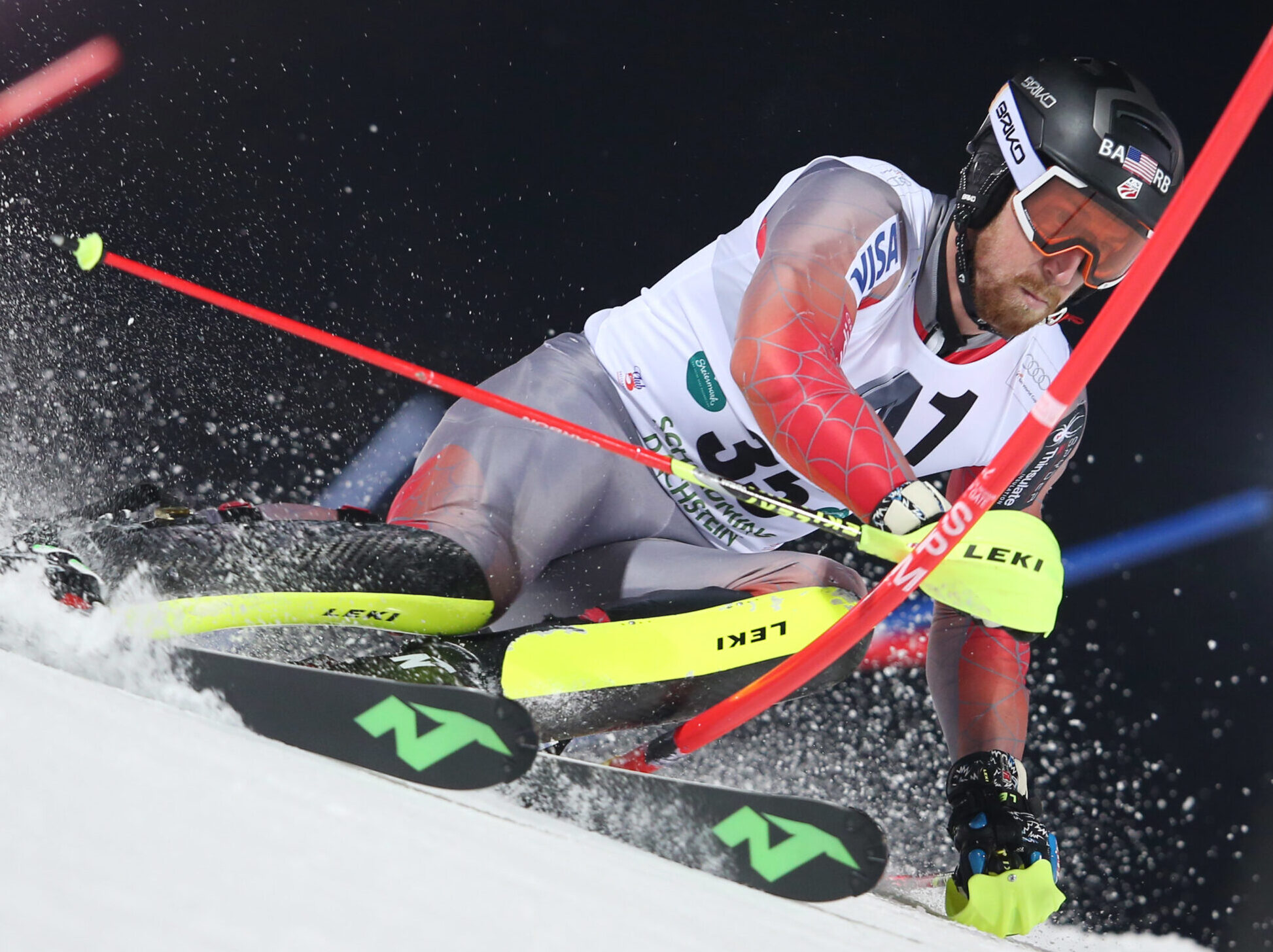
Ankeny was in his Dartmouth dorm room when he learned he had been cut from the U.S. Ski Team. He needed to rank among the world’s top 75 slalom skiers. He stood 76th.
It was the first time he had missed an objective criterion. He cried, then began planning a life without professional racing.
After two weeks and difficult conversations, his thinking changed. The patches on his jacket did not define his purpose. The real goal was pursuing excellence and knowing he had invested himself completely.
Ankeny found an independent route back. He won the NorAm slalom and overall titles and rejoined the national team.
Brown also remembers the anger of being cut. Time led him to reconsider his first reaction. Had he done everything within his control to influence the decision? His honest answer was no.
Years later, Brown walked through the Sunday River base lodge and passed the spot where he once called his mother from a pay phone. He had been in tears after failing to achieve a racing goal that now seemed insignificant.
The memory keeps him honest. Looking back can soften the disappointment, but the pressure felt real at the time.
Thys Morgan learned another version of the lesson after major knee injuries in consecutive seasons cost her national team support.
“Nobody is going to look out for you,” she learned. “You have to fight for what you want.”
Learning what can be controlled
Ski racing creates uncertainty by design. Weather shifts. Visibility disappears. Course conditions deteriorate. A racer’s future can depend on one run.
The sport taught Ankeny to separate action from distraction. He could not control the weather, his start number or another racer’s performance. He could control his preparation, effort, mental state and skiing.
Brust learned the same approach from her father. Before a race, he would remind her to concentrate on the first two gates.
She now uses that lesson when facing large projects in her marketing work. Rather than trying to solve the entire problem at once, she identifies the first manageable section.
Creek learned to stop treating stress as an enemy. At Northern Michigan, she often raced as the team’s fifth starter, knowing her finish could become important if a teammate failed to complete a run. The pressure did not disappear. She learned to meet it.
Thys Morgan recognized a familiar feeling when she began her first job in New York. It reminded her of standing at the start of a frightening downhill training run: She knew she had to do it and wanted to do it, even if she did not yet know how.
Nestvold-Haugen experienced greater pressure from himself than from coaches, teams or spectators. His best skiing came when he released his concern about the outcome. He could then attack, ski freely and trust his preparation.
The moments when they felt most alive
For Thys Morgan, the answer came immediately.
“On a good downhill run,” she said. “There is nothing like that feeling of speeding over the landscape and feeling the terrain underneath you.”
Ankeny described the point when thinking stopped and instinct took over. He let go of expectations, future results and imagined consequences. He could hear the snow, feel each turn and respond to the hill.
“That’s the dream,” he said. “That’s when I felt most alive. Like I was flying.”
Brown surprised himself with his answer.
“Today,” he said. “This season.”
He loved racing with friends as a child, entering his first FIS races, winning in college and competing on the World Cup. Yet coaching now gives him the same sense of engagement.
He shares the hill with his children and other young racers. Around him are friends he has known for more than 35 years.
Brown is no longer chasing hundredths of a second. The part of racing that made him feel alive never disappeared. It changed form.
What the sport asked of them
Brust often told friends that she would see them in April. Racing meant missing birthdays, school functions and even a prom.
She does not regret it.
Creek sometimes wonders whether the sport left enough space to explore her other interests, particularly her creative side. Still, she does not wish she had chosen differently.
Thys Morgan accepted the loss of a conventional adolescence. Her greater concern was education. Seven colleges appear on her transcript, and the collegiate route available to men received little support for women of her generation.
Brown identifies only one significant trade-off. He spent four years after college racing instead of beginning a conventional career. He would make the same decision again.
Ankeny once believed he had sacrificed a normal life. College took him 10 years. Friends graduated, established careers and began families while he continued traveling.
Eventually, he saw the comparison differently. What he considered a sacrifice might look like liberation to someone else.
“I don’t actually think I sacrificed anything with skiing,” he said, before adding one exception: “My physical longevity.”
The dreams that did not come true
Several of the athletes grew up expecting to reach the Olympics.
Brown did not. Neither did Ankeny, who faced injuries and acknowledged that he failed to perform when some opportunities arrived. Creek’s childhood Olympic dream changed as she grew older.
Thys Morgan reached the Olympics twice, yet her perspective may offer the clearest lesson about athletic expectations.
She once believed a gold medal or World Cup title would transform her life. Later, she watched friends who had achieved those goals confront the same challenges as everyone else.
“None of those achievements would have set me up for life in the way I fantasized,” she said.
That realization does not diminish achievement. It puts achievement in its proper place.
A medal can record an extraordinary performance. It cannot guarantee contentment, remove uncertainty or complete a person.
Nestvold-Haugen won bronze in the giant slalom at the 2017 World Championships and another bronze in the team parallel at the 2018 Pyeongchang Olympics. He also earned five World Cup podiums.
Yet when he meets former teammates, they never discuss those accomplishments. The memories that bind them come from pursuing it together.
When the schedule disappears
Retirement removed more than competition. It took away structure, identity and a ready-made community.
At the end of her final collegiate season, Brust cried at nationals. She cried again while packing the house she had shared with teammates in Marquette, Michigan.
Creek had always been able to say, “I’m a ski racer.” To her, the description carried the same energy as announcing that she drove race cars. Then, almost overnight, she could no longer use it in quite the same way.
“When you identify so strongly with that, you have to figure out that you’re more than that,” Creek said. “It’s just part of you. It’s part of your story.”
Nestvold-Haugen described retirement as a bad breakup. He did not miss only the races. He missed the shared breakfasts, van rides and constant companionship.
Thys Morgan missed the training routine and the clarity of having specific goals. Racing USCSA and writing about the sport eased her transition.
Brown missed the preparation periods: Southern Hemisphere camps, fall days on Austrian glaciers and unhurried hours spent searching for the next half-second.
The finish line had provided direction. Retirement required each athlete to create a new one.
A different mountain
An adviser once told Ankeny that he was unlikely to become the 34th-best investment banker in the world. The comment exposed an uncomfortable reality: He had left a field in which he ranked among the world’s best and become a beginner again.
Ankeny accepted the challenge.
“It’s just a different mountain when you really think about it,” he said.
Nestvold-Haugen brought the same outlook into entrepreneurship. Ski racing had normalized hard days, uncertain outcomes and the need to keep working without immediate proof of progress.
“I can probably deal with any challenge,” he said. “I’ll find a way.”
Brust carried racing into marketing, medical animation, ski patrol and coaching in Montana. Creek applied its lessons to her communications career in Michigan while finding new goals through running and strength training.
Brown moved into coaching, equipped with both technical knowledge and curiosity about how young racers learn.
Thys Morgan became a ski racing journalist, then experienced the sport from another angle as the parent of NCAA athletes.
None of them replaced ski racing with an equivalent experience. Instead, they used what racing taught them to enter unfamiliar territory.
The sport changes shape
At 38, Nestvold-Haugen is a father of three. Skiing now gives him something competition could not: the chance to experience the sport through his children.
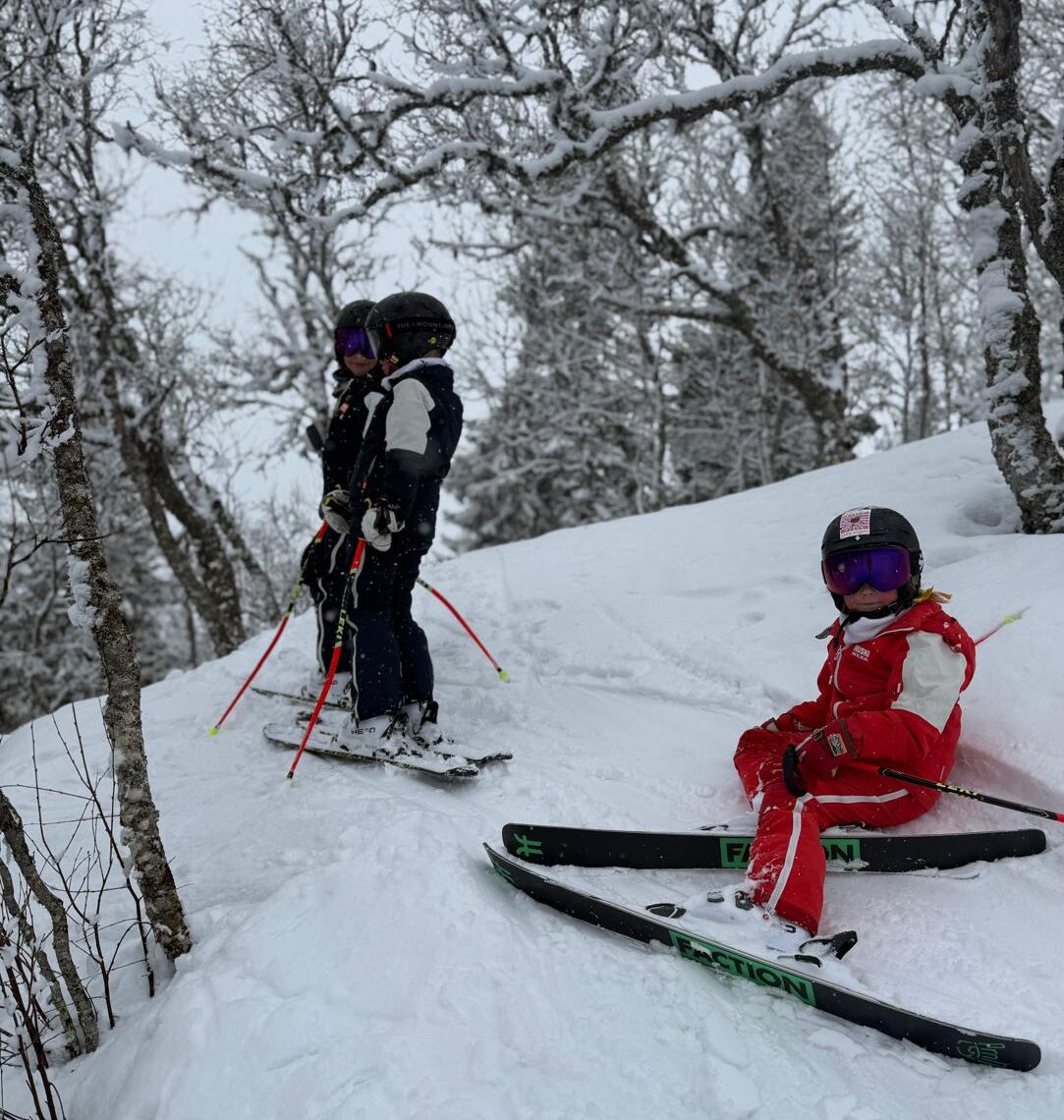
He values skiing as a family activity because parents do not have to remain on the sideline. An adult and a 6-year-old can share the same hill and experience the same snow, even if they understand it differently.
His children also remind him of something elite sport can obscure.
“Don’t stop playing,” he said.
Brown finds meaning in sharing the sport with his children and the athletes he coaches. Brust continues coaching because she wants younger skiers to experience the community that shaped her. Thys Morgan has remained connected as an athlete, coach, journalist and parent.
Their relationships with ski racing continue because the sport has room for more than competitors.
A racer can become a coach, mentor, parent, writer, official, volunteer or simply the person who meets an old teammate for a few runs.
Retirement ended their competitive careers. It did not require them to surrender their place in the community.
What young racers should know
Brown’s advice is direct: Meet everyone. Talk to everyone.
Competitors, coaches, and volunteers may become friends you meet around the world for the rest of your lives.
Ankeny wants young racers to look around, breathe and avoid letting small setbacks consume the experience.
Thys Morgan believes athletes must love the sport, the people and the lifestyle. Progress is rarely linear, and no one permanently solves a giant slalom turn.
Nestvold-Haugen tells athletes to remain curious. Travel should mean more than moving between a hotel and a race hill. Learn about the people, culture and landscape. Continue racing while the process brings happiness.
Creek wants young athletes to understand that getting knocked down and standing up again can produce a stronger version of themselves.
Brust offered perhaps the clearest summary.
“You don’t remember times,” she said. “You don’t remember any of the specifics. You remember the feelings that you had, the friendships you made, how people made you feel and the skills that you gained.”
The clock measured their races. It could not measure their value.
Years later, the times are difficult to recall. The people are not.

About the Author: Peter Lange