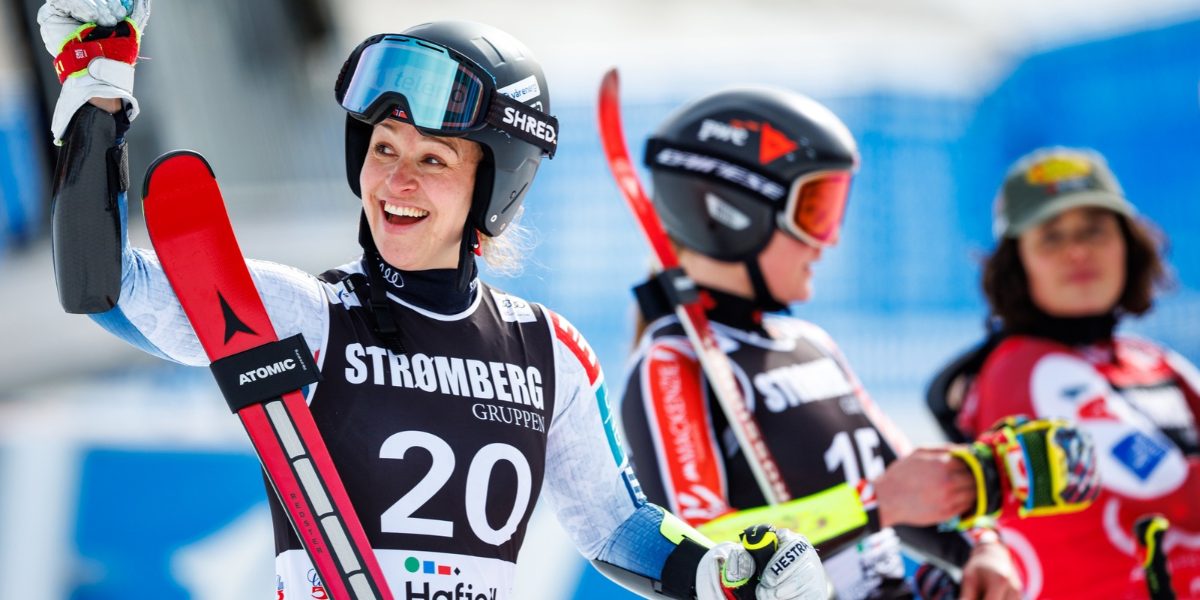
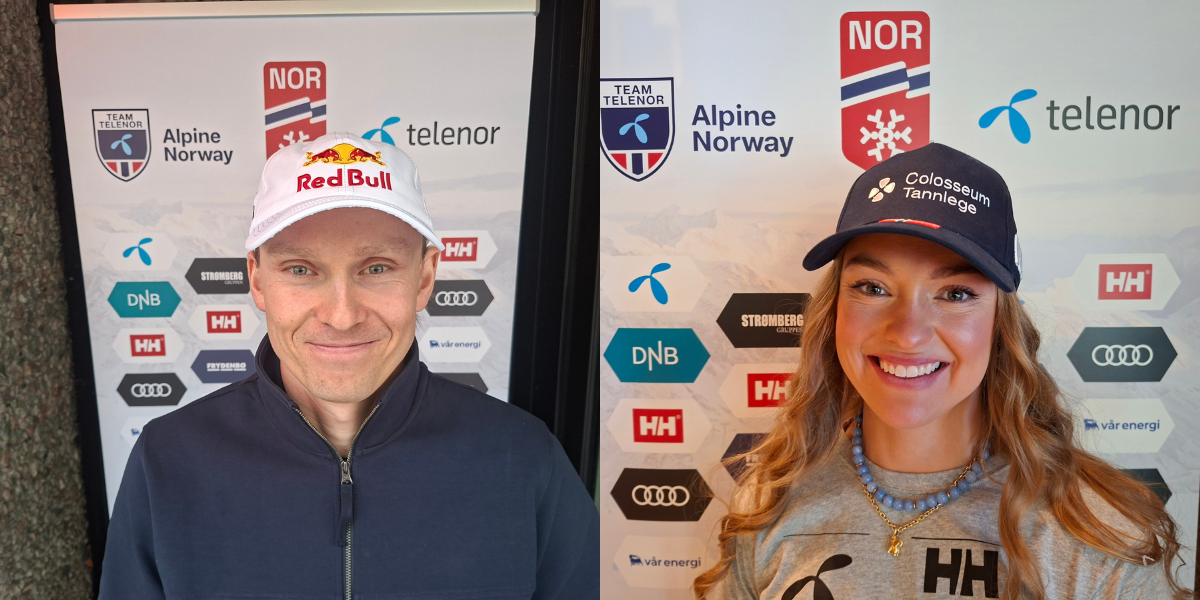
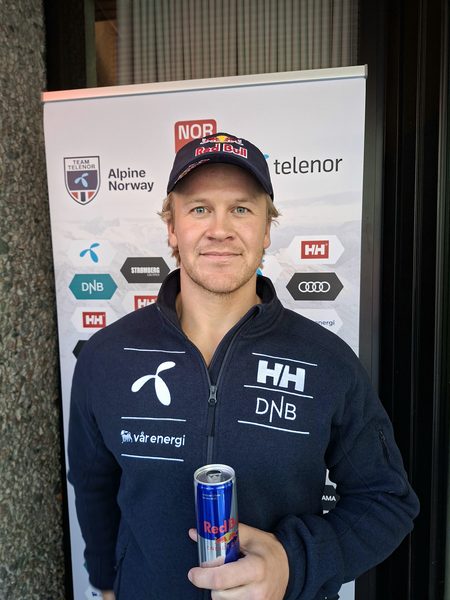
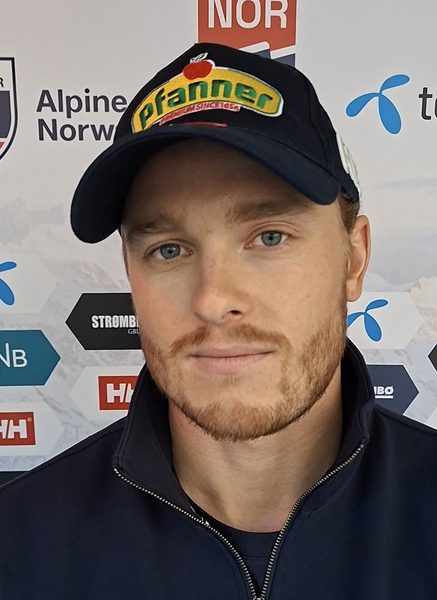
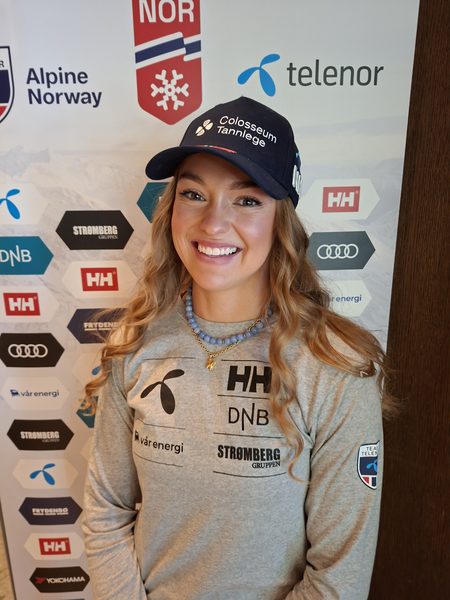
Henrik Kristoffersen, Thea Louise Stjernesund, Photo: Bente Bjørnsen Sherlock
On Oct. 6, the Norwegian Ski Federation (NSF) announced a major shift in personal marketing rights for its top alpine skiers. Red Bull, the Norwegian Alpine Team’s new sponsor, will also offer individual contracts to some A-status athletes. Athletes not offered a Red Bull contract can sell sponsorship space on the front of their helmets to personal sponsors. Athletes keep 60% of the proceeds, and the NSF Alpine section receives the remaining 40%.
In the past, the NSF controlled the prime marketing spot for alpine skiers: the front of their helmets and headwear. For years, the federation’s main sponsor has been displayed in this spot, and the corresponding sponsor income has benefited the NSF Alpine program.
Norway has been one of the few national federations to retain athletes’ individual marketing rights for their headgear, leading to turbulence and conflicts between elite athletes and the federation over time.
For the 2026-27 season, the federation’s A-status criteria require a top-15 World Cup Start List (WCSL) ranking in one discipline and an Ironman score of 600, or multiple championship medals. This season, there are 13 A-status team members.

Unique Sponsor Deal for the Norwegian Alpine Team
The NSF announced the new individual marketing rights alongside Red Bull’s team sponsorship. According to the federation, it is the first time Red Bull has sponsored a national alpine ski team. The company has typically sponsored individual athletes.
Ski Racing Media spoke with Norwegian Alpine Director Claus Ryste on Oct. 7 about the new sponsor agreement and the marketing developments.
“The Red Bull deal is two parts: One, they sponsor everybody, and that’s a new thing. They haven’t done that with anybody else before; they sponsor the whole team,” Ryste explained.
Additionally, “they also go in and pick athletes, like they have done previously with other nations,” he continued.
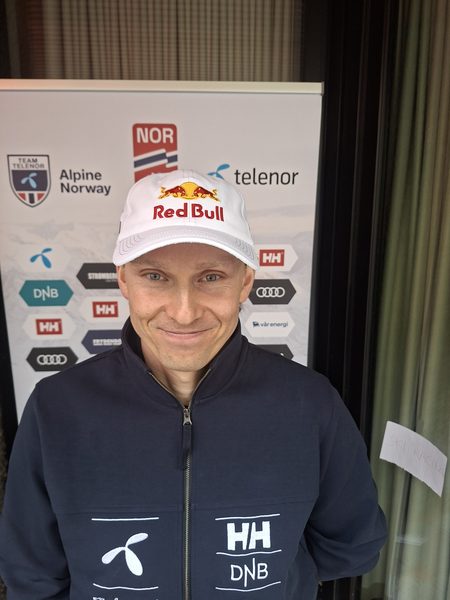
As of Oct. 7, Henrik Kristoffersen and Timon Haugan had signed individual marketing contracts with Red Bull, according to Ryste. They can now display the Red Bull logo on the front of their helmets and hats.
Alpine Director on New Marketing Rights
Ryste said the change addresses a long-running concern among Norwegian athletes:
“We, as a federation, together with Telenor, which is the main sponsor, have decided that A-status athletes can sell their own helmet, like most of the nations on the World Cup, which has been the key topic for why Norwegian athletes’ kind of felt like that was unfair compared to the people they competed against,” Ryste told Ski Racing Media.
“Inside the team, whether somebody gets Red Bull or not, they have the opportunity to sell their helmet to other sponsors, and they didn’t have that opportunity before. I see it as a win-win situation,” he continued.
Increasing Athlete Income and Federation Budget
“If the athletes are doing very well, like we have done for some years, then everybody will earn from this kind of new type of sponsorship, which is a layer above the main sponsors. So, I think this will benefit everybody. The athletes — they get 60 percent of something they didn’t have before, and everybody gets the opportunity to increase the total amount here,” Ryste said.
“The B- and C-level athletes can sell the side of their helmets, and everybody can sell their bottle.”
The team’s main sponsor will appear on the front of B- and C-status athletes’ helmets and headwear, as well as on the front of A-status athletes’ helmets if they do not sign personal marketing contracts. When an A-status athlete sells the front spot, the main sponsor’s logo can move to the side under rules adopted by the International Ski and Snowboard Federation (FIS).
“We’re very happy with the deal now. It increases the budget for the [Norwegian] federation, for everybody, and it increases the possibility for the top athletes to make better deals,” Ryste stated. He thanked Telenor, the team’s main sponsor, for being flexible in shaping the agreements.
“It’s great,” Atle Lie McGrath, the 2025-26 World Cup slalom champion, told Ski Racing Media. He added: “It’s been a work in progress for many years, and finally we have the opportunity to settle it. Now, we’re on the same level as everyone else.”
Kristoffersen’s Past Fight for Individual Marketing Rights
Henrik Kristoffersen has fought for more than a decade to sign an individual marketing contract that would allow him to display his personal sponsor’s logo on the front of his helmet and headwear.
In October 2016, Kristoffersen filed a lawsuit against the NSF. He had been in discussions with the NSF since 2014 to find a solution that would allow him to sign a personal marketing contract covering his helmet. The federation declined in 2016, according to Oslo District Court documents.
Aksel Lund Svindal held a personal marketing-rights contract for many years that included a logo on his helmet and headwear. His contract dated to 2010, when Norwegian alpine athletes could still sign individual deals covering headwear. It predated later NSF rules restricting those rights, NRK reported Dec. 15, 2016.
Kristoffersen lost the case against the NSF in May 2019.
During the process and after the court ruling, Kristoffersen displayed the NSF’s main sponsor’s logo on the front of his helmet.
Ryste Responds Regarding Kristoffersen Case
Ski Racing Media asked Ryste how the current agreement differed from the arrangement in place when Kristoffersen previously wanted to display his personal sponsor on the front of his helmet.
“Last time, we ended up in a trial on who owned the marketing rights on the helmet, not necessarily [about] Red Bull itself.
“This time we made a deal with Red Bull. We made a deal with Telenor. One thing is to get Red Bull in. The other thing is to keep the sponsor family and economy in place.
“And then there is a very big difference in that last time we didn’t have the opportunity to have a sticker on the side [of the helmet]. That came later from FIS,” Ryste stated.
“When people ask me whether it could’ve been different back then, if we’d said yes [to Kristoffersen], you can’t compare it a hundred percent, and it’s just hypothetical if we’d done something different then,” the Norwegian alpine director added.
Did Kristoffersen “Win” in the End?
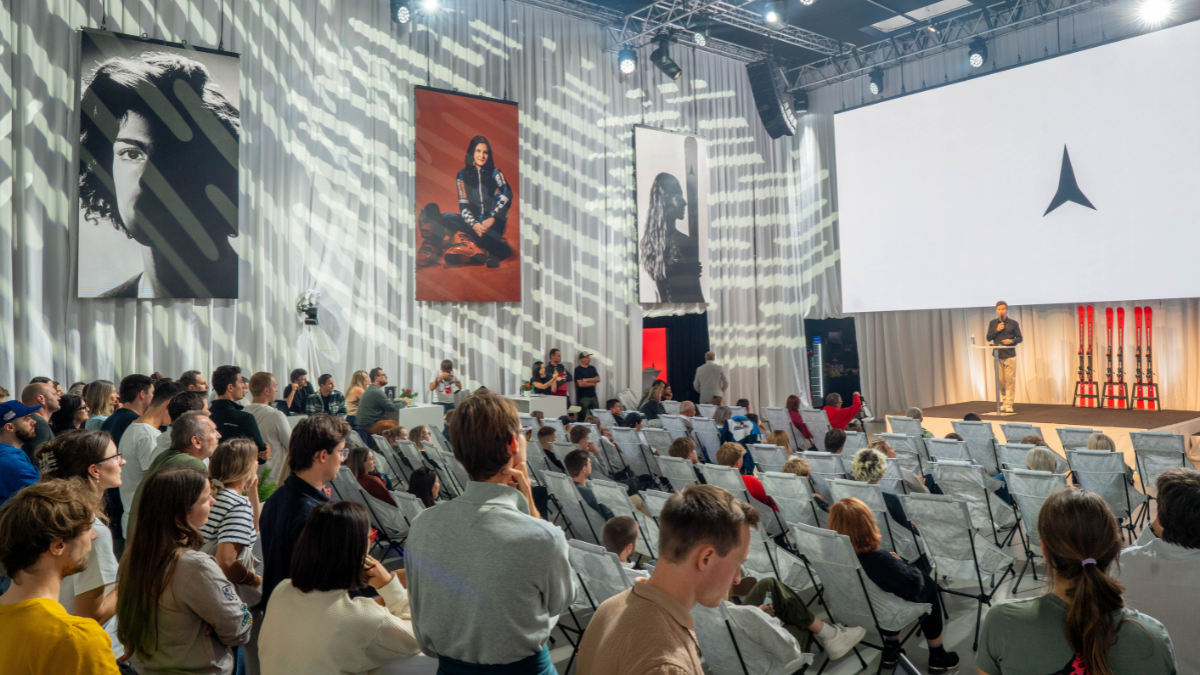
At the Norwegian Alpine Team’s 2026-27 kickoff event in Oslo on Oct. 7, the master of ceremonies asked Kristoffersen whether he had finally “won” after losing his court case, with athletes now gaining personal marketing rights for the front of their headgear.
“That’s a bit difficult to answer,” Kristoffersen responded. He said he believes the younger national team athletes have won a greater victory for their futures.
“I have fought for this for over 12 years, and I have never wavered in my opinion.
“And I have never said that I should be the only one,” Kristoffersen added.
At the end of his answer, Kristoffersen addressed whether he considered the outcome a win by responding: “Both yes and no.”
Conflicts Regarding Individual Marketing Rights
Kristoffersen is not the only Norwegian alpine skier who has been involved in intense discussions with the NSF over gaining greater athlete ownership of individual marketing rights.
In February 2024, Aleksander Aamodt Kilde spoke out about how the Norwegian Ski Federation handled athletes’ requests for increased personal marketing rights.
The conflict with the National Federation over personal marketing rights also played a major role in Lucas Braathen breaking with the Norwegian Alpine Team on Oct. 27, 2023, as SRM reported.
The Financial Balance Between Athletes, Teams and Grassroots Skiing
After Braathen’s retirement announcement, former Norwegian Alpine Team athlete Leif Kristian Nestvold-Haugen told Norwegian broadcaster TV 2 on Oct. 27, 2023:
“This is obviously a difficult situation. The most important task of the federation is to take care of the grassroots. But, obviously, without the top [athletes], you do not get the support and income for the grassroots. So, there is a crossing point. Where is that crossing between give and take for the top athletes, so you still have enough to give to the grassroots?”
The new agreement sets a 60-40 split for individual helmet sponsorship income. That settles how this revenue is divided and opens the door to potentially high-value individual sponsor contracts that could benefit both the athletes and NSF Alpine.
Upholding the Strong Team Bond
The culture of sharing and helping each other is at the core of the Norwegian Alpine Team.
Olympic silver medalist Thea Stjernesund told Ski Racing Media why the expanded individual marketing rights are meaningful only if the team benefits, too:
“It’s not important for us to have that chance, if it doesn’t benefit the team. If it doesn’t give the federation more money in the pot at the end, and helps us get the program we need, then it’s a no-go.
“It’s very important that even though you can have a personal benefit from it, that it also goes to the federation and the team. It gives a team feeling. The other girls on my team know that it benefits them too, if I get a good deal. And I know that it benefits me if they get it, so, it’s ‘all-in’ for the team, and that’s what matters.”
About the Author: Bente Bjørnsen Sherlock