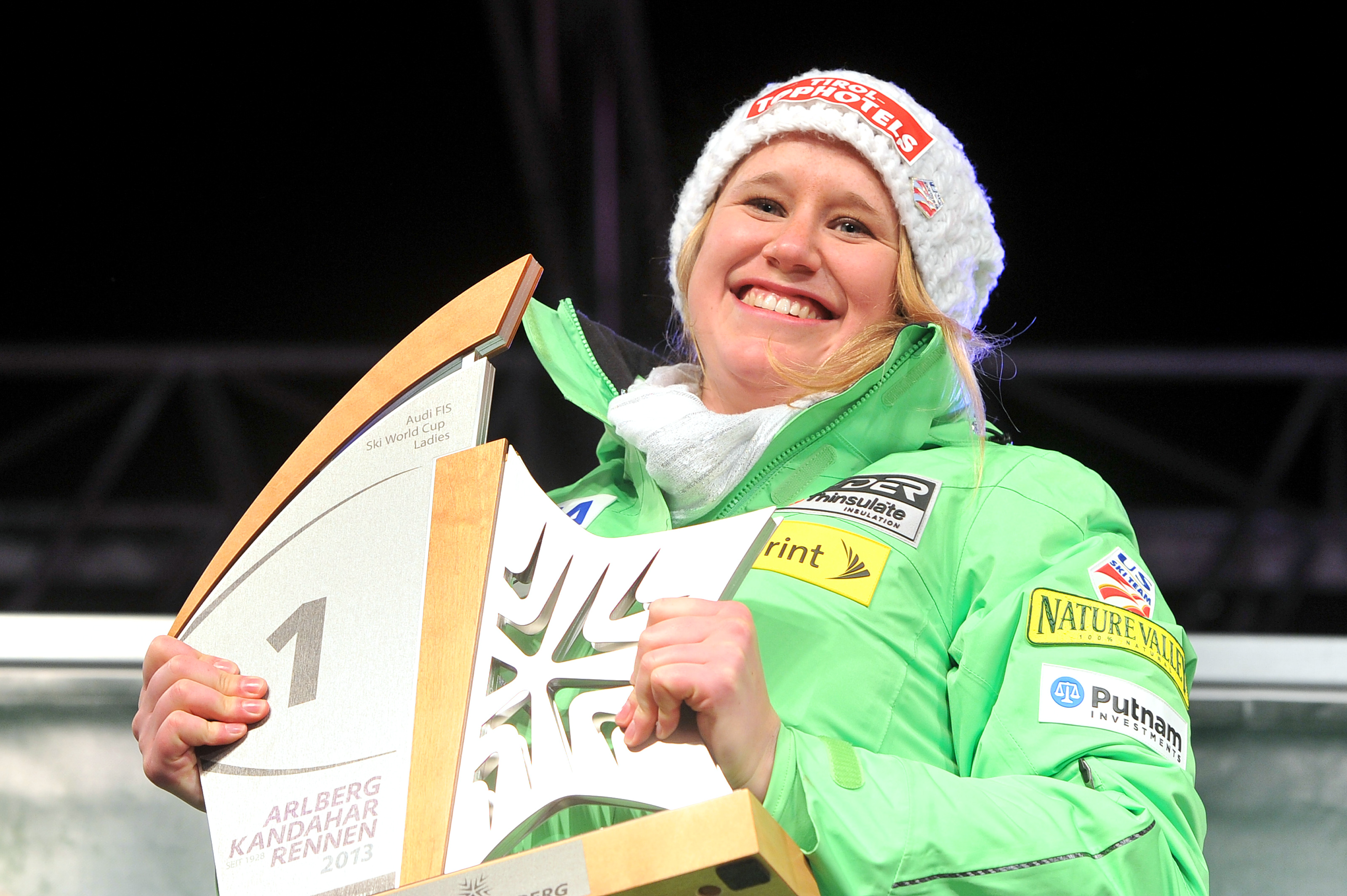
Alice McKennis at the 2013 St. Anton World Cup awards presentation. GEPA/Florian Ertl
Alice McKennis was all smiles as she sat in her Zermatt hotel room last week describing what an incredible camp the U.S. Ski Team women’s speed specialists had on the Swiss glacier.
“This camp has been awesome,” McKennis said via Skype. “The weather and conditions have been nearly perfect. We’ve been running full length super G, around 1:20, so it’s a good leg burner for me.”
Not only is it a physical challenge for the 25-year old Colorado native, but a mental challenge too. The Zermatt speed camp marked the second training session McKennis has joined this summer after a 1.5-year recovery from severely fracturing her right tibia plateau in March 2013.
“I feel like I’m doing really well considering I’m skiing five to six full-length runs a day as well as riding a 15 minute T-bar each time,” she said. “They (T-bars) can be brutal on your legs.”
Much of McKennis’ recovery has been focused on patience and listening to her body. After skiing briefly last fall, she made the decision to sit out the rest of the 2013-14 season to give her body the time it needed to heal more completely. That included a final surgery at the end of this past January to remove a plate and 10 screws from her leg.
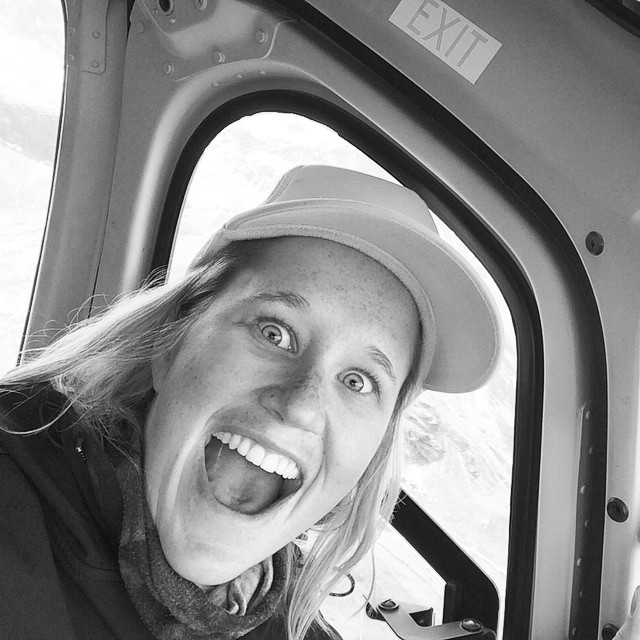
McKennis grabs a helicopter ride in Zermatt. Facebook
While this summer’s New Zealand camp was focused on freeskiing with an introduction to GS, the leap McKennis took to full-length super G in Zermatt is one about which she’s being very calculated.
“I’m really taking the time to listen to my body and focus on the small, technical details of my skiing, like hip positioning,” McKennis said. “I’m focused on doing things correctly and not just going through the motions with half effort.”
This calculated return to snow seems to be working. McKennis’ physical and mental confidence is growing with each day, all the while remaining focused on her technique and inconsistencies she feels between left and right body.
“I’m not as powerful with my right leg,” she explained. “I’ve had to accept that my physical differences from right to left may or may not improve. I’m learning how to train with those differences knowing they could be something I have to permanently adapt to.”
Her boyfriend, Pat Duran, knows all too well the adaptations and struggles she’s gone through and will continue to cope with. As a former alpine and then ski cross racer, he’s had his fair share of injuries and surgeries.
“When she calls me from Europe at 4 a.m. I know she’s either in a helicopter or won a World Cup,” Duran, who serves as the Western Region Competition Service Director for Volkl and Marker, said jokingly.
All kidding aside, Duran is as excited for his girlfriend’s return to skiing and competing as she is. The two met in 2011, just after her first injury and while she was still on crutches. Duran has stuck by his ‘Alligator’s’ side supporting her ever since.
“This summer is huge for her to be hanging with the team and getting time on snow instead of just being able to play catch up at Copper [in November],” he said. “Everything is a few steps ahead for the first time in four years, so we’re both excited about that.”
Duran explained the balance McKennis juggles with being younger in age, yet grouped with the veteran speed skiers including Lindsey Vonn, Julia Mancuso and Stacey Cook. She’s proven herself by winning her first World Cup in 2013, and she’s optimistically looking to get back to where she left off.
“I can’t think of a harder working, more dedicated athlete,” said Wade Bishop, assistant speed coach for the U.S. women’s team. “In the five years I’ve worked with her, I’ve seen her grow in so many ways. … She’s committed to being a professional.”
Teammate Stacey Cook echoed Bishop’s thoughts regarding McKennis’ character.
“Each of our teammates brings something unique to the table,” Cook said. “Alice is a quiet leader despite being one of the youngest on our team. A lot of people said she couldn’t come back from this injury, and seeing her do it gives my teammates and [me] confidence that we can do amazing things too.”
McKennis is more than eager to continue to do “amazing things.”
“My biggest goal will be to medal in Beaver Creek [at the 2015 World Championships],” McKennis said. “But I know that it’s going to take all the small steps in the process to get me there. That’s my main focus right now.”
About the Author: SR Staff Report