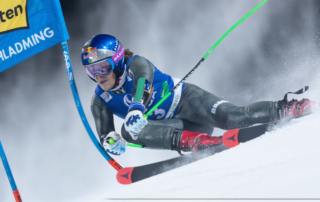
How the Nervous System Controls Force in Alpine Skiing
Strength is only part of alpine skiing performance. Rowmark’s Science Corner examines how the nervous system helps athletes access, regulate and apply force under demanding conditions.



Strength is only part of alpine skiing performance. Rowmark’s Science Corner examines how the nervous system helps athletes access, regulate and apply force under demanding conditions.
Why do young giant slalom skiers lose speed while elite racers seem to carry momentum effortlessly from turn to turn? This coaching article explains how energy dissipation, line choice, depth, pressure management and clean turn release influence speed and efficiency in giant slalom.
How elite ski racers manage vibration, force, and stability—and why strength alone isn’t enough for performance.
Fitness testing in alpine ski racing can improve training decisions, track adaptation, and support athlete development when coaches use data with context. This article explains how Skills Quest-Fitness helps programs apply standardized testing effectively without overinterpreting results.
How Olympic weightlifting builds explosive power, coordination, and durability in youth alpine ski racers—safely and progressively.
Off-season training builds more than strength. It develops the balance, rhythm, and force control that young ski racers rely on when skis hit snow. Learn how movement, play, and strength work together to create better skiing.
Eccentric strength training helps young alpine skiers develop the control, stability, and power needed to perform at their best. By focusing on the muscle’s lengthening phase, it builds strength safely, improves joint stability, and enhances energy absorption—crucial for skiing’s high demands. When integrated into youth programs, it becomes a powerful foundation for long-term athletic development.
VO₂ priming helps ski racers unlock faster oxygen uptake and stronger endurance during high-intensity runs. By performing a brief, high-effort warm-up before competition, athletes enhance blood flow, improve oxygen delivery, and sustain power through longer, more demanding courses—gaining a critical performance edge when it matters most.
Ski racing pushes muscles to their limit, demanding both explosive strength and endurance. Fatigue builds as energy byproducts like phosphate and potassium disrupt muscle contractions, slowing reactions and reducing control — especially late in a race when injuries are most likely. With the right mix of endurance, strength, and recovery training, athletes can fight these effects and stay strong from start to finish.





















Ski Racing Media is the leading international media company in alpine skiing, providing industry expertise, storytelling, and education.
Contact us: info@skiracing.com
©2026 | Ski Racing Media