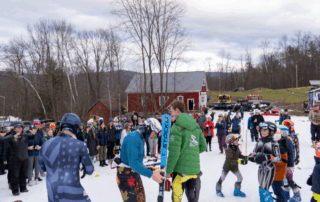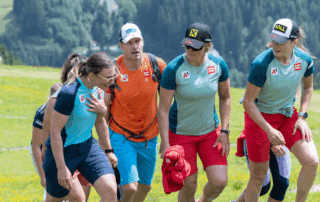
The Development Pyramid: Why General Athleticism Comes First
WVABBTS explains how general athleticism, physical literacy and multisport participation create the foundation young ski racers need for long-term development.



WVABBTS explains how general athleticism, physical literacy and multisport participation create the foundation young ski racers need for long-term development.
Strength is only part of alpine skiing performance. Rowmark’s Science Corner examines how the nervous system helps athletes access, regulate and apply force under demanding conditions.
FIS and FESA will expand their speed-development pilot into a five-stop international series that connects athlete training, coach education and competition.
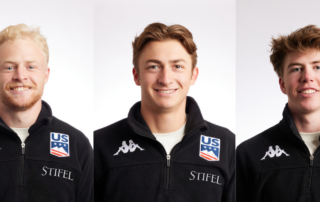
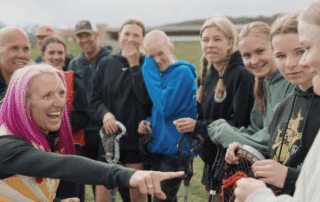
The Second Annual Rocky Mountain Division Roundtable at Copper Mountain brought together Stifel U.S. Ski Team coaches, athletes, and development coaches for an open discussion on athlete development, coaching philosophy, and the pathway to elite ski racing.
Shared training environments are one of the most underutilized tools in alpine ski racing. By breaking down silos and bringing competitors together before race day, clubs can raise performance standards, improve athlete development, and create stronger, more connected training cultures.
For ski racers nearing graduation, the choice between a PG year and college is complex. This article breaks down the key tradeoffs, timing, and personal factors that shape the decision.
Ski racers often ski fast in training but struggle on race day. Here’s why—and how coaches can build environments that translate speed into results.
Fitness testing in alpine ski racing can improve training decisions, track adaptation, and support athlete development when coaches use data with context. This article explains how Skills Quest-Fitness helps programs apply standardized testing effectively without overinterpreting results.
Second runs demand a different mindset than first runs. Dr. Jim Taylor explains how racers can reset emotionally, simplify focus, and attack with confidence under pressure.
Parents play a powerful role in a young ski racer’s mental game. Dr. Jim Taylor explains how subtle pressure — even when unintended — can increase anxiety and hurt performance, and how parents can instead create emotional safety that helps racers thrive.
Olympic gold medalist Benita Fitzgerald Mosley has been named Chief Executive Officer of the U.S. Center for SafeSport, stepping into the role on February 1, 2026. A former elite athlete and seasoned sport executive, Fitzgerald Mosley brings decades of leadership experience across nonprofit, Olympic, and community-based sport as the Center enters its next chapter focused on athlete safety, accountability, and trust.
Early races bring emotion, pressure, and fast judgments. But the best ski racers know early results don’t define a season—responses do.
Ski racing brings excitement, pressure, and emotion for families at every level. This article outlines what parents need to know to support racers in a healthy, productive way—on good days and bad.
Off-season training builds more than strength. It develops the balance, rhythm, and force control that young ski racers rely on when skis hit snow. Learn how movement, play, and strength work together to create better skiing.
Every racer can learn to ski faster. Here’s how athletes train the ability to handle more speed with confidence and commitment across all alpine disciplines.
VO₂ priming helps ski racers unlock faster oxygen uptake and stronger endurance during high-intensity runs. By performing a brief, high-effort warm-up before competition, athletes enhance blood flow, improve oxygen delivery, and sustain power through longer, more demanding courses—gaining a critical performance edge when it matters most.
Strength alone doesn’t win ski races—endurance does too. Alpine racers face intense forces every turn, but without the aerobic capacity to fuel their muscles from start to finish, strength breaks down. Building both endurance and power through volume, skill work, and targeted training is critical to reaching the podium.
The importance of the off-season and how it isn’t just a break but an opportunity to get better at the things that don’t show up on a start list: mindset, movement quality, and self-awareness. What can athletes and coaches do better to embrace these crucial aspects during off-season? Learn more.
Behind every elite athlete is a strong support team and physiotherapists are key. Martina Plunger Beech, who now works for Red Bull, shares insight on preparation and in-season tips for an Olympic Year.
Mental training is often overlooked in ski racing, despite being just as important as physical conditioning and technical work. This article breaks down six key principles—used in every successful training plan—that can transform your mental preparation into a consistent, structured, and effective part of your performance.
In a very special episode of the Skiing is Believing Podcast summer series, Matt Garcka and Alan Rigg welcomed renowned sports psychologist, Dr. Jim Taylor to express the importance of mentality and psychology across sport, and particularly ski racing. Tune in!
Olympians Doug Lewis and Shannon Bahrke created Champions Advantage, a first-of-its-kind mental skills curriculum for athletes aged U13–U19. Whether the goal is Olympic gold or making the high school varsity team, this program gives athletes the tools to train and perform at their very best. Learn more.
Video can transform athletic performance—but only when used correctly. In this article, Ron Kipp explains how the brain processes video, why watching the wrong movements reinforces bad habits, and how coaches can leverage neuroscience to create lasting improvement.
Dr. Luna Ugrenović studied mental health referral experiences in collegiate, elite sport. Emphasizing how early, intentional engagement can shape athletes’ willingness to seek mental health help and their overall well-being. Learn more about her research and the advice she gives to alpine skiing organizations to assist with this process for their athletes.





















Ski Racing Media is the leading international media company in alpine skiing, providing industry expertise, storytelling, and education.
Contact us: info@skiracing.com
©2026 | Ski Racing Media