The 30-year-old Vermont racer seeks to build on his Olympic super-G success and climb the World Cup standings
Ryan Cochran-Siegle charges down the familiar training slope at Copper Mountain in the presence of World Cup downhill champion Aleksander Aamodt Kilde and 17-time race winner Dominik Paris, confident he can elevate his speed events game.
“I want to be skiing against the best skiers to know what I’m up against and If that means I’m slow in training relative to the best guys, then it shows me where I need to improve,” Cochran-Siegle tells Ski Racing Media while training at Copper Mountain. “You’re going to learn from the guys next to you.
“I’m a top ten skier on a good day, but for me to make that next jump, I really need to bring more aggression to my skiing.
“Watching Kilde or (Marco) Odermatt, when they’re on, they put so much risk into their skiing and usually it pays off,” he says.
Both have crystal globes to show for it. RCS has a game plan to attempt to reach that next level.
“Trying to find that balance between pushing the line and pushing my comfort level, while also keeping true to my style of skiing, I’m hoping that throughout this season I get some better results than where I’ve been,” says the experienced U.S. racer.

The Beijing 2022 Olympic super-G silver medalist ranked 10th in the World Cup downhill standings last season, nearly 400 points behind Kilde, who captured his first downhill globe. The Vermonter’s best race result, a 5th came in Kvitfjell in March. Like downhill, he also finished tenth in last season’s super-G standings, both career bests.
While RCS’s most significant career achievements – Olympic silver and a World Cup victory in Bormio – have come in super-G, he is still driven by the allure of downhill glory.
“Super-G is fun to watch, but as speed skiers, we recognize that downhill is the exciting event. I’m focusing equally on super-G and downhill, but downhill has a little more history and excitement that comes with it,” RCS says.
Cochran-Siegle joined his mother Barbara Ann as an Olympic medalist with his inspiring super-G performance last winter at the Beijing Winter Games, a race in which he was just 0.04 seconds behind gold medalist Matthias Mayer.
Barbara Ann won slalom gold on Rossignol Stratos 102 skis fifty years prior at the Sapporo 1972 Olympics
O Canada
Naturally, a fast start out of the gate at the season-opening speed races in Lake Louise, Canada, November 26-27, could be a catalyst for a successful winter campaign.
“It’s a little more of a forgiving downhill track,” RCS says of the picturesque Canadian Rockies course. “It’s a good opportunity to see how we’re doing versus the rest of the world.
“Obviously, you want to start the season off hot; ski fast. You kind of go into that race not knowing what’s going to happen.”
The U.S. Ski Team veteran made his World Cup debut on the Lake Louise downhill course in November 2011. His best career result was 10th last season.
“I’m going to go in and ski with some intensity, find a good flow and match the hill as best as possible. Learning from how I’ve skied there in the past, I’ll try and use that for my own good.”
Raising his game in Beaver Creek
Cochran-Siegle knows where his deficiencies lie and has a calculated game plan to improve upon a pair of sixth-place downhill finishes over his last two races on Beaver Creek’s “Birds of Prey” track.
“Last year, I was skiing well from the Pumphouse (turn combination) down. If I want to do better, I have to ski a little bit more dynamically down the pitch and carry my speed,” he says, of the 45-degree section where racers quickly accelerate up to 80 miles per hour.
“I’ve been a little lethargic in the first few turns, holding on, rather than releasing, having a quick tempo and skiing the fall line.
“Skiing the pitch aggressively sets the mindset for the rest of the track down.”
Kilde will be the man to beat in Beaver Creek. Last season, the Norwegian Viking swept the pair of speed races. He was a staggering 0.66 faster than runner-up Mayer in the downhill.
That’s amore for Italy
It has undoubtedly been ‘La Dolce Vita’ racing in Italy for RCS.
Both of Cochran-Siegle’s World Cup podiums have been achieved on Italian snow. He won a super-G on the vaunted Stelvio track in Bormio, Italy, in December 2020. He also finished runner-up in the classic Val Gardena ‘Saslong’ downhill just ten days prior.
“Looking at Gardena and Bormio last year, I wasn’t quite where I was the year before in the downhills, so I feel like I have something to prove,” Cochran-Siegle says.
“The tracks each have their own unique personalities. Gardena is a very fun, enjoyable track. Bormio has that full-on downhill mentality. I definitely want to improve upon last year.”
The proud Vermonter adds: “I love Italy as country – it has a cool dynamic, the people are really nice and the food, of course, is incredible.”
Rocky Mountain High
Men’s World Cup racing returns to Aspen Mountain for two downhills and a super-G March 3-5. While top racers took on Ruthie’s Run during World Cup Finals in 2017, the Colorado resort has not been a regular stop on tour since the mid-1990s.
“Everyone on this team is excited for Aspen. The last time I skied there was for a Nor-Am in 2015 or 2016. In the 2011 and 2012 seasons, we had downhills there.
“It’s a fun slope to ski, especially in March,” RCS says of Ruthie’s Run. “I think we’re looking for some sunshine to finish out the year.”
Dominik Paris was triumphant in the Aspen 2017 downhill, clocking a time of 1:33.07 on the 2,855-meter course. He edged Italian teammate Peter Fill by 0.08.
Representing the HEAD Rebels
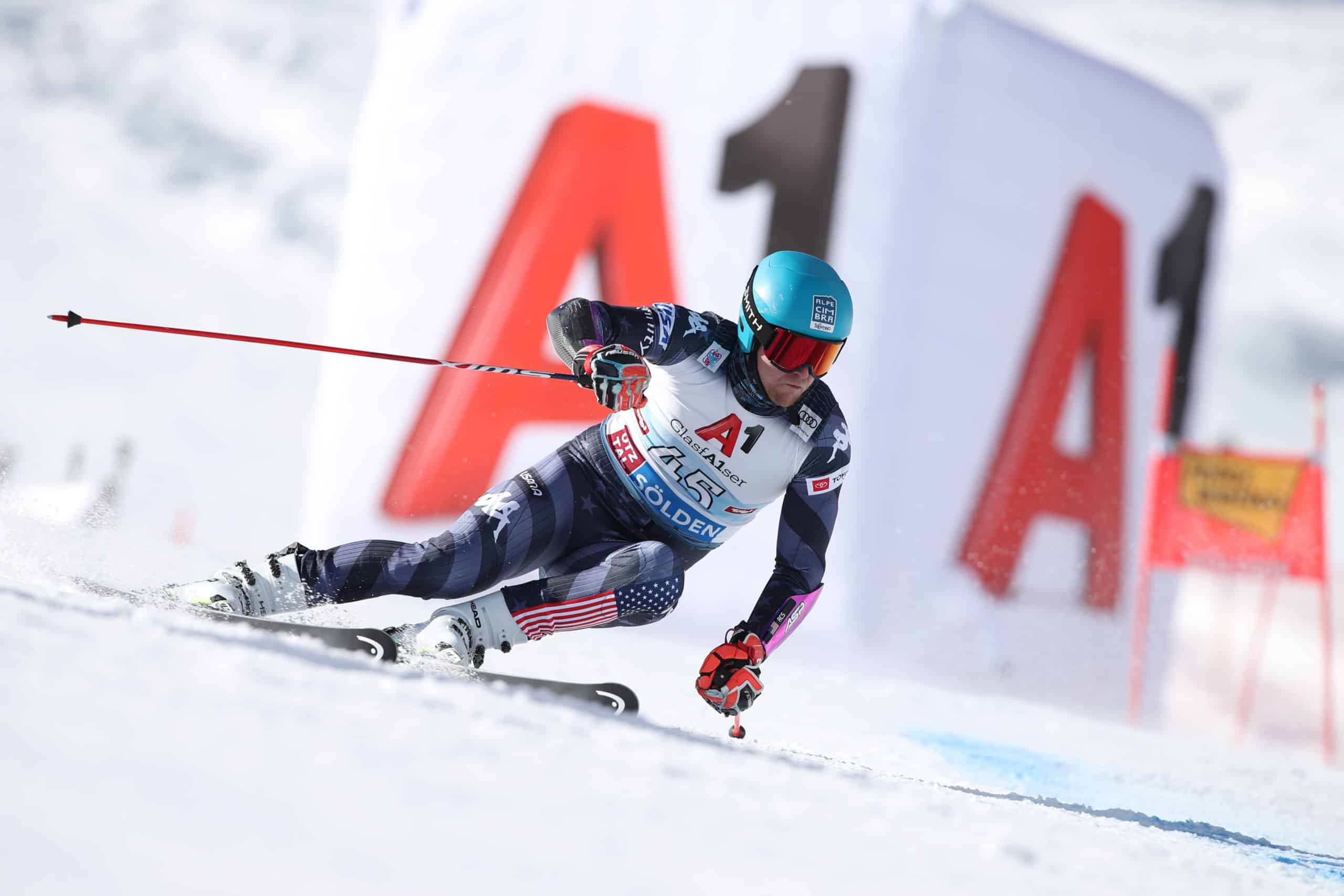
Cochran-Siegle is racing Head skis for a second season. He switched from Rossignol, having skied on the French brand since his World Cup debut in 2011.
“Between skis, boots and bindings, my primary focus has been getting dialed in with the ski boots,” RCS says. “There’s still a lot being figured out.
“Head has shown how supportive they are trying to build something that works for me.”
He informs that he has been tweaking his boots non-stop ever since an April training camp in Norway.
“I’m trying to dial it in, messing around with different stiffnesses and the way the boots are built. We’ve made a lot of progress. I’m trying to continue to build from where I am now.”
U.S. Downhill coaching dynamic duo
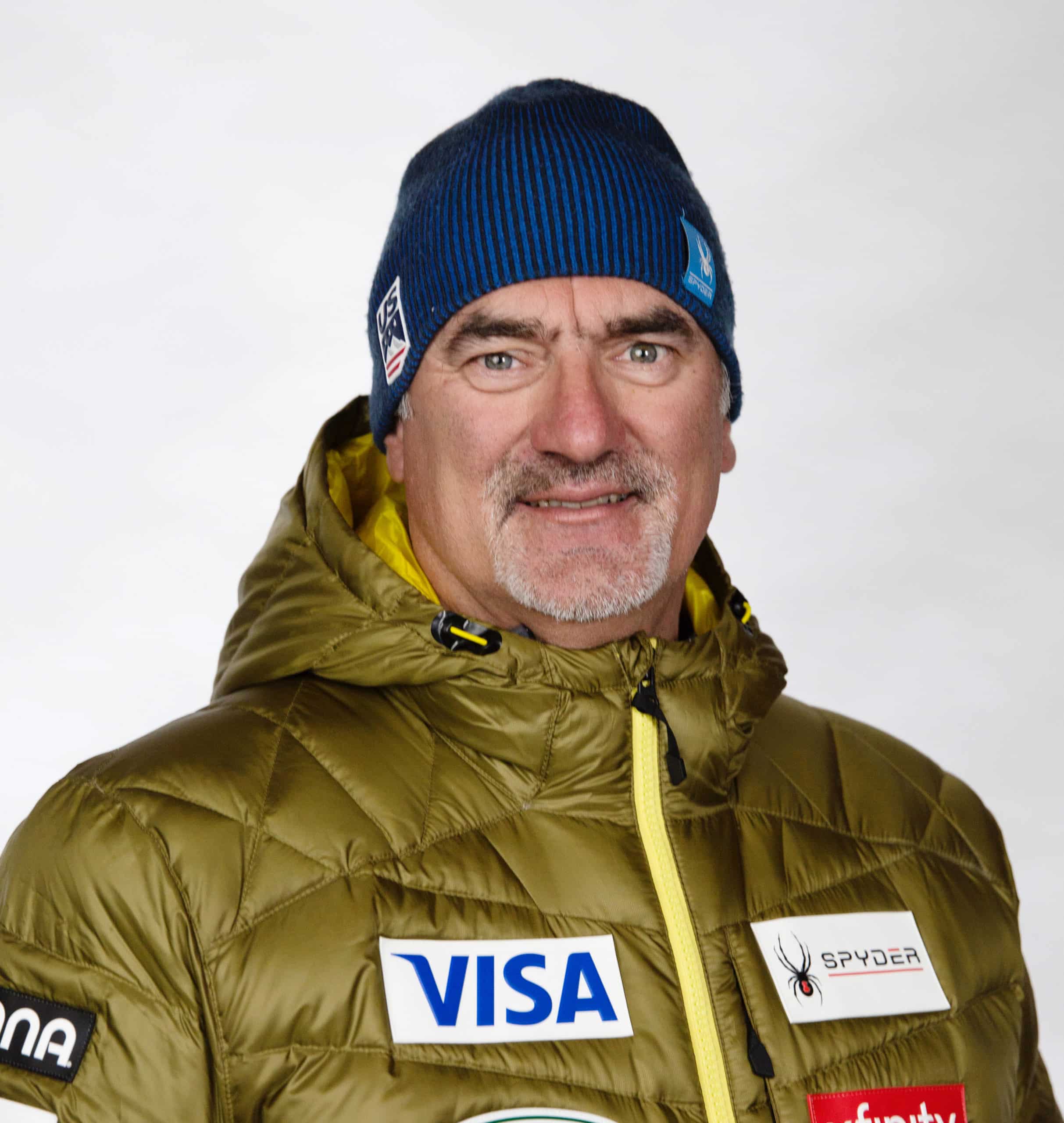

RCS says he feels that he is in a good place working with speed coaches Urban Planinsek and Randy Pelkey.
“We’ve had a pretty consistent coaching staff for three seasons now. I think we’ve all figured out how to work together as a good team,” Cochran-Siegle says.
Pelkey returned as U.S. men’s speed team head coach in 2019, having formerly coached the inexperienced South Korean men’s team in the lead-up to PyeongChang 2018. Planinsek boasts similar adventures and experience, having led the Russian Ski Team along the march to Sochi 2014.
“Urban is fun to be around. It’s fun to have a good balance of personalities,” RCS says.
“Randy is a transplanted New Yorker, so we’re always bantering back and forth about the Patriots and Jets,” he says, of the rival football teams.
“Randy and Urban balance each other out. I think we’re a strong team because of that.”
Follow Brian on Twitter – @Brian_Pinelli
About the Author: Brian Pinelli