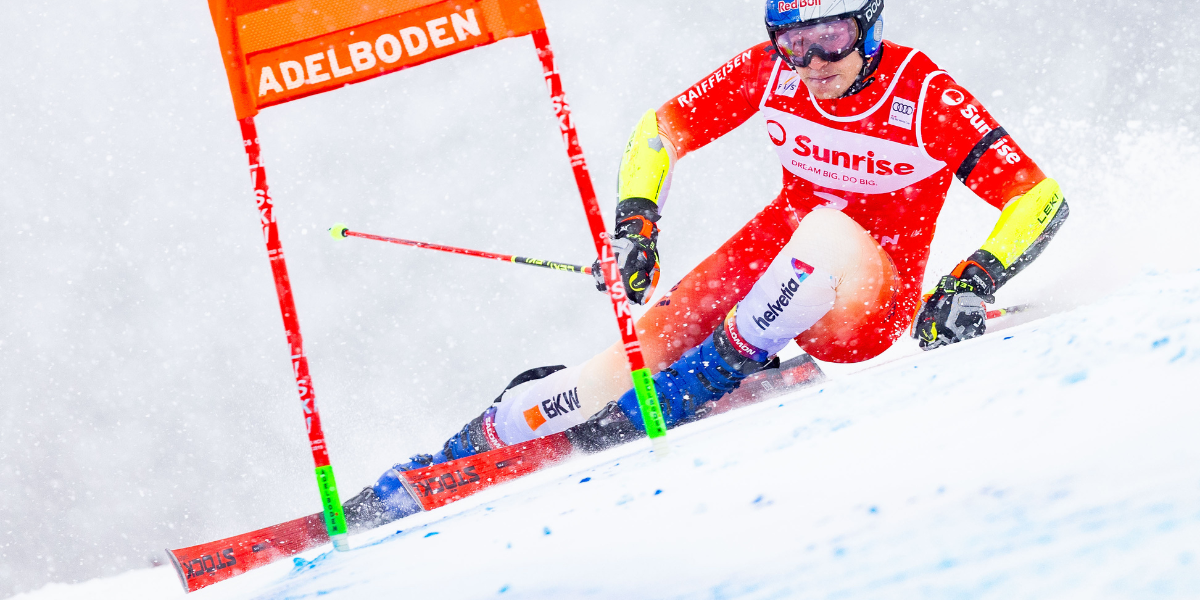
World Cup Downhill athlete, who is also his own serviceman, Sam Morse, reports from Wengen. The Wengen World Cup in Switzerland kicked off the 2023 men’s speed events, with the Lauberhornrennen downhill. It is the season’s longest race, stretching two and a half minutes. It is a real leg burner for the athletes and an incredible puzzle for a serviceman to solve because the course descends through so many different types of snow.
The first thirty seconds of the race consist of new snow that is cold in the morning and begins to heat up very quickly when the sun comes out. It then descends through the Hundschopf (dog’s ears cliff jump), Canadian Corner, and Kernen-S, which are the most technical parts of the course and are injected with water to make for a durable surface. From there, the course descends for another minute on old refreeze, like snow that you often see training in the summer on glaciers. Now that you have the picture, let’s back up and discuss how we should finish our edges.
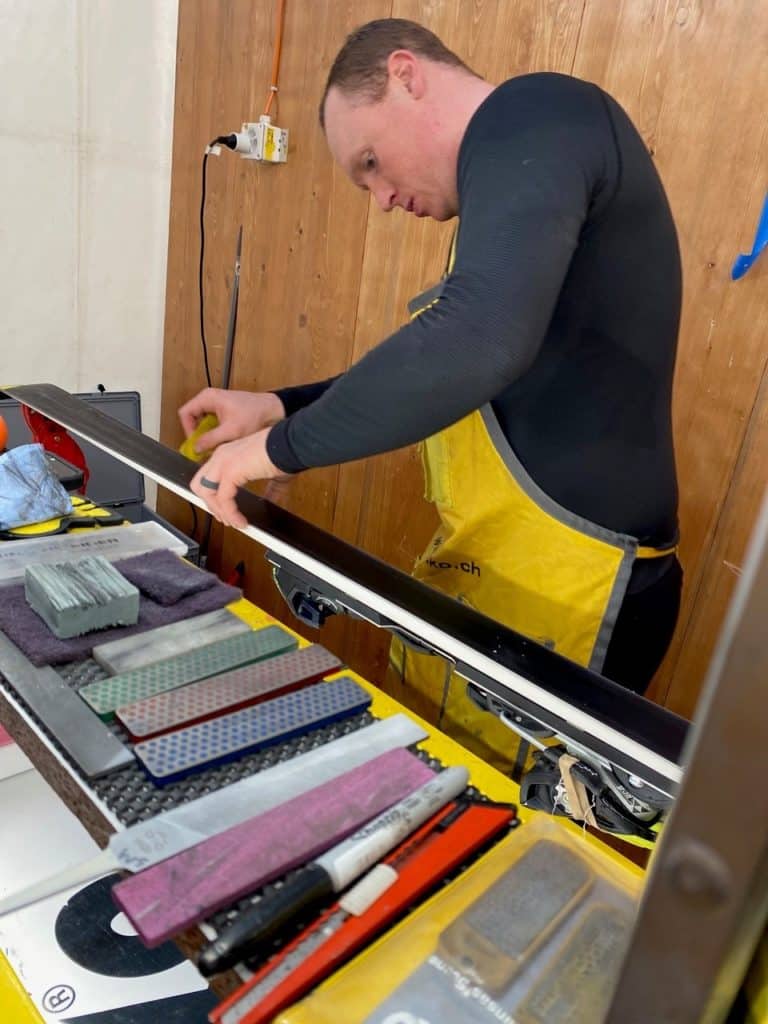
In my last post, I explained the importance of managing your quiver to maximize time, quality, and consistency. Since my skis are all filed, wicked sharp and waxed, it is time to scrape, brush, and then do the finishing touches on the edges with my stones (Toko World Cup Diamond Files). This might be the most critical part of the whole tuning process since it determines your edge’s precise engagement with the snow. Given the varying snow conditions at Wengen, no single edge finishing method is perfect for the entire course. Your edges will likely be too sharp for one course section or too dull for another.
Tunning for the most important sector
You may find similar situations at the races you are preparing for. Perhaps there is a steep icy pitch that gives way to flats that aren’t steep enough to slip all the snow off and creates soft conditions. Or maybe you had a big New England rainstorm that froze overnight and the course is a sheet of glass except for that one section that is getting a blanket of new snowmaking snow blowing over from the next trail as the resort tries to recover from its losses. You are now faced with choosing what part of the course you value the most for your performance.
At Wengen, the Kernen-S is two ninety-degree GS turns with injected icy snow on downhill skis, determining your exit speed for the rest of the course. In my opinion, these are the most critical turns on the course; without executing them well, you stand no chance of competing. So, despite it only being two turns, I made the call to tune my edges for those two turns.
My method for finish stoning consists of the following:
- Start with either a medium 400-grit or fine 600-grit World Cup diamond file.
- Pass up and back on the base edge by hand, then switch the stone to the side edge and do a pass up and back.
- Repeat this process before moving on to the next higher grit stone.
- Typically, I’ll finish with the Xfine 1000-grit by doing the same process.
- But in the end, I finish with just one pass up on the base and then one pass down on the side.
- Switching from the two passes on the base and side to only one pass on the base and side creates less of a hanger protruding from the side edge.
Finishing edges free hand with a stone takes practice, so don’t immediately try this on your next race. Test it out in training and you’ll learn pretty quickly. The most important thing is to finish with a pass on the side, not the base. Like sharpening a knife, you are working the hanger left from the file back and forth, smaller and smaller, while maintaining the angle and sharpness.
The last step in finishing your edges is deciding whether you want to de-tune the tip and/or tail with a gummy stone (Toko Edge Grinding Rubber) or scotch bright (Toko FiberTex). This completely depends on how a racer wants the tip to react and engage. On most water-injected World Cup downhill tracks, I have been de-tuning a lot less than I used to when racing on more compacted snow surfaces. I hope you have learned something from reading this and can apply it to your tuning soon. See you on the slopes! – Moose
About the Author: Sam Morse