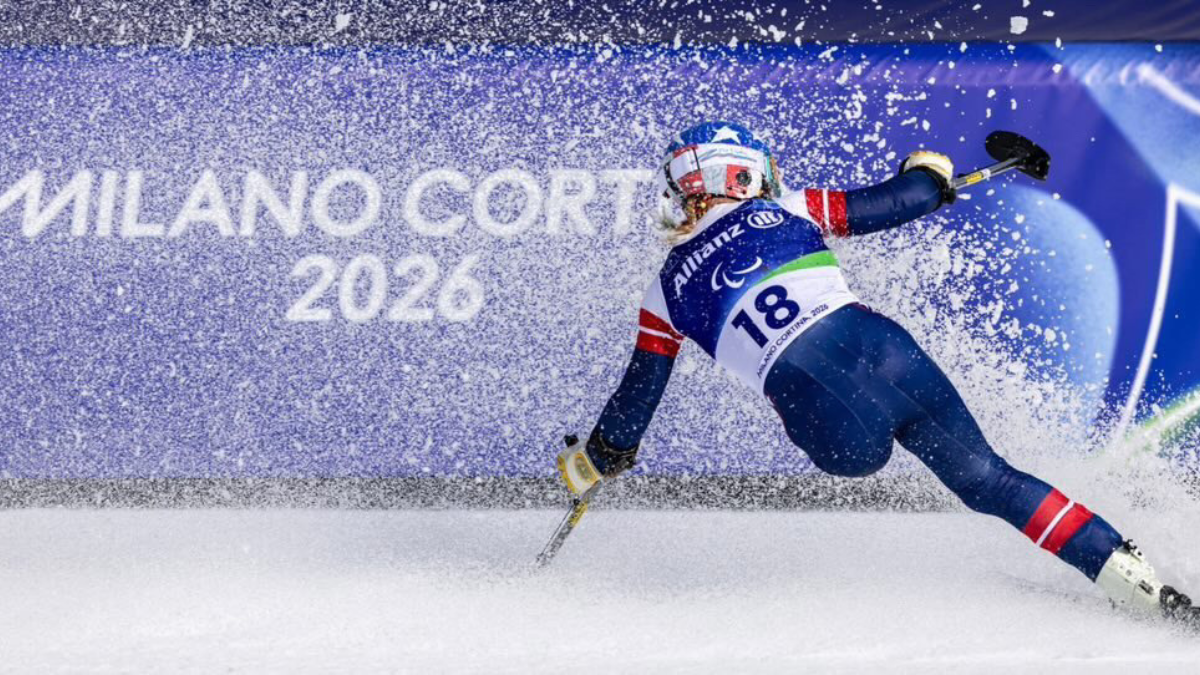
Sara Hector GEPA pictures/Harald Steiner
Between the significant disappointments, the Swedish Olympic GS champion Sara Hector delivered a run no other skier came close to matching. While the field revealed that the race surface was very challenging, Hector made it look like a surface appropriate for children. Confidence and power punctuated the run. After the first run, Hector has a (1.00) advantage over superstar Mikaela Shiffrin. Hector had delivered a run for the ages.
However, the Jasná women’s World Cup giant slalom started ominously with the discipline leader Federica Brignone going out on the fourth gate of the race. That moment dramatically changed the complexion of the 2024 giant slalom discipline title. However, Brignone was unhurt.
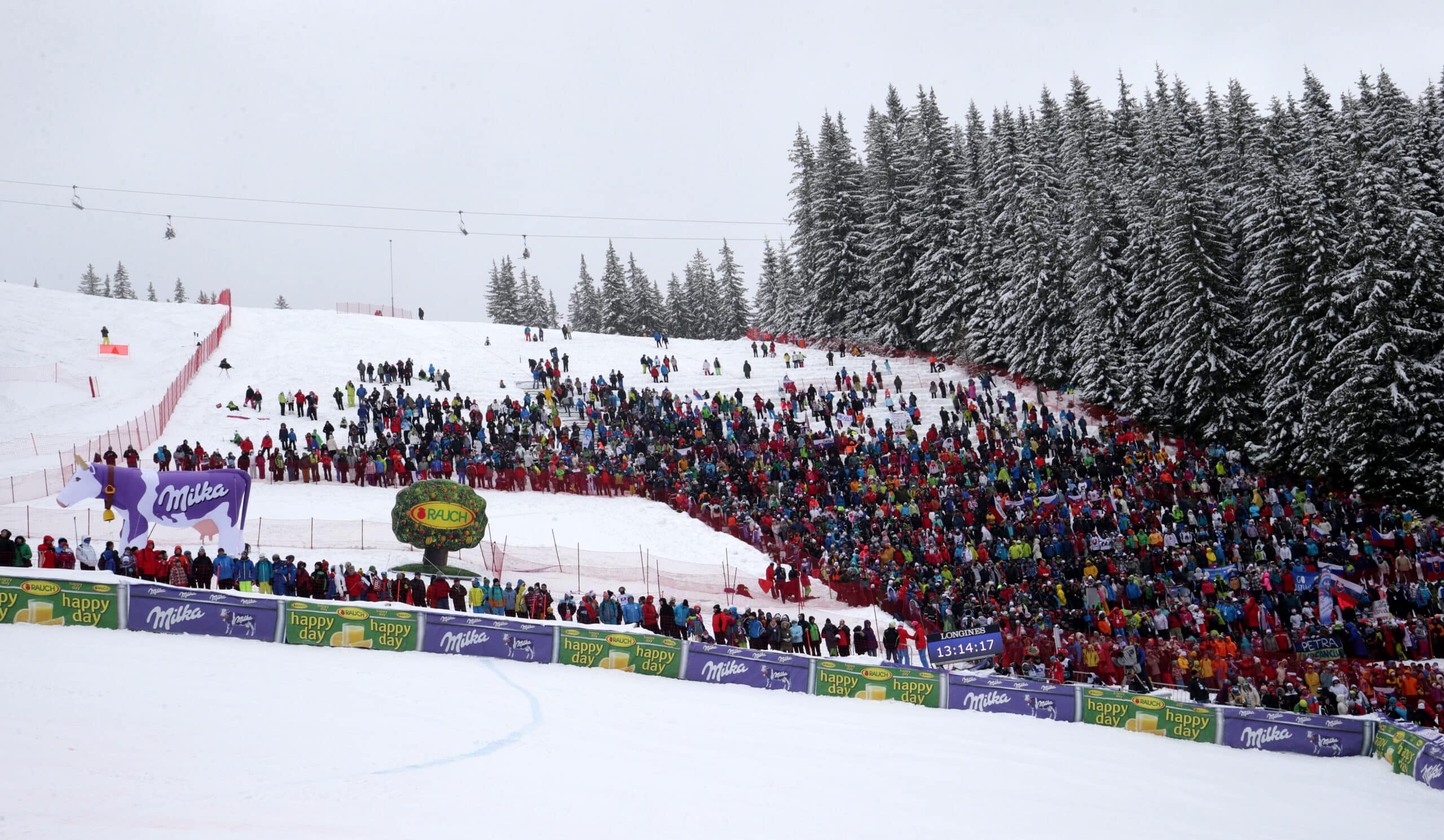
Unfortunately, the next racer that did not finish was home country hero wearing bib four, Petra Vlhová. Vlhová’s fall silenced the massive crowd. The Slovakian star required medical care and a safety sled evacuation. The hospital staff was examining her at the last report. Her crash could significantly affect the season’s slalom title and the excitement of the remaining season.
The enormous crowd lost its energy. It remained greatly diminished for the rest of the morning. They had come to see their nation’s star compete for victory but ended up watching her leave the arena in a safety sled.
Click on images to enlarge.
Although anything can and does happen in alpine skiing, Hector has put herself in a great situation to achieve another GS victory.
Stifel US Ski Team’s Shiffrin was the seventh racer to attack the course. Although she appeared to deliver her usual excellence, she crossed into the finish, trailing Hector by exactly a second.
Wearing bib 15, New Zealand’s Alice Robinson garnered the leaders’ attention as she descended. She could charge hard and look for speed. She grew up at Coronet Peak and has experienced some of the iciest conditions possible since childhood. Robinson, undeterred by the conditions or the course, confidently enters the afternoon ranked third (+1.08), closely trailing Shiffrin.
While only eight one-hundredths separate Shiffrin and Robinson, they have over a second and a half advantage over fourth-place Croatian Zrinka Ljutic.
The conditions were so challenging that after the first twenty women had completed their initial runs, the time differential among the fastest ten was massive (+4.38). By the end of the first run, it had shrunk to (+3.65).
However, It appeared that as the racers skied the course, they created additional texture and better grip. The change highly rewarded great skiing among the higher start numbers.
North American performances
Stifel US Ski Team’s AJ Hurt continues to impress. Hurt is showing she is capable of skiing among the truly elite. Wearing bib 23, Hurt was much better than most and starts the afternoon run (+3.13) but in 8th place. She is only (+0.52) behind fourth place.
Hurt’s teammate Paula Motzan, ranked 21st (+4.46), was not at her best in the morning but did qualify for the afternoon run and will have a good start position for the finale. Immediately behind her is the Canadian Kranjska Gora champion Valerie Grenier, 22nd (+4.59), who also struggled but will have an early start during the second run
Opportunity for higher bibs
The first run was uniquely filled with tragedy and celebration. Among those celebrating were the 13 racers with a start number above thirty who qualified for the second run. The fastest was the Norwegian skiing with bib 32 Thea Louise Stjernesund, who finished the morning 9th (+3.42). The last to qualify was the French racer Caitlin Mcfarlane, skiing with bib 68 (++4.72). The time differential among the fastest thirty was a considerable (+5.11).
In the unpredictable alpine skiing world, Sara Hector’s standout performance in the Jasná women’s World Cup giant slalom is a testament to her skill and composure. The race, marked by unexpected twists like Brignone’s early exit and Vlhová’s dramatic fall, created an atmosphere of tragedy and celebration. As the skiers faced challenging conditions, Hector’s confidence and power set her apart, securing a significant advantage. It was a unique first run, where triumphs and setbacks unfolded on the slopes, leaving fans anticipating the unfolding drama in the remaining season.
Top 30 first-run results and analysis of the fastest three and other qualified North Americans
Click on images to enlarge

Analysis of the fastest three and other qualified North Americans


About the Author: Peter Lange