GEPA pictures
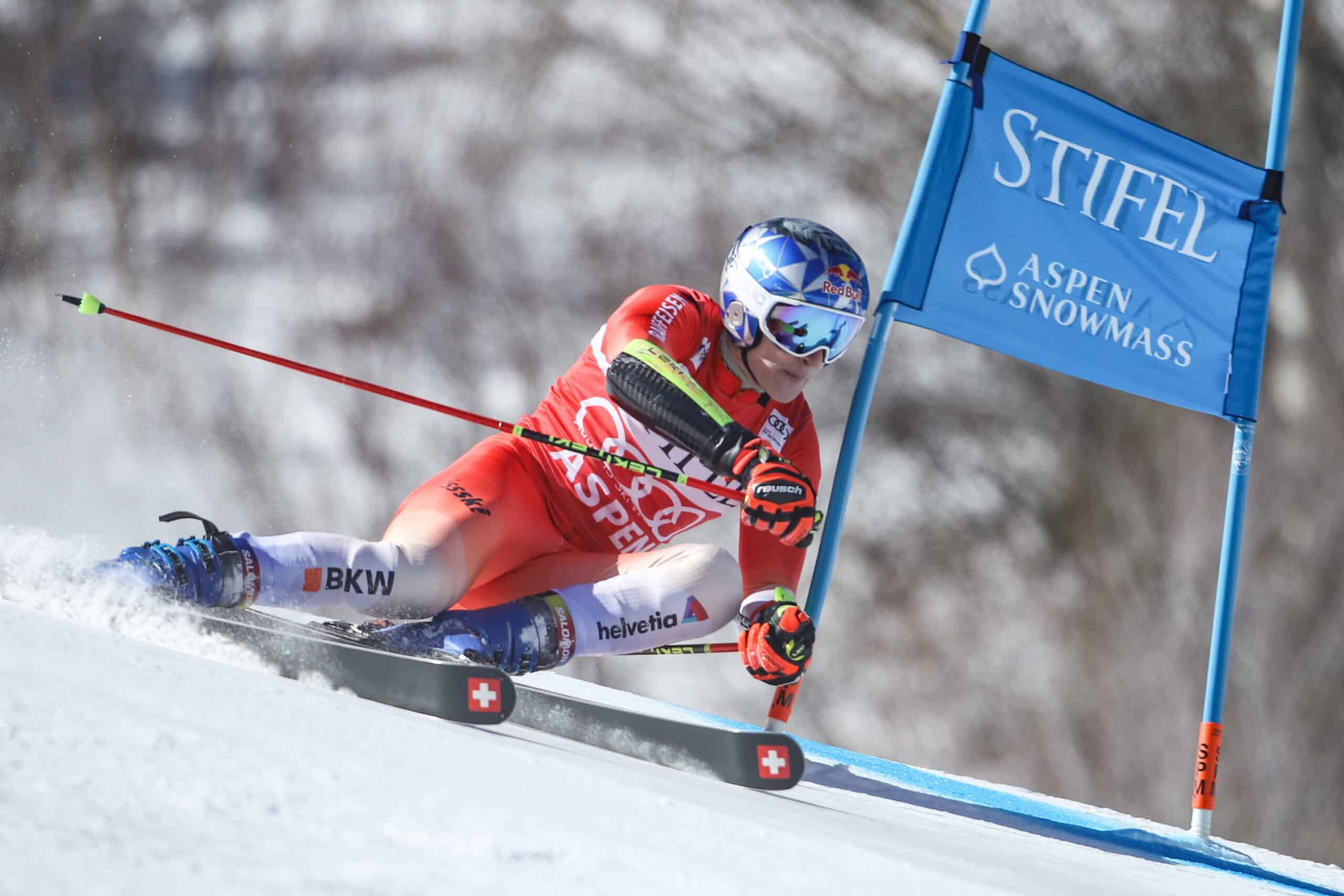
Under sunny skies in Aspen, Colorado, Marco Odermatt wins his 11th straight World Cup GS race and his eighth of the season. He also clinches his third consecutive season’s GS title. He is now three races away from tying Ingemar Stenmark for the most consecutive World Cup victories in a single event. Although it seems impossible to dream about considering Odermatt, it almost seems possible. To say the man is at a higher level than his competition is an understatement worth mentioning.
“It was probably the hardest day of the season,” said Odermatt. “It was so tough, I don’t know why, probably the altitude and the warm temperature. It was very tough. I didn’t feel good at the start, everything was so slow, not much energy.”
“It takes so much energy to always get into this race mood, into this focus. It’s really not easy. Right now it looks easy but it’s definitely not,” Odermatt said. “Each run is so much work for the mental part. Happy that I still had enough energy to win.”
The ski racing community is fortunate to be witnessing such greatness.
How the race progressed
The first of the fastest three from the morning run to ski was Switzerland’s Loic Meillard. He executed at an extremely high level and crossed into the lead, guaranteeing himself his first GS podium of the season. The next to ski was the 22-year-old Norwegian Alexander Steen Olsen. However, Steen Olsen was unable to find the speed of the other top men and crossed into 6th. When Steen Olsen crossed behind his teammate, Norwegian Atle Lie McGrath knew he had earned his first GS podium of the season. However, the last to ski was the best in the world and the winner of the last eleven World Cup GS races.
“It feels amazing. GS has been tough. A lot of lows, more lows than highs actually. So to come back on the podium, it’s great,” said Meillard “I know where I lost it,” he said. “The last banana for the last part wasn’t great. It’s on me I can’t say any different but at least I know that I can be faster than him and that’s important.”
Once I realized I was on the podium, which was unfortunately when Zander (Steen Olsen) came down, I just started to cry,” said the Lie McGrath.
“I couldn’t stop it because there’s been so many things going on these past three years. It was kind of a full-circle moment.
“It’s been very tough for me in GS with a lot of injuries and GS is a tough event and you have to risk it a lot and I maybe haven’t always been in a good position to risk it.”
Click on images to enlarge
The final seven drama
There were seven racers within a second of Odermatt during the first run. The first of those to ski was Italy’s Alex Vinatzer. He crossed the finish line with the second fastest time behind his teammate Luca de Aliprandini. The young Norwegian born in the USA, Lie McGrath, was the next to ski. Lie McGrath skied well and took the lead, guaranteeing himself his third top-ten GS of the season.
Then, Switzerland’s Thomas Tumler crossed just (+0.16) behind Lie McGrath, leaving five to ski. Two of those were Lie McGrath’s Norwegian teammates. One of those, Henrik Kristofferson, was next to ski but could not assume the lead. Next was Slovenian Zan Kranjec, who also failed to ski into the top three. That left only the fastest three from the first run at the start.
The early second-run racers
The afternoon run was a faster course, but the Strawpile race venue continued to challenge the racers. It was exciting to see who would be the most aggressive among the early second-run starters, all with noticeably high bib numbers. Of the first six skiers to race, the lowest bib number was 42. When skiers of this level qualify for the finale, they often ski conservatively to make sure to score points.
Of the early racers, Austria’s Dominik Raschener revealed he was willing to attack the demanding course. As the second racer to ski, he led the race for the following eight racers and ended the day by gaining nine positions to finish 20th (+2.95). The 11th starter, French racer Leo Anguenot, assumed the leader’s chair from Raschner. He then held the lead for the following two racers before being beaten by Austrian Raphael Haaser. Haaser still had the lead when the first 20 racers had skied. In total, Haaser gained eight positions to finish 9th (+1.39).
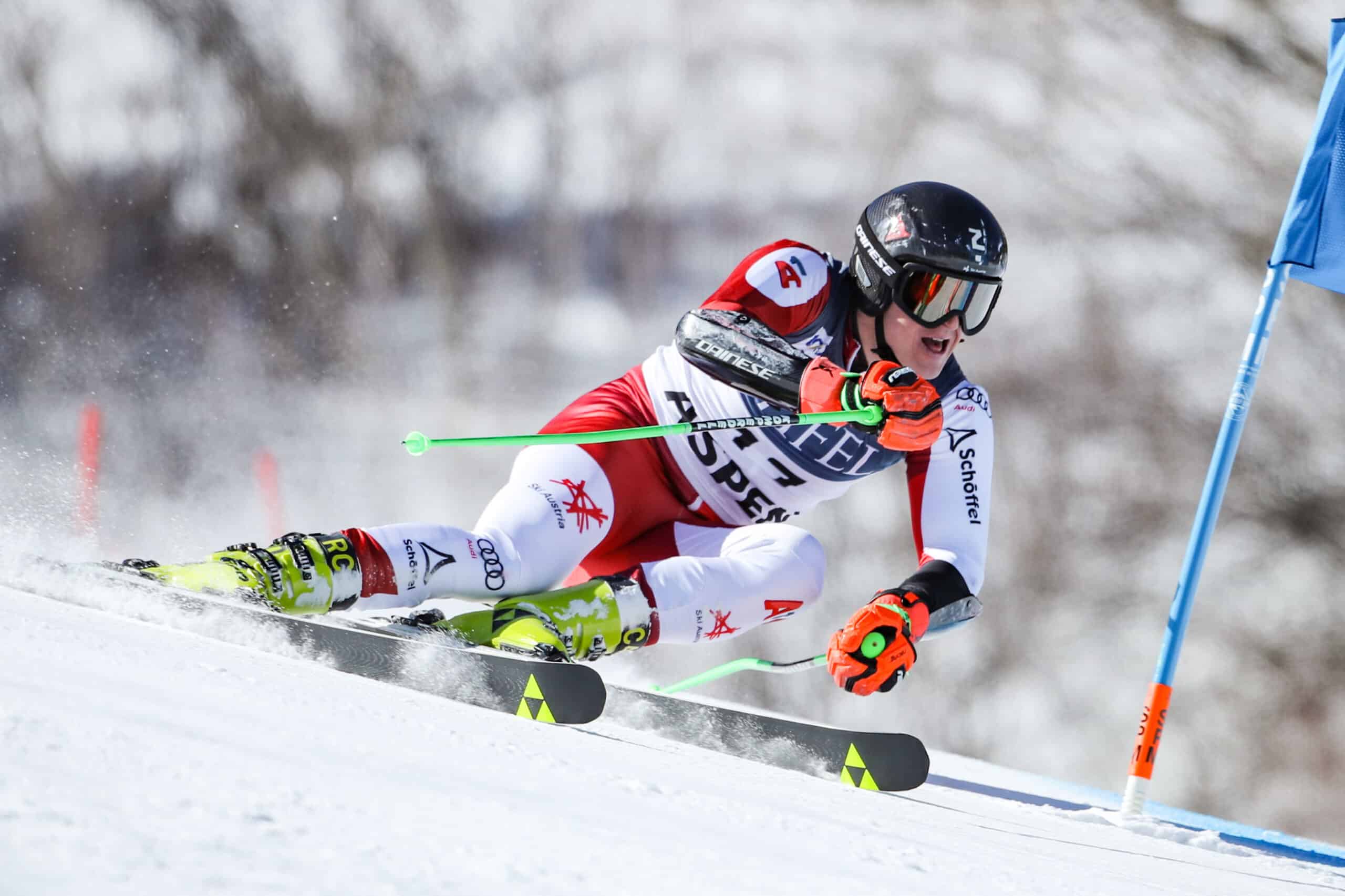
North Americans
Canadian veteran Erik Read was the first North American to ski the second run. Read graduated from the University of Denver, so Aspen is as close to a home World Cup race as he skis. Read gained three positions in the afternoon to finish 21st, keeping his challenging goal of four straight trips to the GS finals alive.
The last of the North Americans to ski was Stifel US Ski Team’s Colorado native, River Radamus. Radamus executed world-class skiing from top to bottom, delivering the fourth-fastest second run. He crossed the finish second fastest (+0.42) behind Haaser. However, by the end of the race, he had gained five positions to finish 11th (+1.81).
Big second run gains
Today, none of the racers could gain double-digit positions during the second run. However, Swiss slalom skier Luca Aerni gained 38 positions from his first run start position and earned $5000 by winning the Stifel Bibbo Award.

Under the bright skies of Aspen, Colorado, Marco Odermatt secures his 11th consecutive World Cup GS victory, along with his eighth GS win of the season, and clinches the prestigious 2024 GS title. With just three races away from matching Ingemar Stenmark’s legendary record, Odermatt’s dominance on the slopes appears unshakeable. As we marvel at his unparalleled skill, it’s evident that Odermatt operates on a level above his competition. The ski racing community is truly privileged to witness such greatness unfold. Tomorrow, the excitement continues as the next GS race takes place on the same challenging Strawpile race arena, promising another thrilling display of world-class skiing.
Stifel Aspen Winternational GS results and analysis of the fastest three and North Americans
Click on the images to enlarge

The analysis of the fastest three and North Americans


About the Author: Peter Lange