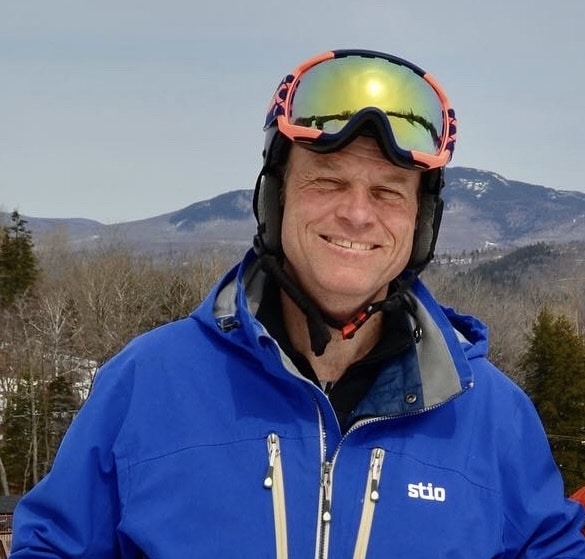
Pictured: Dan Gillis, Dartmouth Photo Credit: Chauncey Morgan
Articles such as Craig Zolan’s recently posted opinion piece about access to college racing and the ensuing discussions are terrific. I rarely comment or actually never do, but I am always grateful that Ski Racing provides this forum. However, on the topic of limiting foreign athletes and/or reducing the age of eligibility, I feel compelled to jump in and suggest that we be cautious about what we are asking for before thoroughly analyzing and recognizing what these athletes contribute and the role that they currently play in our development ecosystem.
Yes, there are a lot of foreigners in our college ranks, which is a good thing. Only some ski academy or club program graduates are ready for the top college programs most parents want their children to gain access to. But there are currently a good number of “available” and reasonably “accessible” roster spots for motivated racers if they look around. We must remember that this is a small sport, and the NCAA circuit is at the elite level.
There are only 34 start slots per gender at the NCAA National Championships, with a maximum of three per team. There may appear to be too many foreigners in that field, but they support a positive evolution. In just three seasons since 2021, the number of American men in the field has increased by nearly 40%. Next year, it will likely rise again as many Americans improved their world rankings significantly this season.
It helps that more former and current US team athletes are accessing the college circuit and that the US governing body is accommodating collegiate skiing, as was the case with Ryder Sarchett, this year’s World Junior GS Champion. I acknowledge that percentages can be more dramatic when they begin from a low number, but 40% remains significant, and we should focus on that progression. We are getting better; that is how we get more Americans into the NCAA Championships and beyond, not by making quotas or adding more restrictions.
The NCAA circuit is a significant resource for US skiing, as it is currently. The open question remains how to best use collegiate skiing as a critical part of the overall US development structure. We should commend Craig Zolan for his constructive analysis from his vantage point as a high school parent. He nails the issue of keeping more in the game longer, which is a more critical issue than it was 20-30 years ago due to the evolution of the sport. But I agree 110% with Brandon Dyksterhouse when he expressed in a social media comment related to this article that we cannot dumb down the college circuit to create access.
We should focus our efforts on enhancements to foster positive solutions rather than regressive ones. Firstly, we can encourage more teams like the University of Nevada to join the western circuit, thus offering more roster spots in a region that can benefit from them. Additionally, we should motivate more schools to follow the example of Colby College by increasing their support for skiers aiming to compete at the NorAm level. We should commend the many eastern colleges that support sizable rosters, which keep athletes training and racing with high-level peers well beyond high school.
We can create more opportunities for top USCSA school athletes by promoting institutions like Colorado Mountain College, whose recently stated purpose is to help advance athletes to the NCAA. Dartmouth’s investment in a more challenging and competitive race venue for the 2025 NCAA Championships should be recognized as an essential enhancement to Eastern college racing. Increasing off-season national team-level training opportunities for college athletes, like those currently offered by GreSki, former USST athlete, and Dartmouth racer AJ Ginnis, is essential as this addresses a significant challenge for top-level US college skiers. We should also build avenues for top college skiers to have access to better equipment, ensuring they have the resources they need to excel. Initiatives such as these increase opportunities for talented and motivated US athletes and raise the quality of the college circuit.
You have to be fast to race at the NCAA level. Participation awards are not the focus of these programs, nor should they be. How can we enhance our development ecosystem without a viable, high quality competition platform to push athletes like WJC medalist Ryder Sarchett (who found his footing at CU last season) and World Cup slalom skier Dasha Romanov (heading to UNH in her comeback season next year)? Without Canadian Laurence St Germain, would Paula Moltzan have found UVM a valuable relaunching pad, and vice versa.? Not everyone is ready to be named to the US Ski Team at age 18 and not all athletes named to the US Ski Team have a smooth injury free progression to the World Cup, The influence of high level foreign athletes in the college ranks helps us keep more of our best developing beyond age 20.
Now is not the time to dumb down the college circuit, and that is exactly what trying to reduce the number of foreigners and eligible ages would do. I hear a lot of influential people offering their reasoned opinions on this topic and urge them to join us on the hill, and not just in the West! You will see more Americans than you expect! Perhaps we should persuade Edie Thys Morgan to update her 2018 white paper on college racing, which remains posted on the USSS website. As comprehensive as it is, she is the first to acknowledge that much has evolved since 2018, including her understanding of the college circuit after six years of being physically on the hill at almost all EISA and NCAA Championship races.
About the Author: Chan Morgan