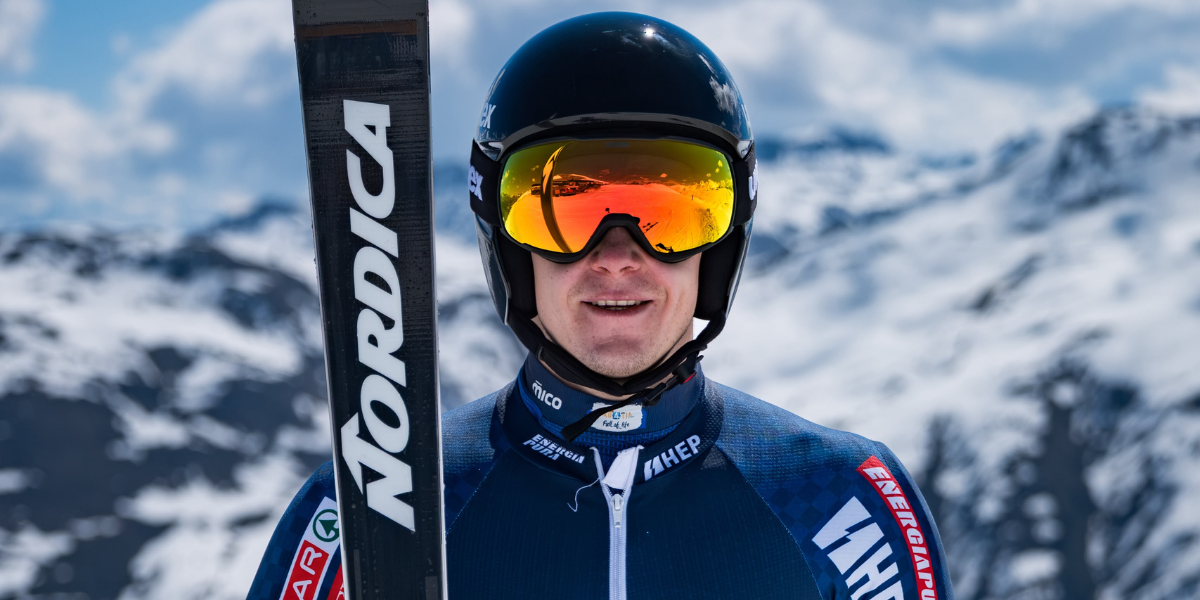
Mikaela Shiffrin in Saalbach: GEPA pictures
Focused Approach After Injury
Mikaela Shiffrin will compete in the women’s slalom on Feb. 15 at the 2025 FIS Alpine Ski World Championships in Saalbach, taking another step in her return to top form. The four-time Slalom World Champion (2013, 2015, 2017, 2019) is known for her unmatched ability to execute full runs with outstanding timing, a skill defining her dominance. But this time, the challenge isn’t about putting together a top-to-bottom performance—it’s about regaining the consistency and confidence of being at her absolute best.
“This World Championships has really shown us just how anything can happen,” Shiffrin said. “It’s really important to go into the day and always kind of take the day as it comes and do the best with what you got.”
Training Gains and Course Familiarity
Shiffrin has made the most of every opportunity to fine-tune her skiing. Competing in the team combined earlier in the week gave her a valuable training run on the slalom hill. That experience provided critical insight into the terrain, a key advantage as she continues to accelerate her comeback.
“Getting a run down the hill already and sort of understanding how the hill feels, I think that’s going to help me bring out better turns for sure,” she said. “That was probably the best training I could have possibly had.”
Preparation is as much mental as it is physical for a racer of Shiffrin’s caliber. She has always excelled at reading a course, memorizing every section, and executing under pressure. The question isn’t whether she can still do it—it’s whether she can push herself back to the level that made her a dominant force in slalom.
Adjusting to Changing Conditions
With the variable weather in Saalbach, the course conditions could be a moving target. Shiffrin expects a compact surface but knows adapting to last-minute changes will be essential.
“It looks like the last couple of days, the weather has been a little bit finicky and changing a lot,” she said. “It will be interesting to see how the conditions come together for tomorrow.”
Shiffrin has handled every type of snow and terrain throughout her career and knows race-day conditions will be out of her control. The key will be to trust her ability to adapt and let her instincts take over.
Returning to Her Best
Shiffrin’s greatest strength has always been her ability to ski with focus and power from start to finish. Historically, executing an entire run hasn’t been an issue—it’s what has made her the most successful slalom skier in history. However, after missing critical training due to injury, she is still working to regain her best rhythm.
“Right now, I’m still working on the consistency of my best turns,” she admitted. “I have some of my very most powerful turns in a course, but then connecting it for the whole course … it’s just not quite there.”
This isn’t about rediscovering how to win—Shiffrin has already proven she can return to the top of the podium after setbacks. It’s about sharpening every piece of her skiing to match the standard she has set for herself.
Staying in the Moment
Shiffrin knows the weight of expectations but focuses on the task rather than the bigger picture.
“It’s really exciting to be able to race this slalom, and I’m trying to focus on just the day in and of itself,” she said. “Not think too much about what it means for the rest of the season and points and all of the other pieces of it, because that gets overwhelming.”
Her approach has always been process-driven, and that mindset has helped her achieve 99 career World Cup victories and eight World Championship golds. While the world is watching to see if she can reclaim her place at the top, Shiffrin is focused on one thing—skiing her best when she leaves the start gate.
About the Author: Peter Lange