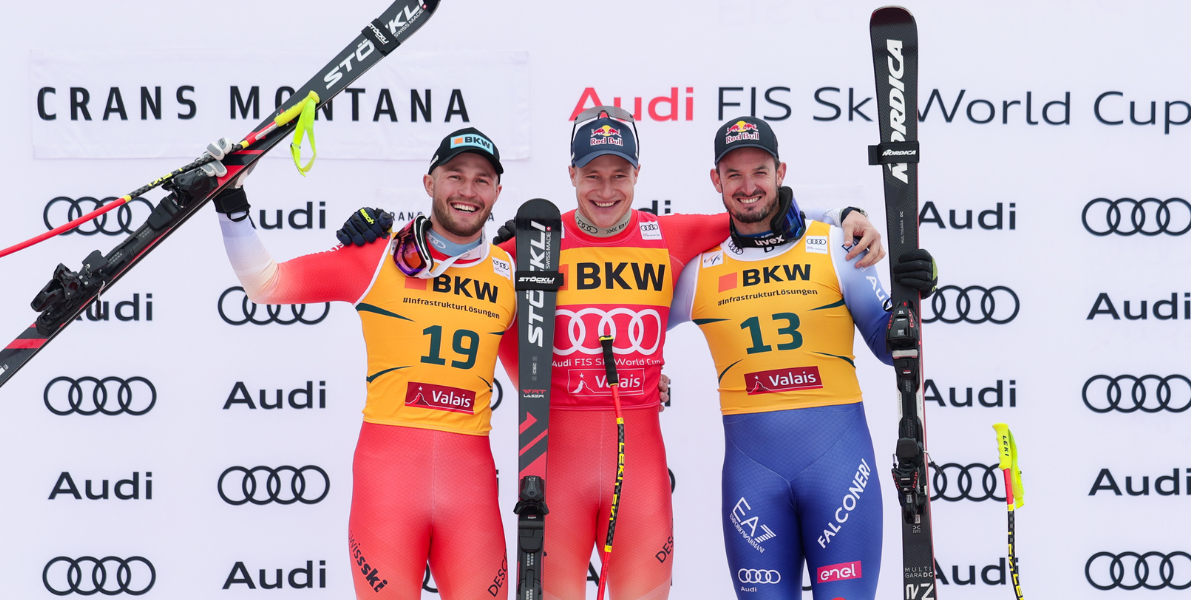
Monney, Odermatt, Paris: GEPA pictures
Odermatt Pushes the Limit in Chaotic Crans-Montana super G
CRANS-MONTANA, Switzerland — The Crans-Montana Men’s World Cup super G was a relentless fight against the clock, with racers attacking a high-speed, punishing course that demanded nearly perfect timing at the absolute limit. Lead changes came in waves, with skiers throwing down blistering runs—until bib 15 Marco Odermatt.
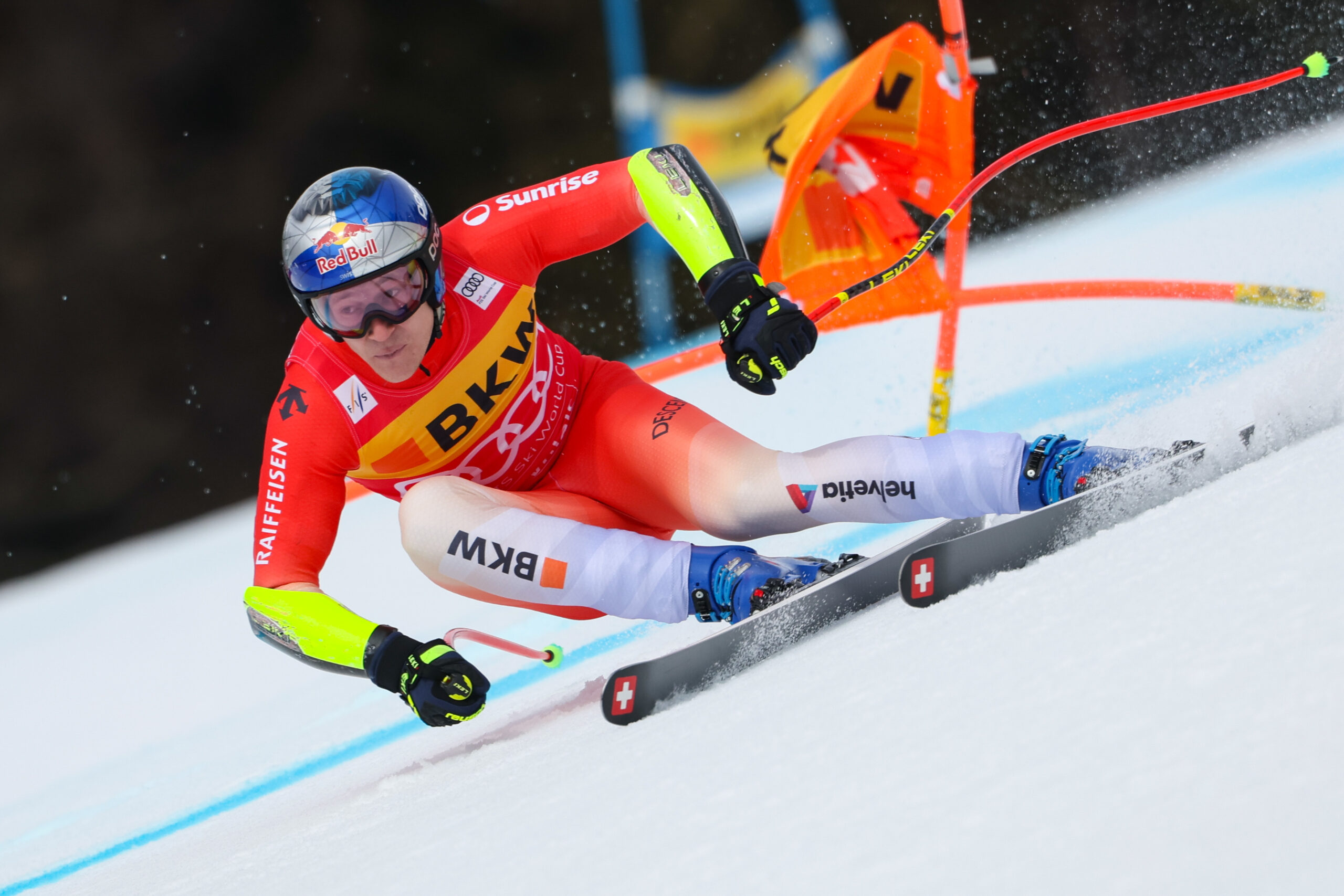
The newly crowned super G World Champion pushed harder, skied faster, and found speed where no one else could, taking his third super G win of the season. Alexis Monney followed in second for a Swiss 1-2 finish, while Italy’s Dominik Paris claimed third.
“Winning here for the first time is amazing,” Odermatt said. “Every victory is special, but taking the top spot at a new venue makes it even better. Sharing the podium with Alexis Monney for Stöckli’s first-ever 1-2 makes this even more special. The atmosphere was incredible—when you cross the line and hear the crowd roar, it’s always a good sign. But in Switzerland, it’s loud all the time, so you never really know if you are fast or not. It was the right kind of loud today—I knew it meant I had won.”
click on images to enlarge
Lead Changes Define the Early Battle
Austria’s Daniel Hemetsberger (bib 1) set the opening mark, but the race quickly turned into chaos. Before anyone could settle into a rhythm, James “Jack” Crawford (CAN), the 2023 Super-G World Champion, stormed out of the gate, looking set to take the lead. But in a split second, his campaign unraveled—mistiming a critical right-footed turn in sector three, he missed a gate and skied out.
With the leaderboard wide open, the Swiss charge began. Franjo Von Allmen, fresh off his downhill victory, skied on the edge of disaster, yet held on to take the lead. Moments later, Stefan Rogentin crossed the line in third, putting two Swiss skiers inside the top three.
But this was only the beginning.
Speed Takes Over, Lead Swaps Continue
Just when it seemed the Swiss had control, Norwegian Adrian Smiseth Sejersted changed everything. The World Championship bronze medalist threw down an aggressive run, attacking every turn with precision and power. His reward? A 0.04-second advantage over Von Allmen and the new fastest time.
The leaderboard continued to shift. Nils Allegre (FRA), skiing with focused intensity, slotted into third, just 0.21 seconds behind Smiseth Sejersted and Von Allmen. Then came Fredrik Møller (NOR), the Bormio super G winner, charging toward the lead with green light splits. But in a heart-stopping moment, he missed a gate in the final sector, ending his run just before the finish.
The lead changes kept coming. Mattia Casse (ITA), the Val Gardena winner and second in the super G season standings, attacked with precision and power, seizing the top spot with a blistering run. But his time at the top was short-lived. Veteran Italian Paris, known for his experience and raw speed, delivered a masterful run, carving through every high-speed transition to hold the lead through the first 15 skiers to finish.
Still, the race was far from over.
“I’m a bit surprised about my run and the result,” Paris admitted. “It didn’t feel that good while I was skiing, but in the end, it turned out to be a very good day. I wasn’t sure if my time would hold up, but sometimes in ski racing, things come together even when it doesn’t feel perfect. Finishing on the podium here is a great step forward, and I’ll take this result as motivation for the rest of the season.”
Odermatt Redefines Fast
With many different leaders already, all eyes turned to Odermatt.
The super G season leader had seen the leaderboard shift endlessly before his start, but hesitation was never an option. From the moment he pushed out of the gate, it was clear he would attack the course differently than anyone before him.
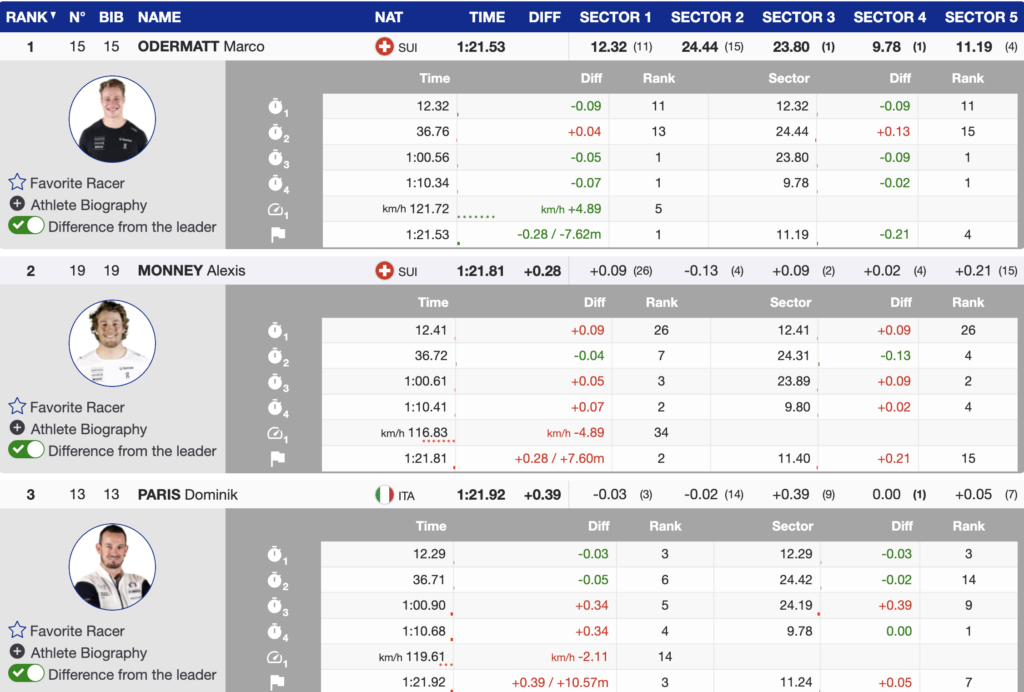
He trailed Paris through the first two sectors, but his skiing was building like a storm. Entering sector three, he found speed where no one else had, carving a tighter, more powerful line that sent him into the green. His final split times were staggering, and as he exploded off the final jump, the fastest time of the day flashed on the board—0.39 seconds ahead of Paris.
Odermatt had done it again. But the race wasn’t quite over.
Monney Powers into Second, Swiss Dominate
When the standings seemed set, one final challenger remained— Switzerland’s Monney (bib 19), the third-place finisher in yesterday’s downhill.
Launching onto the course at full speed, Monney charged through each sector with fearless intensity. The margins were impossibly tight, but he refused to back down. Through the middle of the course, he was still within reach of Odermatt, and as he soared off the final jump, the timing board was his last opponent.
He crossed the line 0.28 seconds back, stealing second place and locking in a Swiss, Stöckli, 1-2 finish. Paris held on for third, bringing home another strong result for Italy.
“It was a really good run, solid from top to bottom,” Monney said after securing his second podium in 24 hours. “I wasn’t sure if it would be enough because this is an easier slope, and I’m not the best on easy slopes. But I found speed where I needed to and managed to hang on to second place.”
After a race defined by nonstop movement at the top, the final result was clear: Odermatt, Monney, and Paris stood above the chaos.
Final Standings and What’s Next
With only one super G remaining before the World Cup Finals, the fight for discipline points and season standings is in full force.
Odermatt’s third super G victory of the season tightens his grip on the discipline title, leaving his rival, Casse, with little time to respond. Meanwhile, for those on the bubble, the urgency is higher than ever—every race now carries the weight of qualification, ranking points, and national team start positions.
On a day when the world’s best skiers pushed the limits of possibility, Odermatt once again proved that when speed is the only currency, he is nearly untouchable. With a commanding 181-point lead in the season’s super G standings, and only two races remaining, Casse’s chances of challenging for the globe are all but gone.
Late Starters Find Success
While most super G podiums are decided early, the Crans-Montana course remained fast throughout the race, allowing several late bib numbers to capitalize on prime conditions.
Slovenian Miha Hrobat (bib 37) charged into eighth place, while Austrian Andreas Ploier (bib 38) delivered a strong run to finish 11th—both proving that speed was still available for those willing to push the limit.
Further down the start list, Italian downhiller Matteo Franzoso (bib 51) took full advantage of the conditions, sneaking into the final points position in 30th. His run marked the highest bib number to break into the top 30, underscoring the depth of the field and the race’s unpredictability.

North Americans Struggle to Crack Top 15
With fast times possible throughout the race, the North American racers had opportunities but couldn’t break into the top 15 in Crans-Montana.
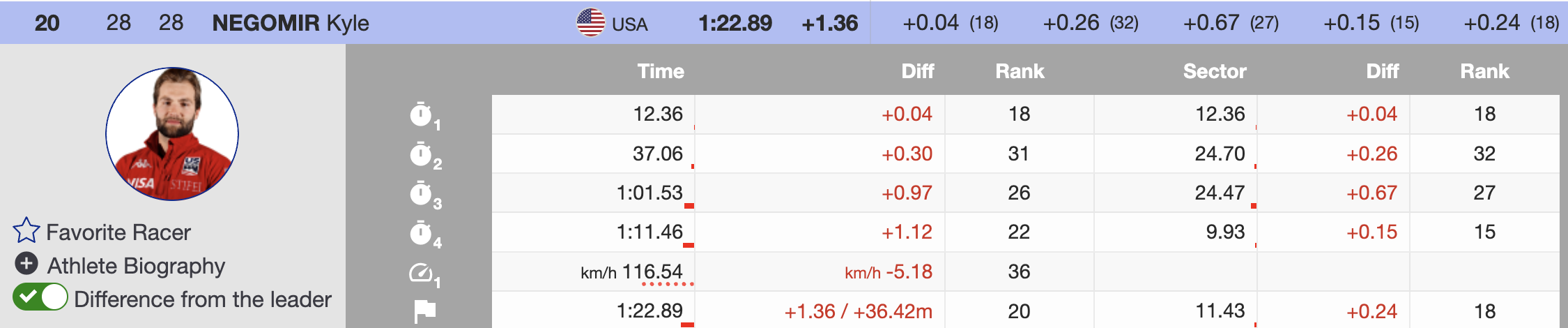
The best result came from Stifel U.S. Ski Team’s Kyle Negomir, who skied to 20th place, finishing 1.36 seconds back. While a solid performance, it was a tough day overall, as none of his teammates or the Canadian squad found the extra speed needed to challenge the frontrunners.
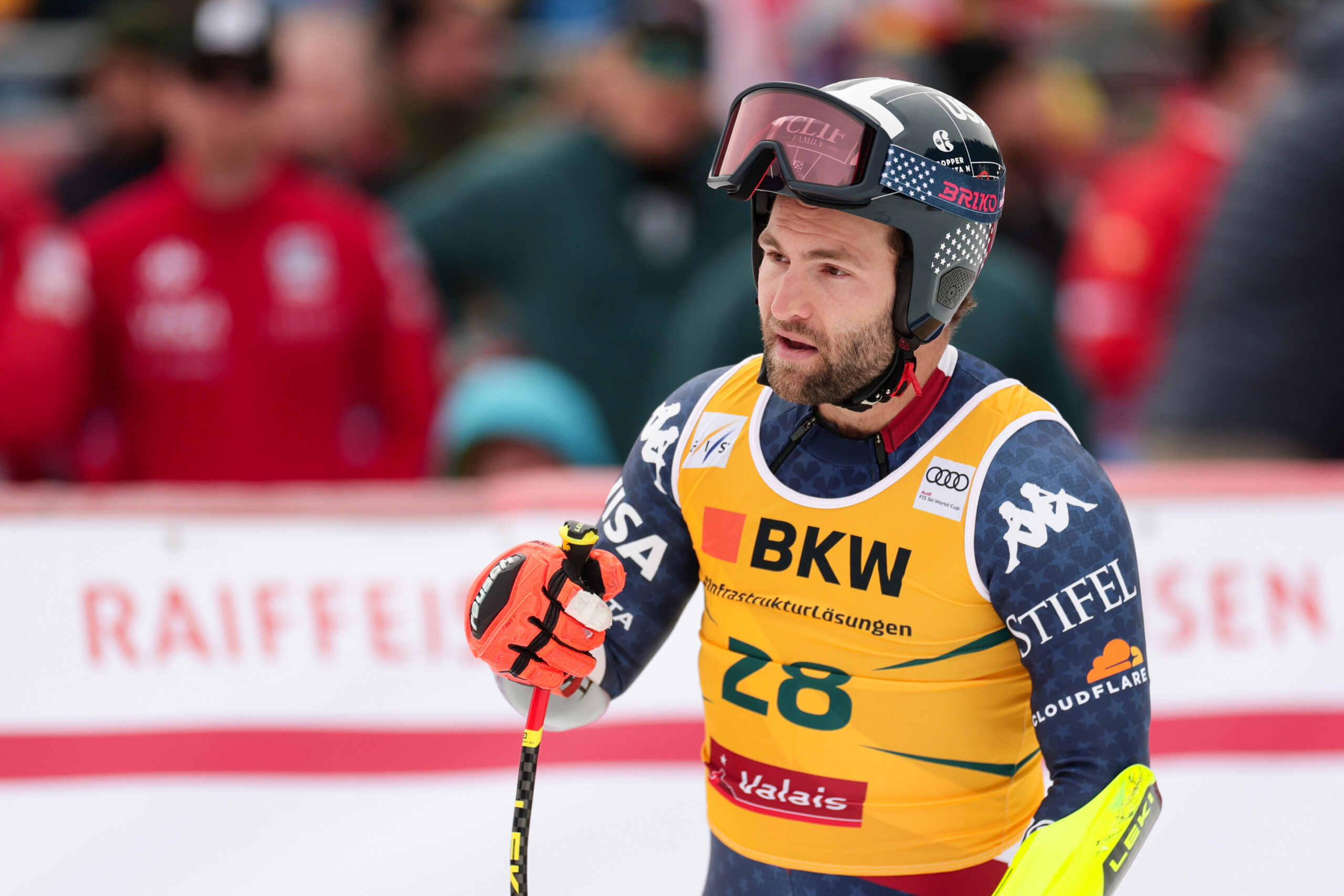
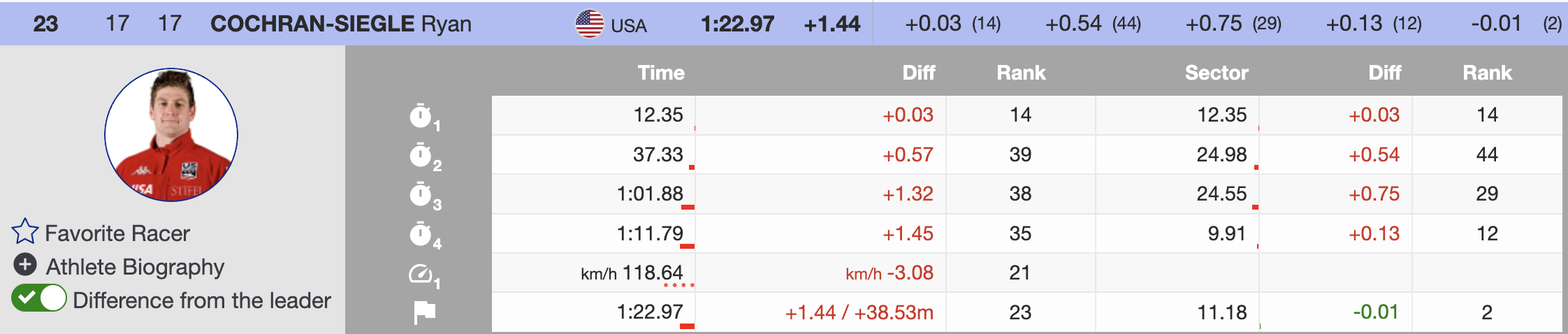
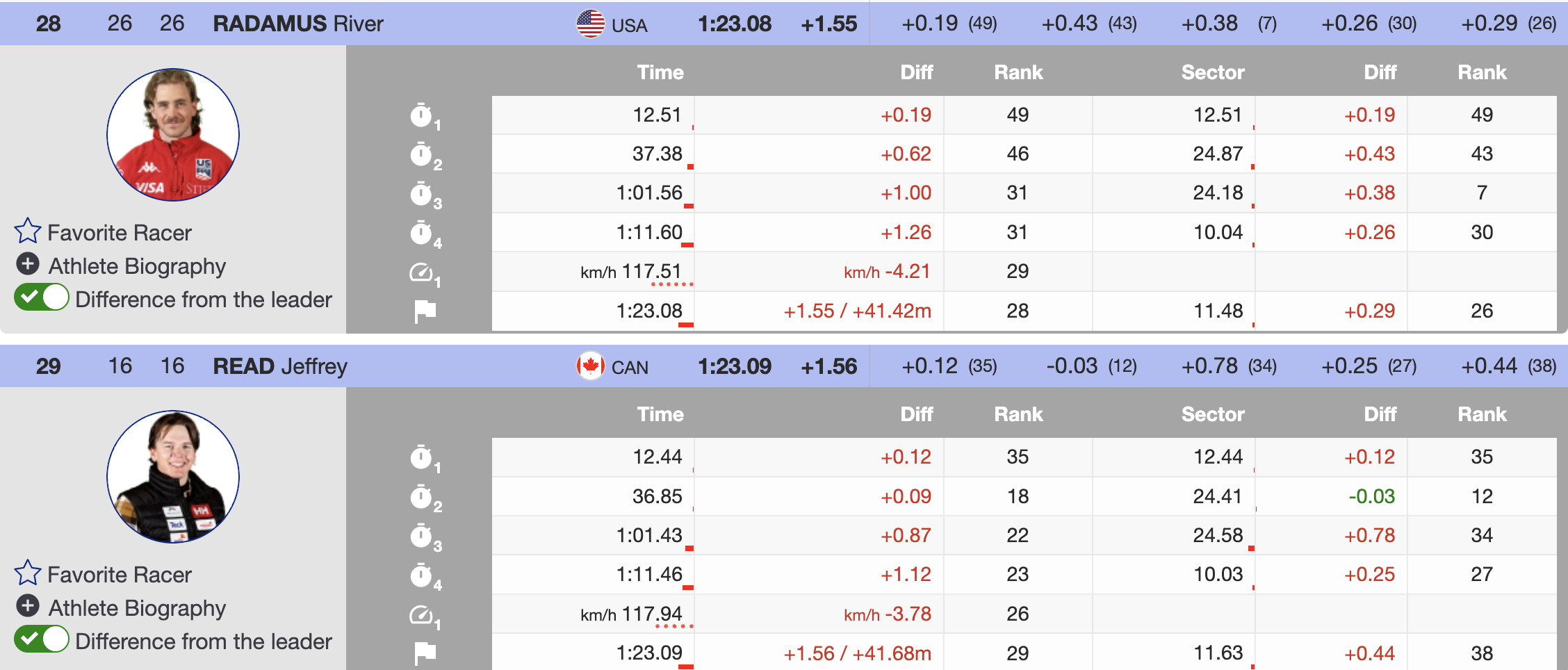
Ryan Cochran-Siegle (USA) finished tied with two others at 23rd, while River Radamus (USA), primarily a GS racer, placed 28th. Canada had one finishers in the points—Jeffrey Read (29th)
With only one more super G before the World Cup Finals, the North Americans will need a stronger showing next time to gain ground in the discipline standings.
Top 30 Finishers
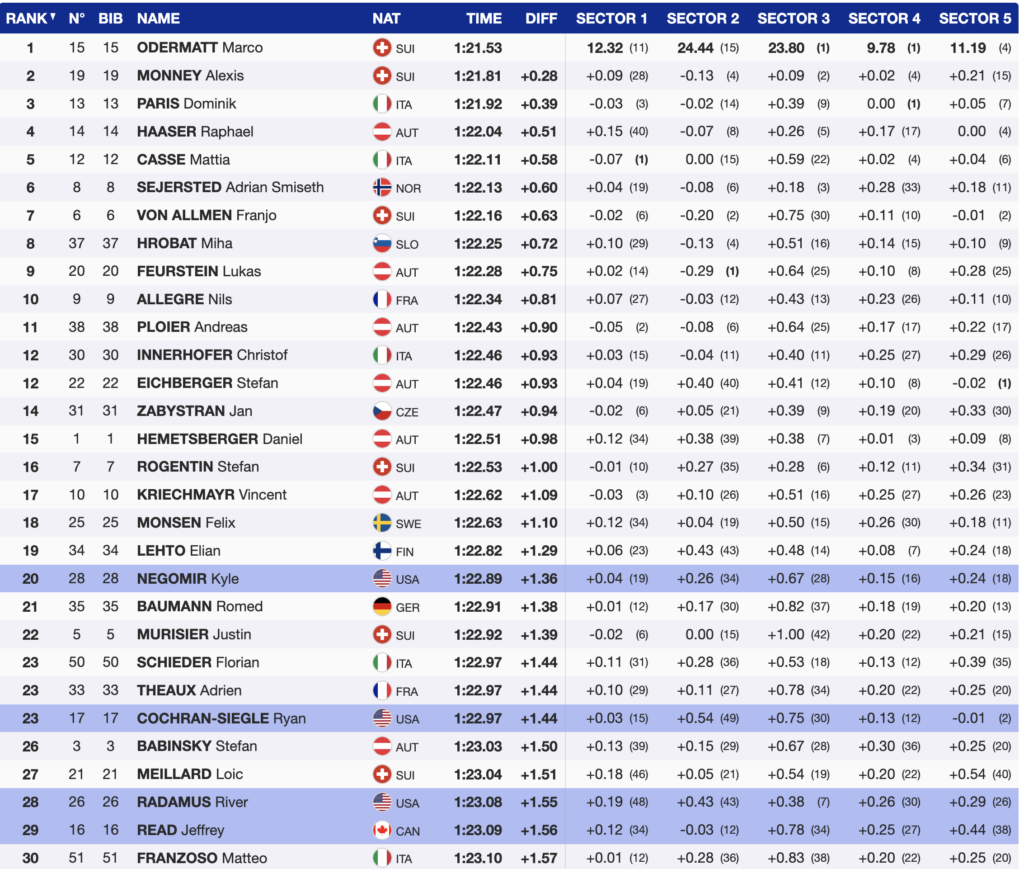
Run Analysis: Top Three Performers and North Americans in the Top Thirty
About the Author: Peter Lange