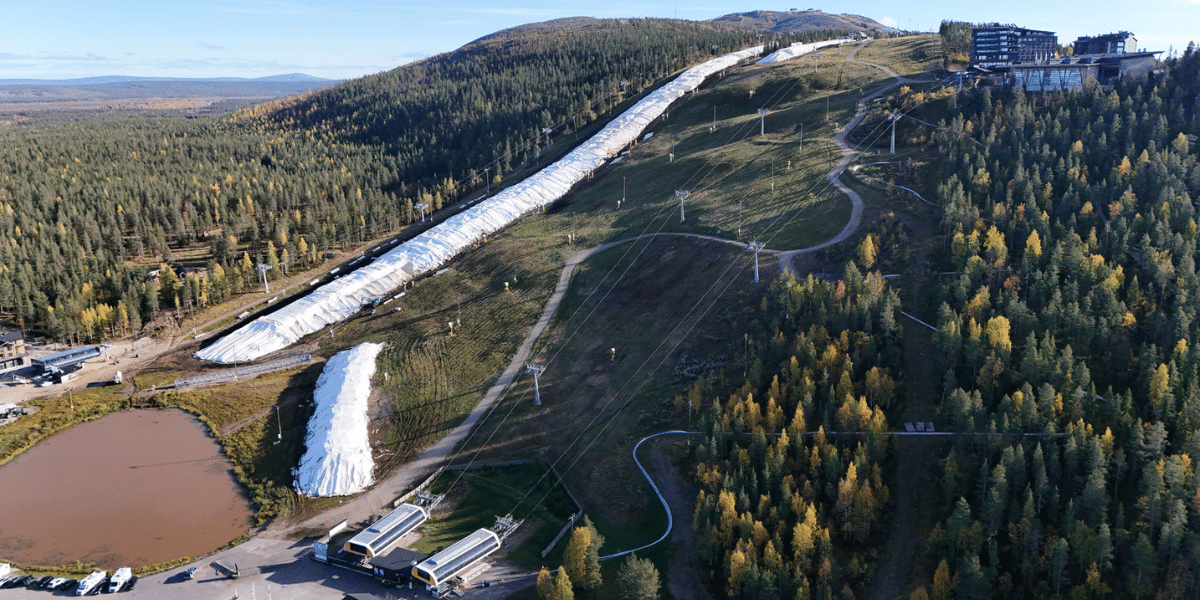
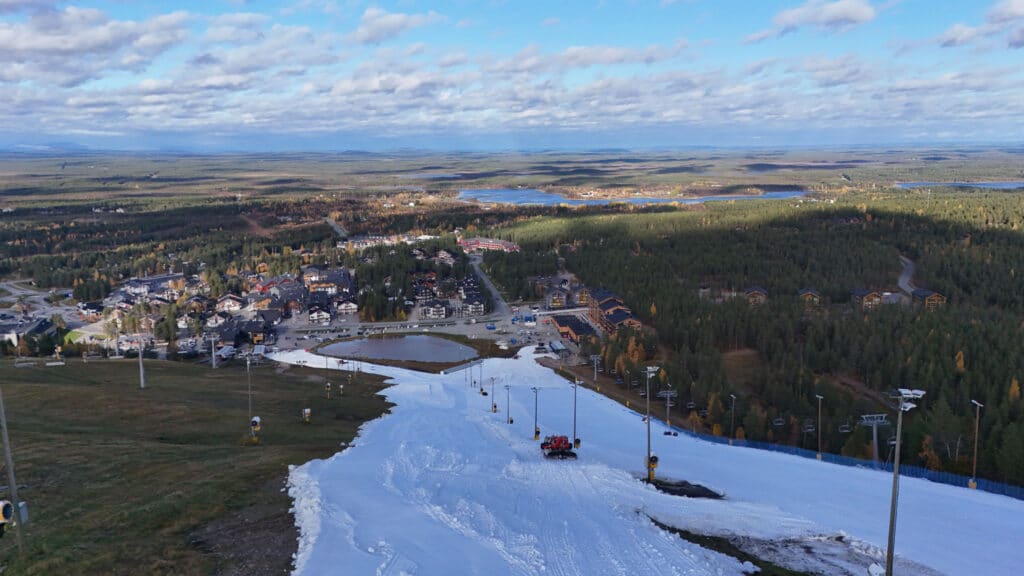
Featured Image: Levi, Finland. Provided By Marko Mustonen.
Each November, under the glow of Arctic lights, the world’s best alpine skiers gather in the Finnish Lapland for the Levi World Cup. This season, both the men’s and women’s slalom World Cup tours will kick off in Levi, with the women racing on Saturday, November 15 and the men following on Sunday, November 16. The event marks the official start of the slalom season and is a celebration of winter itself. While many resorts still await colder temperatures, Levi is already race-ready thanks to years of innovation in snow farming and a community deeply invested in keeping the World Cup alive above the Arctic Circle.
“It all started back in 2016,” says Marko Mustonen, Commercial Director at Levi Ski Resort. “The ultimate goal was to secure the World Cup. That was the reason we started snow farming in the first place.”
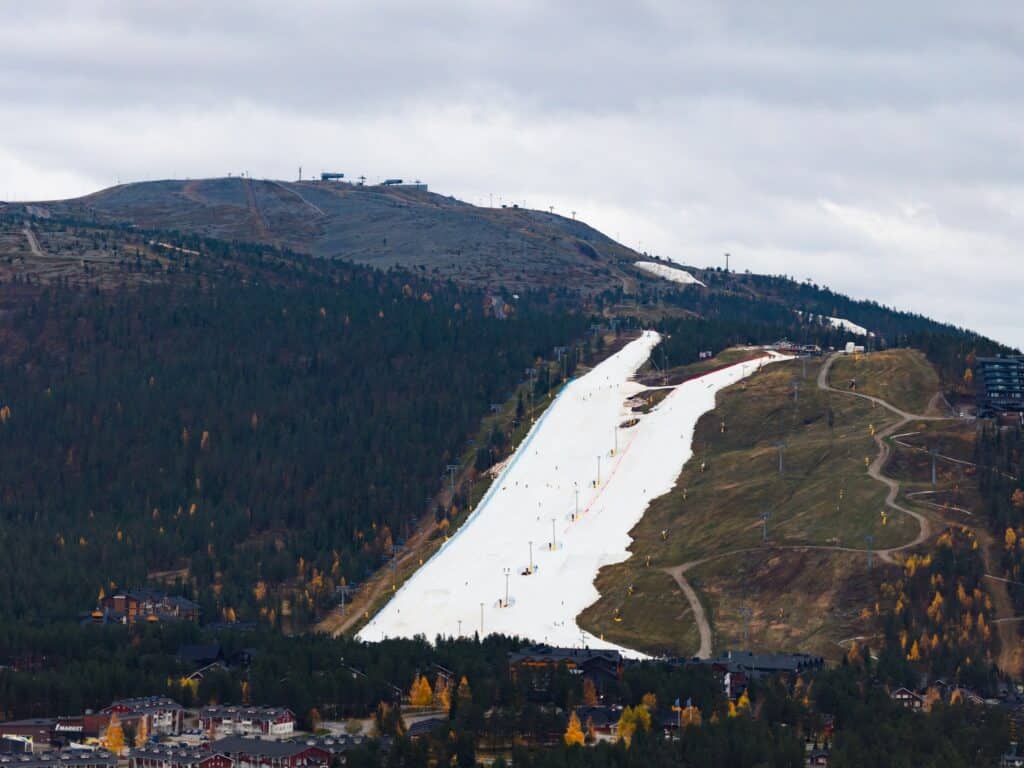
Snow Farming: Levi’s Winter Insurance Policy
Levi’s snow farming process has evolved into one of the most advanced in the world. Each spring, snow from the slopes is pushed into massive storage piles and carefully covered with insulating materials to preserve it through the summer. When fall arrives, often long before winter temperatures do, the saved snow is spread back onto the race hills.
“Last summer, we stored close to 300,000 cubic meters of snow,” Mustonen explains. “Every year, we’ve been storing a little more and improving the process. There are so many variables: weather, rain, the condition of the snow when we start pushing it, but we’ve learned a lot.”
Even with unpredictable autumn weather in recent years, Levi’s preparation has allowed the venue to consistently deliver a race-ready surface by mid-November. “We have to start spreading the snow before it freezes too hard. Timing is everything,” Mustonen says.
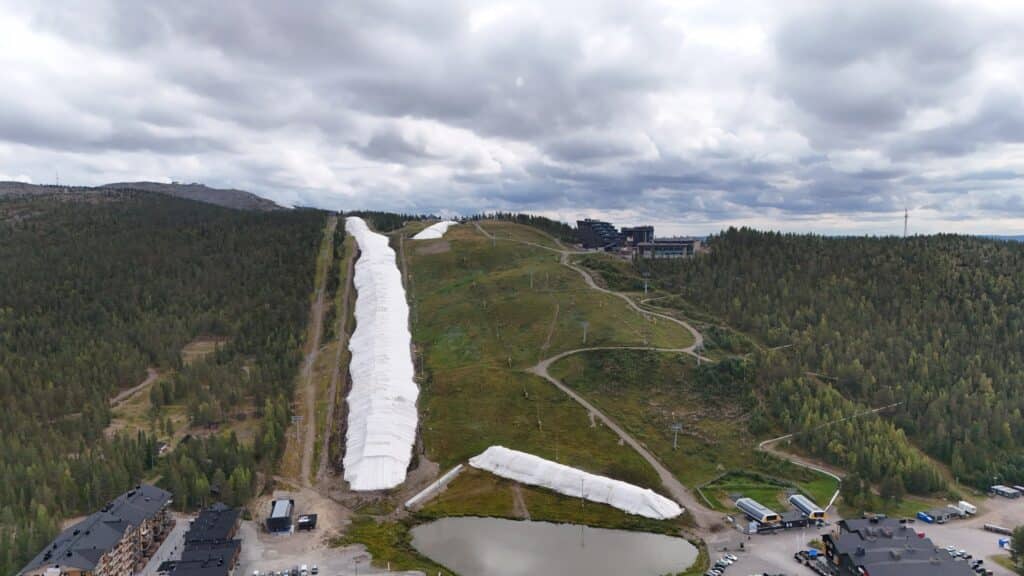
Consistency in an Unpredictable Climate
While early winter conditions in Lapland can arrive as early as October or as late as November, Levi remains reliably race- ready thanks to advanced snow farming and automated snowmaking system. The resort operates more than 400 automated snow guns, making it one of the most efficient systems in the world.
“Our goal is that we can ski no matter the weather,” Mustonen says. “We guarantee the surface and the snow coverage. And every year, we’ve gotten better at reducing snow loss through evaporation during the summer.”
For the athletes, the result is a remarkably consistent and high-quality training and racing surface. “It’s actually very good snow,” Mustonen notes. “The hardness and grip are perfect for slalom training, which is something teams can’t always get on glaciers this time of year.”

A Unique World Cup Experience
Beyond snow reliability, Levi offers a one-of-a-kind atmosphere on the circuit. Located 170 kilometers north of the Arctic Circle, the event takes place during the start of the polar night, a period when the sun doesn’t rise above the horizon. “It’s a little bit unique,” Mustonen laughs. “But it’s beautiful. You have the northern lights, the reindeer, the landscape. It’s very special.”
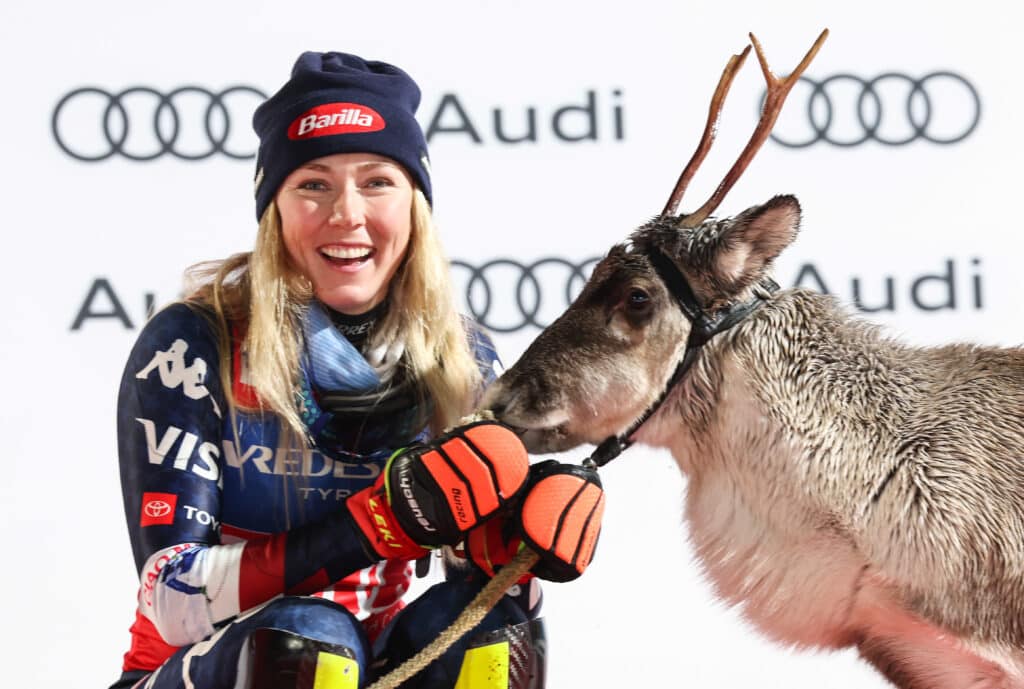
And, of course, no Levi World Cup is complete without the now-famous reindeer ceremony, where winners are presented with their very own reindeer, complete with a name of their choosing. “It started years ago as a fun idea,” Mustonen says. “But now it’s tradition. The reindeer are real, and the athletes can visit them when they come back.”
Community at the Core
Levi’s World Cup is thoroughly a community effort. Each year, over 500 volunteers help make the event possible. “It’s very much a local effort,” Mustonen emphasizes. “Everyone in the village is involved in some way. And we get applications from all over the world. People really want to be part of it.”
For the small Lapland village, the World Cup represents more than a sporting event; it signals the true start of winter. “It’s the highlight of the year,” Mustonen says. “It’s the real winter opening for us. The whole community looks forward to it.”
A Vision for the Future
Looking ahead, Levi plans to keep expanding its early-season training and sustainability efforts. “We’re developing new areas and improving the snow farming process every year,” Mustonen says. “This isn’t just about racing. It’s part of our annual winter cycle. We recycle the snow, use it efficiently, and create the best conditions possible for everyone, from World Cup athletes to recreational skiers.”
Levi’s formula seems to work. The resort now welcomes visitors from over 70 countries each winter, with international guests growing by more than 20 percent annually.
“Our philosophy is simple,” Mustonen says. “If we can serve the best skiers in the world, we can serve everyone.”
And when the polar night settles over the Arctic Circle and the lights of Levi flicker to life, that philosophy glows just as brightly as the northern lights overhead.
About the Author: Katie Twible