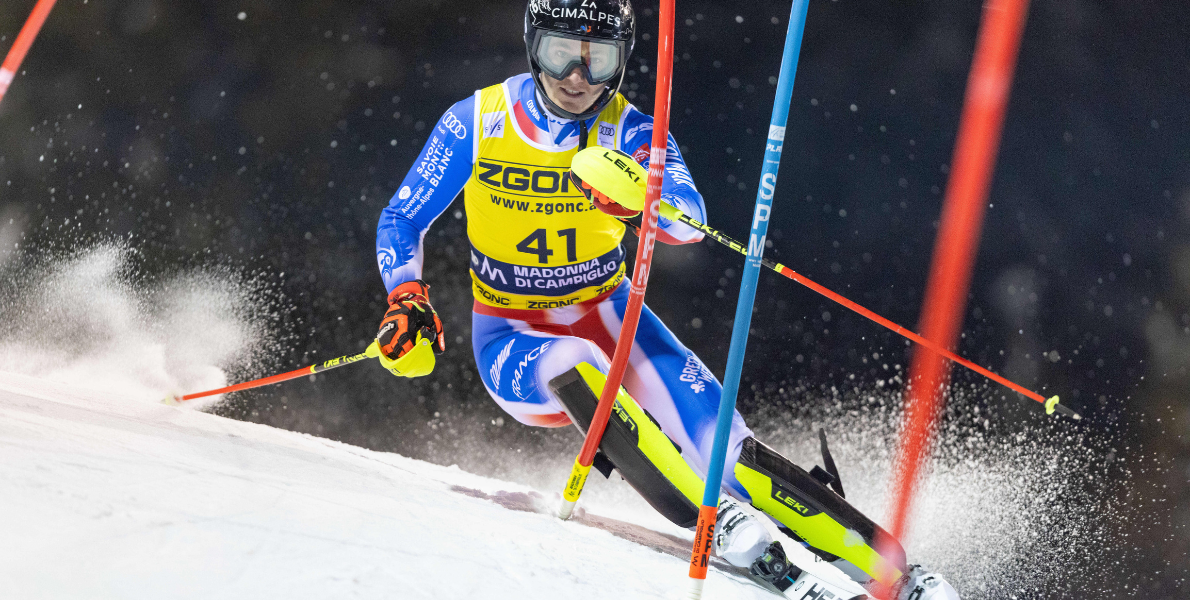
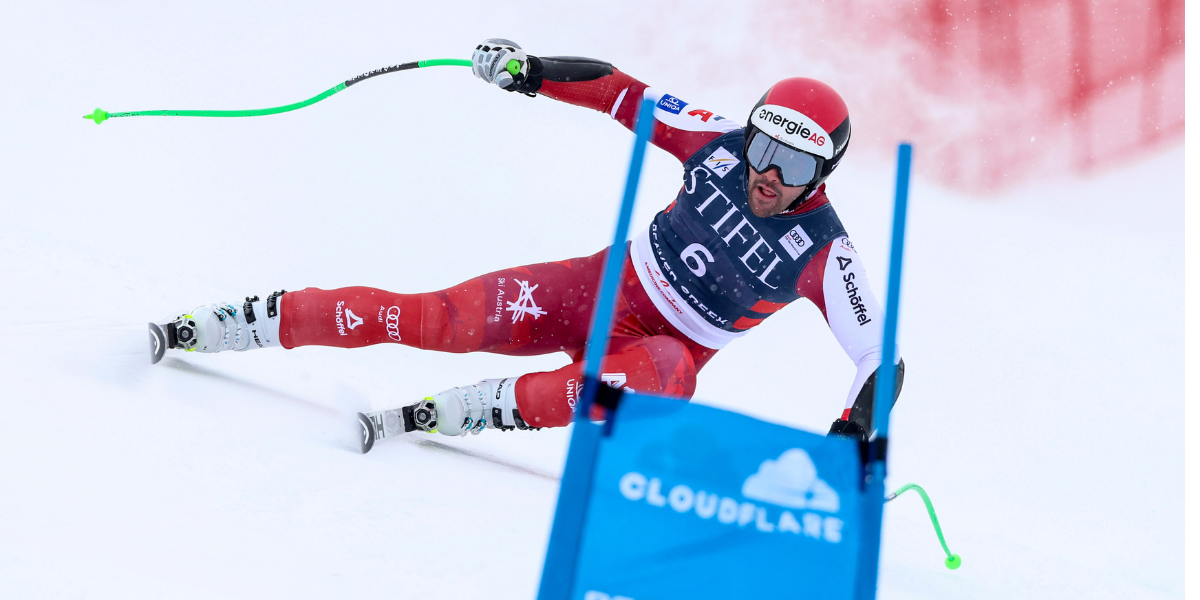
Vincent Kriechmayr / GEPA pictures
A challenging day on the hill
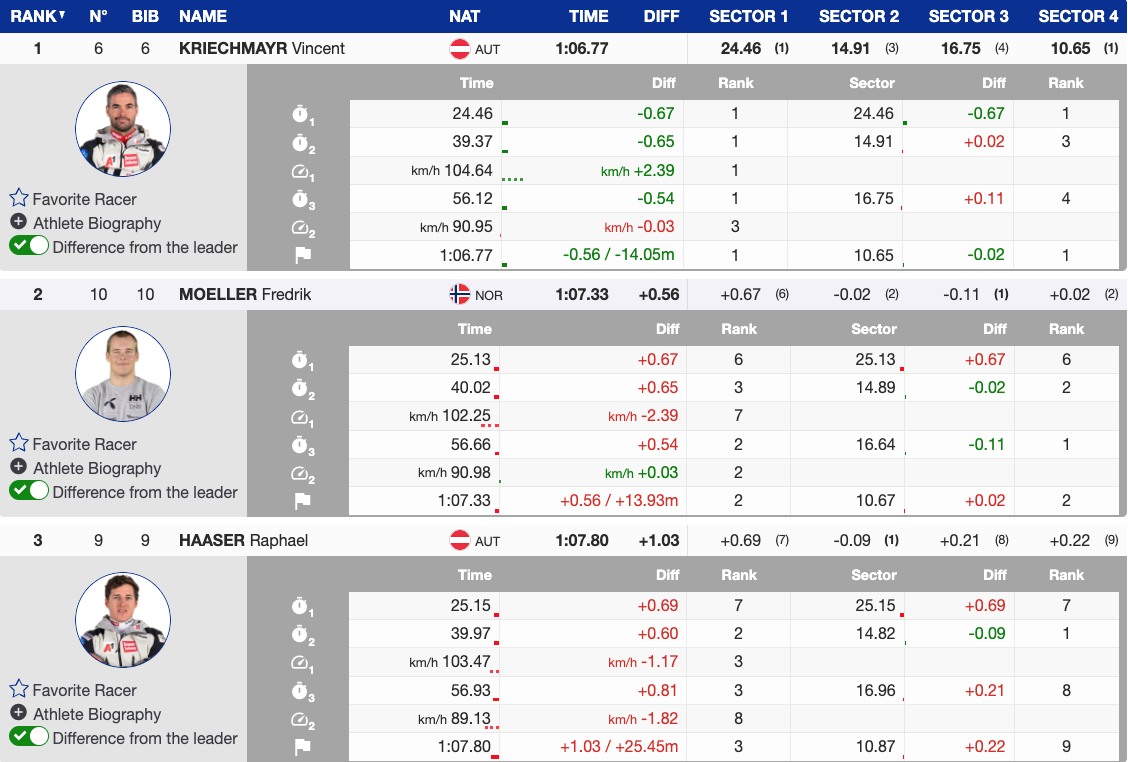
BEAVER CREEK, Colorado — Austria’s Vincent Kriechmayr earned the 10th World Cup super-G victory of his career on Friday, winning a weather-shortened Stifel Birds of Prey super-G that became official after 30 racers. The jury canceled the race after bib 31 when visibility and wind deteriorated, locking in one of the most dramatic podiums of the early Olympic season.
The win also carried deep meaning. Beaver Creek is where Kriechmayr scored his first World Cup point, and later his first World Cup victory, back in 2017. Now, eight years later, he returned to the top of the podium on the same hill.
“It was a tough race. The first 14 racers had similar conditions, but after the break and after Franjo’s crash, it wasn’t that fair anymore. I’m happy about my skiing, but I want to be honest about what the day was like.”
He reflected on how differently victory feels now:
“As a young athlete it’s totally different. It’s not getting easier to find the limit and push from start to finish — and you get some gray hair, too. You need a whole group of people behind you, and I’m thankful for mine.”
Møller and Haaser shine behind a veteran champion
Norway’s Fredrik Møller delivered a breakout performance to finish second — his second career World Cup podium after last year’s super-G win in Bormio. Because the set skied more like a long GS, he felt comfortable taking risks.
“This course was more like a GS course. We’ve trained a lot of GS the last seasons, so that’s probably my advantage today. You can make mistakes — even Marco can make mistakes — but this was my day.”
He also addressed the higher, unfamiliar start:
“It was for sure more challenging than the normal start. You had to make smart moves there, and that’s where the race was won.”
Norway’s day was also shaped by a wise call from returning star Aleksander Aamodt Kilde, who chose to ski out rather than risk injury.
“There were just too many factors today to push it. I charged out of the gate, didn’t feel it, and skied out on purpose. I’m happy we got an official race — and that Fredrik made the podium. That’s a good team win.”
Austria’s Raphael Haaser claimed third, earning the seventh super-G podium of his career and his first-ever third place after six previous seconds.
“It’s very special. I really like it here. Birds of Prey is tough every year, and today the weather made it even tougher.”
Because he raced Thursday’s downhill, Haaser said the higher start felt slightly more manageable:
“For the guys who only do super-G, you need a bit more confidence up there.”
Weather turns the day upside down
Racers battled fog, wind, shifting light, and a long stoppage after Franjo von Allmen’s crash. His airbag deployed, and he skied to the bottom waving to the crowd — a reassuring moment in an otherwise tense sequence.
Although the weather degraded sharply later in the race, conditions remained fair enough to validate results through bib 30. When the wind and visibility collapsed during bib 31, the jury called the race.
North American Highlights
Crawford leads the continent in 7th
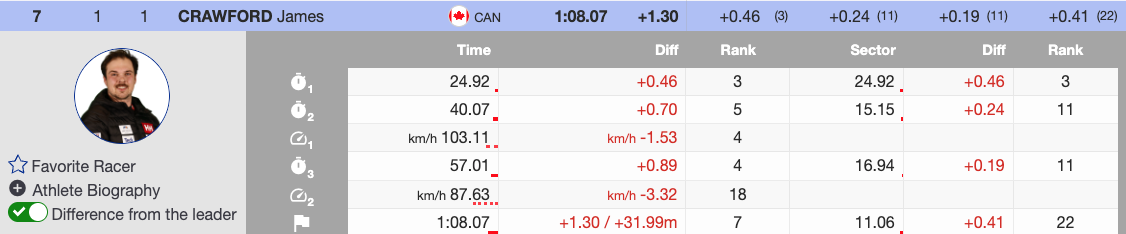
Canada’s James “Jack” Crawford delivered the top North American performance, finishing seventh with aggressive skiing on the technical midsection. Despite going off bib 1, he remained calm and committed.
“Going bib one, I just tried to bring confidence into the skiing and not overthink it. The terrain in this set didn’t feel great, and I got a little in my own head near the bottom, but the speed is there if I can put it together top to bottom. Kriechmayr took the right risks — I just need to learn from that and make the same choices.”
Radamus electrifies the home crowd
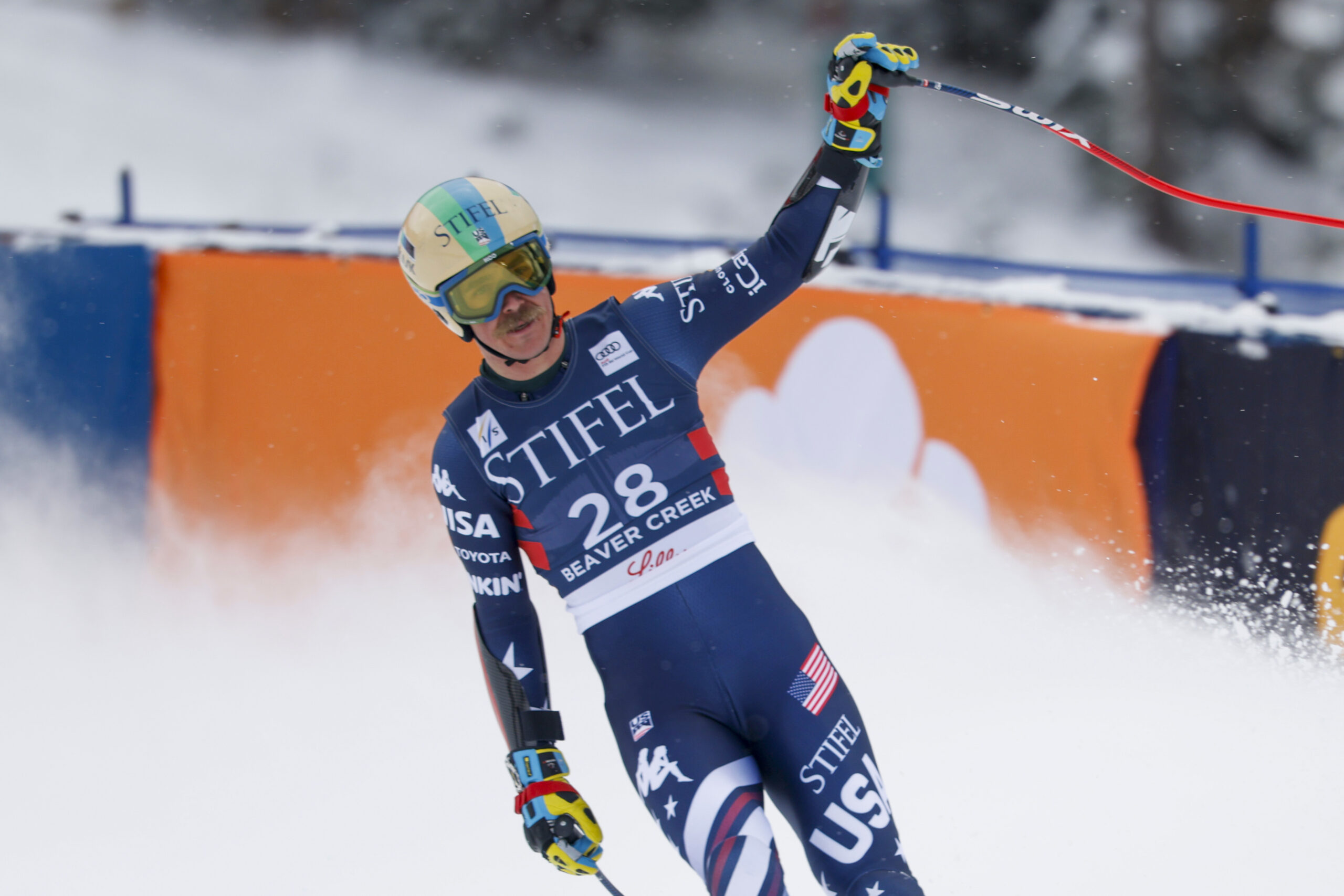
Stifel U.S. Ski Team athlete River Radamus delivered one of the most exhilarating runs of the day. After waiting through the extended weather hold, he pushed out with purpose and immediately ignited the home crowd.
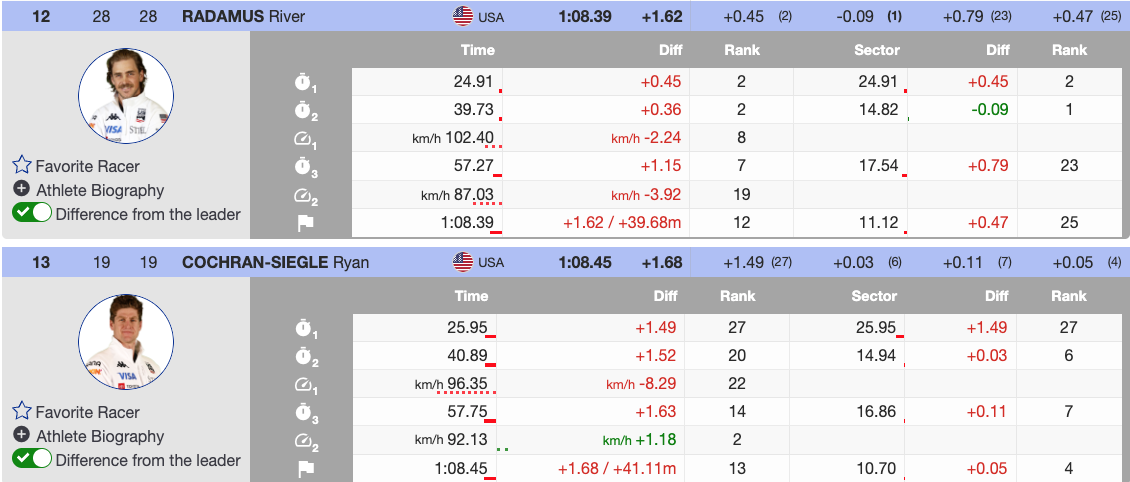
His opening pace was exceptional: 2nd-fastest Sector 1 and tied for 1st in Sector 2 (–0.09).
Although Radamus was charging toward a potential career-best super-G finish, a dramatic hip-check in Sector 3 cost him 0.79 seconds. Even so, he recovered with determination and finished 12th (+1.62) — earning valuable points and reinforcing his growing versatility.
“I wanted to lay it all on the line. If I had the nerve to really commit in the first four turns, it would set the tone — and it did. I know I made a huge mistake, but I wouldn’t have been skiing fast if I wasn’t risking that. Hopefully I gave the crowd a good show.”
Cochran-Siegle builds momentum
American Ryan Cochran-Siegle finished 13th and continued gaining form.
“I didn’t execute well enough on the upper section — that’s where I lost most of my time. But the snow held up well, and if the light stayed good, there was speed to be found.”
Jeffrey Read fights through adversity
Canada’s Jeffrey Read delivered one of the day’s wildest DNFs. After a long wind hold, he attacked aggressively until a bump in Sector 3 threw him off line, put his hand in a gate, and ripped his glove off and pole.
“There was a lot of adversity in the start gate. I stayed focused and really wanted to stick my nose in it. Losing the glove threw me off, but there’s good skiing happening. I’m taking the positives.”
Final Top 10
- Vincent Kriechmayr (AUT)
- Fredrik Møller (NOR)
- Raphael Haaser (AUT)
- Dominik Paris (ITA)
- Marco Odermatt (SUI)
- Stefan Eichberger (AUT)
- James Crawford (CAN)
- Stefan Rogentin (SUI)
- Stefan Babinsky (AUT)
- Giovanni Franzoni (ITA)

Men’s Super-G Top 30 Results
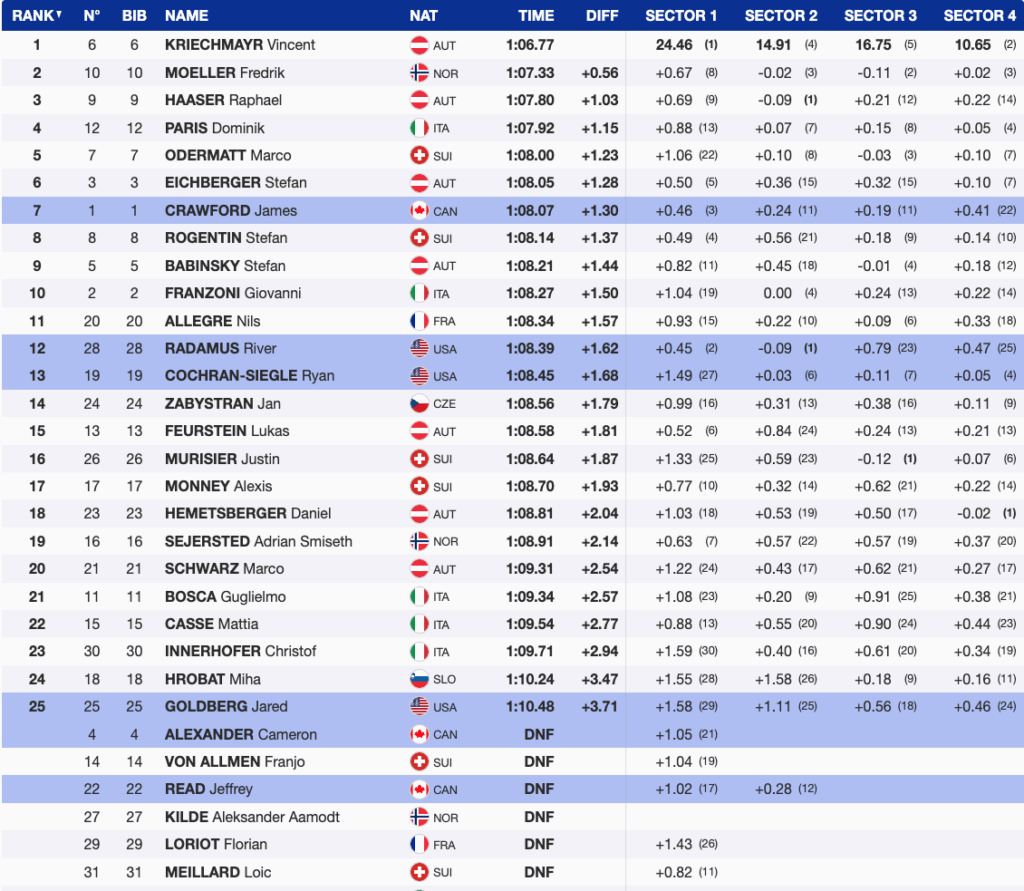
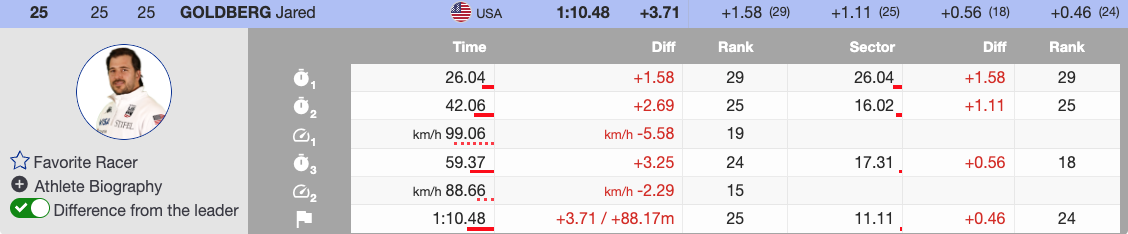
Analysis of the Top Three and North Americans Among the Top 30
About the Author: Peter Lange