Guest Commentary
We love it when foreigners praise Norway as a sporting nation. There’s a saying here: “It’s typically Norwegian to be good,” and the world writes glowingly about the Norwegian model. But what actually is this model in 2026?
The model is built on a simple conviction: children need play, variety and the experience of mastery before they’re pushed toward performance. The athletes representing Norway today, including those who helped produce one of the country’s most successful Winter Olympic performances, grew up with this model. So did I, and it carried me all the way to the Olympic and World Championship podium in alpine skiing.
Norway isn’t only a winter sports nation anymore, either. We compete right at the top in many of the world’s biggest sports, including golf, tennis, athletics, cycling and soccer. In other words, we’re remarkably versatile, and that’s closely tied to the model’s emphasis on inclusion and development.
But something has changed. With my own children, I see more specialization, earlier and more compulsory sessions, and parents paying to replace active play with organized training. Because let’s be honest: when you pay thousands for training, you want value for money.
A question has started to nag at me: are we moving in the right direction? Should children’s sport really be paving the way for an ever-earlier focus on competition and performance?

What the Norwegian model was built to protect
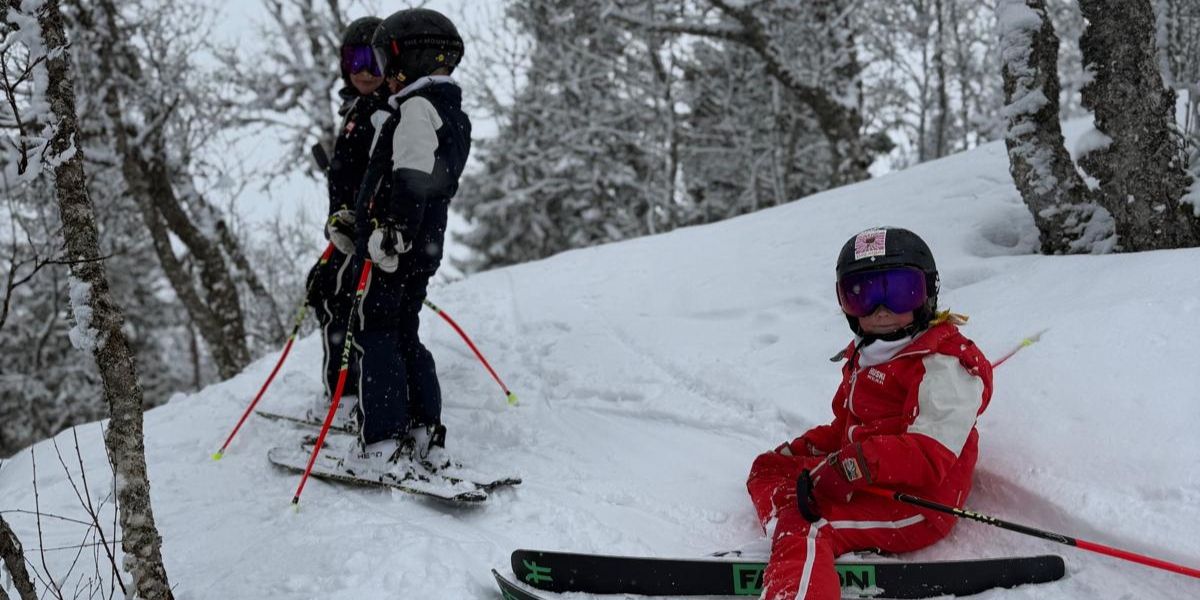
Those who end up the best in their sports have, for the most part, spent countless hours on the pitch, the slopes or in the gym in their free time. The reason is usually the same: that’s where their friends are, and where mastery actually happens. Those are hours no club can replace. My own children say exactly what I said as a kid: they want to go to training because that’s where their friends are.
Children already know who’s “best.” We don’t need to reinforce it. We should keep play and mastery at the center. Those who want to reach the top will put in the work. But we have to give them time.
My claim is that this early specialization is pulling us in the wrong direction, not only for grassroots sport, but in the long run for elite sport too. Many believe more training and an earlier focus produce more medals. Quite the opposite.
We’ve run this experiment before. Calgary 1988 was the first Winter Olympics in which Norway won no gold, and the answer was Olympiatoppen, Norway’s national high-performance center. The year before, Norwegian sport’s governing body had adopted its guidelines for children’s sport, a framework almost unique in the world. For me, three decades of medals look more like a byproduct than the original goal. And that is the very model we’re now dismantling.
Belgium did the same thing in soccer. After a disappointing Euro 2000, they built a development model designed to keep as many players as possible in the game for as long as possible. The result was a golden generation, including Kevin De Bruyne, Eden Hazard and Vincent Kompany, and a nation of 11 million that climbed all the way to the top of the FIFA rankings. Maybe the question isn’t how many winners we produce, but how many we lose along the way.
Why early specialization threatens the system
Multi-sport clubs, the heart of the model, are an endangered species. More than three-quarters of Norwegian sports clubs are now single-sport clubs. Earlier figures suggest we now establish more than 10 times as many new single-sport clubs as multi-sport ones.
As a young and promising alpine skier in the 1990s and early 2000s, I did alpine and cross-country skiing, soccer, tennis, golf and all-around sport. It was never about ranking or results, but about building a solid, versatile base. For me, that was decisive.
Those who have won medals for Norway over the past decades grew up in a world where the street, the woods and the schoolyard mattered just as much as the club. When the calendar fills up with compulsory training four or five days a week, there’s simply no time left for the unorganized stuff: free play, multiple sports, just hanging out.
For the vast majority of Norwegian elite athletes over the past 20 years, that unstructured activity has been a decisive part of the foundation. And that’s exactly what we’re now paying our way out of.
I hear about overuse injuries and stress fractures in children as young as 12 or 13, and about 9-year-olds in a single sport who want to quit because the joy is gone. But what if it’s precisely that 9-year-old who keeps the group’s spirits up, and keeps the next Haaland in the game long enough to discover his or her potential? Not everyone can be the best, but sometimes it’s the second-best who keeps the best one going.
We’re already seeing the consequences. Nearly six in 10 quit before they turn 18. The reasons they give are exactly what the model is meant to protect against: too much pressure, too little mastery and joy. And when a 14-year-old quits, the sport is rarely swapped for something else. It’s swapped for nothing.
The hidden cost of losing free play
Costs have gone from nominal to exclusionary, and the children who don’t fit the early specialization lose their sense of belonging long before they get the chance to find their place. We talk warmly about breadth, but in practice we’re building narrow tracks with high thresholds.
At the same time, we normalize the idea that training fees running into the thousands each year are simply the price of participation, because the alternative is losing your spot. What disappears isn’t just the training, but the friends, the social scene and the steady rhythm of the week.
What’s left is inactivity, poorer mental health and exclusion. This isn’t just a private bill. It’s a cost to society that all of us end up paying.
Children caring about results is part of the joy of sport, and we shouldn’t take that from them. But there have to be adults in the background who keep the focus on play, process and development, not on the weekend’s rankings. I know how strongly that performance pressure can weigh on a young athlete, and I was lucky to have role models who understood exactly that.
The model is not dead, but it needs help
It’s not too late to turn this around. And this isn’t about tearing down what works. Norway has fantastic coaches, volunteers and clubs that put in thousands of hours every day so our children can thrive. But we have to make it easier to take part without being locked into a compulsory track, and play has to be brought back as a place to learn, so that parents can take part in it, not just pay for it.
The hours outside the organized system aren’t wasted free time. That’s where the answer lies.
That’s also why I spend my days the way I do. As a founder of Chall, I work to democratize grassroots sport, so that good tools for learning aren’t reserved for clubs and qualified coaches, but reach the volunteers, the parent-coaches and the enthusiasts too, and the children themselves.
This isn’t a pitch. It’s context. I want to be honest about where I’ve chosen to spend my time, because that’s where I, as a parent and former athlete, can actually do something about what I’ve written here. The diagnosis stands on its own. What I’m building is simply my own response to it.
The Norwegian model isn’t dead, but it’s sick. If we don’t act now, in 15 or 20 years it won’t be foreigners writing about us. It’ll be us, looking back at what we once were.
Disclosure: Nestvold-Haugen is a founder of Chall, a grassroots sports technology company referenced in this column.
About the Author: Leif Kristian Nestvold-Haugen