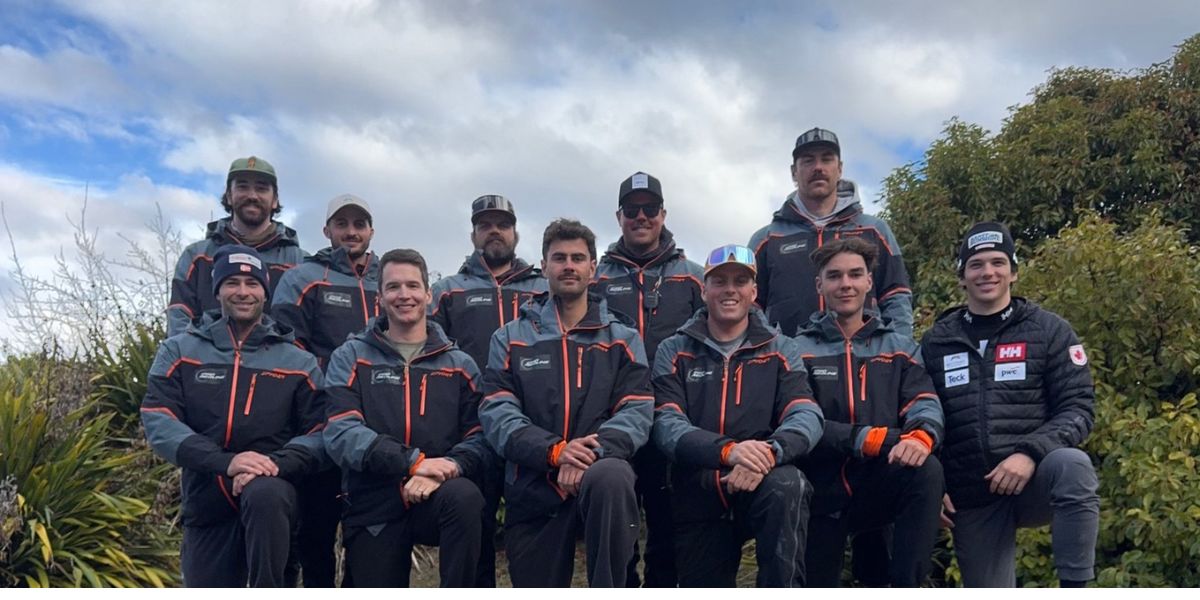
After Global Racing and World Racing Academy closed, seven athletes faced a shrinking path to elite competition. Together with an experienced staff and committed partners, they built another one.
When Global Racing closed at the end of March, Tim Gavett confronted a question that has ended more than one elite ski racing career: What now?
Gavett believed he had more to give. His spring results supported that belief, as he earned four slalom podiums between Burke Mountain and Waterville Valley. However, he was also beginning another rehabilitation, this time from an ACL injury.
Without a national-team place or an established independent program, his options appeared limited.
“I knew I had so much more to give to the sport,” Gavett said. “But without Global, my options seemed limited, if not nonexistent, to continue to the World Cup without the support of a national team.”
He began talking with his father, longtime coach Dave Gavett. Then he called Jimmy Krupka, his friend and former Green Mountain Valley School teammate.
The question was simple: What if they started a team?
Krupka initially had doubts. Christian Borgnaes, another former Global Racing athlete searching for a program, immediately liked the idea. Once Dave Gavett and his wife, former World Cup winner Traudl Hächer-Gavett, became involved, the concept gained momentum.
Within two months, Spyder Redline Alpine had assembled seven athletes, three primary coaches, service personnel, a physiotherapist and a European home.
Filling the independent-team void
Elite independent programs occupy an essential but financially fragile place in alpine ski racing.
Global Racing, founded and led by Paul Epstein, helped athletes bridge the gap between college or development-level competition and national-team selection. It also gave elite racers from smaller nations without fully funded national teams the training, staffing and logistical support needed to compete internationally. The program ended after the 2025-26 season when Epstein joined the Stifel U.S. Ski Team as head coach of the men’s technical team.
World Racing Academy also ended its elite program after last season. Founded by Daniel Fahrner in 2010 and later led by Martin Fahrner, WRA enabled athletes from smaller nations and those outside traditional national-team structures to compete in the Europa Cup and World Cup.
Their departures left established World Cup racers and athletes attempting to rebuild their rankings with few comparable options.
“Spyder Redline Alpine was created to address the gap in high-level independent teams created by the loss of Global Racing and World Racing Academy,” Krupka said. “Right now, we’re targeting NorAm and World Cup slalom and GS.”
For Krupka, the alternative might have been retirement.
“There were simply no world-class independent teams supporting NorAms,” he said. “I had no desire to continue traveling to NorAms on my own. This was the perfect opportunity, and I couldn’t say no.”
A collective built around its athletes
Spyder Redline is not owned by its coaches, and no individual organized it to make a profit.
Athletes generally pay their personal training and competition expenses, along with a team fee that contributes to the staff budget. Meanwhile, sponsors and federation support help reduce the financial burden.
“No one has a personal stake in this financially,” Gavett said. “Our goal is to make it as affordable as possible for those willing to give everything to the sport.”
The collective structure also removes pressure to enlarge the roster simply to collect additional fees.
“This team belongs to each athlete and staff member collectively,” Krupka said.
Although many athletes expressed interest, Redline chose seven whose competitive schedules aligned and whose personalities fit the intended culture.
“We were looking for guys who were fast, who were on the same schedule and who we knew would be great contributions to the team,” Krupka said.
For Gavett, character carried as much weight as results.
“The quality of character and the combination of simply good people are a large part of what makes a team successful,” he said. “While ski racing speed and ability were important to us, character was equally, if not more, a driving factor in selecting this group of athletes and coaches.”
The roster is set for the season, although the program will welcome temporary training partners.
Seven athletes representing four nations
Spyder Redline combines established World Cup racers with athletes pursuing or rebuilding access to the circuit.
Erik Read, Canada
The two-time Olympian and 2023 World Championship team parallel bronze medalist brings the group’s deepest World Cup résumé.
Read has scored World Cup slalom points in 11 consecutive seasons and GS points in 10 straight seasons. He has also qualified for four World Cup Finals in giant slalom.
Now primarily focused on GS, the Atomic skier gives the younger athletes a teammate who understands the independent model after spending two seasons with World Racing Academy. He also earned All-America recognition while racing for the University of Denver.
Dave Gavett said Read’s ability to mentor the group justified adding a seventh athlete to a roster initially intended for six.
“He has taken his mentor role seriously,” Dave Gavett said.
Click on the images to enlarge
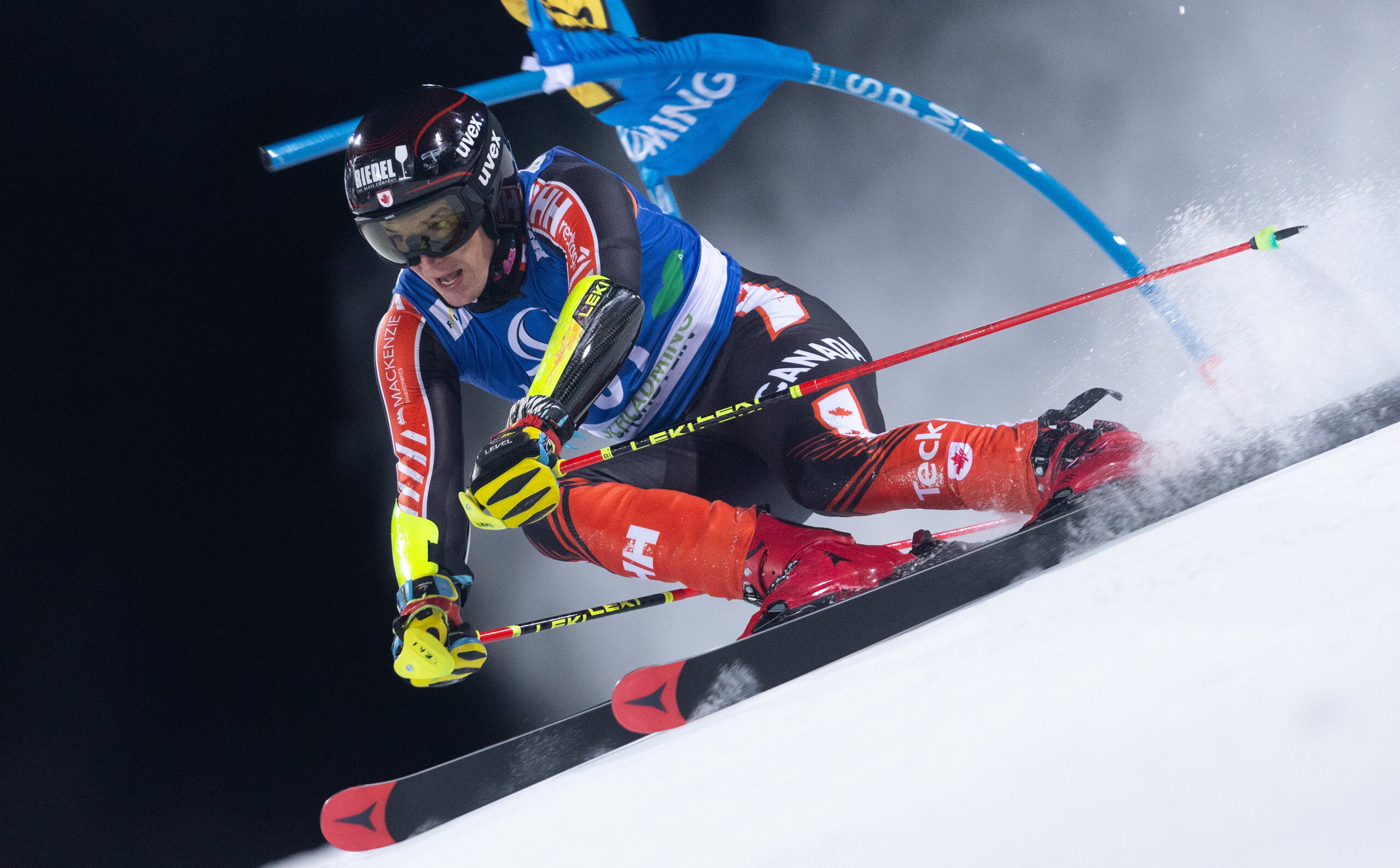
Liam Wallace, Canada
The Banff athlete has 34 World Cup starts across slalom and GS. Wallace also won the 2022 NorAm overall and slalom titles and the 2025 NorAm GS title.
He remains a named member of the Canadian Alpine Ski Team. Alpine Canada Alpin included Wallace on its 2026-27 national team roster.
Alpine Canada is paying Spyder Redline to train and manage Wallace this season and is covering his program costs. He is expected to follow a World Cup slalom schedule.
Wallace also raced for the University of Alaska Anchorage during the 2018-19 season.
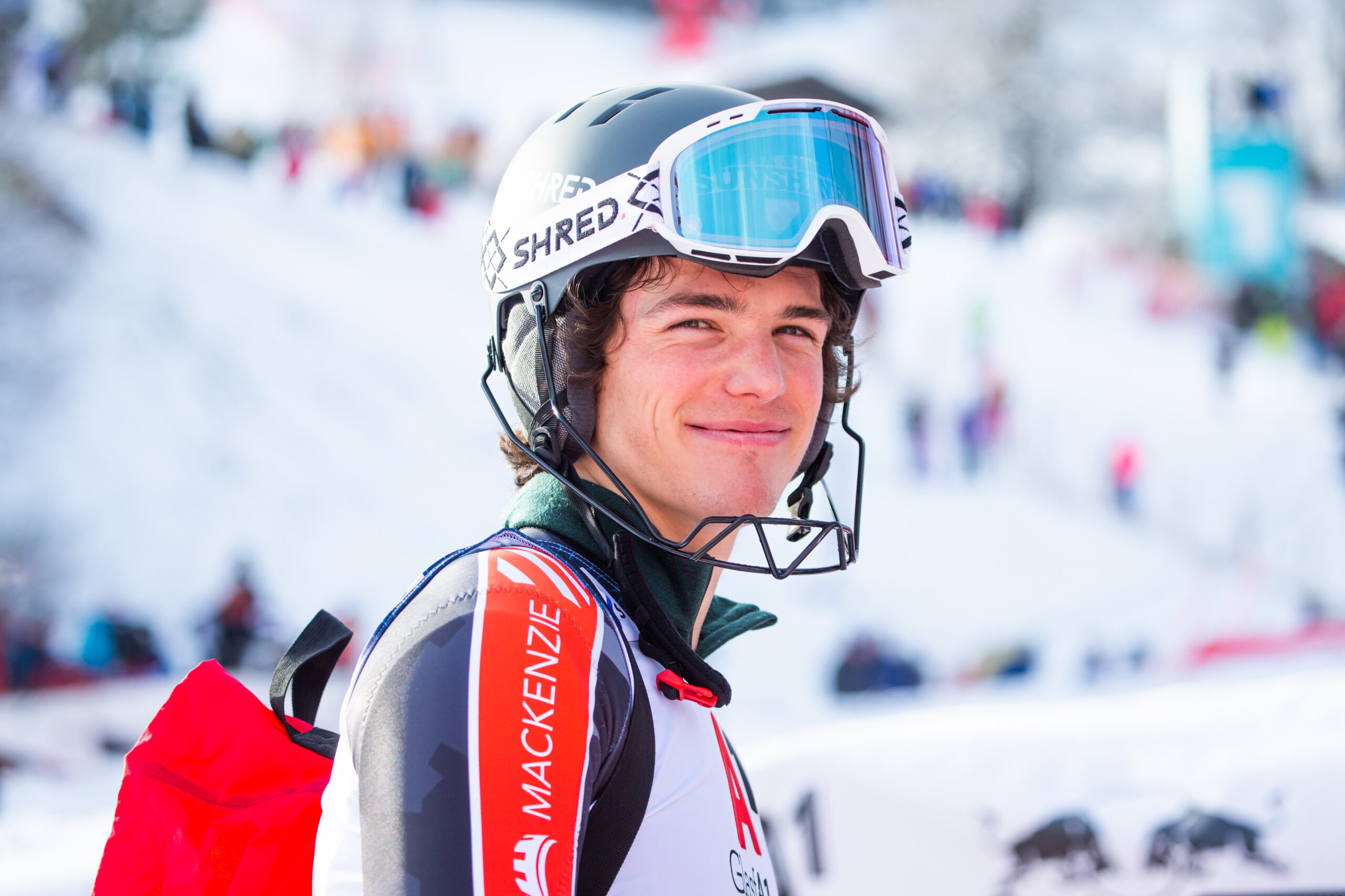
Étienne Mazellier, Canada
The Quebec athlete enters the season positioned to pursue World Cup slalom opportunities. He will begin primarily on the NorAm circuit while continuing to develop in both technical disciplines.
Mazellier raced for the University of Colorado and earned second-team All-America honors in both GS and slalom at the 2025 NCAA Championships.
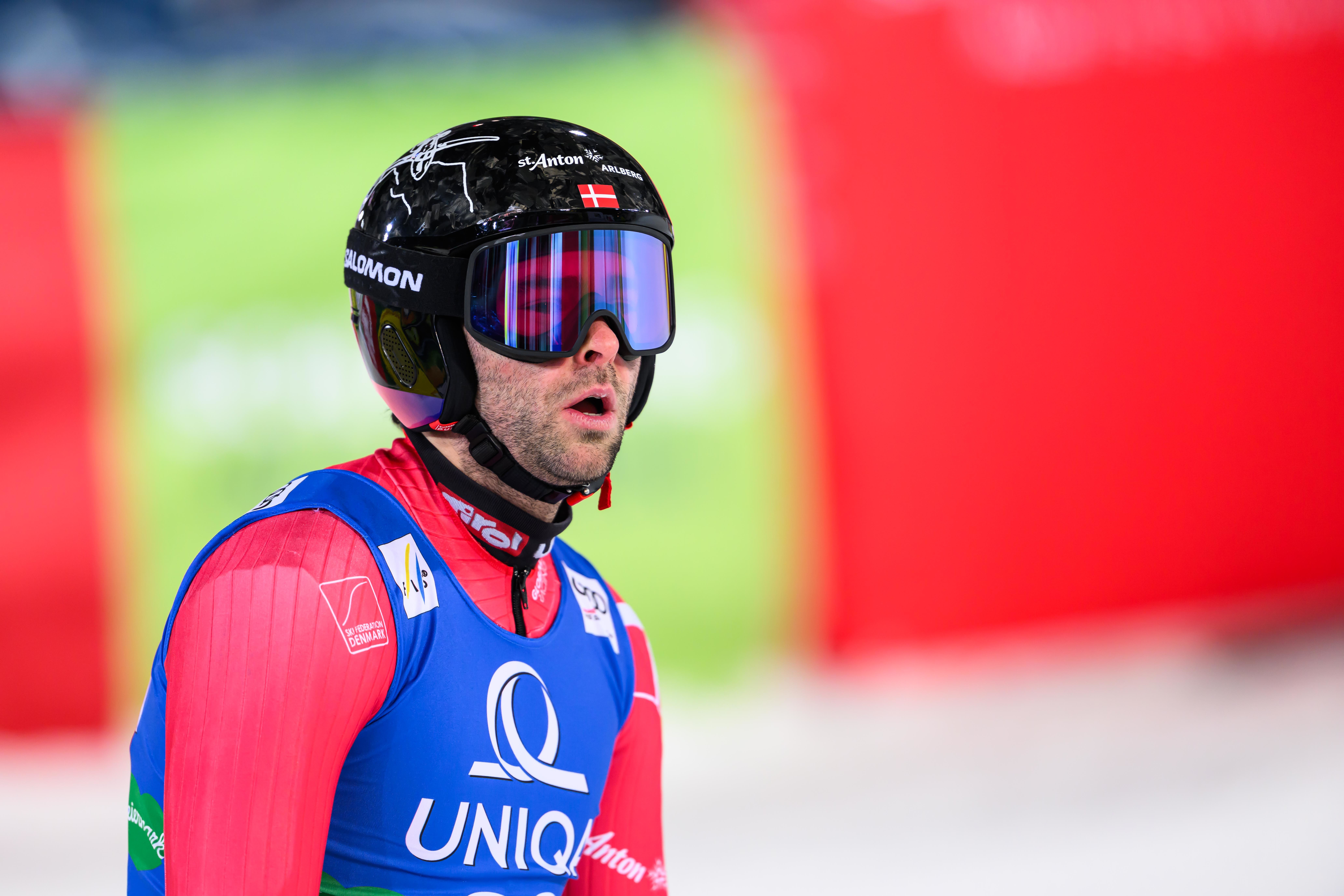
Christian Borgnaes, Denmark
Borgnaes grew up in Austria and has always held Austrian and Danish citizenship through his Danish father. He now represents Denmark internationally.
The former Global Racing athlete has scored World Cup points in six giant slaloms and enters the season ranked 38th on the World Cup giant slalom start list. He also represented Denmark at the 2026 Olympic Winter Games in Bormio, Italy.
Unlike the other six Redline athletes, Borgnaes did not race in the NCAA.
Three more athletes with NCAA backgrounds
Christian Oliveira Søvik, Brazil
A dual Norwegian-Brazilian citizen, Søvik previously trained with Norway’s Europa Cup group and now represents Brazil.
The University of Denver graduate earned four alpine All-America honors. He received first-team recognition in both slalom and GS in 2024 before adding second-team honors in both disciplines in 2026.
After representing Brazil in slalom at the 2026 Olympic Winter Games, the HEAD athlete is targeting his first World Cup start.
Jimmy Krupka, United States
The GMVS graduate and former U.S. Ski Team and World Racing Academy athlete has three World Cup slalom starts.
Before an injury interrupted his rise, Krupka reached No. 54 in the world slalom rankings and No. 125 in GS. He will begin this season in NorAms, seeking the results required to regain World Cup eligibility.
Krupka attended Dartmouth College and raced for the Big Green during the 2019 season. He is also beginning his first season on Atomic.
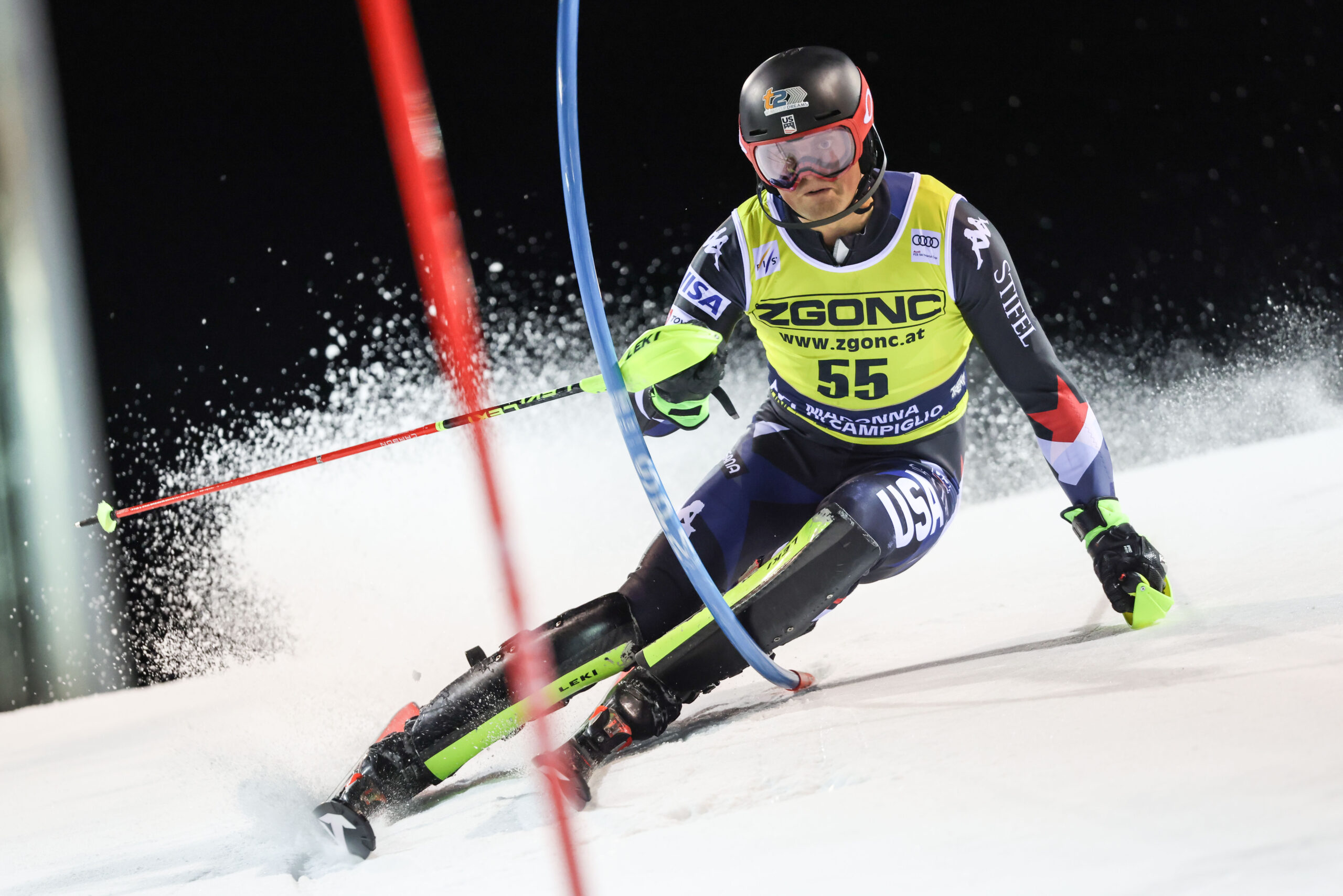
Tim Gavett, United States
A former GMVS and Global Racing athlete, Gavett raced for Middlebury College. He tied for sixth in GS at the shortened 2020 NCAA Championships and earned second-team All-America honors. Middlebury also named him first-team All-East that season.
Gavett plans to return to snow around January as he rehabilitates his ACL. The Atomic skier has spent much of the past several seasons managing injuries, but his four spring slalom podiums demonstrated that his speed remains.
Among Spyder Redline’s seven athletes and three primary coaches, nine have NCAA skiing connections.
A staff with World Cup and development experience
Head coach Ryan Wilson gives Spyder Redline experience inside both national and independent programs.
A former University of Utah skier, Wilson earned first-team All-America honors in GS twice. He finished third at the 2011 NCAA Championships and second in 2012.
Wilson coached at Steamboat Springs Winter Sports Club before joining the U.S. Ski Team, where he became a men’s World Cup slalom coach. He later worked at Ski & Snowboard Club Vail before spending last season with Global Racing.
Gavett trusted Wilson’s understanding of both worlds.
“He has experience coaching on the World Cup and doing a year with Global,” Gavett said. “I felt that he would understand what it takes to make it as an independent World Cup team.”
Assistant coach Ian Hanbury raced for Saint Michael’s College. He later coached with Loveland Race Team and Ski & Snowboard Club Vail before spending the past two seasons with APEX2100.
Assistant coach Scott Houser raced for St. Lawrence University. His coaching career has included Sugar Bowl Academy and several periods with Ski & Snowboard Club Vail. He also worked privately with former U.S. Ski Team racer Lila Lapanja.
Dave Gavett serves as program director and will assist with coaching when needed. He organized the program, hired its staff and manages its finances and logistics.
Dave Gavett’s involvement is also personal.
“Like all fathers, I love my son and would do anything for him,” he said.
Gavett acknowledged that part of his commitment is about helping Tim continue his career. When asked whether sharing their passion for ski racing gave the experience special meaning, he replied, “Absolutely, that’s how I feel.”
World Cup experience throughout the staff
Dave’s wife and Tim’s mother, Traudl Hächer-Gavett, will also coach periodically.
The former German standout won four World Cup races and reached 10 World Cup podiums. She finished second in the 1985-86 World Cup GS standings and earned a GS bronze medal at the 1991 World Championships in Saalbach-Hinterglemm, Austria.
Pietro Martinuzzi, who worked with Global last season and operates a physiotherapy clinic near Udine, Italy, serves as the team’s physiotherapist.
Meme Martinuzzi will service skis for Read and Borgnaes. Zane Dekoff will work with Krupka and Gavett.
Staff size reflects a central Redline priority. Its athletes will not always train or race at the same venues, and each needs consistent coaching and equipment support.
Some are ready for World Cup slalom or GS. Others need NorAm and FIS results to improve their rankings and earn World Cup access. The roster also includes discipline specialists and athletes competing in both slalom and GS.
Three primary coaches allow Redline to divide between two locations without leaving an athlete unsupported.
“We’ll have a plan every time the schedules diverge,” Krupka said. “We’ll never have to leave someone at a race without a coach.”
Early camps begin building the team
The program began with a short camp in Val d’Isère and Tignes, France, where Wilson lives.
Its slalom athletes then completed a week of double sessions inside the Wittenburg ski hall in Germany. Afterward, the team held a five-week camp in New Zealand.
Mazellier broke his wrist, while Wallace lost training time to the flu. Still, Krupka said the coaches consistently found productive training despite difficult weather.
“It’s easy to work efficiently in a small team,” Krupka said.
Gavett attended the Tignes camp even though his ACL prevented him from skiing.
“I showed up to gel with the team and try to help set a positive team culture and environment,” he said. “I will continue to pop in and out as I rehab to stay tight with the team.”
Read offered a concise early assessment.
“It’s a group of guys who want to work hard, have fun and ski fast,” he said. “The first camps have been fun and collaborative.”
The team’s shared history has accelerated the process. Gavett previously trained with Borgnaes and worked with Wilson at Global. Meanwhile, Krupka spent the past two seasons with Read at World Racing Academy. Gavett and Krupka have known each other since their U12 years at GMVS.
A European home near Innsbruck
Spyder Redline will establish its European base in Oberperfuss, Austria, outside Innsbruck.
The location offers access to training throughout Tyrol and a central starting point for travel across the World Cup and European circuits. For the North Americans, it also provides something less tangible but nearly as important: a home during a long winter abroad.
The team will stay with Gabi and Martin Treindl, who previously housed Global Racing athletes. The relationship extends well beyond a standard rental arrangement.
“When I was on Global, we called our landlords our parents away from home,” Gavett said. “As a North American, having a place to call home in Europe during a long ski season is incredibly important to your mental health and longevity.”
The athletes will cook and live together. Dave Gavett believes those daily routines will help turn a collection of racers into a team.
After a September conditioning block at home, Redline plans to train on European glaciers in October. In November, its slalom athletes will travel to Scandinavia while the GS group heads to Colorado for the season’s opening North American World Cups.
Alpine Canada backs the model
Wallace’s arrangement with Alpine Canada offers an important example of how a national federation and an independent program can work together.
Wallace remains part of the Canadian Alpine Ski Team. However, Alpine Canada will rely on Spyder Redline to provide his day-to-day training, coaching and competition management. The federation is also covering his Redline costs.
The arrangement gives Wallace national-team recognition and financial support while placing him in a small technical group with three primary coaches and an individualized World Cup plan.
Canada has three athletes on the roster: Wallace, Read and Mazellier. Their circumstances differ, but the concentration of Canadian racers provides a functioning men’s technical group outside a traditional national-team structure.
It also shows that an independent team does not have to operate against a federation. Instead, it can provide capacity a national program needs while creating opportunities for athletes beyond a fully funded roster.
Independent programs also allow smaller nations to remain involved at the highest level. Denmark and Brazil do not provide financial support to their Redline athletes. Without an independent structure, Borgnaes and Søvik would face a much harder route to the World Cup.
Why Spyder believes in the underdog
Spyder gives the team more than its name.
As title sponsor, the company is supplying custom race suits and apparel. It is also providing direct financial support to help fund travel and program operations.
For retired U.S. Ski Team downhiller Steven Nyman, who now works with Spyder, supporting the program carries personal meaning.
Nyman earned 11 World Cup podiums, including three victories. All came in downhill at Val Gardena/Gröden. Yet during two periods of his career, he fell to a support level that required him to help finance his own comeback.
He understands what it means to continue without the security of full national-team funding.
“The less glamorous side — the guys who are in the trenches trying to grind their way back — that’s who we’re looking to support,” Nyman said.
Spyder also sees competitive and commercial value. The company wanted a stronger presence at the highest level of alpine racing and had long followed the success of independent World Cup athletes.
“Everybody loves an underdog,” Nyman said. “They’re unique, and they have a little fight in them. I always root for those guys, and I’m proud to have them under our wing.”
Spyder reconnects with its racing roots
Nyman described the coming season as Spyder’s 49th year in ski racing. Supporting Redline is part of the company’s effort to reconnect with the international racing heritage that helped establish the brand.
“We’re proud of that heritage,” he said. “We’re proud of the innovation we’ve brought into the sport, and we’re looking to innovate further in the coming years.”
The partnership gives Spyder visibility across NorAm and World Cup competition. However, the relationship extends beyond exposure.
Redline’s athletes will contribute to Spyder’s product testing and development, including its Speed Freaks racing line. Because the journey from initial design to consumer availability takes considerable time, the company wants direct, constructive feedback from racers using its products in demanding training and World Cup environments.
For Nyman, the support is neither charity nor sentimentality. Spyder sees World Cup potential, international exposure and product-development value in the partnership.
“For us, it’s exposure on the World Cup at the highest level,” he said.
In return, Spyder’s backing makes the athletes’ journey less financially difficult and gives the team a title partner invested in its success.
TOKO trusts the people behind the program
TOKO will support Spyder Redline as its wax-and-tool partner.
At a level where hundredths of a second can decide qualification, ski preparation is central to performance. Redline has dedicated service staff, but those technicians also need dependable products and technical support.
Ian Harvey, TOKO’s U.S. brand manager, said the company’s belief begins with its previous experience working with members of the group.
“TOKO is excited to support Spyder Redline Alpine,” Harvey said. “We have worked with several of the team’s athletes and staff members in the past and know them as passionate, skilled racers and ski technicians who are in the sport for the right reasons.”
For Harvey, the partnership fits athletes attempting to create their own route upward.
“When you’re hungry and clawing your way toward the top, choosing the right wax and tool partner is critical,” he said. “We’re pleased that Spyder Redline has placed that trust in TOKO.”
The agreement gives Redline an established technical partner while connecting TOKO with athletes whose experience spans NCAA, NorAm and World Cup racing.
Success must extend beyond one season
Spyder Redline will measure its first winter through World Cup points, NorAm podiums, improved rankings and new World Cup opportunities.
However, the team’s larger test will be whether it creates something sustainable beyond one season.
Krupka said the goal is not necessarily to return every athlete to a national team. For racers from smaller nations, an independent program may become their permanent route to the World Cup. For others, it can provide a way back after injury, deselection or changing federation criteria.
“The goal is World Cup success,” he said.
The new program has retained what its athletes valued about Global Racing and World Racing Academy: hard work, shared purpose, resourcefulness and enjoyment. It has added a higher coach-to-athlete ratio and a collective structure designed to protect quality.
Dave Gavett wants the athletes to finish the season faster. He wants World Cup points and significant NorAm results. Just as importantly, he wants them to look back on the difficult days and remember that they enjoyed building something together.
For Tim Gavett, the program’s value is more immediate.
“Without Spyder Redline, athletes like me, who have so much left to give, are forced to retire,” he said. “With Spyder Redline, we have the opportunity to continue striving to be our best.”
Disclosure: Spyder and TOKO are partners of Ski Racing Media.
About the Author: Peter Lange