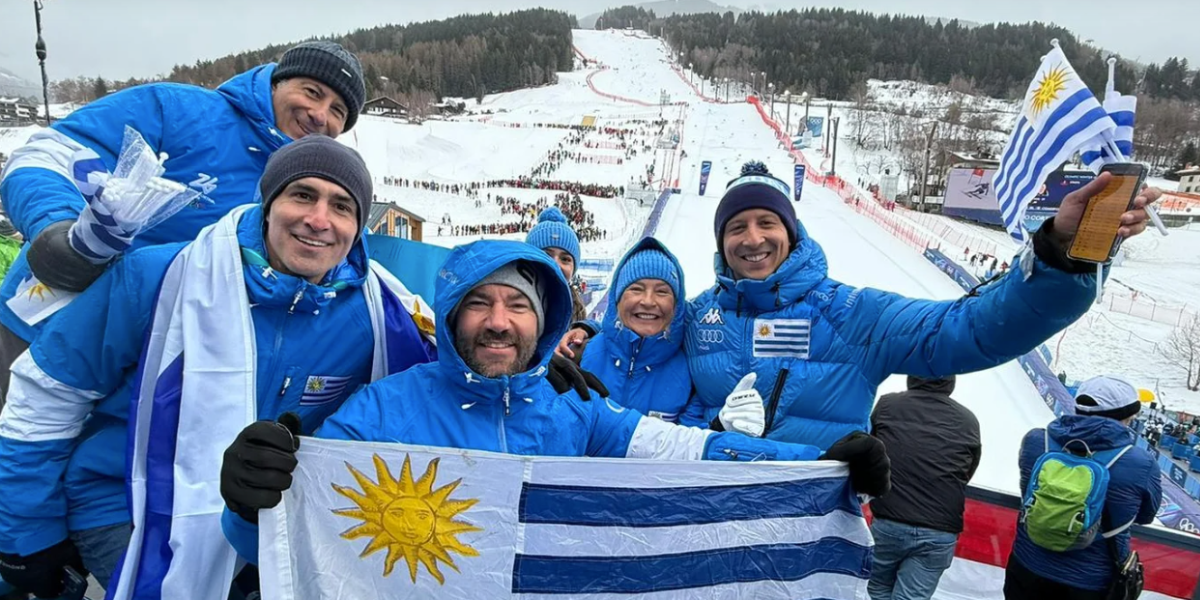
Team Uruguay. @ Asociación de Ski y Snowboard (ASSU)
Uruguay has no mountains and no natural snow. Now, it has organized its first Alpine skiing national championships.
The Asociación de Ski y Snowboard del Uruguay reached that landmark Sept. 14 at El Colorado, Chile. International fields contested women’s and men’s giant slaloms during the country’s first organized ski competition.
Holding the races outside Uruguay reflected the practical challenges facing the emerging ski nation. However, it also demonstrated how the country plans to build an international racing program despite its geography.
“This is so much more than simply holding a sporting event,” ASSU President Joaquín Gallinal Carrau said in an interview with FIS-Ski.com before the competition.
For Uruguay, the championships represented both an achievement and a starting point.
How did Uruguay’s first Alpine championships unfold?
Athletes from Europe, North America, South America and Oceania entered the inaugural races.
Switzerland’s Kevin Fritschi won the men’s giant slalom in 1 minute, 30.42 seconds. Americans Jack Morris and Kyle Harned completed the top three.
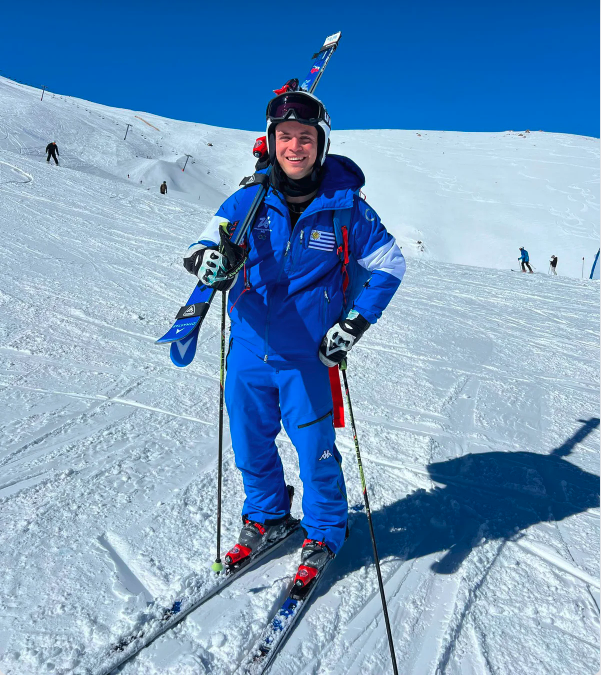
Uruguay’s Nicolás Pirozzi Mayer placed 10th, finishing 2.53 seconds behind Fritschi. The result gave the host federation a top-10 finish in its first championship race.
Luxembourg’s Gwyneth Ten Raa won the women’s competition in 1:28.93. Norway’s Helene Unhjem Oveland finished 0.16 seconds back, while American Kaitlin Keane took third at 0.31.
Mariana Vanrell represented Uruguay in the women’s race but did not finish the first run. Her presence remained significant for an organization working to create more opportunities for women in Alpine skiing.
The official FIS results included athletes from more than a dozen nations across the two competitions.
Why does this milestone matter for Uruguay?
Uruguay’s national identity has deep ties to sports, especially soccer. Snow sports present a different challenge because athletes must travel abroad for meaningful training and competition.
ASSU believes that obstacle should not determine the country’s ambitions.
The federation wants to establish a sustainable development system instead of relying on occasional individual success. Its wider plan includes recruiting young athletes, expanding women’s participation and developing disciplines beyond Alpine skiing.
Gallinal Carrau told FIS-Ski.com that geography can make the journey more difficult. Still, he believes it should not limit what Uruguay can accomplish.
The organization has already identified its first female Alpine representative and first Uruguayan ski cross athlete. Those breakthroughs give younger athletes visible examples to follow.
Ultimately, ASSU wants children to see a Uruguayan skier competing on snow and think, “I can do that too!”
How did the Olympics strengthen Uruguay’s momentum?
The championships followed Uruguay’s return to Olympic Alpine skiing after a 28-year absence.
Pirozzi competed at the 2026 Milan Cortina Winter Olympics, becoming the second skier to represent Uruguay at the Games. Gabriel Hottegindre became the first when he competed at the 1998 Nagano Olympics.
That return carried meaning beyond one athlete’s results. It proved that a skier representing Uruguay could progress from development races to the sport’s largest international stage.
Pirozzi then raced in a championship organized by his national federation at El Colorado. Although the competition took place in Chile, ASSU served as the organizer and established its place on the FIS calendar.
The connection between Olympic participation and federation development gives Uruguay a foundation for its next phase. Athletes can now see an international pathway, while ASSU gains experience organizing sanctioned competition.
How is FIS supporting Uruguay’s development?
FIS has helped ASSU develop technical structures, competition standards and a long-term plan.
That support carries added importance for a young national association operating without local snow. Uruguay must build relationships with neighboring winter-sports nations and secure access to foreign training venues.
FIS development officials Dimitrije Lazarovski and Jelena Dojcinovic have worked with ASSU throughout the process. Lazarovski described the first competition as an important achievement for Uruguay and the wider South American region.
FIS Council member Magdalena Kast of Argentina also emphasized its regional value. Cooperation among South American federations can create more racing opportunities and increase the continent’s presence in international snow sports.
Chile provided the mountain. International athletes supplied a competitive field. Uruguay delivered the organization and ambition.
One competition will not remove every barrier facing the program. Nevertheless, the inaugural championships turned a long-term idea into a tangible result.
Uruguay is no longer simply considering how to enter the international ski community. It has organized a national championship, returned an athlete to the Winter Olympics and begun building a pathway for the next generation.
Source: Original reporting and interviews from FIS-Ski.com. Competition information and results were verified through the official FIS database.
About the Author: Peter Lange