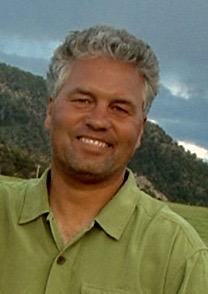
Franjo von Allmen After Three Olympic Golds: FIS Worlds Debate

At 24, Franjo von Allmen emerged from the Milano Cortina Olympics with three gold medals and a dramatically different public profile.
His approach to ski racing, he says, has changed considerably less
The 25-year-old Swiss speed star enters the 2026-27 World Cup season following an extraordinary Olympic performance in February, when he won the downhill, super-G and team combined. Yet von Allmen says he feels little obligation to prove that those results established a new expectation.
“I ski for myself, so I don’t have to prove anything to anyone, nor do I have to live up to any expectations the public might have, do I?” von Allmen told Reuters during Swiss-Ski’s media day Wednesday in Dübendorf, Switzerland.
It is a straightforward philosophy from a racer whose career accelerated rapidly before reaching its highest point so far at the Olympics.
Von Allmen became one of the defining athletes of the Games, winning three alpine gold medals in his first Olympic appearance. In the downhill and super-G, he finished ahead of Swiss teammate Marco Odermatt, the dominant men’s World Cup skier of recent seasons.
Now, instead of trying to recreate February, von Allmen is looking forward.
Turning Olympic success into consistency
Reuters reported that von Allmen spent part of the summer at home in Switzerland, where motocross remained one of his favorite activities. The trained carpenter said daily life has remained relatively normal even as his public profile has grown.
The increased attention, he acknowledged, is still something he is learning to navigate.
The racing presents a more familiar challenge.
Von Allmen identified greater technical consistency as an objective for the new season. His three Olympic gold medals showed how high his level can be when everything comes together. The World Cup challenge is producing that level repeatedly across different hills, snow conditions and course sets.
His relationship with Odermatt will remain part of that equation.
Odermatt won nine World Cup races across three disciplines last season and captured his fifth consecutive overall title. Von Allmen, however, beat him to Olympic gold in both speed disciplines.
Asked whether that might increase the competitive tension between them, von Allmen downplayed the idea.
“No, I think it’s largely the same,” he told Reuters, explaining that the two have traditionally followed their own approaches to skiing.
The Swiss men’s speed team enters the winter with significant internal competition, led by two of the sport’s most accomplished current speed racers.
Von Allmen’s first World Cup start is expected to come in Colorado. The men’s schedule includes a super-G at Copper Mountain on Nov. 28 followed by giant slalom Nov. 29.
Von Allmen rejects plan for more World Championships
Von Allmen was considerably less restrained when another subject surfaced during the Swiss-Ski media event.
FIS is pursuing a significant change to the championship calendar that could create a major international title event every winter.
The FIS Council announced Sept. 3 that it had agreed in principle to increase the frequency of its World Championships. Under the concept, championships would continue in odd-numbered years but would also take place in even-numbered years that do not include the Winter Olympics, beginning in 2032. FIS is also examining whether an additional championship could be staged as early as 2028.
FIS said its preliminary feasibility study examined sporting value, calendar implications and commercial and media-rights opportunities.
Several prominent Swiss athletes see a significant downside: medals could become less meaningful if athletes compete for them almost every year.
Von Allmen made his position unmistakable during the Swiss-Ski media event.
“Personally, I think it’s crap,” he said, according to Swiss media reports. He added that holding World Championships more frequently would diminish the value of the event.
He was not alone.
Loïc Meillard acknowledged the commercial rationale behind adding championships but argued that scarcity is part of what gives championship medals their importance, according to Swiss media reports. Corinne Suter expressed similar concerns about diminishing the stature of the event.
Odermatt also questioned the concept.
According to Swiss media reports, he suggested FIS could instead use the open year to experiment with different World Cup formats or destinations. He raised potential races in places such as China or Japan and even floated an indoor slalom in Dubai as an example of how the sport could try something different without awarding another set of World Championship medals.
A debate over what makes a championship matter
The disagreement exposes a broader question for alpine skiing.
FIS sees additional World Championships as potentially valuable sporting and commercial properties. Its recent strategy has also placed increased emphasis on consolidating and expanding the value of international media rights. FIS and Infront announced a unified international media-rights agreement covering World Cups and World Championships in 2025.
Athletes are approaching the issue differently.
For them, part of a World Championship medal’s significance comes from how few opportunities exist to win one. Under the traditional schedule, World Championships occur every two years, while the Olympics arrive every four. A racer can spend an entire career with relatively few chances at either.
Adding championships would create more opportunities to win medals. It would also make those opportunities less rare.
That distinction clearly matters to von Allmen.
He knows better than most how quickly a championship can change a career. His three Olympic victories transformed him from one of Switzerland’s emerging speed stars into one of the most accomplished skiers of his generation.
Yet as another World Cup winter approaches, von Allmen appears intent on separating what happened in February from what comes next.
The Olympic medals are his.
Now the job is to ski faster — and more consistently — when the clock starts again.
About the Author: SR Staff Report

Related Post