
From a Freezing Garage in Norway to SkiSoxx: Tad Barrows’ Simple Idea to Protect Skis
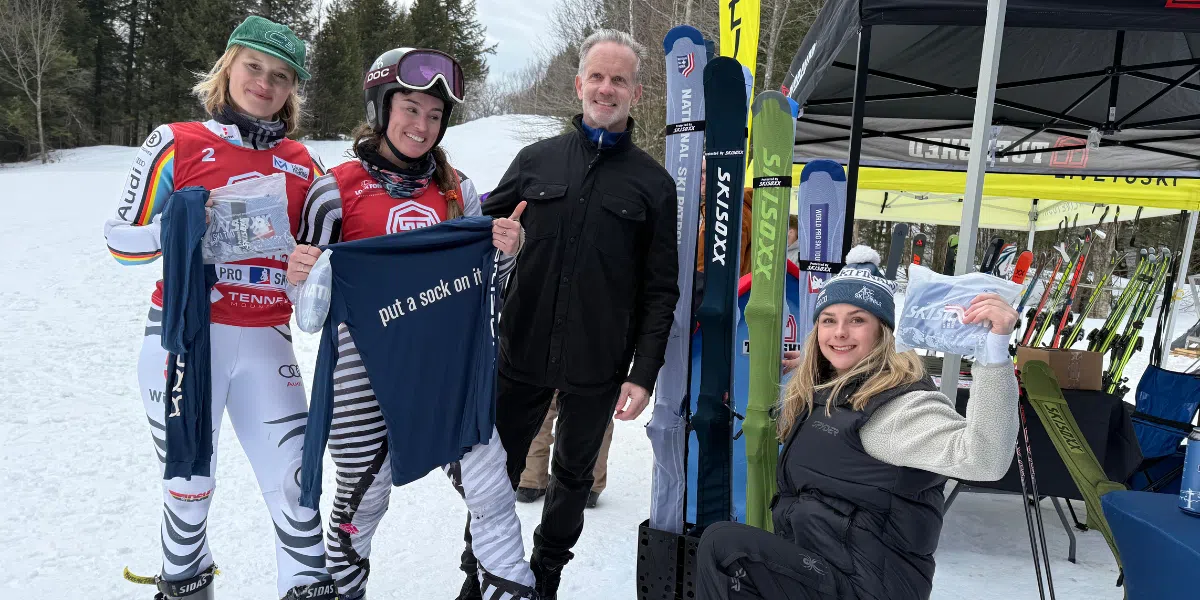
Featured Image: SkiSoxx founder Tad Barrows poses with elite ski racers showcasing his innovative ski-protection product.
There are certain things ski racers do that make perfect sense to us and probably look completely ridiculous to everyone else.
We spend hours scraping, brushing, sharpening and obsessing over skis, only to finish the job, throw several pairs into a bag or the back of a van, and hope they survive the trip to the next hill.
Tad Barrows noticed the contradiction years ago.
It was 2008, and Barrows had recently married a Norwegian woman with three children. Her oldest son, Theo, was 13 and already a highly ranked junior Nordic skier. One night before a race, Barrows found him working in a freezing garage, preparing five or six pairs of skis for the weekend.
Barrows knew enough about ski racing to appreciate the work. He had grown up racing himself, and skiing had been part of his life since childhood. But Nordic preparation was another world.
So he stayed with Theo as he worked. For the next several hours, Theo explained wax, snow conditions, temperature changes and why he needed so many different skis ready for one race. Barrows remembers a box containing roughly $500 worth of wax and the painstaking process of getting each ski exactly right.
Then, sometime after midnight, Theo finished. He reached down, grabbed the skis together in his arms and dropped them into a ski bag. After watching hours of careful preparation, Barrows couldn’t believe it.
“You just put so much amazing effort and money into those skis,” he remembers telling Theo. “Isn’t there some way to preserve all that great work that you just did?”
Theo smiled and gave him an answer that would stick with Barrows for years. “No, but there should be.” That was the beginning of what would eventually become SkiSoxx.
A Ski Racer Long Before SkiSoxx
SkiSoxx may be relatively new, but Barrows’ connection to skiing is anything but.
His father was one of the original founders of Loon Mountain in New Hampshire, and Barrows remembers walking to the top with him before a single tree had been cut. He became the first member of the Loon Mountain racing team and, by 14, was one of New Hampshire’s top-ranked junior racers.
At 15, he was invited to an Olympic development camp in Europe. There were fewer than 20 athletes in the group, and several would eventually go on to compete in the Olympics. It was there that Barrows met Peter Dodge.
Dodge was a few years older and already someone the younger Barrows looked up to. After watching Barrows ski one day, Dodge delivered a comment that Barrows would remember for decades.
“Tad, when I first saw you here, I didn’t think you belonged,” Barrows remembers Dodge telling him. “I don’t think that anymore. You’re a great skier.” Then Dodge skied away. For a 15-year-old Barrows, it was unforgettable.
His own racing career, however, changed soon afterward. The economic fallout of the 1973 oil crisis hit his family hard. His father had invested heavily in skiing and New Hampshire real estate, and suddenly the family could no longer afford the sport in the same way.
Barrows stepped away from ski racing, eventually attended Brown University and followed a life that took him in plenty of different directions. But skiing never really disappeared. Neither did his instinct to invent things.
An Idea That Wouldn’t Go Away
The conversation with Theo in Norway happened in 2008, but SkiSoxx wasn’t born immediately afterward. Barrows originally imagined that he and Theo might develop the product together. Life changed, his marriage ended, and the idea was pushed aside. Still, it never completely left him.
Years later, when Barrows was looking for something new to build, he returned to the problem he’d watched unfold in that Norwegian garage.
“I really should give that a try,” he remembers thinking.
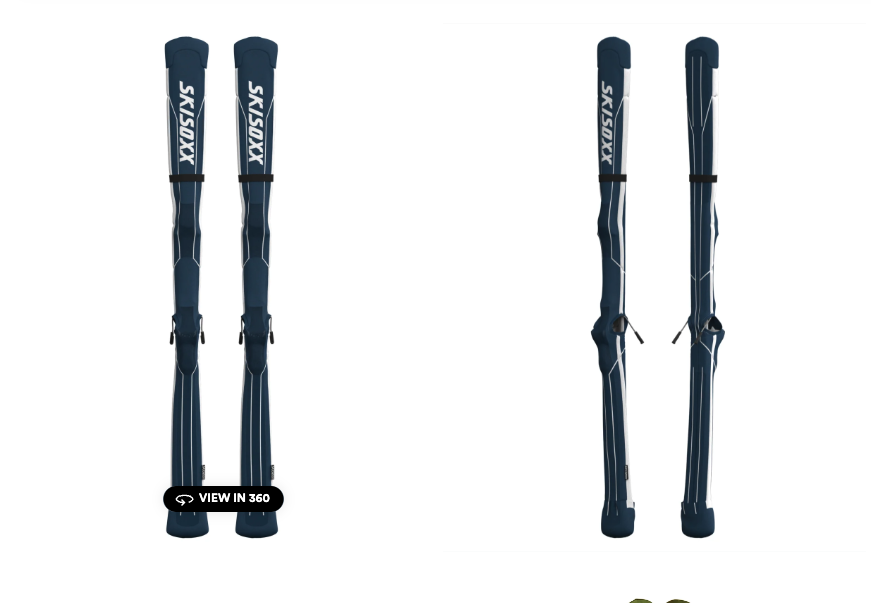
The concept sounds almost comically simple: make a sock for a ski. Actually making one was not.
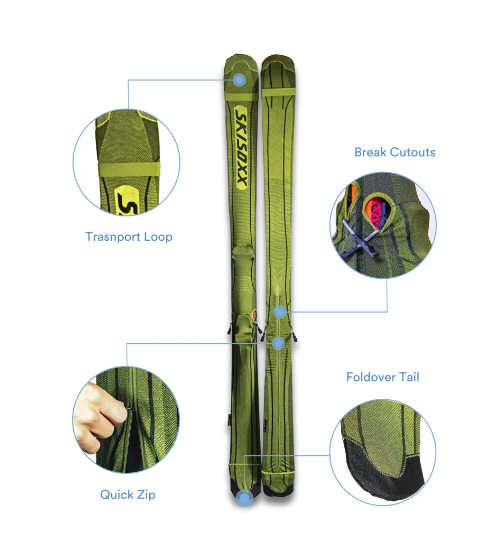
Barrows wanted something fitted enough that you could still see the shape of the ski rather than another loose ski bag. It needed to stretch over bindings, withstand sharp edges and repeated use, and remain easy enough to put on and take off that skiers would actually use it. He contacted textile and sock manufacturers across North America and experimented with different fabrics.
The biggest problem was getting a tubular design around the bindings and brakes without destroying the material. Eventually, an online posting connected him with a textile manufacturer in Beirut, Lebanon, who had experience making winter outerwear. When Barrows explained the problems he had encountered, the response was essentially simple: We’ll figure it out.
Together, they did.
The solution was a zipper that allowed the material to open around the binding, along with openings for the brakes. Barrows continued testing prototypes himself, repeatedly putting them on skis, taking them off, stretching them and zipping them to see where they failed.
Even after launching, he kept tinkering. More recently, the fabric was updated with an extremely fine, high-strength thread added to the nylon, polyester and spandex blend to improve durability without sacrificing the stretch that makes the design work.
It is the kind of detail Barrows can happily talk about for a while, and that might be what stands out most when talking with him. This isn’t someone who happened to find a product category in skiing. He genuinely likes solving the problem.
The Ski Racing Test
There is perhaps no harder audience to sell a new ski product to than ski racers.
We are particular. We have systems. We know exactly how the van gets packed, which skis touch which skis and how many jackets need to be shoved between bags to keep everything from destroying everything else.
Barrows laughs about the stories he has heard since launching SkiSoxx: towels, blankets, bubble wrap and even hockey socks used to protect skis. Peter Dodge described years of loading vans almost like a lasagna, layering skis with jackets, bags and whatever else was available between them.
For Barrows, Dodge’s reaction mattered. Before officially launching SkiSoxx, he decided to reach out to his old acquaintance from that European development camp. There was only one small problem: they hadn’t spoken since 1973.
Barrows emailed him anyway, retelling the story of the compliment Dodge had given him as a teenager and explaining what he was now trying to build.
Dodge’s response was equally straightforward. He didn’t remember Barrows or the story. But he loved the idea.
The two reconnected, and Dodge became involved with SkiSoxx as an ambassador and partner. For Barrows, having someone who had spent decades around racers, college teams and vans full of skis immediately understand the problem was meaningful validation.
Protecting the Work Racers Put Into Their Skis
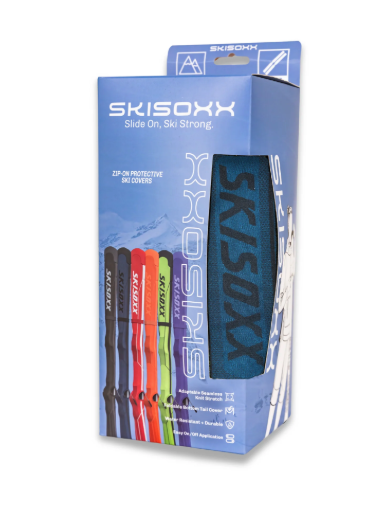
A pair of SkiSoxx currently retails for $79.95, which inevitably leads to a reasonable question: If you already own a ski bag, why do you need something else?
Barrows’ answer comes back to the same thing he saw in Norway.
Ski racers put an enormous amount of time and money into their equipment. A competitive athlete may have several pairs of skis for each discipline, and every one of them requires work. We tune edges, prep bases, test skis and then load them together with bindings, poles, boots and everything else needed for training and racing.
A ski bag makes transportation easier, but it doesn’t necessarily stop everything inside that bag from rubbing, banging and scraping against everything else.
“I can’t protect them when you’re skiing,” Barrows said. “But I can protect them when you’re not skiing.”
For racers, there is also the performance side. Bases and edges matter, and anyone who has spent time in a race room knows how much work goes into preparing them. Protecting that work during transportation is where Barrows believes SkiSoxx fits.
There is also a slightly less technical benefit familiar to anyone who has put race skis inside a vehicle: sharp edges and car interiors aren’t exactly friends.
SkiSoxx protect the skis from the car, but they can also protect the car from the skis.
Finding a Place in the Ski Community
Barrows has been deliberate about introducing SkiSoxx through people skiers already trust.
The company has developed relationships across the ski industry, including with PSIA, National Ski Patrol, USCSA and the World Pro Ski Tour. To Barrows, instructors, patrollers, coaches and racers are natural ambassadors because other skiers pay attention to the equipment they use.
If a young skier watches their coach or instructor pull a protected pair of skis out of the van, Barrows believes that carries more weight than simply seeing an advertisement. The same applies to experienced racers and lifelong skiers who travel regularly and understand the challenges of transporting and protecting equipment.
That kind of organic introduction has been important for a product that many skiers still don’t know exists. At his first Snowbound Expo in 2024, most people had never seen anything like it.
Barrows remembers standing in his small booth and watching people walk past, stop, back up and stare at the covered skis. Some touched the material. Others immediately started telling him about their own homemade solutions.
Then they would look at him and say some version of the same thing: “That’s a really good idea.” One customer had just purchased a new pair of skis and was preparing to put them in the trunk of an Uber in downtown Boston. He walked directly from the retailer to Barrows’ booth.
“I need some SkiSoxx,” he told him.
For an inventor introducing something people haven’t necessarily thought to search for, those moments matter.
Back Where It Started
Today, SkiSoxx has become Barrows’ full-time focus. He recently sold another app he had been developing, leaving him with two primary occupations, as he jokingly puts it: SkiSoxx and his five grandchildren.
There is something fitting about the company bringing him back so directly into a sport that has followed him through nearly every stage of his life.
He grew up at a ski area his father helped create. He raced. He attended an Olympic development camp. Circumstances eventually pulled him away from competition, but decades later, skiing gave him another idea worth chasing.
Barrows has always been an inventor. He told Ski Racing Media that even as a student at Brown, he had little interest in following the traditional path into a large company. His brain was always moving toward the next idea and trying to figure out whether he could turn one into something real.
He also understands now just how large the gap can be between having an idea and building a viable business around it.
“Sometimes life intervenes,” Barrows said. “It’s often very difficult to take an idea and actually make it into a profitable business.”
SkiSoxx began with one of those ideas, but perhaps more importantly, it began with something every ski racer understands: someone cared enough about their skis to spend half the night preparing them, and then threw them all together in a bag.
Barrows noticed. Nearly two decades later, he is still trying to solve it.
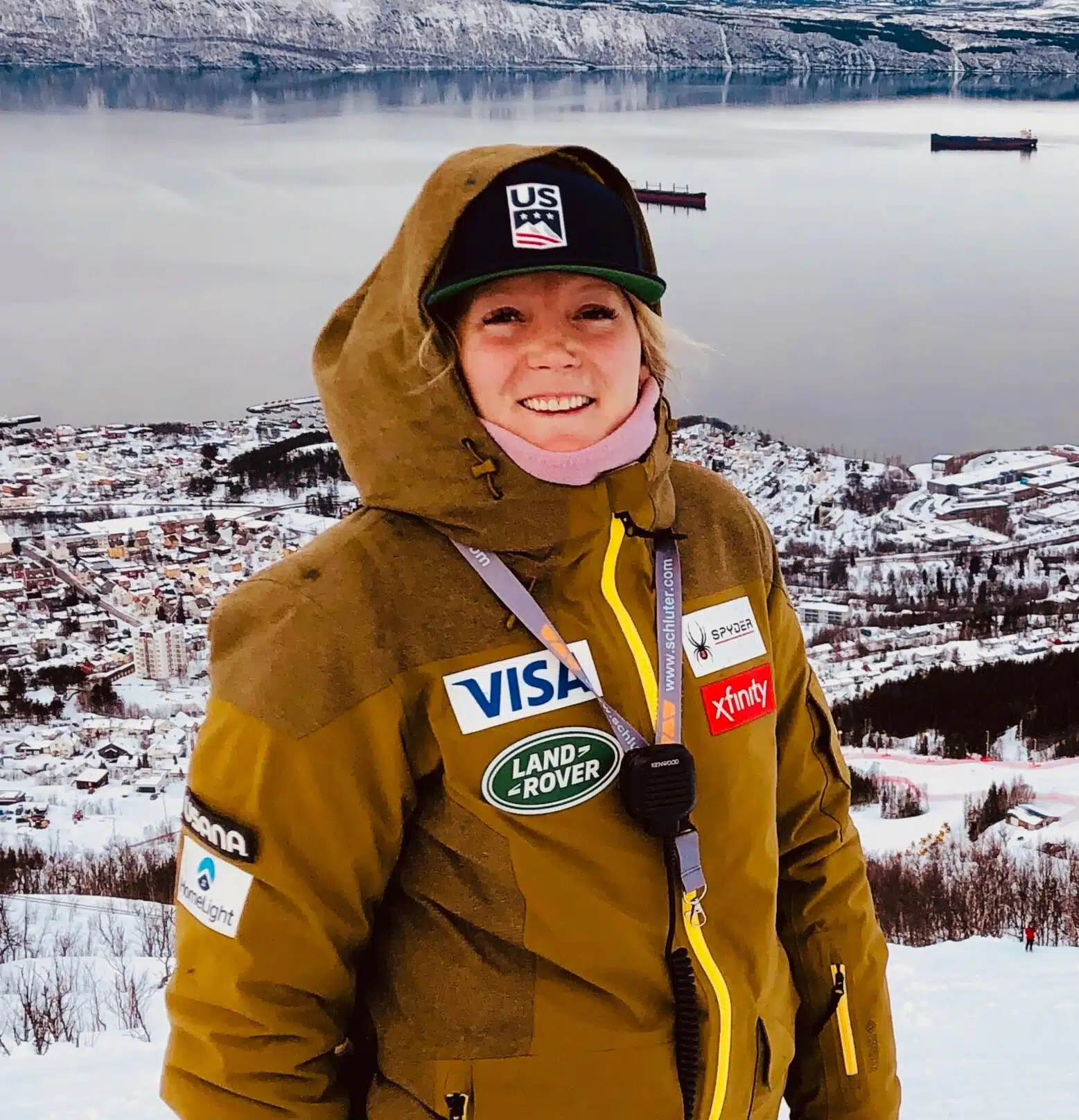
About the Author: Katie Twible
Related Post





