You get what you pay for. It’s a truism that bears out in the world of ski racing, where big clubs and ski academies deliver all the high end services and facilities one could need to succeed. This truism, like many, warrants a follow-up: Do you need what you get?
The answer is based on a wide variety of factors, and will be different for everybody. Jimmy Cochran is manager of Cochran’s Ski Area, Ground Zero for affordable ski racing, and offers another consideration: “The thing that bugs me about a $55,000 ski season is this: Even if a family can afford it, it fundamentally changes the experience for the kid,” says Cochran.
The steward of Mickey Cochran’s hillside and its rope tow that spawned two generations of Olympians is referring to the expectations that often go along with spending massive amounts of money on “results” and how that can affect what is supposed to be a fun, healthy, character-building pursuit.
Indeed, for some athletes a lower-key environment actually helps them nurture the passion for the sport that will get them to the top. Among them, not surprisingly, is Ryan Cochran-Siegle, the youngest of the Cochran cousins. Last season he not only made it to the World Cup podium twice, but he did it in both speed events. This from a hill that tops out at 350 vertical feet.
“My whole development as a kid was having fun every day,” says Cochran-Siegle. If you can maximize whatever hill you are on, you can develop really strong skiing.” He admits that down the road it takes bigger mountains to get comfortable with speed and variations of terrain, but there are some things no club or mountain can deliver. “Success is much more about drive and will and the ability to have fun and enjoyment with it. That is what keeps you pushing yourself and your skiing.”
Other small resorts may not have the Cochran’s pedigree, but many have the passion, the community support and the kids with a dream, who just can’t get enough. Here’s a look at how they’re making it happen:
Cochran’s: accessibility is the bottom line
When it comes to punching above your weight, and having a good time doing it, nowhere does it like Cochran’s. Even more important than the astounding number of Olympians and U.S. Ski Team athletes the Richmond, Vt. hillside has produced are the thousands of local families Cochran’s has introduced to skiing and ski racing.
They’ve done it with a unique approach. Rather than competing with other ski areas for customers, Cochran’s knows it is competing with other activities. “That means finding a number that works for the community and the kids in the ski programs,” says Jimmy Cochran, now in his sixth year managing the resort.
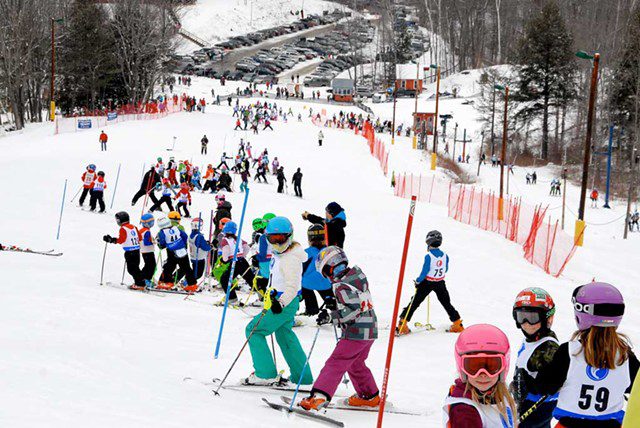
Two years ago, when Cochran’s lowered the family pass price they sold twice as many passes, and it improved their bottom line. At $295 the Family Pass is one way Cochran’s delivers on its mission focused on making skiers, not money. “I don’t think there are any real tricks to making the sport affordable,” says Jimmy, who believes that affordability creates a larger pool of athletes and can perhaps help capture some future stars.
The accessibility ethos rolls year round. Last summer Cochran’s added a pump track and mountain biking trails that connect to Richmond’s trail network, and their lush “Field of Excellence” is a homegrown outdoor dryland facility that is utilized not only by the club but also by many local sports teams. All of the above is free.
“Community support is critical for us to survive as a ski area,” says Jimmy. Since 1998, Cochran’s has been a 501c3 nonprofit, which opened up fundraising avenues. Community support in dollars and physical labor made snowmaking (2007) and lights (2010) a reality and opened up the scope of what Cochran’s could deliver.
“As a nonprofit ski area we try hard to drive down the cost for anyone coming to ski (not just racing).” In addition to learn-to-ski programs for schools in surrounding communities, the area hosts eight high school ski teams and college club teams. All are infused with the “Cochran’s Way,” which involves fun, hard work and striving for excellence.
The area and club (each is a separate nonprofit) depend on fundraisers like the Rope-a-thon and the annual ski sale, individual donations as well as donations of equipment and expertise. “Our main strategy over the past decade-plus has been to improve infrastructure through fundraising, and use growing sales to drive down the price, while always making scholarships available to anyone in need,” says Jimmy. Prices have gone down while the facility greatly improved.
Cochran’s may be small, but they’re always thinking big. The next big step, which is possible on the property, would be a FIS homologated GS trail. Jimmy admits it would be a huge undertaking but, “to max our potential as a nonprofit, we need to get there.”
Buck Hill: Volume, intensity and fun
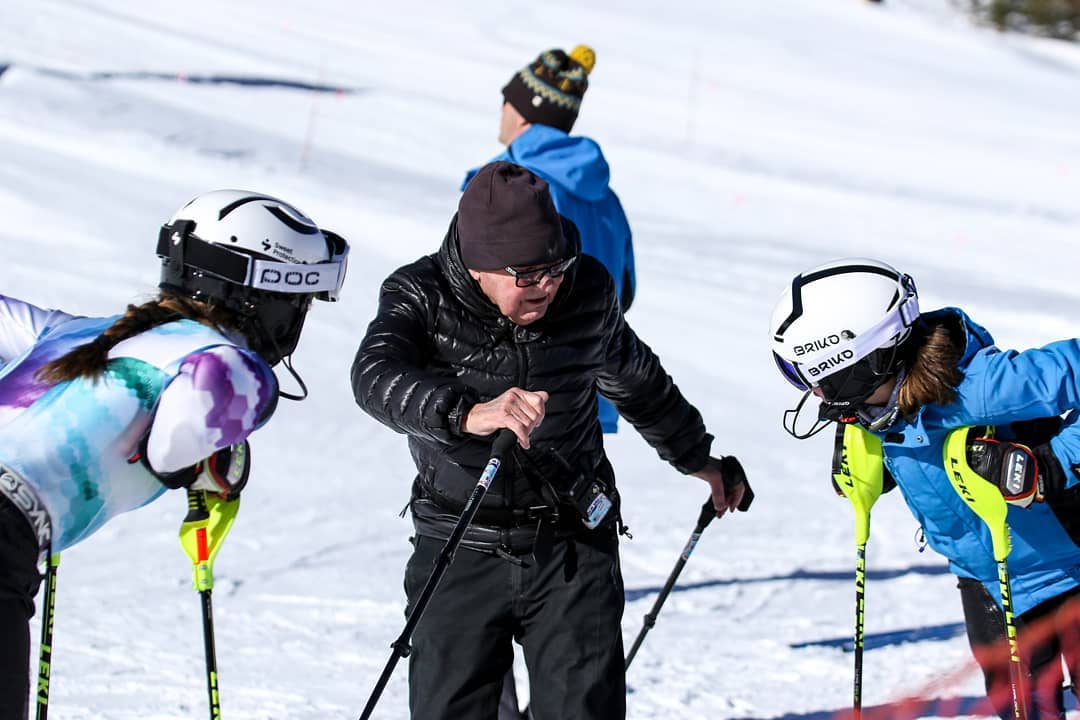
If there were such a thing as a factory for producing slalom skiers, it would be Buck Hill. The tiny mountain just south of Minneapolis, Minn., has produced scores of Olympic, U.S. Ski Team and NCAA athletes over the years under the guidance of Erich Sailer. Since Sailer came to Buck Hill in 1969, his philosophy has guided the club’s approach via three priorities: repetition, strong fundamentals and high-level demonstration. All three come together on the training hill.
A 15-vertical-foot start ramp gives the 250-vertical-foot training hill an extra boost. “The idea is that you can reach full speed by the first gate,” says Executive Director Jacob Olsen, who explains that in a two-hour block, kids easily get 20 plus runs (or 40 at record pace). That works out to roughly 25 gates that take 17-22 seconds per run. At Buck Hill’s Christmas camp, included in the full season program fees, 150 kids pound gates on seven courses across the hill from 7am-2:30pm. Even in sub-zero temperatures under the lights midweek, kids are shedding layers as they keep up the pace. Contests throughout the season keep the competitive juices flowing. “We usually recognize the hard chargers — the ones that show up every time, and put their heads down,” says Olsen.
Smack in the middle of the four lanes sits the “Jaeger Haus” commonly referred to as Sailer’s shack. Through windows on both sides, a coach can talk to every athlete running the courses. Such connection assures timely feedback, and that no athletes (and no bad habits) slip through the cracks. Active feedback leads to the solid fundamentals that have allowed many of Buck Hill’s top athletes (led by Lindsey Vonn) to excel in multiple disciplines.
The other crucial piece of Buck Hill’s success is a coaching staff that can demonstrate the right moves, another of Sailer’s priorities. Buck Hill maintains a young energetic stable of coaches through continuous outreach to its alumni, during and after their collegiate skiing careers. “We do our best to have staff that like to ski and want to train some with the kids,” says Olsen.
When the club does have camps at larger mountains — like pre-season in Colorado — they maximize the opportunity by bringing in high-level pace athletes. Athletes are also encouraged to aim for high-caliber, out-of-division events, like the Junior Championships and U.S. Nationals. “Even if one athlete goes we will still fully support it without extra cost to the families,” says Olsen. In return for this support, successful World Cup and NCAA athletes give back by coming to races, providing pace and coaching at camps and staying connected with the club.
The FIS program at Buck Hill is $2,650, with no charge for out-of-division competitions. The extra support for pace athletes and out-of-division racing comes from the Buck Hill Ski Club, a 501c3 nonprofit booster for the racing team that operates fundraisers and the annual fall camp in Winter Park. The Buck Hill Ski Team itself is owned by the ski resort, and enjoys stable ownership and management, as well as a fully integrated relationship with all aspects of planning and mountain ops. “We are not an afterthought,” says Olsen. “We are part of the conversation.”
“Parent and family involvement is a huge piece of our program,” explains Olsen. In winter, parents become a traveling carnival, running races in the Midwest. Above all, Sailer’s tenet is that fun is the biggest motivating factor for kids, and a natural consequence of a fast-paced, competitive environment.
Last year Buck Hill debuted the three-run FIS race, a unique format that allowed the club to run two races (six runs) in one day, and allowed kids to get FIS results right at home. Says Olsen: “It is sometimes overlooked what you can accomplish on a small hill.”
Catamount: Ready to pounce
At 1,000 vertical feet, Catamount is not a small mountain, but it’s been nonetheless ignored by families driving past it to their weekend homes in Vermont, New Hampshire and New York. That was, until last year. When Covid restrictions shut down out-of-state weekend visitors, many of those same families landed much closer to home, at Catamount. The program went from 180 kids to 289, and expects to swell to 350 this season. It couldn’t have happened to a more prepared place.
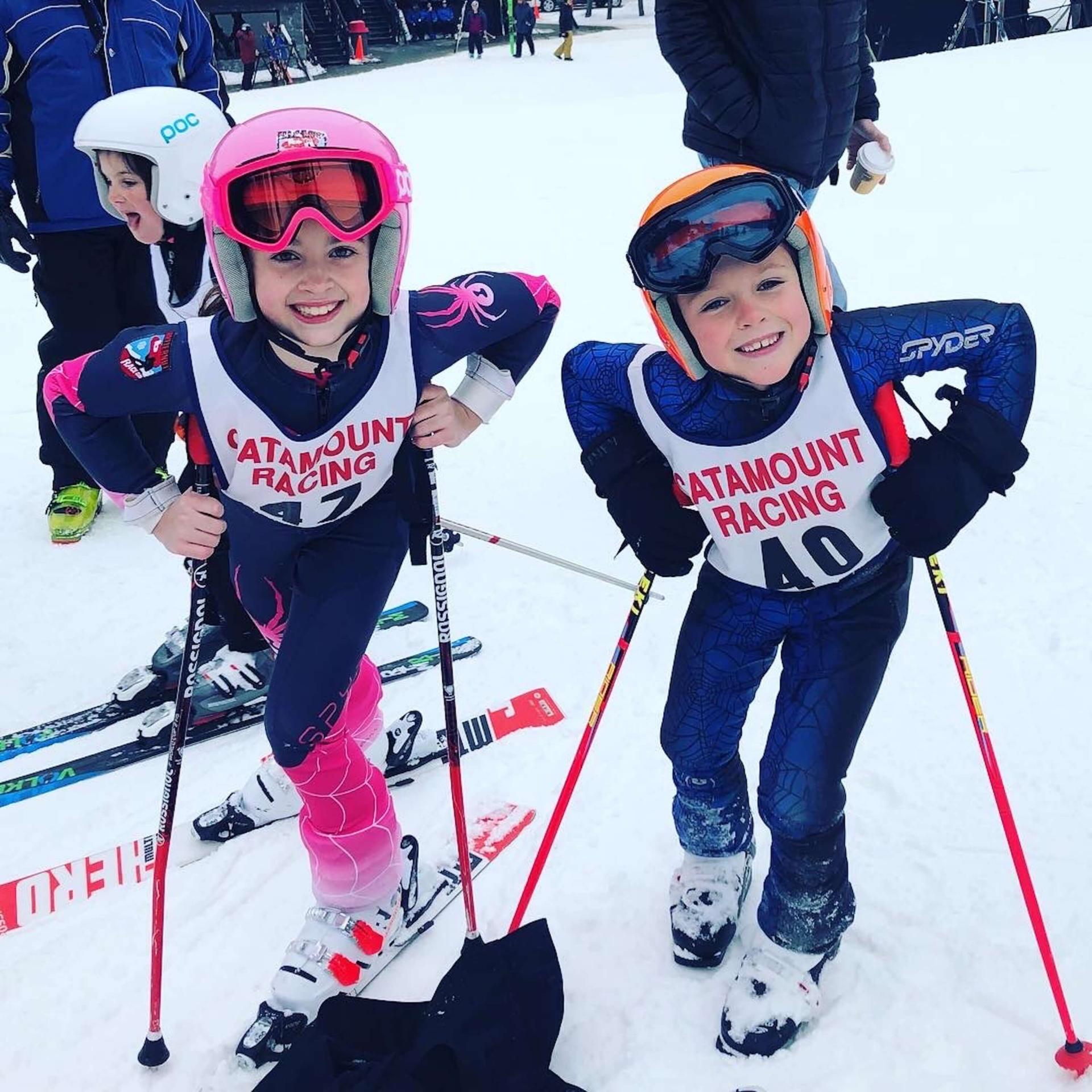
Since 2018, Catamount has been owned by the Schaefer family, who also own Berkshire East. Growing up at the foot of Berkshire East, Jim and John Schaefer went on to race NCAA for UVM and Middlebury respectively. They strongly believe that skiing, a lot, at a local mountain with good coaches, provides the foundation needed for success in ski racing. It was important they provide that opportunity at Catamount.
Putting mountain manager and ski racing kingpin Mark Smith in place was the first step. Capital improvements in lifts, lodges and snowmaking have followed. For the upcoming season, Slovenian Olympian Urska Rabic Bevc and her husband Jaka, both veteran coaches, join Catamount. As Director of Skiing, Urska will run the snowsports programs, including the ski team and its seasoned staff of 48 coaches.
Dues for the active parents’ association reimburse coaches for clinics, putting Catamount “ahead of the curve in having our coaches educated through clinics,” says Race Director Bruce Diamond. With its proximity to New York City, as well as Westchester and Fairfield counties, Catamount has a steady supply of enthusiastic ski racing families who will enjoy ongoing improvements. For the upcoming season, the resort merged two trails into one big training lane served by a newly installed rope tow, and widened a third top-to-bottom trail where U16s train. Next year comes the race arena.
The most important thing, says Diamond, “you’ve got to keep them moving.” The rope tow will allow kids to cycle quickly, and when there is a line they are encouraged to freeski rather than wait in line. Grants from the Kelly Brush Foundation and the Killington World Cup Committee have subsidized upgrades to safety and training equipment.
The three levels of program — from Devo to Interstate to Tri-State — are all weekend-focused and emphasize fundamental skill development. Catamount only recently added Friday night training to the program and it was a hit, luring 50-60 kids per session. With the Rabic-Bevc duo on site, they hope to add more midweek training to accommodate local kids and those who can utilize remote learning.
One of primary barriers in ski racing is the cost of FIS races, especially for Tri-State athletes who also must travel for them. This year Catamount will host some USSS races, with an eye to FIS races and ultimately NorAms. Typically ownership tolerates racing. At Catamount they are passionate about it.
While Catamount transforms from a nice little weekend program to a really great program with some good steep trails, it still welcomes kids who just want to have fun and learn how to ski. “We’re offering a really good culture, but we want to stay accessible,” says Diamond.
Hunt Hollow: family style
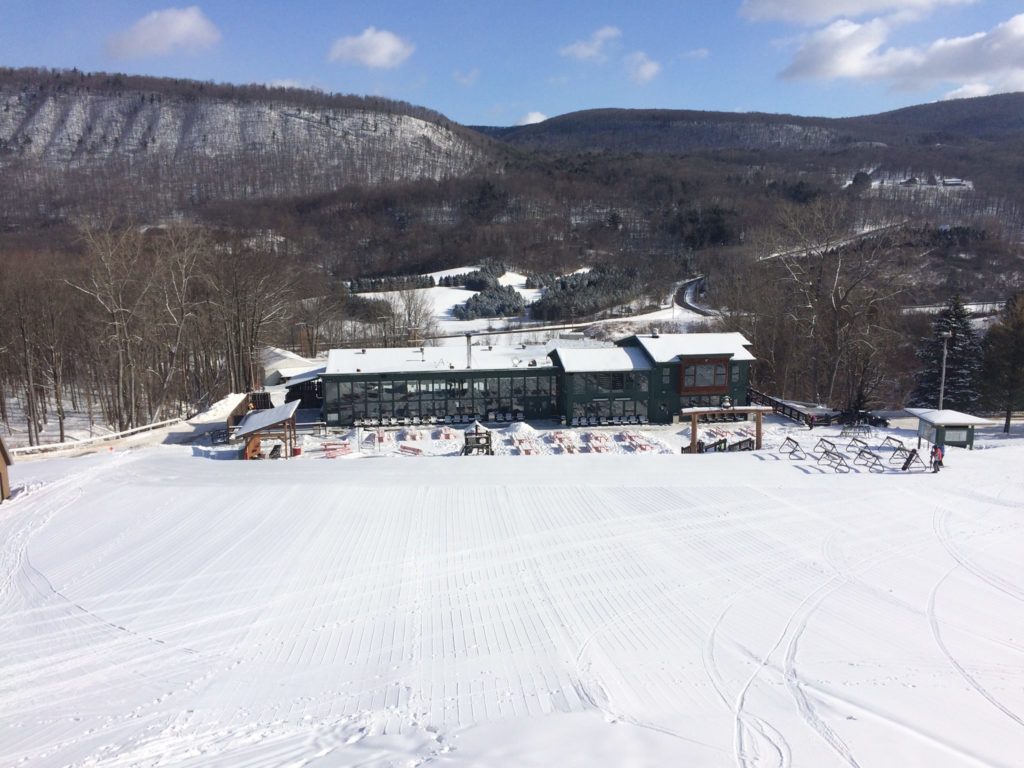
When you’re here, you’re family. You won’t get a bottomless breadbasket at Hunt Hollow, but you will get a friendly supportive atmosphere and as much time on snow as a school kid can handle. Volunteer coach Mark Wolcott calls the private ski area outside of Rochester, in the heart of New York’s Finger Lakes region, “a diamond in the rough.”
Hunt Hollow’s membership works like a golf club, where an initiation fee can be spread out over five-10 years and the annual family season pass options are competitive with larger areas. Last year’s program fees for U10-U19 topped out at $825.
One key to Hunt Hollow’s program is the low (1:8) coach-to-racer ratio, which allows racers to work with the same coach throughout the season. Race coaches are part-time in the volunteer-driven, grassroots ski club, meaning they all have day jobs. However, all have full-time dedication to the kids who train under the lights after school, and all day on weekends to rack up as many as six days per week. That brings Hunt Hollow’s in-season skiing and training volume up to ski academy levels, while allowing kids to live at home.
The club typically bolsters its season with a summer trip to Mt. Hood, early season trips to Okemo and West Mountain, and a Whiteface camp in December. During the season, in a normal year, athletes also make racing treks over the border to Ontario.
Hunt Hollow’s 875-foot vertical drop is actually slightly greater than Georgian Peaks, home of Canadian Downhill legend Todd Brooker, and one of the private ski areas around which Hunt Hollow was modeled. The club’s dedicated Glade race trail is “one of the best training and race-day venues you will find anywhere,” says Wolcott.
The vast majority of racers compete in NYSSRA events throughout New York State, then attend regional races in New England and beyond. Many go on to strong USCSA ski teams. Almost all high school-aged kids there also race for their schools in surrounding towns, shuttling between several areas including Swain, Bristol and tiny Brantling to get the best midweek training available at each venue. The high schools and clubs work together around their respective racing schedules. To accommodate the numbers, Hunt Hollow (open to non-members midweek) can split midweek evening training into two sessions, 3-5pm and 5-8pm.
FIS racing is admittedly hard to come by in this part of the state. Wolcott notes that Georgian Peaks’ ability to host NorAm competitions indicates Hunt Hollow could host FIS races as well. He envisions a “Mideast Cup” with Tristate and Canada convening for FIS races at Greek Peak, West Mountain, Bristol, Holimont, Hunt Hollow and clubs in Ontario. “The fields would fill up,” he says.
In recent years, the resort has vastly improved facilities, with new and upgraded LED lights, a new snowmaking pond and a compressor for the race hill. With dependable conditions, assured training space and no lift lines, Hunt Hollow has, “more training on a Saturday than any place in the east,” says Wolcott. Another advantage: “We keep it fun for kids and they don’t burn out.”
About the Author: Edie Thys Morgan