Training and competing at the World Cup level is tough. Doing it without a national team is tougher still. There are not a lot of options short of hiring a private coach and training staff. Even if you can find the resources to support that investment, you’d still be missing the benefit of high-level peers for training and camaraderie. Thanks to Global Racing, the independent path to the World Cup is not only possible, but also positively charged.
Since 2013, Global Racing has assembled a roster of international athletes trying to claim or reclaim a spot on the World Cup tour. This season, a group of 11 athletes from six different countries have teamed up under the direction of Global Racing’s founder and coach, Paul Epstein.
Green Mountain roots
Epstein, who now calls Austria home, originally hails from Vermont. After an early FIS career at GMVS he raced on the NCAA circuit as a two-time All-American for UVM, then returned to GMVS as a coach. “The idea for Global Racing came when I was still racing in college,” Epstein recalls. At the time, there was nothing available for college-aged athletes like himself, who were still developing athletically and extremely motivated. The only option was to join a PG program with much younger kids. Instead, he turned to coaching at GMVS, and as he built experience, his own coaching style and methodology emerged.
Martin Guyer worked with Epstein as both an athlete and a coach at GMVS. “Intense, consistent and loyal” are words Guyer uses to describe Epstein, who he says is unrelenting in finding ways to ski faster. “He would do anything for the athletes to help them succeed — he really built up their self-confidence,” says Guyer. “He has a strong belief system yet was still open minded to new ideas and approaches.”
Among those beliefs was the notion that to compete at the top of the sport, you need the best athletes to compete against, and that the majority of them are in Europe. In 2013, Epstein decided to make the leap and start his own team. That first year, his team was four guys on the FIS/NorAm circuit. The next year, his group grew to 10.
Breakthroughs and belief
In 2016, Marcel Mathis — recently ousted from the Austrian team — asked to join Epstein’s group for the summer in New Zealand. He scored well enough to be given World Cup spots by the Austrian team, and went on to score World Cup points for the first time in three years.
That success shifted Global from a FIS program to something with a higher goal. “It broke down a wall and people saw us,” says Epstein. More European athletes came, and made their respective Europa Cup teams or scored World Cup points. Epstein was learning a success formula that worked with athletes of all different backgrounds from all different countries. “You can turn an athlete’s career around if you believe in them and they believe in you,” says Epstein, adding, “If a coach goes out and makes an enormous claim, that’s a big bite to take, but it’s motivational because it holds the coach responsible.”
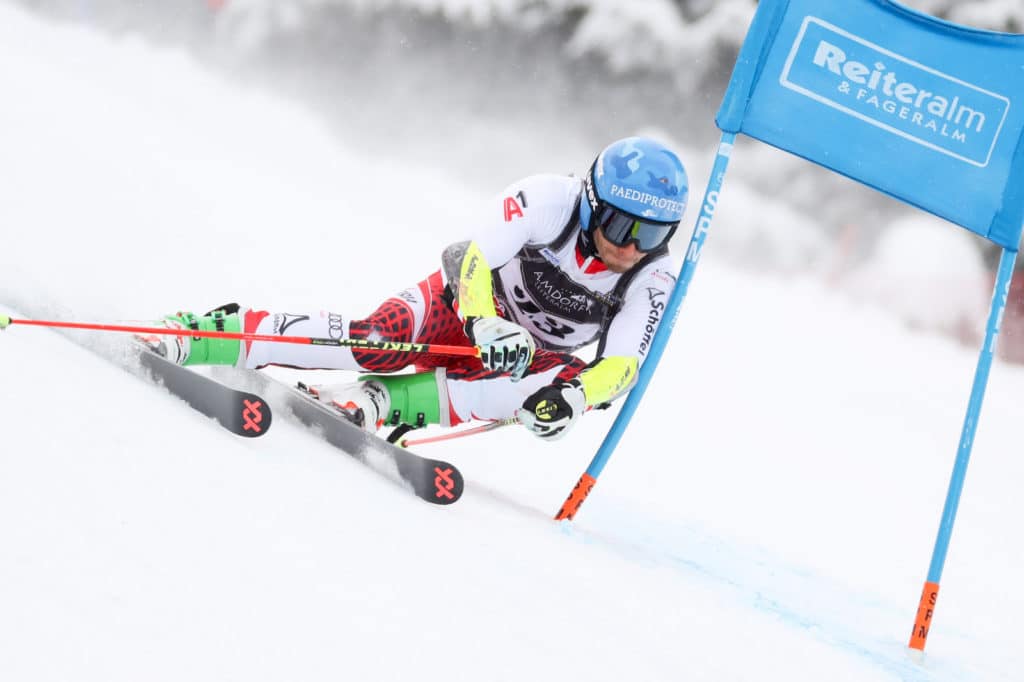
Case in point: When Magnus Walch was kicked off Austria’s Europa Cup team, he sent Epstein a trove of videos before signing on with Global and attending their first camp. Epstein went through them all. In the meantime, the Austrian Europa Cup coach offered Walch a chance to requalify for his team. “I said, ‘If you’re coming with me, you’re qualifying for World Cup,’” Epstein recalls. Walch went with Global and, having never scored a top 15 on the Europa Cup, was 14th in the Adelboden World Cup that season. Walch retired last spring, as Austrian national GS champion.
The process of rekindling talent continues to fascinate and inspire Epstein. Global has become a platform for talented, motivated athletes who have fallen through the development cracks. They may have been bounced from their national teams after a rough season, or are simply on the cusp of breaking onto the World Cup but lack the advantages of national team status.
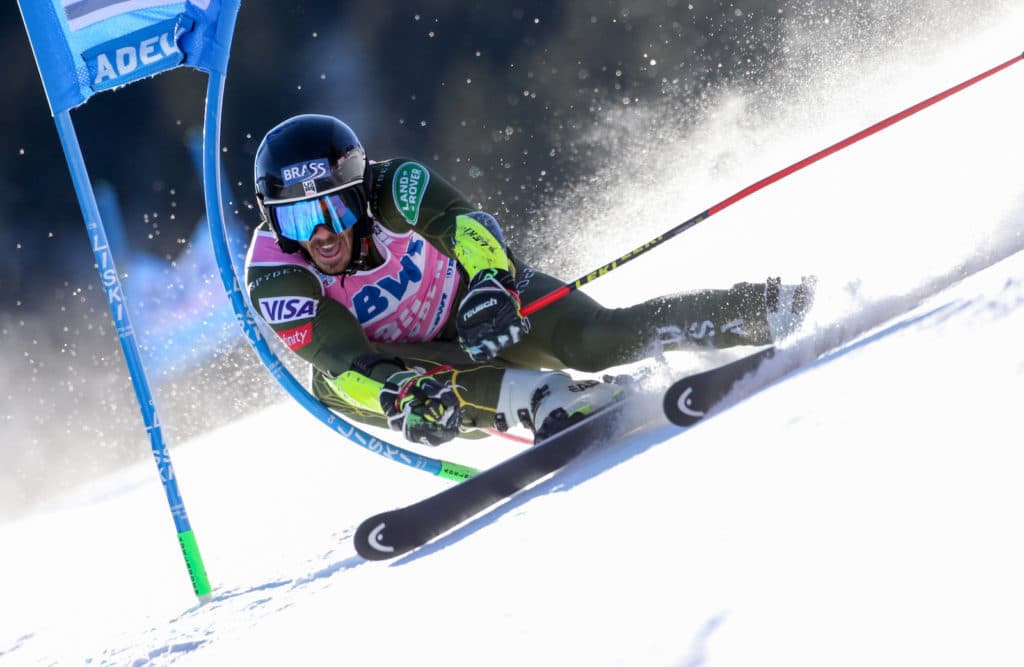
American Brian McLaughlin has been on and off the U.S. Ski Team, and is now in his second season with Global Racing. “Paul sets really high standards and pushes hard for consistent execution, which is really important at the highest level when there are 60 really good skiers fighting for a second run,” says McLaughlin. When McLaughlin describes his teammates, he notes their shared purpose: “We all have a deep desire to push and prove ourselves. This combination of a passionate coach and driven athletes provides an environment for putting the pieces together for fast skiing.”
Building the team
Every spring, Epstein chooses his team for the next year, finding athletes who ski at a similar level and are in shooting distance of the ultimate same goal: The World Cup. This year that includes two athletes from both Belgium and Australia, one from the Netherlands, one from Germany, one from Ireland and four from the U.S. Once the athletes have an OK from their national federations, Epstein deals directly the respective head coaches to sort out opportunities that will be available for the upcoming season. Then, they set about their summer training plan, traveling to the glaciers from their European base, which, for most of the teammates, is a shared apartment in Innsbruck.
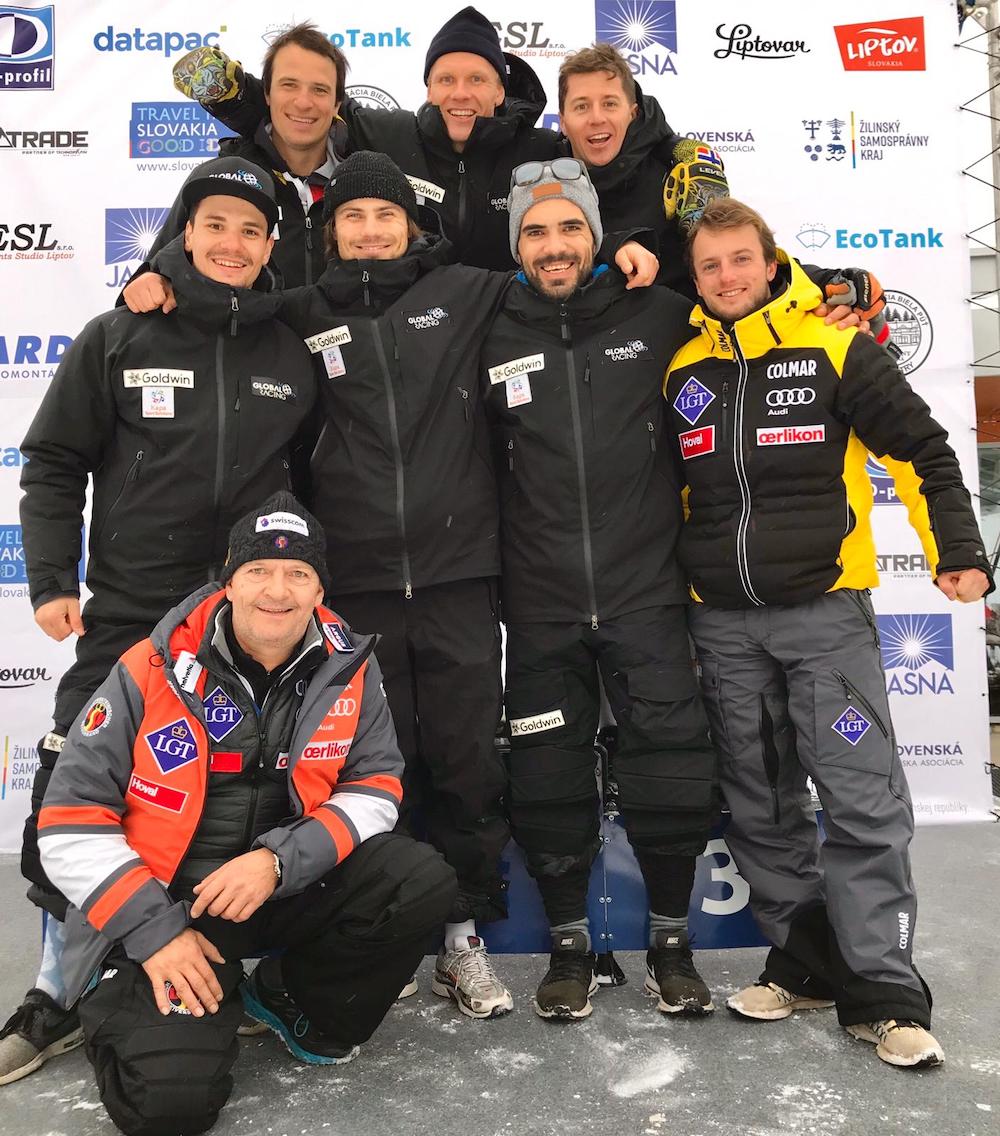
As the season opener in Soelden approaches, the U.S. has three spots up for grabs in GS. Two of those are only available to athletes ranked in the top 80, and one is available to athletes ranked in the top 150. For now, the four American Global athletes — Tim Gavett, Patrick Kenney, Brian McLaughlin and George Steffey — are going for that top-150 spot. However, if any of them can achieve a sub-80 ranking in the early season, “it opens a lot of doors,” says Epstein. Though Global is better known for its success in GS, the team includes athletes strong in both tech events, and some athletes pursue super G racing opportunities when it makes sense with scheduling and training availability.
Showtime
When Global athletes do get the nod for the World Cup they have full support. Quite simply, “I am at every single race,” says Epstein. On the World Cup, he is sometimes listed as the head coach for Belgium, or the Netherlands or Australia because they have no full time national teams. Athletes from countries with national teams, like the U.S., stay with their respective national teams at World Cup events to take advantage of the rooms provided by the organizers. On the hill, however, it is business as usual for inspection and course reports. Epstein has good relationships with the U.S. coaches, who sometimes collaborate on hill.
Another hurdle for non-national team athletes is equipment. Here, too, Epstein’s relationships make it easier. Currently, Global Racing enjoys a close connection with Marker Dalbello Volkl. “We have the most of any team in the world on them,” says Epstein. For other athletes, Epstein can work his connections to help get the good stuff from the factory.
The price of greatness

Racing independently, even as part of a team, is not cheap, and there is no à la carte option with Global Racing. “I believe it is important to have consistency between the coach and athlete, and that takes time,” says Epstein. Some federations pay the fee for their athletes, but the U.S. athletes must raise those funds independently. A full season, about 10 months including all expenses (apartment rental, car payments and program fee) is roughly 40,000 Euros, plus 8-12,000 Euros toward salary and expenses of Global’s four techs. Epstein points out that the lower your world rank, the less expensive it gets. For example, athletes ranked in the top 60 of the World Cup start list do not pay for hotels at races, and the same goes for athletes with a top-75 world rank when at Europa Cups.
Epstein, who never imagined himself leaving the state of Vermont, married an Austrian woman and now lives in Langenfeld, down the Oetz valley from Soelden. Even during the season, he can usually go home every week to see his wife and daughter. “I never knew how far this would go,” says Epstein, who admits that World Cup skiing was not on his radar when he started his team, and when naysayers predicted he wouldn’t last one year. He simply wanted to give athletes an opportunity that was not there for him. “I wanted to be a support system.”
Racers ready
This year, the Global staff includes Epstein, coaches Clemens Baumann and Hugh Brooks, as well as four service techs, Miha Kosmac, Benjamin Angerer, Simone Sperindé, and Pirmin Kochgasser, and physio Teresa Kager.
“We’re just trying to work as hard as we can,” says Epstein. Last season, at the second Santa Caterina World Cup GS, Global had three athletes in the top 30. “That was a motivating day for all of us. It showed we can do something as a team.”
Guyer, who now runs Momentum Movement athletic training in Burlington, Vt., shared some time with the 2021-22 Global squad in Saas Fee. “It’s been fantastic watching so many athletes from different countries all come together under Paul’s guidance to achieve success,” says Guyer, who notes Global’s impressive track record “year over year helping multiple athletes regain their confidence, match or exceed past performances and achieve results.”
Guyer is among many who will be cheering for the current cadre of athletes. “I wish them success and a shot at realizing all that potential. Especially those U.S. guys!”
For the opening World Cup races this season, Global Racing may have up to five athletes competing. As for the Olympics, Epstein assumes the fastest skiers will go for the respective national teams, and that there will be a mechanism in place to select the team fairly. The main goal, however, is for the athletes to improve their skiing and either get back to the World Cup or become legitimate World Cup racers. “When these federations say these guys don’t have it, I think … maybe your system is not into development, but is in it for superstars,” says Epstein. “People get thrown out way too soon. They end up coming back better than they were before.”
The 2021-22 Global Racing roster:
USA: Tim Gavett, Patrick Kenney, Brian McLaughlin and George Steffey
AUS: Alec Brooks and Harry Laidlaw
IRE: Alec Scott
BEL: Sam Maes and Dries van Den Broecke
GER: Anton Grammel
NED: Martin Meiners
Follow them all @teamglobalracing and at www.teamglobalracing.com.
About the Author: Edie Thys Morgan