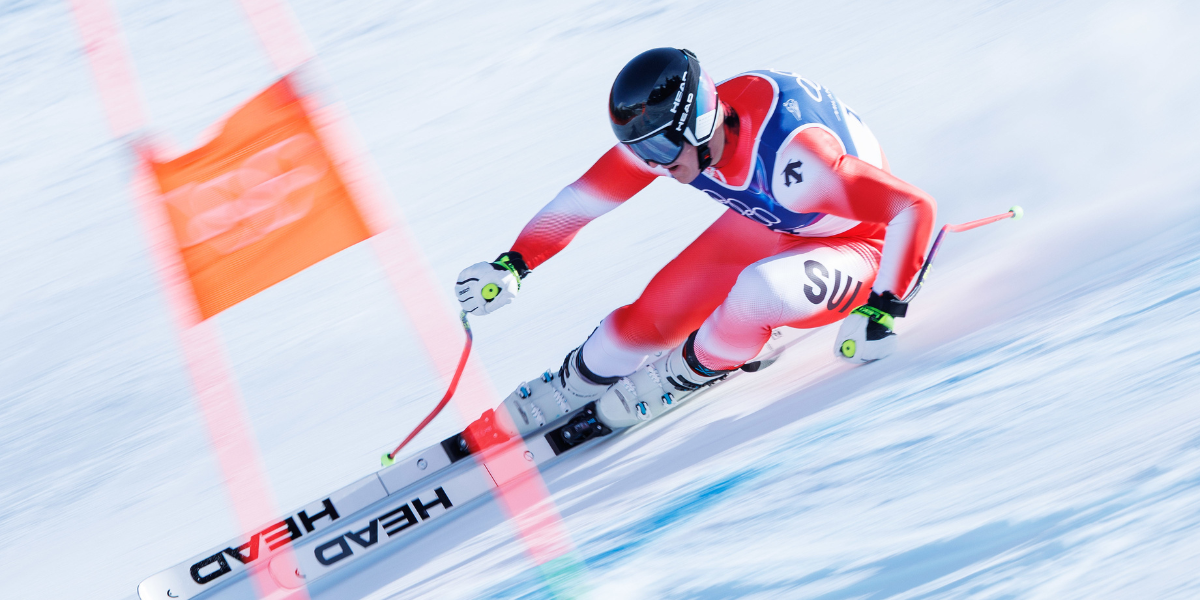
Franjo von Allmen / GEPA pictures
A Day Made for Speed
Under clear skies at the base of the Stelvio, the Olympic men’s downhill unfolded on one of alpine skiing’s most storied venues. Bormio, a longtime World Cup classic, demanded everything from the 36 men who charged down its steep, relentless track. Instinct, courage, and absolute commitment were required from top to bottom. On this day, one skier delivered it all.
Olympic Men’s Downhill: Top Five
Gold 🇨🇭 Franjo von Allmen (SUI) – bib 8 – 1:51.61
Silver 🇮🇹 Giovanni Franzoni (ITA) – bib 11 – +.20
Bronze 🇮🇹 Dominik Paris (ITA) – bib 12 – +.50
4th 🇨🇭 Marco Odermatt (SUI) – bib 7 – +.70
5th 🇨🇭 Alexis Monney (SUI) – bib 6 – +.75
Franjo von Allmen Sets the Tone
Switzerland’s Franjo von Allmen came out firing from the very beginning.
From the opening turns, von Allmen skied with authority, carrying speed effortlessly while staying balanced on the edge. The Swiss team’s preparation was evident throughout the course. They nailed the line and knew exactly where to be aggressive and where to stay compact to maintain speed, a fact underscored by placing three skiers inside the top five. With Marco Odermatt finishing fourth and Alexis Monney fifth, it was a huge day for the Swiss team, and von Allmen, in particular, looked completely in sync with the hill.
A Run That Demanded Everything
Always on the edge, he attacked the technical sections with confidence. His line through the side hill was clean and aggressive, his top speed among the fastest on the course. He launched the big jump with ease, stayed composed on the landing, and when the green light flashed at the finish, the message was clear. This was something special.
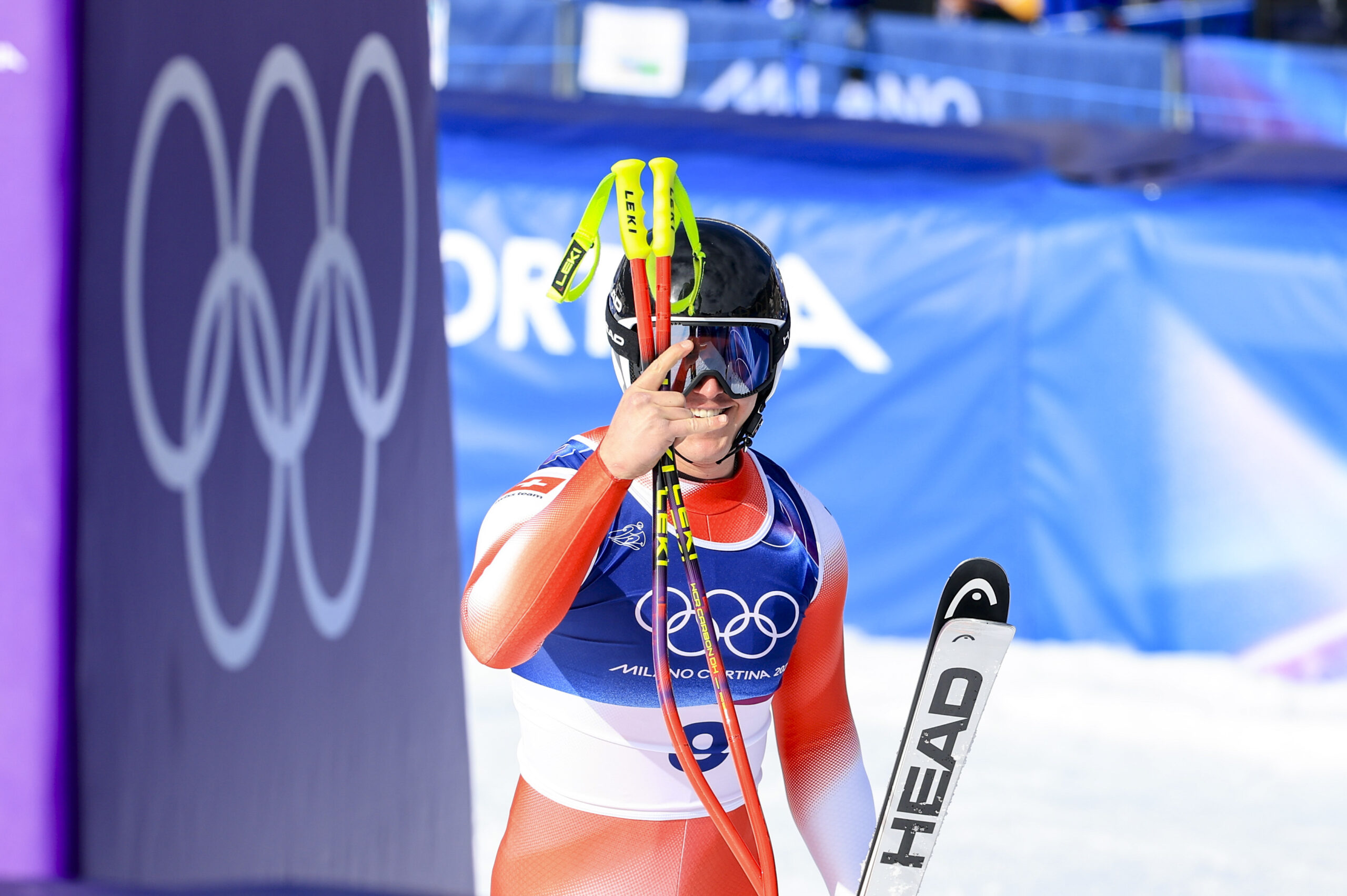
It was a huge run. Textbook downhill skiing at the highest level. At just 24 years old, Switzerland’s Franjo von Allmen delivered one of the most memorable performances to start the Games, winning Olympic gold in his first ever Olympic race. The first-time Olympian admitted it felt almost unreal.
“Absolutely not,” von Allmen said when asked if he could have imagined a better debut. “What happened today, I’ll take it. I’m super happy. It feels kind of like a movie.”
Keeping It Simple on the Biggest Stage
His run drew rave reviews across the skiing world. Asked how he managed to ski with such control on the sport’s biggest stage, von Allmen kept it simple.
“Just be there and try the skiing,” he said. “Show solid skiing, not overpush. Just show what I can.”
Racing With Purpose and Perspective
The moment carried deeper meaning. When von Allmen was 17, his father passed away, a loss that nearly pulled him away from the sport altogether. Instead, he chose to keep going, eventually earning a place on the Swiss national team and now standing atop the Olympic podium.
“I thought a lot about him today,” von Allmen said quietly.
With Olympic gold around his neck at the bottom of Bormio, it was hard to imagine a more powerful answer to that loss, or a more perfect beginning to an Olympic career. On a day where none of the podium finishers from the previous Olympic downhill were even on the start list, a completely new generation seized the moment, making the result feel not just emotional, but emblematic of a changing guard and a thrilling new chapter for the sport.
A Podium Day for the Host Nation
Behind Franjo von Allmen’s golden run, the podium belonged to Italy. In front of a roaring home crowd in Bormio, the Italians delivered a dominant day on the Stelvio, placing two athletes on the podium and turning the finish area into a celebration. It was a result built on confidence, familiarity, and the ability to rise under Olympic pressure.
Giovanni Franzoni’s Breakthrough Moment
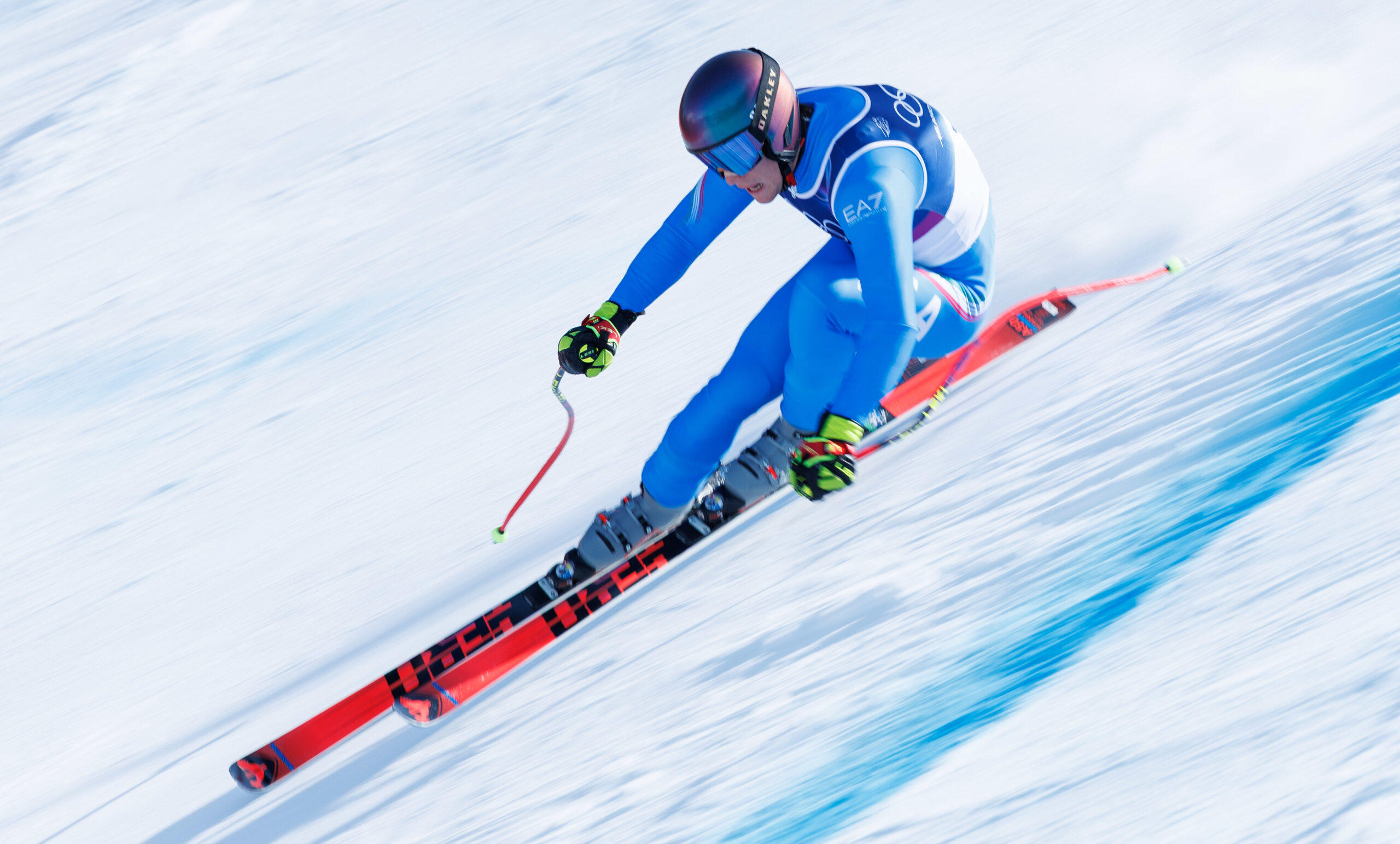
Giovanni Franzoni, also 24, claimed the silver medal, continuing what has been a breakout season for the young Italian. Before this winter, Franzoni had only three career top-ten finishes. This year, he has taken a clear step forward, skiing with confidence and a willingness to push the limits on the sport’s biggest stages.
Franzoni’s run was solid and composed from start to finish. His skis carved cleanly through the turns, his flight was controlled, and although he opened up slightly more than von Allmen in the corners, he maintained strong speed throughout the course. Competing in his first Olympic Games, Franzoni delivered under pressure and fed off the energy of the home crowd lining the finish.
Racing With Meaning on Home Snow
The performance carried deep personal meaning. Franzoni has spoken about skiing alongside his roommate, who passed away earlier this season during training in Chile. That presence stayed with him on the hill in Bormio, adding emotional weight to an already career-defining run and season.
“And also with Domme Paris, after Val Gardena, I told him that I really wanted to share a podium with him,” Franzoni said. “I’m just so happy about the Italian people. They gave me a really good message, with passion, with love. It gave me great energy to produce a great run. It’s unbelievable.”
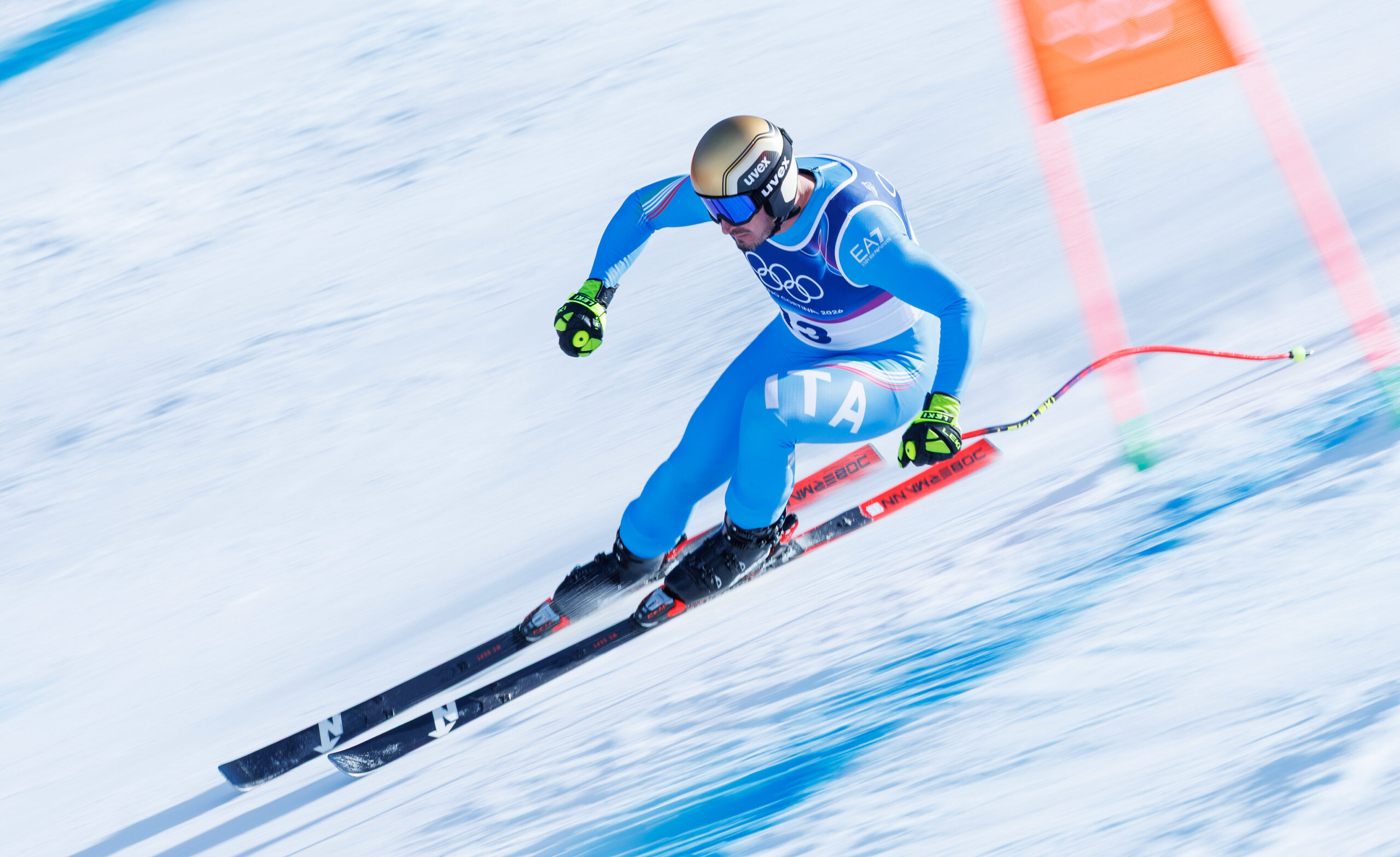
Dominik Paris completed…
Where Speed Meets Fear
What matters most on the Stelvio is speed from the very start. Skiers go from zero to 100 kilometers per hour in just five seconds, making aerodynamics critical immediately out of the gate. Any hesitation at the top costs speed that cannot be recovered later on this course.
The second key is total commitment through the terrain. The steep side hill demands absolute trust in the skis, while flights of 45 to 52 meters (a hockey rink is 60m in length) require balance and confidence in the air. These jumps are long enough that small errors quickly turn into lost time.
Timing and conditions were also decisive. Traditionally raced in December, the downhill was held in February for the Olympics, bringing more sunshine and a bumpier surface as the day went on. Managing the changing course became essential, especially late in the race.
From the start, racers stare straight at the first gate between their ski tips before dropping into the steepest pitch. On the Stelvio, there is speed available from the very top, but only for those willing to take it. In the end, the course rewards courage, efficiency, and total commitment, and exposes fear just as quickly.
Bryce Bennett’s Olympic Farewell
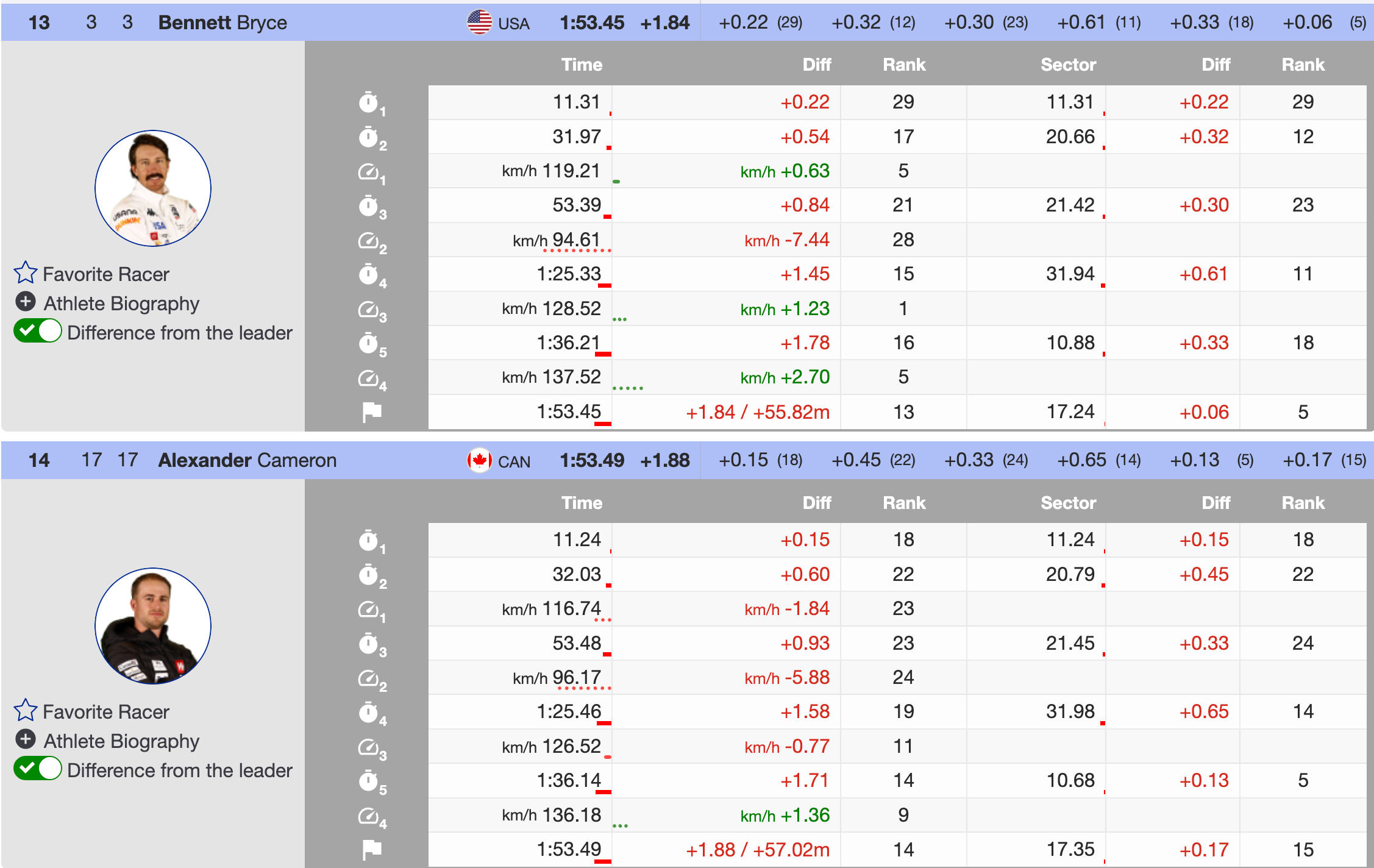
For Bryce Bennett, the race marked an emotional Olympic farewell. The 33 year old from Truckee, California made the final Olympic start of his career in his third Olympic Games and first as a father, finishing 13th. Bennett attacked the Stelvio with power, hitting 137 kilometers per hour and launching a 52 meter flight, the longest of the day. Less aerodynamic but fully committed, he skied with intention. With his wife Kelly and daughter Kate in the grandstands, the moment carried added weight. After three Olympic appearances, Bennett walked away without medals, but with pride and perspective.
“The time wasn’t there today, but I honestly skied the way I wanted to,” Bennett said. “I’m proud of it.”
Cochran-Siegle Searching for the Right Balance
Ryan Cochran Siegle arrived as the lone American World Cup podium finisher this season, but the Olympic run never fully came together, finishing 18th. Still searching for the right balance after a fall on the Stelvio last year, Cochran Siegle admitted he did not bring the intensity the course demands. He praised the course conditions, calling the slope fair and consistent, and noted that the February light offered a very different challenge than the traditional December race.
“I probably didn’t bring enough power,” Cochran-Siegle said.
American Rookies Trust the Process
For the American rookies, the Olympic downhill was about trusting preparation. Sam Morse, racing in his first Olympic Games, finished 19th, focusing on staying patient and skiing within himself. The approach paid off, delivering a run that reinforced his confidence and motivation moving forward.
“Your skiing is enough,” Morse said. “Stick to the plan.”
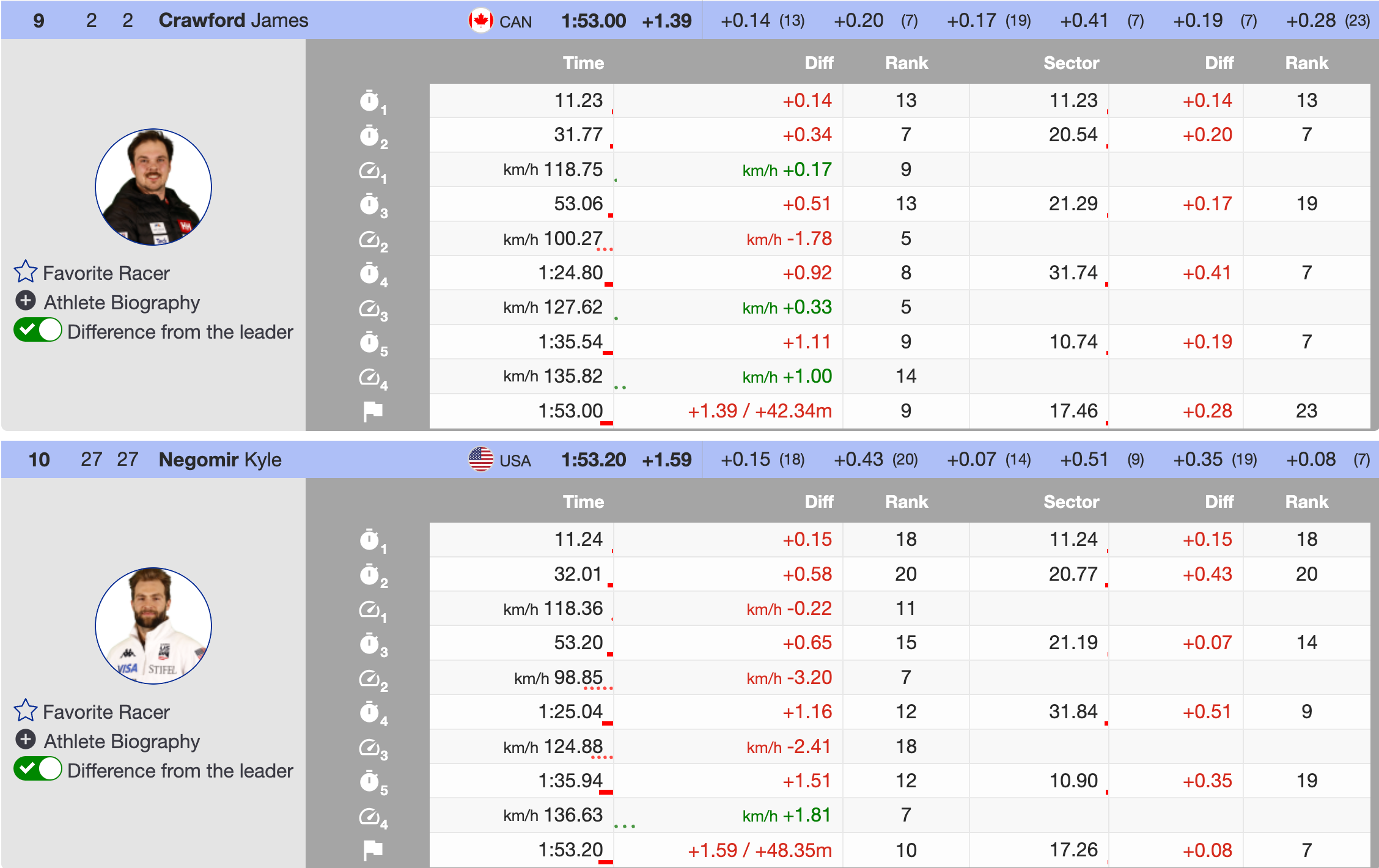
Kyle Negomir produced the top American result of the day, finishing 10th and laying down a solid run in his Olympic debut. Leaning on meticulous preparation, Negomir trusted his plan and let the skiing happen.
“It’s a blast,” Negomir said. “To be able to show what we’ve worked for on a stage like this is super special.”
For the Americans, Bormio delivered clarity, confidence, and moments that will endure long after the finish line.
Jack Crawford Leads Canada’s Charge
Leading the Canadian charge was Jack Crawford, who finished ninth, continuing to build momentum after a challenging season. He delivered one of the biggest moments of the race with a massive 51 meter flight, nearly the length of a hockey rink. The jump surprised him so it cost him speed that was difficult to recover, but signs of confidence were evident throughout the run. Coming off a training run win earlier in the week, Crawford skied with growing freedom and belief.
“I finally brought the level I know I have,” Crawford said. “There were a few mistakes that cost me the podium, but I feel like I’m back on form and ready to build from here.”
Resilience and Meaning for the Canadian Team
Cam Alexander placed 14th, continuing his return after three knee injuries. Alexander showed strong carving in the turns and solid timing through the technical sections, though he struggled at times to find the aerodynamic position needed on the Stelvio’s fastest sections. He recorded the longest airtime of the day at 54 meters, a reflection of both commitment and confidence.
“I know my skiing’s in a really good spot,” Alexander said. “Sometimes it doesn’t go your way, but you take the positives and move on.”
For Brodie Seger, the day carried powerful personal meaning. In his first Olympic Games, Seger finished 28th with his mother watching from the finish area. He raced in honor of his father, who is currently battling ALS, and after crossing the line turned to the camera with a simple message.
“Hi dad,” Seger said in the finish to the camera.
Read finished 25th and embraced the moment with a smile at the finish. Bormio is known for being as intimidating as it is iconic, and simply racing the Stelvio on the Olympic stage carried its own significance. For Read, the result was secondary to the experience of being there and taking on one of the toughest tracks in the world.
For the Canadian team, the Stelvio delivered challenge, opportunity, and moments that will stay with them long after the Games conclude.
🇺🇸 UNITED STATES — MEN’S OLYMPIC DOWNHILL RESULTS
- 10th 🇺🇸Kyle Negomir (USA, 1996)
- 13th 🇺🇸Bryce Bennett (USA, 1992)
- 18th 🇺🇸 Ryan Cochran-Siegle (USA, 1992)
- 19th 🇺🇸Sam Morse (USA, 1996)
🇨🇦 CANADA — MEN’S OLYMPIC DOWNHILL RESULTS
- 9th 🇨🇦James Crawford (CAN, 1997)
- 14th 🇨🇦Cameron Alexander (CAN, 1997)
- 25th🇨🇦 Jeffrey Read (CAN, 1998)
- 28th 🇨🇦Brodie Seger (CAN, 1995)
Unexpected Storylines on the Stelvio
The Olympic downhill in Bormio also reflected a broader trend that has defined the season, particularly for Austria.
Austria’s Ongoing Struggles
Long considered the standard in men’s downhill, the Austrian team has struggled all winter to contend for victories, and the Olympic race was no exception. Vincent Kriechmayr, Austria’s fastest male skier, skipped the final World Cup stop in Crans Montana to focus entirely on preparing for the Olympics. Even with that targeted approach, he was unable to put together the run he was looking for on the Stelvio, continuing a season marked by frustration rather than results.
A Bright Moment Through Adversity
Daniel Hemetsberger provided one of Austria’s few bright moments, holding the leader’s chair early in the race. The performance was especially impressive given his violent crash earlier in the week, when he lost his helmet and emerged with a bruised and swollen face. His ability to rebound and attack the course stood out on a demanding day.
Norway’s Absence Felt on the Start List
Norway’s absence was impossible to miss. Just one Norwegian appeared on the start list, a stark contrast for a nation traditionally synonymous with speed. Adrian Smiseth Sejersted was the lone starter, but his race ended before the finish, underscoring the team’s difficult moment. With injuries sidelining much of the squad, including Aleksander Aamodt Kilde, who remains in recovery, Norway arrived in Bormio focused more on regrouping and restoring health than on contending for medals.
A Reminder of How Quickly Fortunes Change
On a course that often confirms established dominance, the Stelvio instead underscored how quickly fortunes can shift. For some of the sport’s most powerful nations, the Olympic downhill served as a reminder that depth, health, and momentum remain as critical as reputation.

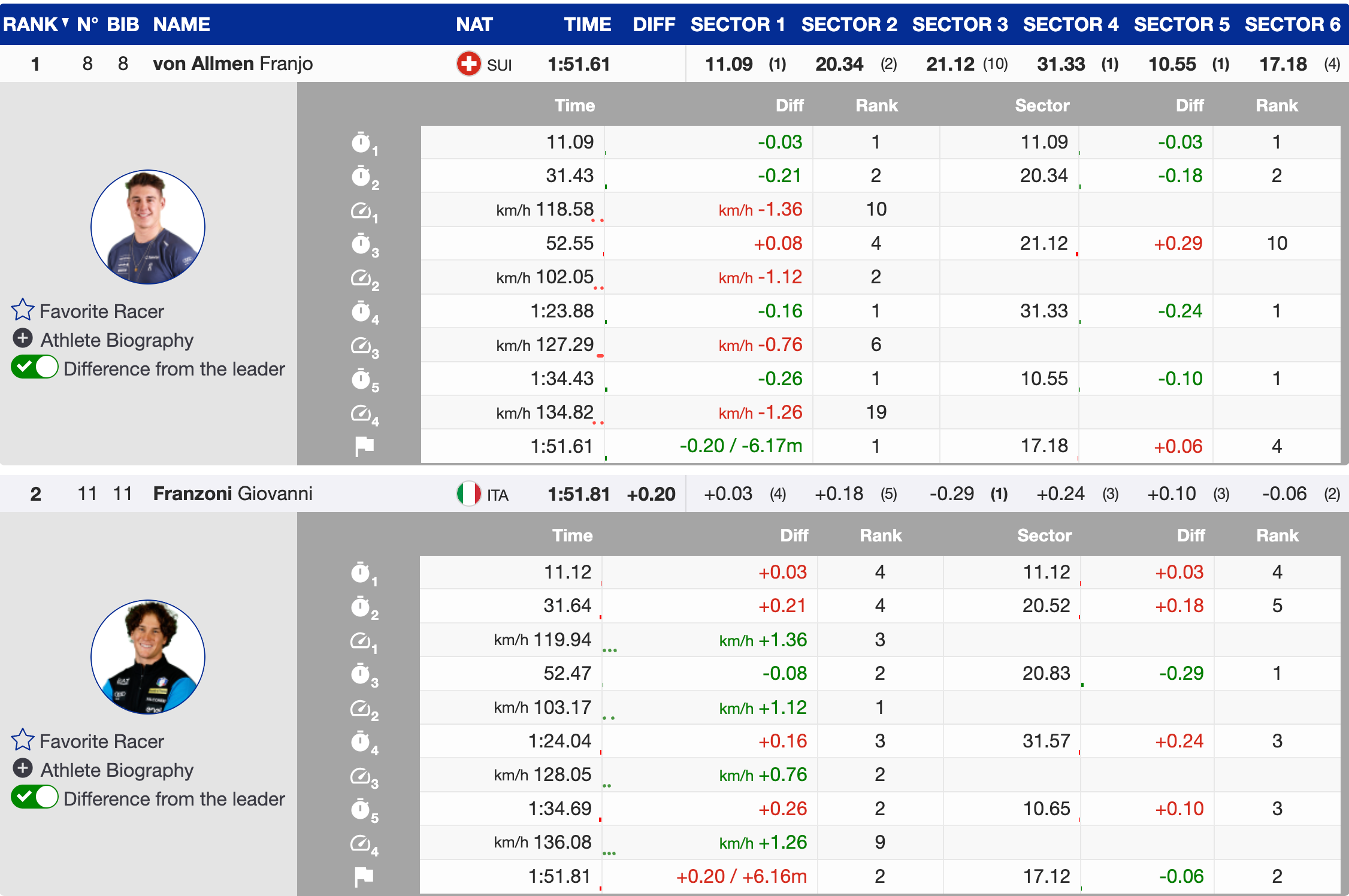
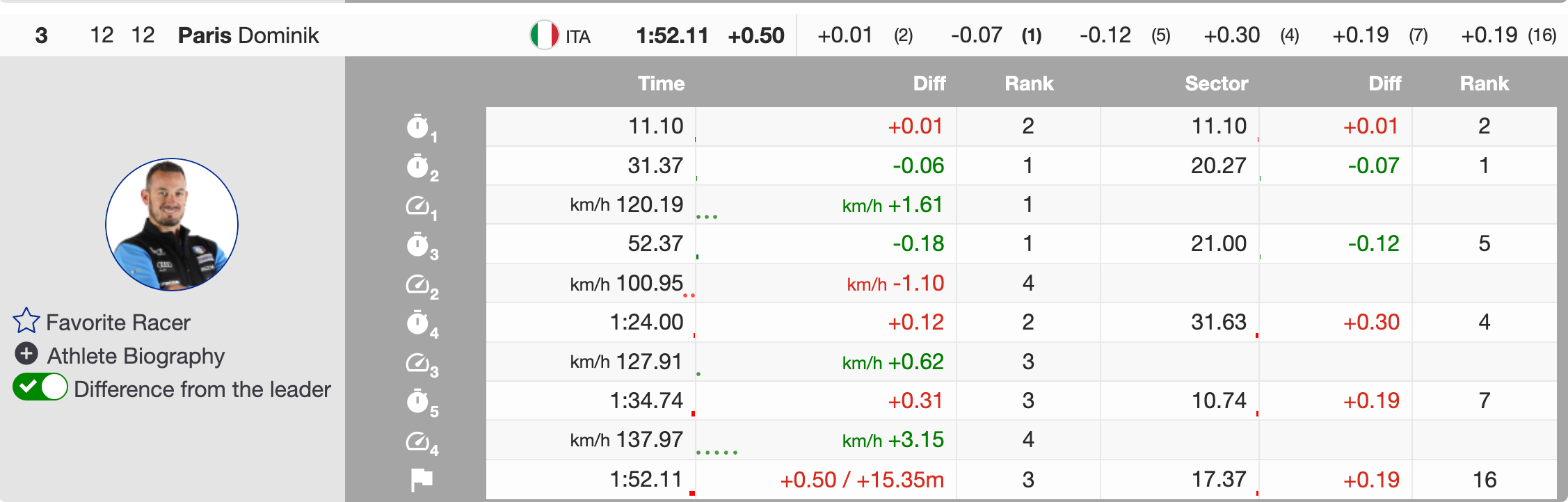
Olympic Downhill results
Click images to enlarge
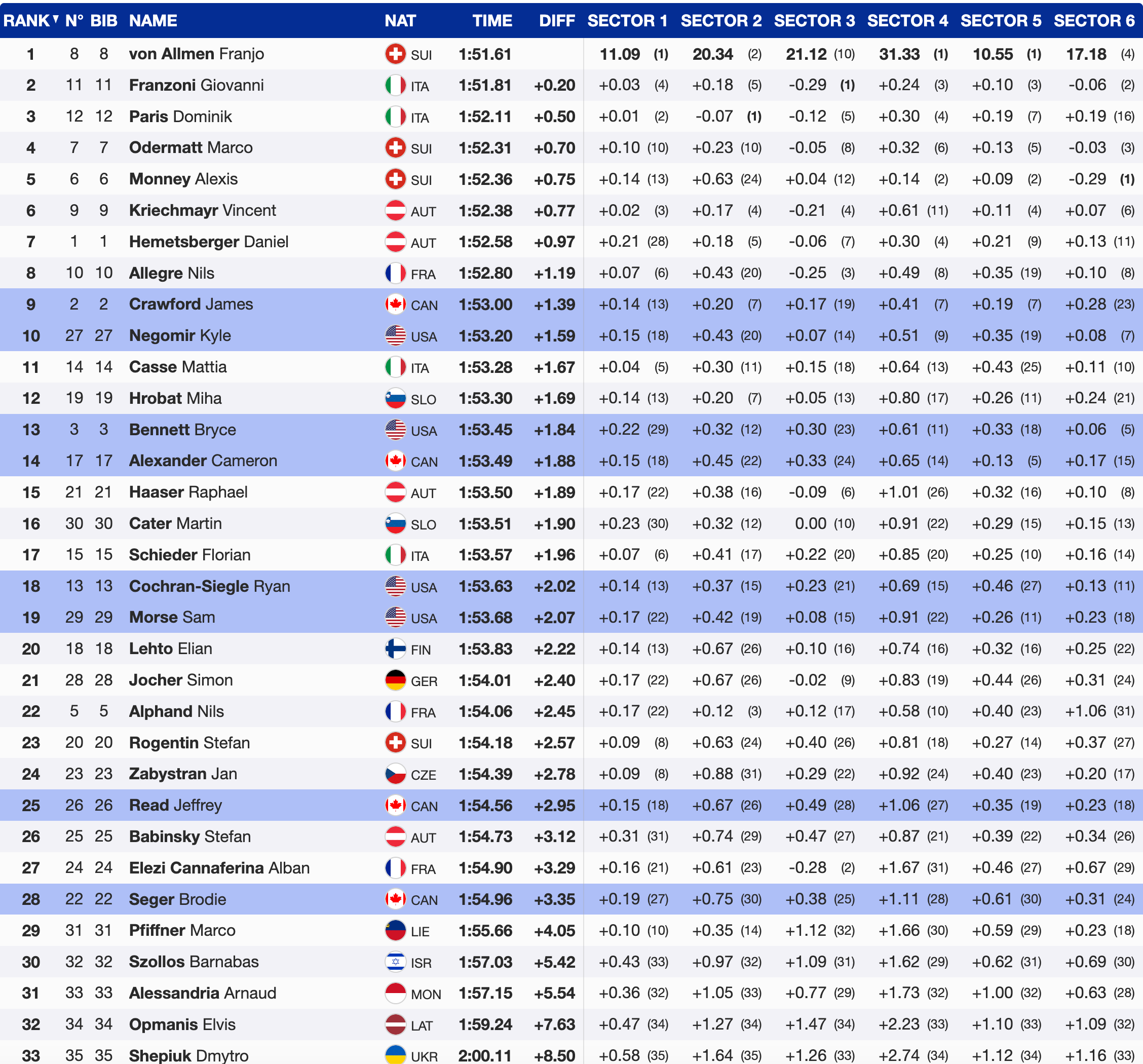
Analysis of the top three and Other North Americans among the top 15
About the Author: Katie Twible