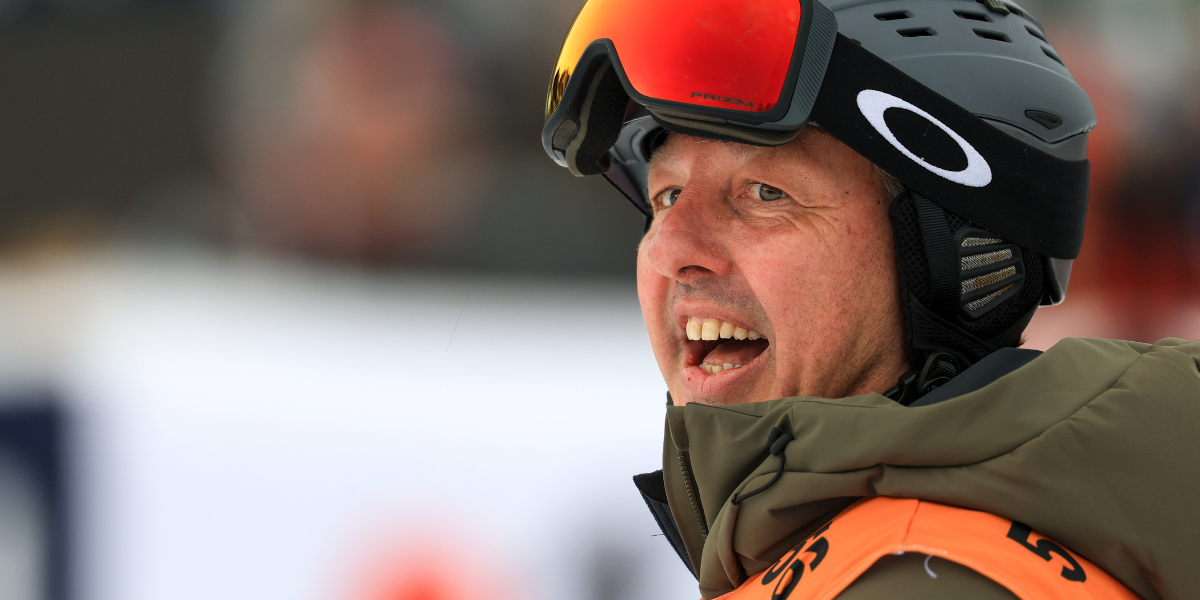
Featured Image: Alexander Ospelt/ GEPA
In one of the closest elections in International Ski and Snowboard Federation (FIS) history, Alexander Ospelt of Liechtenstein was elected president Thursday at the 57th FIS Congress, defeating incumbent Johan Eliasch by a single vote, 65-64.
The razor-thin result ends Eliasch’s five-year tenure leading the federation and ushers in a new era for international ski racing.
Ospelt, a lawyer and former president of the Liechtenstein Ski Association, campaigned on a platform of transparency, collaboration, and unity. Those themes remained central in his first remarks after the election as he acknowledged the divisions revealed by the narrow vote.
“The result shows we’re still divided,” Ospelt said during his first press conference as president. “I see this division as a chance, rather than a problem. My first task will be bringing unity and a common ambition to drive FIS forward together.”
A New Start for National Federations
The election was widely viewed as a referendum on the direction of FIS following years of debate surrounding governance, commercial strategy, and decision-making under Eliasch’s administration.
Rather than focusing on the campaign that led to his victory, Ospelt emphasized that his immediate priority will be listening to National Ski Associations (NSAs) and athletes.
“There’s a lot of work to do, but I want every NSA to feel like now is a new start,” Ospelt said. “I will take all their concerns seriously and every NSA must be treated with the same importance as any other.”
A recurring theme throughout his campaign was ensuring smaller federations have a stronger voice within the organization.
“I’ve requested that the bigger states show solidarity with the smaller states,” Ospelt said. “It’s not in anybody’s best interest to just have athletes from the leading nations competing in the World Cup.”
That philosophy could have significant implications for Alpine skiing, where a handful of traditional powerhouse nations continue to dominate participation, podiums, and resources.
Ospelt Outlines Vision for Alpine Skiing
Alpine skiing was front and center during Ospelt’s first press conference as president.
Responding to a question from Ski Racing Media contributor and Skiing is Believing podcast host Matt Garcka about the future growth of FIS’s premier discipline, Ospelt outlined a vision centered on modernizing the television product, elevating athlete profiles, and creating more opportunities for racers from emerging ski nations.
“I think we have to find a TV format which goes no longer than one hour, 50 minutes,” Ospelt said. “I think we have to make the athletes more visible. We have to promote the athletes more so they’re becoming stars. People want to see stars.”
The comments touch on several issues that have become recurring topics throughout the Alpine community in recent years. Broadcasters, organizers, and national federations have increasingly discussed how to make races more accessible to casual viewers while maintaining the sport’s competitive integrity. At the same time, athletes have called for greater visibility and stronger personal branding as a way to grow the sport beyond race-day audiences.
Ospelt also suggested FIS must do more to expand Alpine skiing’s global reach.
“We have to make Alpine as well more international,” he said.
Perhaps Ospelt’s most notable Alpine-specific proposal involved creating clearer pathways into the World Cup for athletes from smaller nations. He suggested that wild cards could be used to help promising racers gain experience and visibility at the highest level of the sport.
“If we have a Bulgarian athlete who is on the step to the World Cup, then we have to make him visible in the World Cup and give him a wild card so he can start in the World Cup,” Ospelt said. “These are only some ideas, but yes, we have to work on them.”
The concept reflects his broader belief that the long-term health of Alpine skiing depends on increasing the number of nations represented on the World Cup circuit.
When asked by Garcka about balancing the interests of skiing’s traditional powerhouses with developing nations, Ospelt again stressed solidarity.
“I think it’s in the best interest of the big nations that we do not compete only with Austrians, Swiss, Italians and athletes from the Nordic states,” he said. “They need this internationality as well.”
He added that larger federations have expressed a willingness to support emerging programs and athletes.
“I requested this solidarity between the states, that they help the smaller nations bring athletes into the World Cup.”

Financial Growth and Athlete Support
Another key pillar of Ospelt’s platform centers on increasing financial support for national federations and athletes.
He said FIS is already exploring new sponsorship and investment opportunities that could create additional revenue streams for the organization.
“We’re already looking at ways to gain additional stakeholders, investment and sponsors, in order to distribute more income to the NSAs and meet athletes’ requests for increased prize money,” Ospelt said.
The issue has become increasingly important across Alpine skiing, where athletes and national teams have voiced concerns about rising travel costs and the financial realities of competing on the World Cup circuit.
Ospelt believes stronger commercial partnerships can help address both federation funding and athlete compensation.
“We have to improve our situation and this will be in the best interest of FIS to gain additional stakeholders and sponsors,” he said. “The athletes are requesting more prize money, which I fully understand.”
For many athletes, coaches, and national federations, the success of those efforts may become one of the earliest measures of Ospelt’s presidency.
New FIS Council Elected
Congress delegates also elected 18 members to the FIS Council, including the USA’s Dexter Paine.
The newly elected council members are:
- Dr. Michael Huber (AUT)
- Flavio Roda (ITA)
- Magdalena Kast (ARG)
- Deidra Dionne (CAN)
- Tove Moe Dyrhaug (NOR)
- Fabien Saguez (FRA)
- Ken Odashima (JPN)
- Dr. Franz Steinle (GER)
- Dexter Paine (USA)
- Patrick Toussaint (AND)
- Victoria Gosling (GBR)
- Jean-Philippe Rochat (SUI)
- May Peus (ESP)
- Zhao Wang (CHN)
- Nevena Ignjatović (SRB)
- Martti Uusitalo (FIN)
- Tomaž Kunstelj (SLO)
- Jana Palovičová (SVK)
Belize was also welcomed as a new FIS member nation, bringing total membership to 142 national ski associations, while Guinea-Bissau was granted full membership status.
What It Means for Ski Racing
The narrowest presidential election in modern FIS history leaves Ospelt with a significant challenge: uniting a federation that remains deeply divided while delivering meaningful reforms.
For Alpine skiing, however, his early priorities were clear.
Throughout Congress, Ospelt repeatedly emphasized increasing athlete visibility, strengthening the World Cup’s commercial appeal, expanding opportunities for smaller nations, and creating a more sustainable financial future for athletes and federations alike.
Whether those ideas can be translated into meaningful policy changes remains to be seen. But after a one-vote victory that revealed a divided federation, Ospelt has already identified the areas where he believes Alpine skiing must evolve.
Sources: International Ski and Snowboard Federation (FIS); FIS Presidential Press Conference, 57th FIS Congress, Belgrade, Serbia; reporting by Ski Racing Media.
About the Author: SR Staff Report