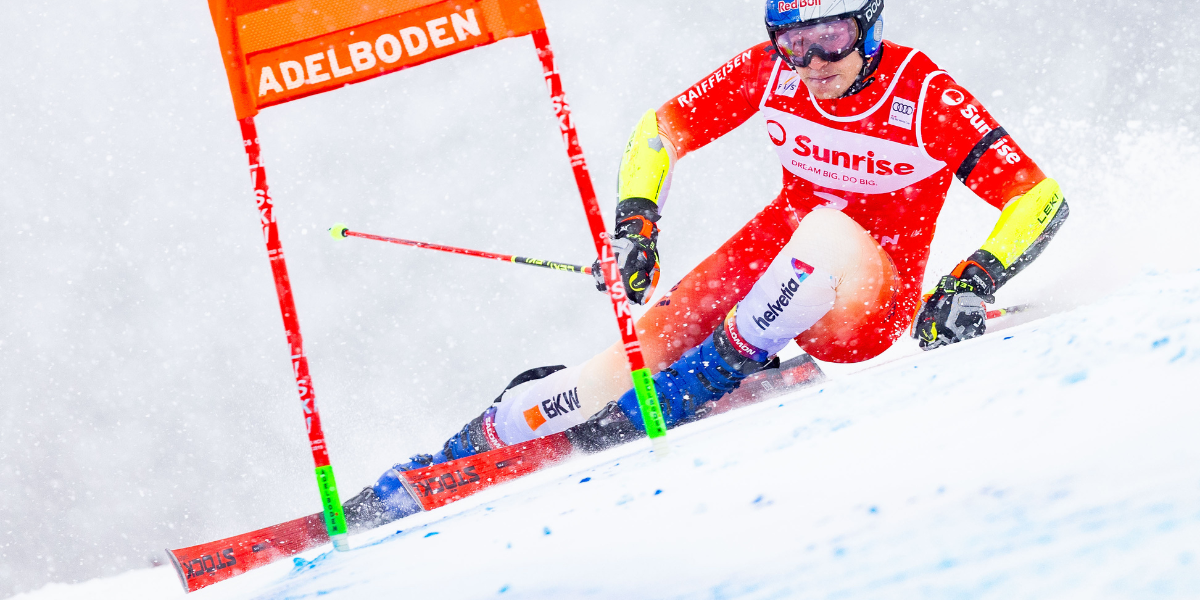
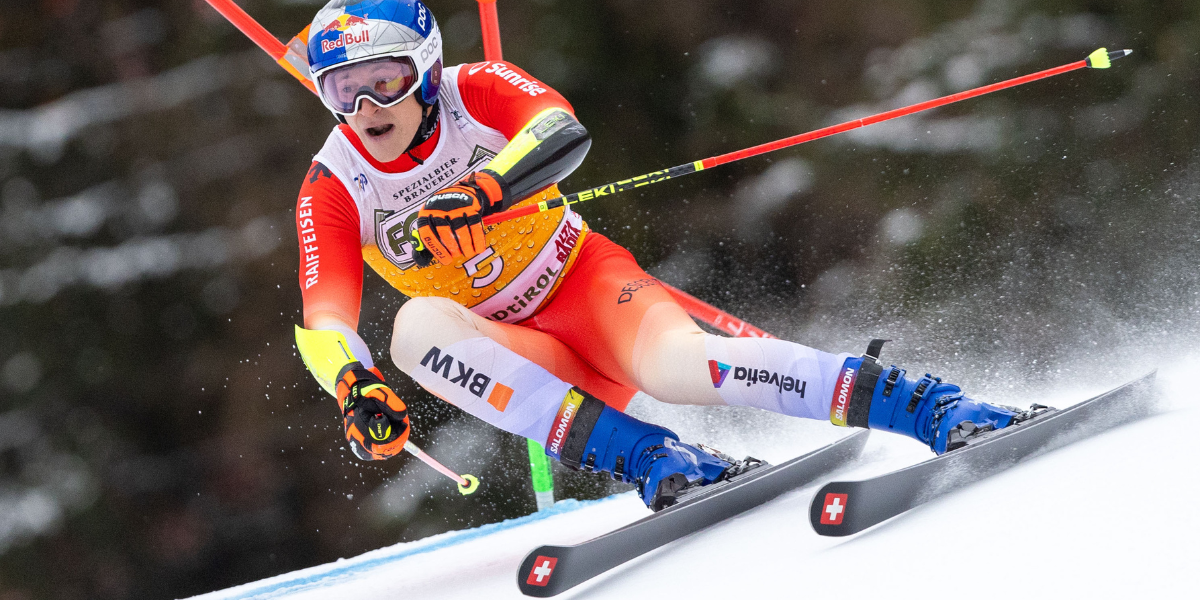
Marco Odermatt / Alta Badia 2024 / GEPA pictures
Arguably the most scenic and unquestionably one of the most iconic stops on the FIS Alpine World Cup tour, the Alta Badia Gran Risa celebrates its 40th anniversary this weekend.
Surrounded by the Dolomites in the South Tyrol region of Italy, the Gran Risa launched in December 1985. Its name translates to “great split” – a reference to the split in the forest through which mountain dwellers once hauled timber to heat their homes during winter. From the beginning, the slope announced itself as something special. In that inaugural running of the Gran Risa giant slalom, Swedish champion Ingemar Stenmark christened the course with his 80th World Cup victory.
A few years later, Italian hero Alberto Tomba would etch his highly celebrated mark on the slope, winning three consecutive races (1987, 1990 and 1991) and again in 1994. Although his compatriot Massimiliano Blardone came close with three Gran Risa victories from 2005 to 2011, no athlete would surpass Tomba’s streak until Austrian Marcel Hirscher hit the scene. The slalom, which made its debut on the Gran Risa in 2006, marked the beginning of Hirscher’s reign on the Italian slope, as he dominated the tight gates in 2011. He also went on to win the GS there for six consecutive years between 2013 and 2018. Alta Badia’s reigning alpine king is Swiss champion Marco Odermatt, who has landed five GS victories here, including four since 2022.
‘Coolest race on the World Cup’
Considered one of the most technical hills on the circuit, the Gran Risa’s slope angle maxes out at 69 percent, winding sharply through pine forests and sprinkled with surprise berms just when it seems to smooth out. Another athlete who has consistently conquered the course and still reveres it is American giant slalom hero Ted Ligety. The Utah native, known throughout his career as “Mr. GS,” says Alta Badia is “the coolest race on the World Cup.”
“It’s just so amazing to stand in the start gate looking at the Dolomites right out there,” says Ligety, who will be commentating on the 2026 Olympic men’s races for NBC Sports from nearby Bormio this February.
His fondness for Alta Badia began with slalom, the site of two of his best career World Cup finishes in the discipline – a second and third place in the 2006–07 season. Ligety then added the venue to his long list of GS victories in 2010 and 2012, before returning to the podium in 2013-14.
The ultimate opportunity to balance arcs and speed on steeps
“All the bends and turns in the trail, it’s steep and challenging the whole way, but it’s also right at that verge of being fully arc-able,” Ligety says. “You’re always at the limit of what is possible in skiing. Then, when you make the transition onto the flat, which has two big rollers, you have to let it glide, but also be precise on the timing. It’s a really tough hill to match the intensity from top to bottom. It’s an awesome spot, always a favorite.”
Not only is Alta Badia a favorite among racers, it is also one of the most watched stops among TV viewers across the globe.
“Everybody is trying to find that balance between arcing as much as you can and having to incorporate the speed control because it’s steep. You see some of the most unbelievable runs in the history of skiing happen on that hill because the people who find that balance can have an unbelievable race,” Ligety says. “You watched Marcel over a bunch of years have unbelievable runs or Ode in the last races. When you take those greats and put them on a hill where they can truly show their ability to separate themselves, it’s amazing to watch.”
Odermatt leads the GS standings and Norwegian Timon Haugan leads the slalom standings coming into the 2025 edition of the Alta Badia World Cup. The giant slalom kicks off Sunday and the slalom on Monday.
About the Author: Shauna Farnell