Featured Image: Ameila Smart/GEPA
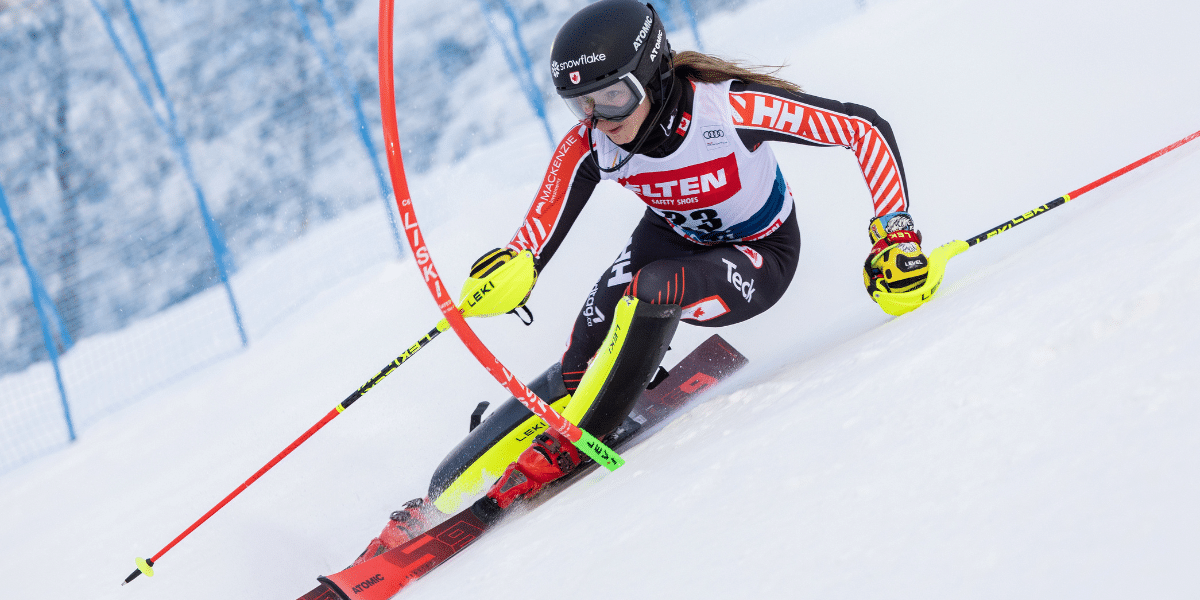
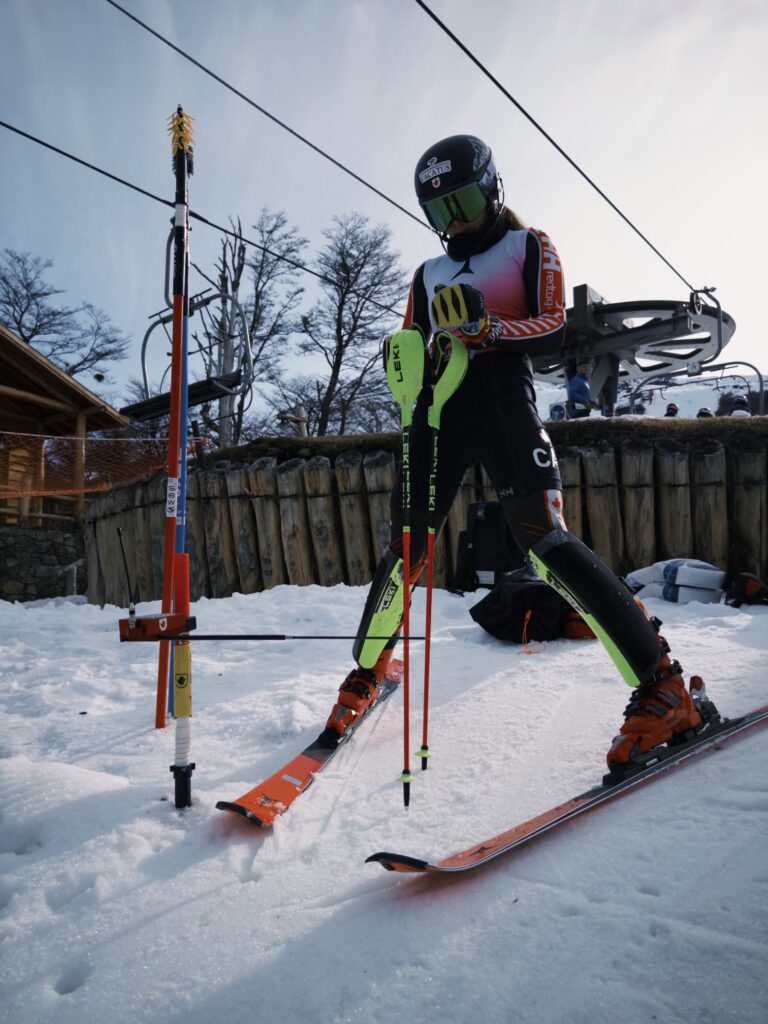
When it comes to consistency, composure, and curiosity on the World Cup circuit, Canadian slalom skier Amelia Smart is quietly carving her way into the sport’s most competitive scene. With Levi World Cup slaloms on deck this weekend, Smart arrives with a clear head, a deep sense of perspective, and a renewed appreciation for the unpredictable rhythm of elite sport.
“It’s funny. I always thought my progression would be linear,” Smart laughs. “You know, step by step, make a second run, get a top 20, then a top 10. I had one of those seasons where it really happened that way, and I was like, ‘Okay, I’ve made it.’ But that’s not how ski racing works.”
From Whistler to World Cup
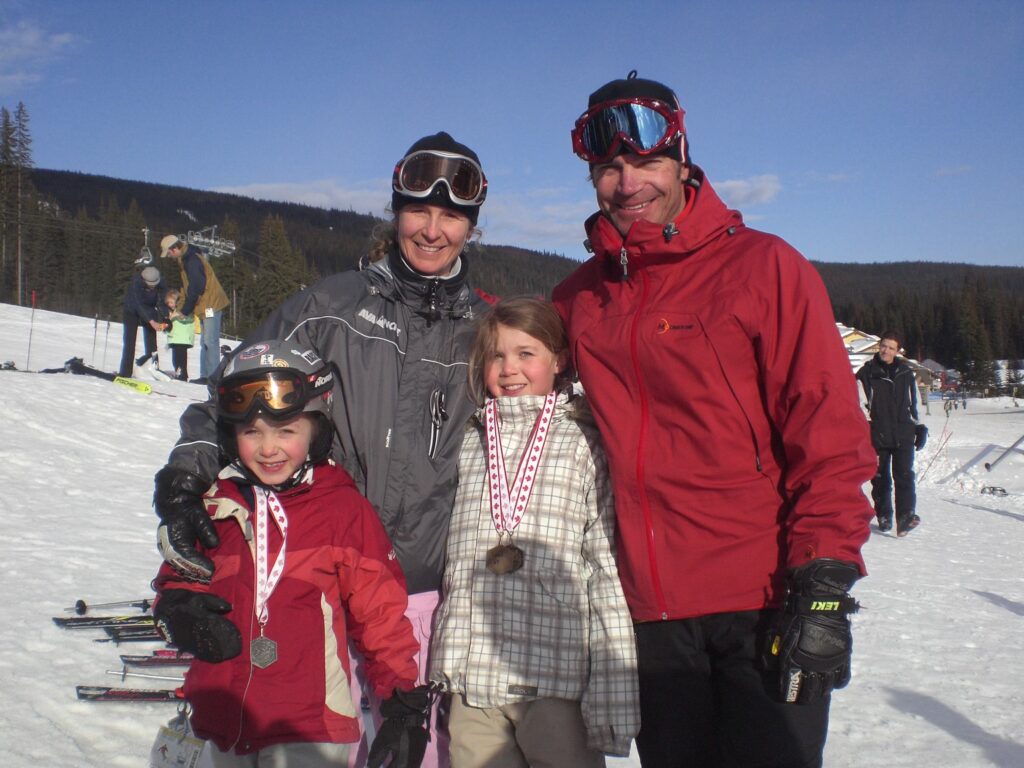
Born in Vancouver and raised across some of Canada’s most iconic mountain towns, Smart’s ski roots run deep. She learned to ski in Whistler and New Zealand, spent early years on the slopes of Big White, where her kindergarten was located right on the mountain, and eventually settled in Vernon, skiing for Silver Star and later Panorama, where her father, Steve Smart, coached her through U16.
“I don’t think I’d be where I am without my parents,” she says. “My dad really instilled a work ethic mindset. I probably hated it at the time, but I think that’s what’s helped me most in the long run.”
That work ethic led her to the University of Denver, where she balanced World Cup starts with NCAA racing, an experience she credits for grounding her through the sport’s intense highs and lows. Smart graduated with a double major in Computer Science and Environmental Science, later completing a Master’s in Water Security focused on snowpack modeling and sustainable snowmaking.
“I think being in college forced me to really decide why I wanted to keep ski racing,” she says. “It would’ve been easy to just be a normal student. But figuring out the why — that’s something I still come back to.”
The Nonlinear Path
That “why” has carried her through the unpredictable world of World Cup slalom, a discipline where margins are razor thin and the competition is as deep as it has ever been.
“The hardest part is realizing that progress isn’t linear,” Smart admits. “I had a breakout season where everything just clicked. But since then, it’s been up and down. You start questioning if you’re getting worse, but you have to remember, World Cup racing is volatile, especially in tech events. You just have to keep showing up.”
That resilience is fueled by her technical precision and her evolving mindset. Known for her analytical nature, Smart says learning to let go, even just a little, has been key.
“I’ve always been rigid, very process-driven,” she explains. “But the best races I’ve had were when I was playful, when I went in it with a smile, no expectations, and just skied. That’s hard to do when you’re so focused, but I’m realizing that’s where my best skiing comes from.”
Support and Sisterhood
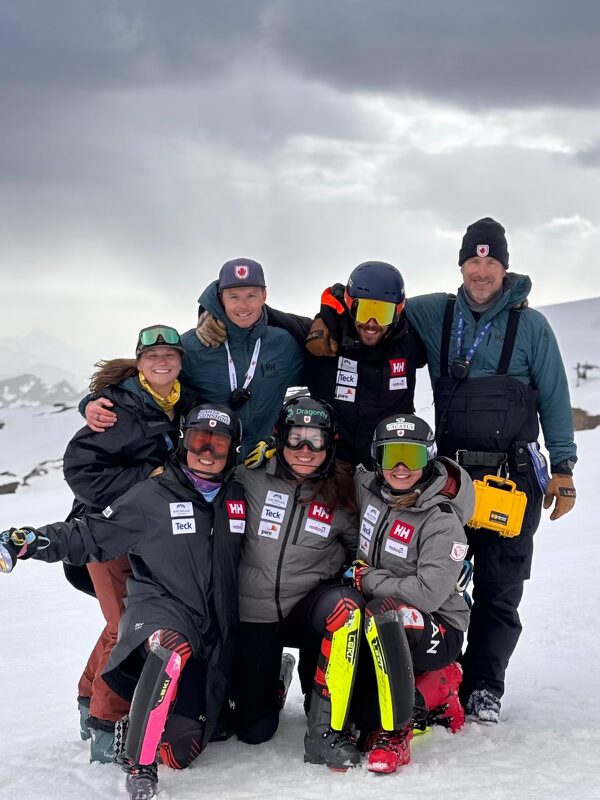
The current Canadian women’s tech team is one of the tightest-knit groups on the circuit. Smart, alongside longtime teammates Ali Nullmeyer, Laurence St-Germain, and a growing group of emerging tech skiers, describes the environment as a blend of healthy competition and genuine friendship.
“We’re all introverted in our own ways,” she says with a laugh. “But the vibe is good. We all push each other without making it negative. If someone crushes a training run, it’s like, ‘Okay, I want to do that too.’ But it’s supportive. It’s motivating.”
Smart also credits the all-Canadian slalom coaching staff for understanding the unique challenges that come with being far from home.
“Our coaches get it,” she says. “They’re away from home too; they know it’s hard. It makes a big difference when they create that homey feeling on the road. Last year, they even made sure we had apartments over Christmas, so it felt special.”
Resilience, Redefined
When asked about mental toughness, Smart doesn’t hesitate. “So many hurdles,” she says with a smile. “And it’s usually the same one.”
Her greatest challenge? Overthinking.
“I can analyze myself right out of a mindset,” she admits. “Something works for a few races, and then it doesn’t, and I’m like, ‘Back to the drawing board.’ But I’ve learned to stay curious, to keep asking what’s going to work this time.”
Smart has worked with several sport psychologists over the years and says this season she’s focused on bringing more playfulness into her skiing. “Every time I’ve gone into a race thinking, ‘Let’s just play,’ I’ve skied my best. It’s that simple and that hard.”
Beyond the Bib
Off the hill, Smart fills her cup with climbing, mountain biking, and wing foiling, a sport she took up a couple of years ago on the lake in Invermere. “It’s so fun,” she grins. “Cold water but worth it.”
She also continues to explore her academic passions, with long-term interests in water resource management and environmental planning. “Maybe one day I’ll work in city water planning or at a treatment facility,” she says. “But for now, skiing is still the focus.”
Looking Ahead
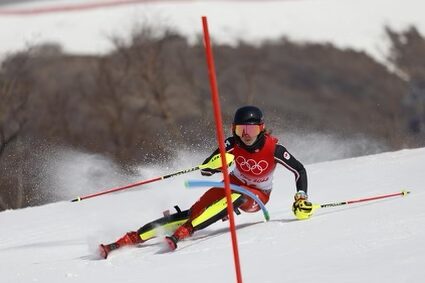
With another Olympic season on the horizon, Smart is keeping her approach steady.
“The World Cup season doesn’t change,” she says. “If I ski well, I qualify. If not, I don’t. It’s the same process. But if I do make the Olympics again, I just want to soak it in more this time and really experience it. Last time with COVID, it was so restricted. We missed the opening and closing ceremonies. This time, we’re all going.”
Asked what the future looks like, Smart smiles thoughtfully. “I don’t know,” she says. “I’m definitely in the later part of my career, but I still love skiing, I still love the challenge. I’ll know when it’s time to do something else, but right now, I’m excited for what’s ahead.”
As the World Cup heads north to Levi, Amelia Smart stands poised, grounded by her work ethic, strengthened by her curiosity, and ready once again to play.
About the Author: Katie Twible