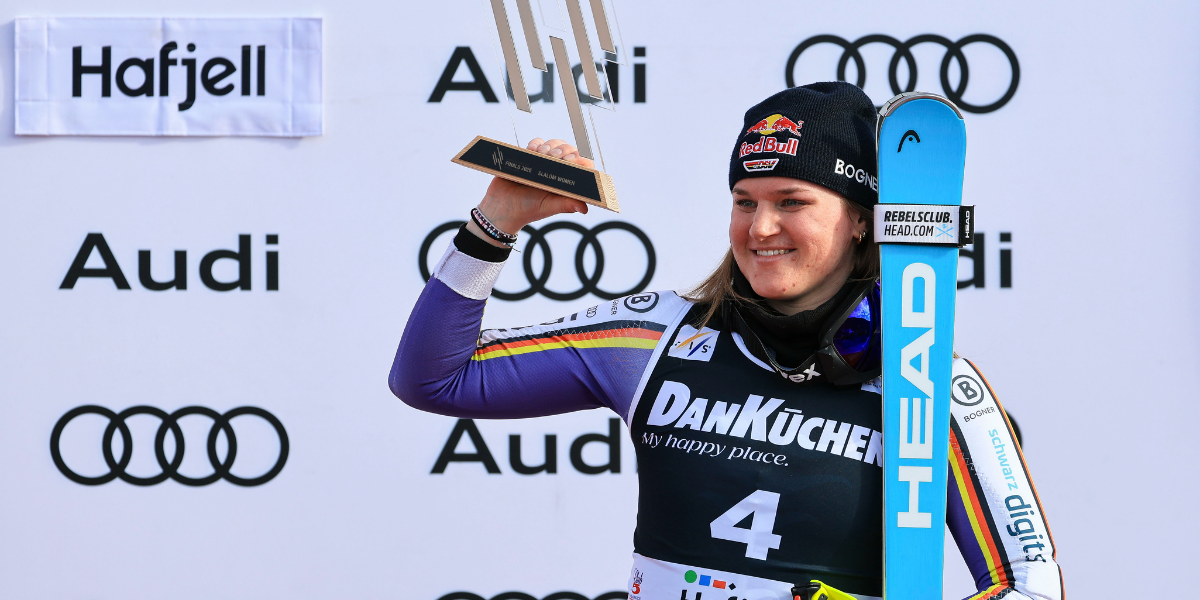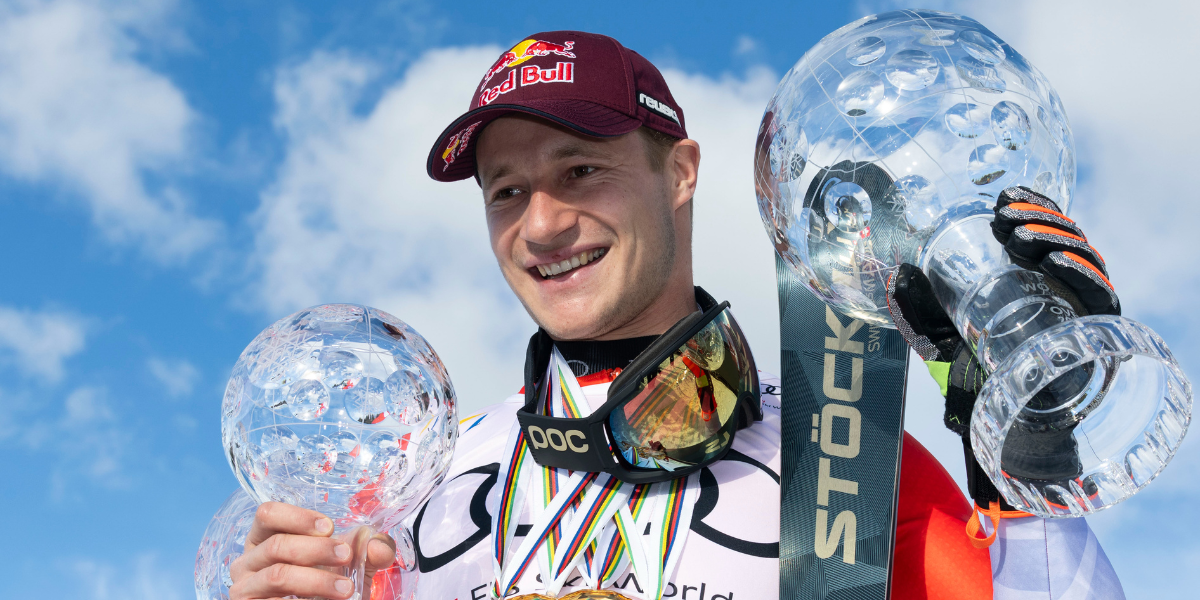
Photos courtesy of Anna Sullivan/American Downhiller
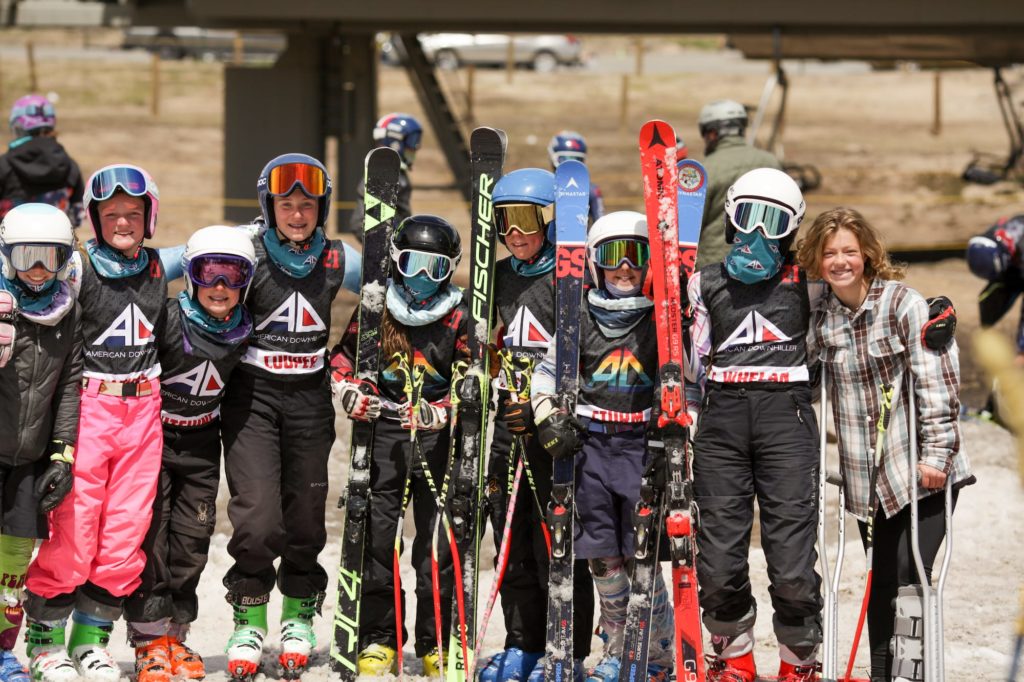
Among the ski camps restarting after last year’s COVID hiatus was the American Downhiller speed camp, which recently concluded at Mammoth. Now in it’s fourth season, the five-day camp — aimed at U14 and U16 athletes — once again harnessed an all-star crew of coaches with World Cup chops. Among the regulars were current World Cup athletes Steven Nyman and Bryce Bennett, along with DH legends Daron Rahlves, Leanne Smith and American Downhiller creator/spirit animal Marco Sullivan. They were joined by coaching greats Johno McBride and Chris Brigham and “rookie” coaches Tommy Biesemeyer, Laurenne Ross and Tricia Mangan. In a gross understatement, the American Downhiller staff is STACKED.
Success amid challenging conditions
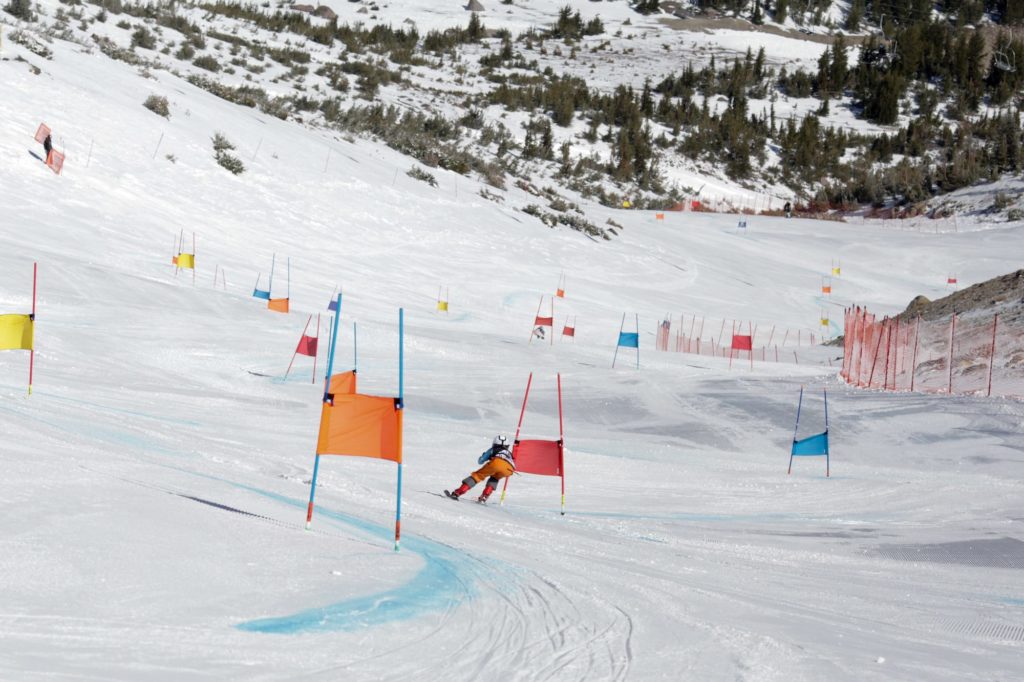
Unlike in past years, COVID restrictions required this to be a day camp, and required that each group remain separate from each other throughout training. The greater challenge was snow conditions, with Mammoth’s snowpack significantly less than normal, and warm weather leading up to the camp. Mother Nature, however, threw down her support with a late snowstorm leading into sub-freezing nighttime temps, making the conditions perfect.
How it rolled
“All went flawlessly,” reports Sullivan, whose entire marketing program involved one Instagram post. Nonetheless the camp filled beyond capacity, with 77 athletes (including eight FIS-level mentors) divided into eight groups, with two-three coaches per group. Day 1 was spent freeskiing, talking through speed concepts and getting comfortable with Mammoth’s natural and custom-built terrain, including the infamous Hare Jump, as well as wave tracks and gliding sections. That led into three days in gates on two separate super G courses. It all came together on Day 5 for three full, timed SG runs linking everything together.
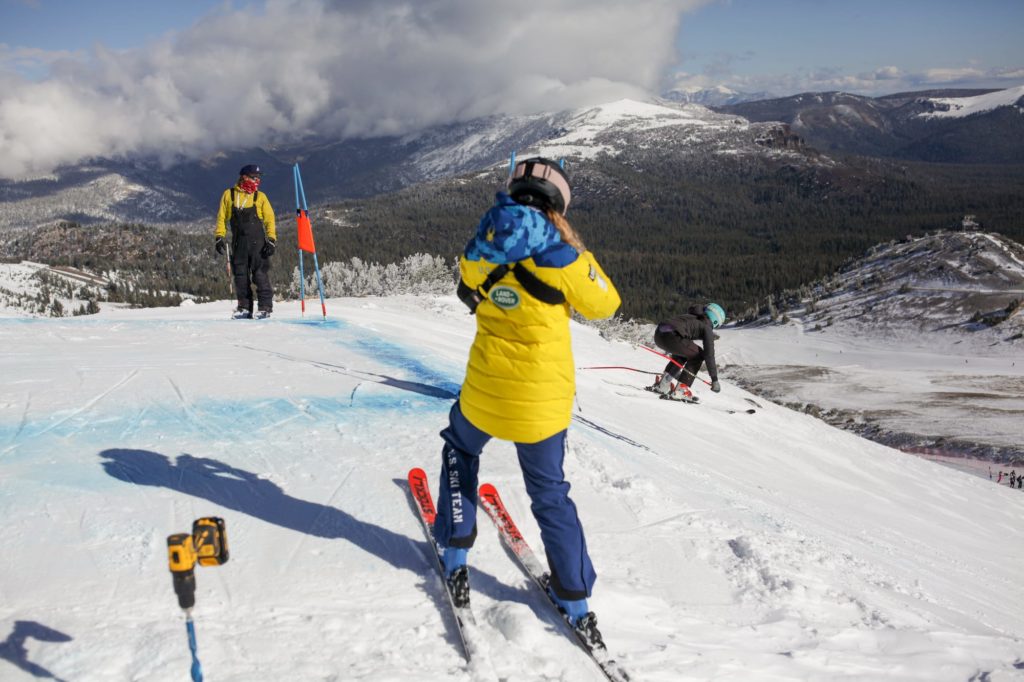
Sullivan sees a huge opportunity in sharing speed tactics, something that often gets overlooked when coaches are focused on making kids technically strong. “Sometimes it’s about sending it and finding the fall line,” says Sullivan, who, along with his wife Anna Goodman, now coaches the Squaw Valley Ski Team. Going straighter, finding your tuck, making speed — these are all things that can be difficult to put into words, but that American Downhillers know in their bones, and can exude as well as demonstrate.
Every afternoon camp moved to the park in town, where coaches led the groups through dry-land sessions. McBride, longtime U.S. Ski Team coach and current alpine program director of Aspen Valley Ski Club (AVSC) is notorious for his creative dry-land and team-building, and took charge, utilizing sand pits, picnic tables, obstacle courses and competitive games. “I want dry-land to be a good experience,” said McBride, who also stressed the importance of team. “Teaching kids that team element of the sport is so important. It will end up carrying you a long way if you figure it out.”
COVID adjustments
The team aspect was further played up through the COVID-required groups. Each group had its own color buff, which reinforced a sense of team unity. Smaller group sizes eliminated the nightly talks by World Cup stars, but fostered smaller, more personal interactions within each group. Athletes wanting to connect with a specific coach did so organically, often at dry-land, in a socially distanced way. The other major COVID adjustment was turning it into a day camp, which allowed parents to see the action firsthand. “There were a ton of parents every day hanging out at the Hare Jump,” said Sullivan, who got enthusiastic feedback from the spectators.
The goods and the gear
Another new feature this year was exclusive American Downhiller poles, custom bent for each camper by legendary pole-bending savant Mark Archer, AKA Speedy. Archer’s poles, once ubiquitous on the World Cup speed circuit, are now a rare and coveted commodity. “Some of the kids brought them to dry-land so they would not lose sight of them,” says McBride.
Further support came from Clif Bar, which provided tasty fuel, and money for one full scholarship, split between two athletes. ADL Ski Club, which runs dream trips for passionate skiers, sponsored an additional three half scholarships and Nordica donated four sets of junior super G skis for kids without their own speed skis to use.
The seeds of speed
McBride, whose editorial in Ski Racing, “Preserving Speed in the USA,” explored the challenges and benefits of developing speed skiers, is a proponent of introducing kids to speed elements at a young age. At AVSC McBride runs speed camps for kids age 7-11, introducing them to the many subtle skills of skiing speed, like gliding, traversing, skiing with minimal edge angle, aerodynamics, jumping and managing pressure through terrain. “Little kids have a built-in governor,” McBride notes. In his camps, athletes must demonstrate proficiency at each element before moving on to the next, and ultimately tying it all together. Because it is so fun, the kids are motivated to learn each skill and progress safely, making “speed camp” a highlight they talk about all year.
He and Sullivan both address the misconception that you need a huge amount of real estate to train speed, and maintain that you can train elements at nearly every mountain. “You can do a lot with a jump, a wave track and some glide turns,” says Sullivan. This year’s camp was a good example of working with limited space due to snow conditions. “You don’t need a full venue and a whole trail,” says McBride. “You can work on pieces of the puzzle and then put them together.”
McBride advocates for shifting the messaging about speed, starting with the national team communicating to families that “learning how to ski fast and over bumps is what we do. It ties into what we do across the board.” This, he feels, would reduce the stigma and perception that it’s either one way (speed) or the other (tech). “If everyone tries to teach speed elements to little guys, you are not doing anyone a disfavor.” Folding speed fundamentals into development also reduces the trepidation that goes along with introducing speed when athletes are older, and the stakes (speed, risk, cost) are higher. The next step — one McBride and Sullivan would like to see — is creating speed opportunities across the country, at different times of the year.
Win-win scenario
The acknowledged need for speed development and the resources represented by American Downhiller would seem to provide an obvious solution to our country’s speed challenge, or at least a worthy question to ponder. How can the talent of the American Downhillers — our own national treasure — be deployed to inspire and develop future speed skiers in this country?
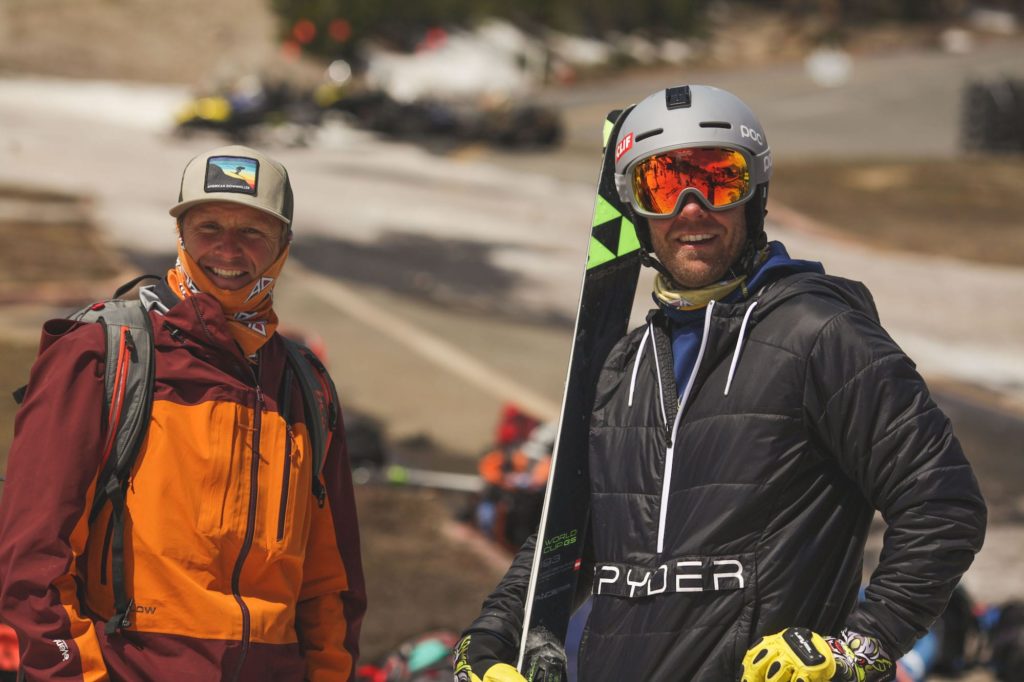
American Downhiller offers a way for U.S. Ski Team alumni to stay connected, to give back and to be fairly compensated for their efforts. “Keep the cycle going and you keep building your staff. What a great model,” says McBride, who has seen that most former athletes — even the most selfish during their own careers — want to give back. “If I was still engaged [with the U.S. Ski Team], I would set up a forum or avenue to bring in alumni and use it as an educational experience,” says McBride. “Any knowledge you could impart on a young coach or athlete is priceless.”
Laurenne Ross concurs. While still competing, Ross ran her own weekend camp in Mt Bachelor and this year coached her first American Downhiller camp. As a kid she remembers watching and cheering Bode Miller and Daron Rahlves at the Lake Louise World Cup. “Cheering for them and interacting with them — it felt like I was a part of something big,” says Ross. “There is something so cool about the American Downhiller camps and getting the next generation and community to connect.”
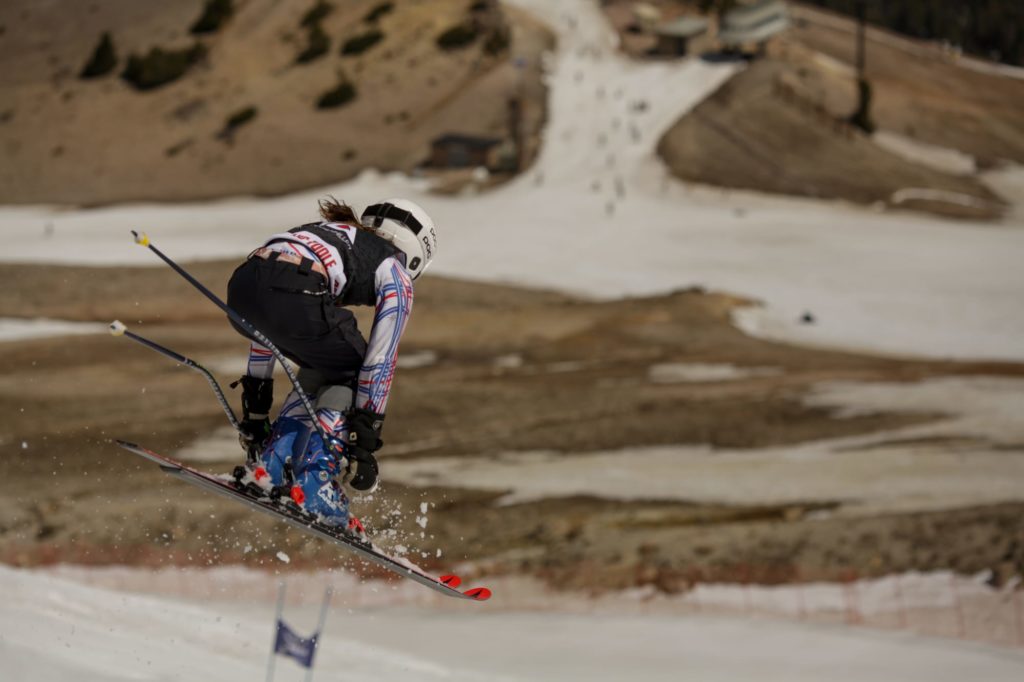
When COVID restrictions and complications lift, could American Downhiller be enlisted to reach a broad range of athletes, from U14 all the way through the national team? Rather than have the American Downhiller brigade roll in after the national team athletes leave a speed camp, what if they overlapped? The potential for coaches education seems similarly huge. What if a subset of the American Downhillers came out to Copper Mountain speed projects early season, and the geographically diverse squad of talent took on smaller local projects for kids of all ages?
“I don’t want to go fast and have fun,” said NO KID EVER. If nothing else, American Downhiller will continue to be a star-studded camp for the lucky kids who can attend, though for fans of U.S. skiing it is hard not to dream of it being something more. “The coolest part is getting all these people together and seeing what happens,” says Sullivan, who adds, “The biggest thing for me, is that those 77 kids were having the best time.”
The American Downhiller 2021 crew:
Chris Brigham
Johno McBride
Leanne Smith
Daron Rahlves
Steven Nyman
Bryce Bennett
AJ Kitt
Anna Sullivan
Dane Spencer
Keely Kelleher
Wiley Maple
Travis Ganong
Marie Michele Gagnon
Keely Cashman
Laurenne Ross
Tommy Biesemeyer
Scotty Veenis
Tricia Mangan
About the Author: Edie Thys Morgan