Photo: Fondazione Cortina/Mattia Rizzi
The former Sports Illustrated cover boy exceeded all expectations in Italy, while on the comeback trail from injuries. Kurka, on preparing to face his Paralympic opponents in March 2026: “I will beat them when it matters.”
Andrew Kurka shows no signs of slowing down after 15 years on the U.S. Para Alpine Ski Team and a laundry list of injuries.
Kurka’s first victory since badly injuring a shoulder at the Beijing 2022 Paralympics came on Cortina d’Ampezzo’s renowned Olympia delle Tofane piste. The 32-year-old Para ski racer from Palmer, Alaska, won a downhill in the men’s sitting class at the Para Alpine World Cup in the Italian Dolomites resort on Jan. 30.
He celebrated with teammates and coaches. However, Kurka explained that his primary motive was not to be the fastest but to gain valuable insight as he prepares for his fourth Paralympics in Milan-Cortina 2026.
“My performance was focused on coming here and building on what I once was and what I’ve done in the past,” Kurka said. “I’ve had a lot of injuries. In Beijing (2022 Paralympics), I broke my arm and had a shoulder injury and thumb surgery. Before that, I broke my back, femur, a lot of bones. I was out for a year and a half.
“I really didn’t come out here trying to win the downhill, but rather with the idea that I’m going to ski this downhill smart. I’m going to finish and prepare myself for Cortina (2026).
“That being said, preparing myself for Cortina, the slope is looking really nice. It’s firm. It’s steep and you have to commit to every single turn.”
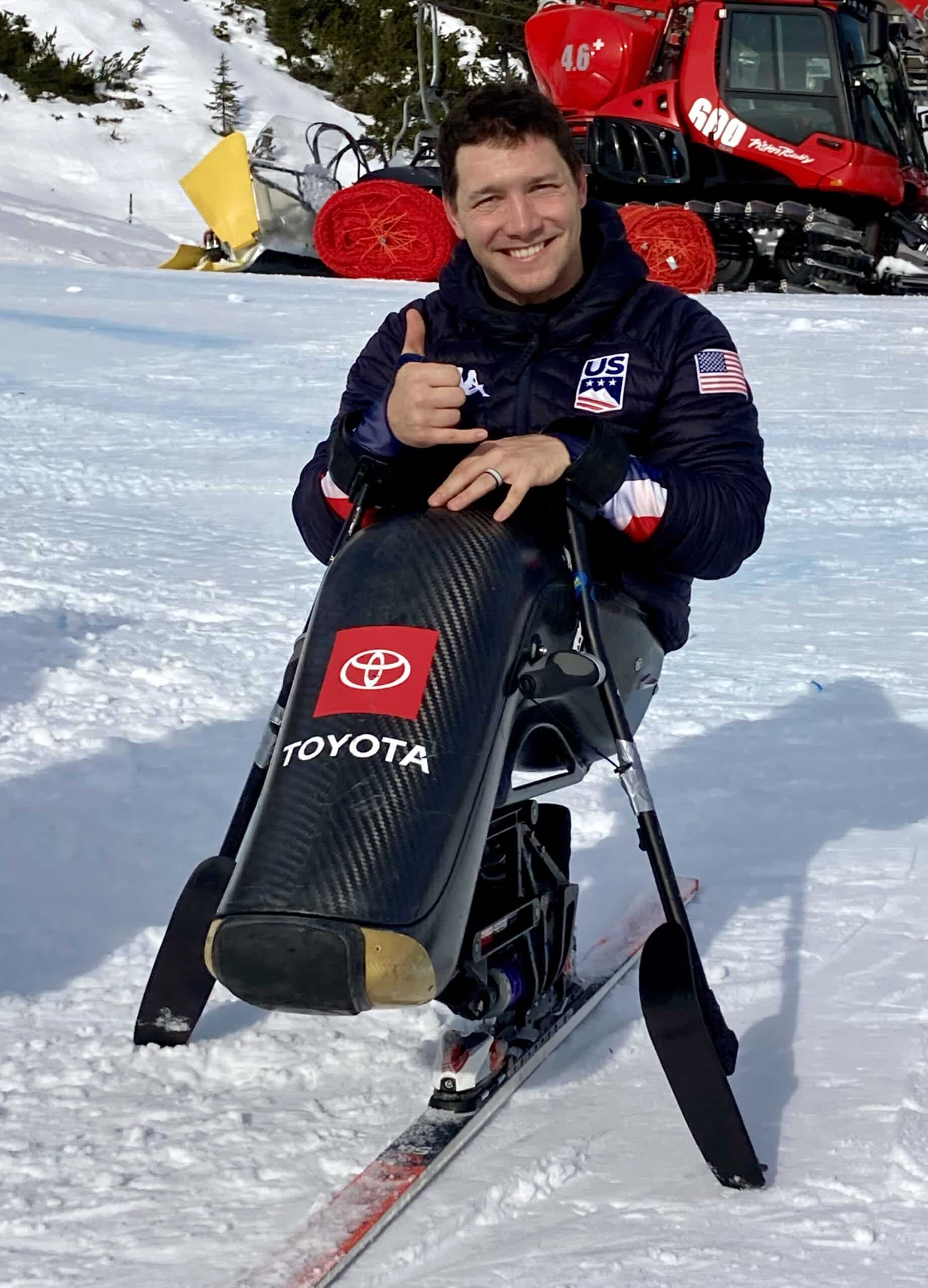
Fastened into his Toyota-sponsored monoski, Kurka blazed down the future Olympic and Paralympic piste on a hard, fast surface under sunny skies. Temperatures hovered just above freezing. He clocked a time of 1:21.44 to take victory. Kurka was 0.19 seconds faster than his nearest challenger, Kurt Oatway of Canada.
Click on images to enlarge

No Fear Down the Tofane Schuss
Fondazione Cortina successfully organized and contested four days of Para Alpine racing from Jan. 30 to Feb. 2 at the 2026 Cortina d’ Ampezzo Olympic and Paralympic venue, the “Queen of Speed.”
Para Alpine racers across three classes — sitting, standing, and visually impaired — challenged the same formidable Olympia delle Tofane course that the able-bodied World Cup women had taken just days prior. Considering numerous crashes on the future Olympic and Paralympic track – including top names Mikaela Shiffrin, Corinne Suter, Priska Nufer and Valérie Grenier – tensions were high among the Para athletes.
Lack of confidence or fear certainly doesn’t pose a problem for Kurka, the PyeongChang 2018 Paralympics downhill gold and super-G silver medalist. As the Para ski racers kicked out of the 2,160-meter start above the signature Tofane Schuss, he used this fearlessness to his advantage, racing the Italian course for the first time.
“A lot of guys are a little worried to stick their face in it — I’ve never had that issue,” Kurka said. “Many guys were startled or worried about going down the Tofane Chute. That was the easiest part of the entire course.
“They’ve skied this hill before and raced this course. I couldn’t because I was injured. I came here with the mindset that this is training for Cortina (Paralympics 2026).
“When I race these events, I’m not trying to crush all the young kids,” he said, referring to the World Cup. “I have been through it, having competed at the Games. I’m here to learn. I’m here to assess. And I will beat them when it matters.
“I will be prepared when that day comes,” Kurka said.
In the men’s super-G, Kurka let off the gas, racing “70 percent.” He finished fifth in a race won by local hero René De Silvestro.

Journey to Becoming a Champion
Kurka has been on the U.S. Para Alpine Ski Team since 2010. He gained his first experience on the World Cup circuit that same year.
The Alaskan qualified for his first Paralympic team for Sochi 2014 before his impressive gold and silver medal performance at PyeongChang 2018. After an untimely accident, Kurka then defied all odds, persevering and competing at a third Games in Beijing 2022.
Kurka finished fourth in the men’s sitting downhill in China, just 0.08 seconds out of the medals. Astonishingly, he raced roughly an hour after a nasty crash on an adjacent training course, resulting in a broken arm and a slew of injuries, impacting him physically and mentally. But he raced anyway. It was an awe-inspiring performance.
Andrew’s first Olympic dream wasn’t on the slopes but on the wrestling mat. He was a six-time Alaskan state champion in freestyle and Greco-Roman wrestling. However, this dream ended abruptly at age 13, after an all-terrain vehicle accident severely damaged three vertebrae in the middle of his spinal cord. Two years later, he first tried the monoski that his physical therapist encouraged through a program called Challenge Alaska.
Akin to the mindset of dominating athletes like Tiger Woods and Novak Djokovic, Kurka asserts that he centers everything he does at this stage of his career around succeeding at the major events, and in his case, that means the Paralympics.
“Absolutely,” Kurka says, asked if he’s already focused 100 percent on winning more medals at the Milan-Cortina 2026 Paralympics.
“That’s the big one — that’s the money-maker. My win in PyeongChang is the one that helped me buy my bed and breakfast,” he says. Kurka and wife Veronika own and operate a B&B named the Golden Standard at home in Palmer. They gear their business toward helping people with disabilities enjoy the outdoors.
“It’s why we do what we do — it is the one event every four years that determines who the best in the world is,” Kurka says. “It’s the one race that can really change our lives.”
Follow Brian on Instagram – @brian.pinelli

About the Author: Brian Pinelli