“Ma! I’m going to the Olympics!”
In a whirlwind of a season, one that left 24-year-old Bella Wright undergoing emergency surgery and missing two months of racing mid-season due to a broken ankle, the speed skier’s dream came true as one of 11 women named to the 2022 Olympic team.
Wright clicked into her first pair of skis at three years old and began chasing her two older brothers, Cole and Bronson, around the notorious mountains in Little Cottonwood Canyon, Utah. It wasn’t long before she was pursuing a passion for ski racing at Snowbird Sports Education Foundation and moving up through the domestic ranks. Wright was first nominated to the U.S. Ski Team just last year, as a member of the Development Team.
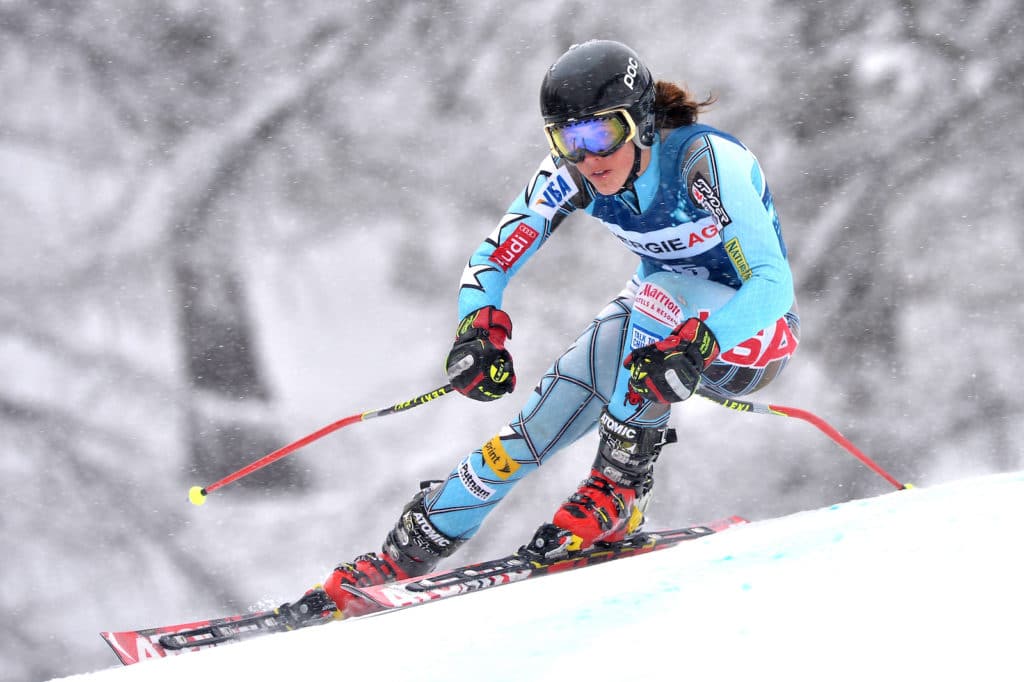
A strong junior athlete who achieved many NorAm and FIS podiums, including the 2019-20 NorAm title in super G, Wright came into the 2020-21 World Cup season as a consistent speed skier. Now a member of the B Team, Wright’s performance as a first-year U.S. Ski Team athlete even shocked herself.
“I didn’t really know what I was expecting last year being my first full World Cup season,” said Wright. “I started to build my confidence and see a lot of improvements in my skiing. I think it was being on the U.S. Ski Team, and being surrounded by such fast and amazing skiers, I was really excited to be right in there with everyone.”
Finding her arc
Wright began chasing her childhood dream surrounded by her role models on World Cup courses she had only seen on TV. There was no shortage of excitement but lacked the confidence in her first races of the 2020-21 season. Wright tapped into the many similarities between the World Cup and NorAm circuits to overcome her own limitations and snag her first World Cup points at her second stop on the tour.
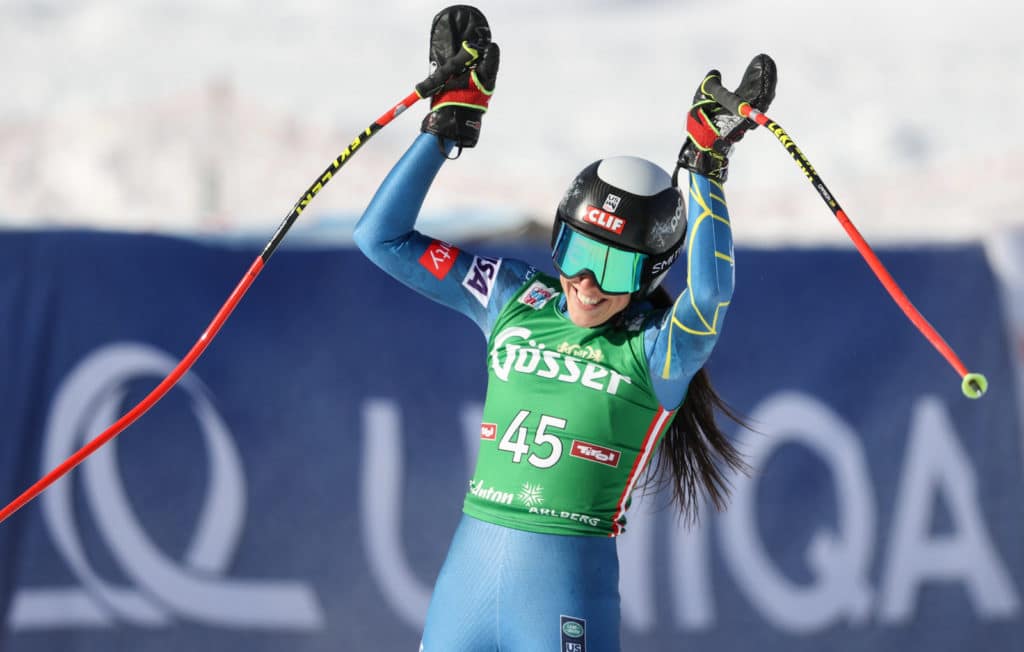
“I just had to break over that barrier mentally,” said Wright. “Once I got to St. Anton and scored my first World Cup points, it just felt more natural in my head, and I had the confidence I could ski in the top 30. Instead of just aiming for just getting at least top 30, let’s try to move that more. I moved up and up each race and each venue.”
With each new venue came another top-30 finish, seven finishes in a row. Wright had found her rhythm and tried to use her lack of familiarity with new venues to her advantage. She was trusting in her ability to ‘just ski,’ and continued to move through the ranks, eventually scoring her best result ever in Val di Fassa, Italy, landing in the top fifteen.
“I was just so ecstatic about last season and how everything turned out,” Wright remincined. “It’s really important for me to continue to build my confidence.”
Olympic hopeful
After her first full World Cup season, routinely in the top 30 in both super G and downhill, Wright was ready for more this Olympic season. Then unfortunately came “Stone” — the stuffed-animal goat she named in tribute to her gallstone blocking a duct in her gallbladder.
Wright had just arrived at her second speed camp in Zermatt when she woke up in excruciating pain only to find she had the beginning stages of an infection. Wright’s ski camp turned into a five-day hospital stay after removing her gallstone and gallbladder in emergency surgery. When she flew home days later, Wright began a four-week recovery where she wasn’t allowed to lift more than 10 kg.
“I was really worried for a while,” said Wright. “I maybe bent the rules a little and really started to progress with my training again at the end of October. I did testing and my strength numbers were actually higher than the summer, so I felt like I got my strength back quickly and was feeling even better than last year.”
Wright returned to snow in early November at Copper Mountain. If there was one positive to running first during a 6-a.m. training session, it’s that by the time Wright had finished her run and was back on the lift, her competitors sharing the training venue were making their way down the course. For a visual learner like Wright, this birds-eye-view of her line choice, ski pressure, and execution gave her the immediate feedback to learn and execute run after run.
“I’m a pretty big visual learner,” said Wright. “It really just helps me see their line and gauge how I felt and how my run was. You don’t get to see that often.”
Wright was in the final days of her Copper training block when she and her teammates received a text from former teammate Lindsey Vonn that “Coach Vonn” was coming. Over the past year Wright and Vonn formed a special virtual connection where Vonn would reach out to Wright over Instagram and text message with personalized video analysis and advice on how to succeed at each venue. Up until her appearance in Copper, Wright had never worked with Vonn in person.
Vonn skied side-by-side with Wright throughout her entire inspection, giving her advice prior to her runs and feedback the entire 12-minute chairlift ride back to the start. Wright’s dream of being Vonn’s teammate came true, and seeing her expertise in terrain and line choice helped Wright’s progression as a speed skier.
“I remember being so crushed when I was never named to the team before she retired.” shared Wright. “Even though I have gotten to know her better over the last year it was definitely a moment in my life that I had to pinch myself. To have her on the hill and for inspection, and have her guidance, giving us tips on how to be fast in certain sections, it was just super valuable.”
Back to the hospital before Beijing
Wright was thrilled to be back in Lake Louise for her first race of the season. She had fast sections of solid skiing mixed with small mistakes leading up to the season opener. Her first World Cup race was no different than training — solid sections paired with mistakes that ultimately cost too much time. Wright narrowly finished in the top-30 her first downhill day (27th), but missed a second top-30 downhill finish the next day, just 0.05 seconds behind.
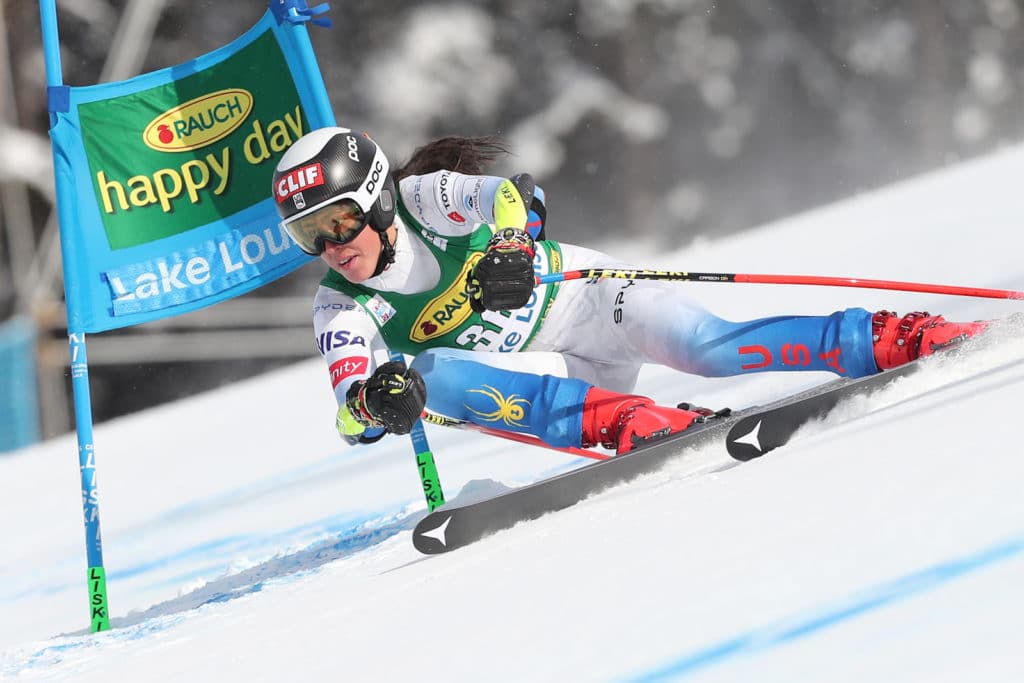
After a costly mistake mid-course in the super G and missing a gate further down the track, Wright spoke with teammate Mikaela Shiffrin to evaluate her mindset over the weekend. They recognized Wright’s fearless skiing in training wasn’t translating to race day. She had more to give.
“I can ski fearlessly and push the limits,” shared Wright. “Maybe I pushed them a bit too much, but it feels a heck of a lot better to do that than to just ski to ski.”
Wright took her fearless mindset straight to St. Moritz the following weekend where she unfortunately crashed in the second of two World Cup super-G races, sustaining a broken talus bone in her right ankle. Despite being non-weight bearing for six weeks, Wright went to work in hopes of achieving her biggest goal of the season: compete at the Olympics.
“I’ve been told that this bone 99% of the time needs surgery, however I’m the lucky duck that doesn’t need it,” Wright shared on her Instagram. “My heart is a little shattered, but I’m going to continue to work and make sure I can do everything I can to be back when the time is right.”
Luckily for Wright, her timing back on snow couldn’t have been better. She returned to snow on Jan. 28 for the first time since her crash on Dec. 12, just days before embarking on a journey to Beijing.
‘It’s been a tough few months with so many unknowns for myself,” shared Wright. “Between emergency gallbladder surgery, to a talus bone feature that was supposed to end my season and take away my Olympic Dream, I somehow made it out still swingin.”
About the Author: Karina Schwartznau