World Cup speed skier and serviceman Sam Morse unveils his intricate process of breaking in new speed skis and transforming them into high-speed marvels.
Those who read my last article, “My Secret Weapons in Aspen,” might wonder how I prepare my skis to transform them into ‘race skis’. Speed event skis, especially in downhill (DH) and super-G (SG), differ significantly from technical disciplines like giant slalom (GS) and slalom (SL) in terms of the time it takes for a ski to reach its optimal racing state. This article specifically focuses on the process of preparing the long boards for the intense world of speed skiing.
It’s crucial to note that the journey to race readiness varies across ski brands. Fischer and Head skis, for instance, have historically required several seasons to break in thoroughly. In contrast, the old Atomics, equipped with their impregnated fluorinated bases, often exhibit impressive speed right out of the gate, requiring minimal preparation. Understanding these nuances is essential to the quest for high-speed excellence on the slopes.
It begins in the summer heat when I get my ski order from Fischer. The skis come unprepared, with rough sidewalls and the bases as dry as a Utah summer. Pulling the sidewall and second edge takes hours, then sanding, setting the edges and beginning wax cycles. Shaping a brand-new ski is genuinely an art form; every ski serviceman has a twist on how to shape and polish the ski. I focus on three things once they are ready to hit the snow.
First Focus
I maximize the runs I take on my skis, skiing them as frequently as possible. Having fewer skis proves advantageous in this pursuit, ensuring that each pair gets ample runs. Contrary to popular belief, an impressive wall of skis behind your tuning bench can be more of a curse than a blessing. Instead, I suggest you focus on a select few pairs, especially when it comes to downhill skis, capitalizing on their on-snow volume. Every time I cycle a ski on the snow, after meticulous waxing, scraping, and brushing, a transformative process unfolds. This continuous action not only conditions the base material but also effectively levels the intricate, hairy structure of the sintered bases, enhancing their performance with every run.
Second Focus
My next consideration involves the specific snow characteristics I run the skis on. The more aggressive the snow structure, the faster the bases break in. Re-freeze summer conditions, marked by large sharp crystals, create an ideal environment for rapid adaptation.
Yet, the key to a fast ski is more than just the conditioning of the base material. The natural bending and flexing of the ski play a pivotal role, softening the internal metals, wood, and glue within. As the ski becomes more supple, it glides over micro terrain with minimal resistance force pushing back against the skier. This transformation is most effective in harder snow conditions, where the ski gains exceptional grip and flex. In contrast, soft, new snow doesn’t contribute significantly to breaking in the ski’s flex, emphasizing the importance of the specific snow texture in the skis’ performance enhancement.
Third Focus
The last primary focus for breaking in new speed skis is deciding when to regrind the ski. During summer skiing, stones in the snow often cause minor scratches and dings along the bases and edges. When my ski has undergone approximately ten quality on-snow sessions, I consider regrinding them. Sometimes, I delay this process and use the skis for the upcoming season’s downhill training runs before I grind them. These runs often result in base burns, prompting the need for regrinding. Just so you know, each pair of skis has a limited number of regrinds, usually restricted to three times at most.
Surprisingly, many of my fastest skis only revealed their true potential after the initial regrind. This process not only levels the base structure but also thins the edges, reducing friction of the steel edges against the snow. I often speculate that the repeated application of waxes into the base permeates deeply. When regrinding occurs, it exposes these infused waxes, enhancing the ski’s performance even further.
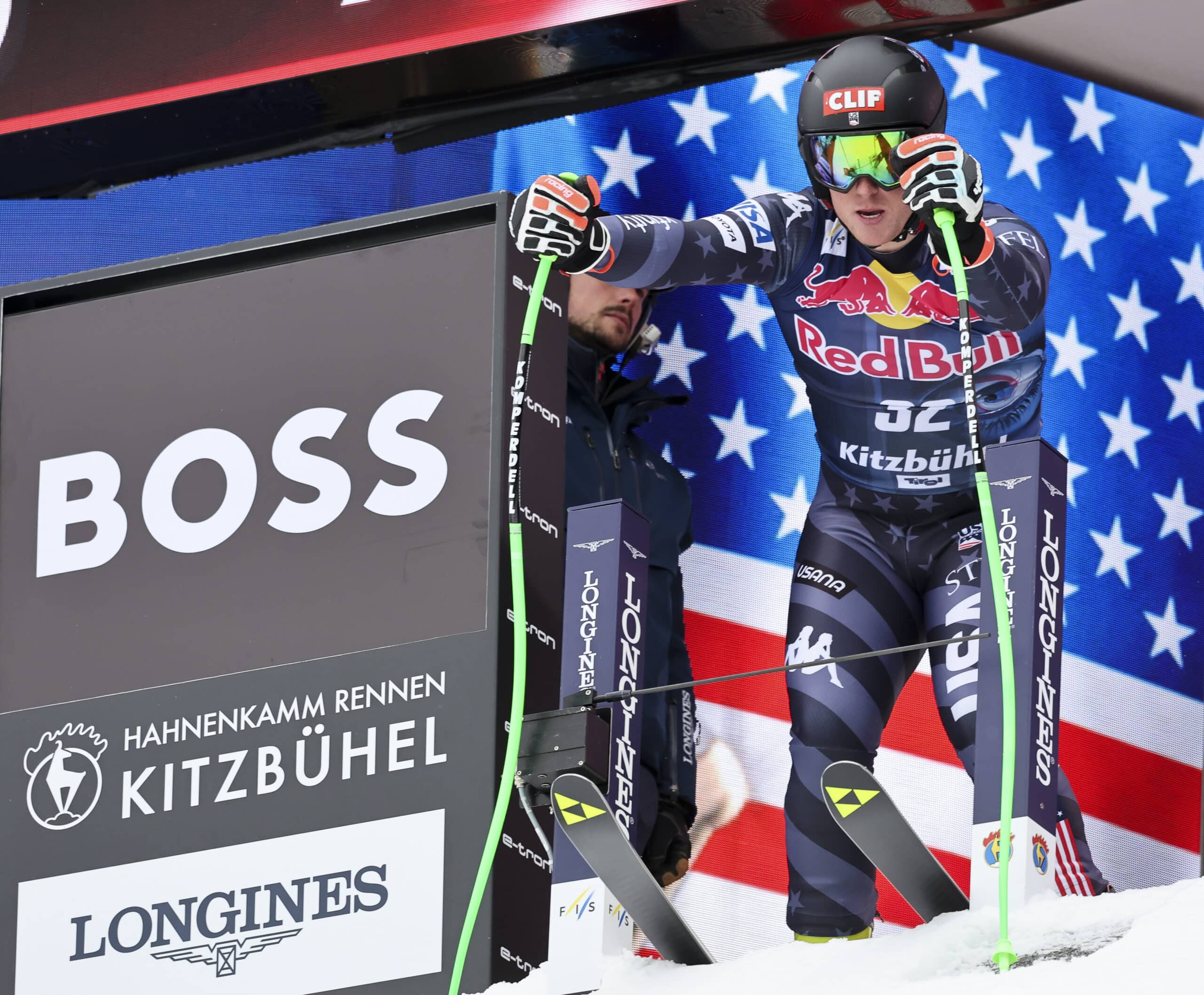
Speed Skis Reveal Unique Personalities
I hope this glimpse into my summer process proves valuable to you as you embark on your journey with a new pair of speed skis. After the intensive summer preparation, I unleash these skis in official downhill training runs throughout the winter. In the following winter, these meticulously prepared skis make their grand race debut, showcasing the culmination of the summer’s efforts and training runs.
What captivates me most about speed skiing is the unique narrative that unfolds with each pair of skis. Unlike technical event skis, which are replaced relatively frequently, my relationship with each pair of speed skis spans years. I cherish the evolving story etched into every scratch, grind, and wax, marking the challenges and victories of countless races. Eventually, when the time comes, I retire these skis with honor, placing them on the wall as a testament to the unforgettable journeys we’ve shared.
I look forward to meeting you on the mountain, where the passion for speed, skill, and dedication unites us in the exhilarating skiing world! See you on the slopes!
- Moose (Sam Morse)
About the Author: Sam Morse