Author’s note: The good news in this conversation about cost — and there always is some — many of our country’s best ski racers are still finding a way to mature in this sport without stratospheric spending. They’ve made it with talent, hard work, creativity and an extraordinarily engaged and supportive ski community. We’ve talked to many of them and their parents, to learn how they managed to follow their dreams without bankrupting their futures. Their stories are all different, but they share some common themes in what helped them along their journeys, which include:
- Drive, to persevere no matter what the obstacles
- Being active in other sports
- Full family involvement
- Strong community and program support
- Discounted family program fees for resort employees
- Coaches/mentors with good guidance on spending and development priorities
- Help with good equipment from an early age
- Public high schools that cooperate
- Communication and self-advocacy skills
- Donations, grants, scholarships
- T-2! $2.3 million and counting directly to athletes
- Elite level collegiate racing and programming
- National team funding: a game-changer!
- National team flexibility with programming when necessary
These athletes and parents shared their stories in the hopes that it will help young ski racers and their families see beyond the obstacles to the possibilities. Ski Racing Media is pleased to present a series within a series, if you will, “Breaking through without breaking the bank.”
Patricia Mangan and the entrepreneurial spirit
It’s the end of a busy day at Camp Mangan, and as the 45 kids get picked up, Tricia Mangan and her mother, Martha, are happy but tired. Now in its 11th year, Camp Mangan was started by Tricia and her twin brother, William, as a way to earn money while also keeping fit for ski racing. “They can’t keep a job all summer, so they started a camp,” Martha explains. What started out as one session with 10 campers is now four weekly sessions of non-stop activities where kids play hard, without electronics or fancy equipment.
Tricia recently graduated with an engineering degree from Dartmouth College after five-and-a-half years in which she raced full time, representing the USST (including at the 2018 Olympics) and the Dartmouth ski team. This coming season she will compete on the World Cup speed circuit as an independent athlete with ISRA.
Every step of this journey was made possible by her skiing community, starting with her family and their work ethic.
Martha and her husband, David, met while skiing. When their oldest son was six, Martha joined the ski patrol to get a free family membership at Holimont, a private family-oriented area in Ellicottville, an hour south of their home near Buffalo, N.Y. Immediately the kids jumped into racing for the club and loved it.
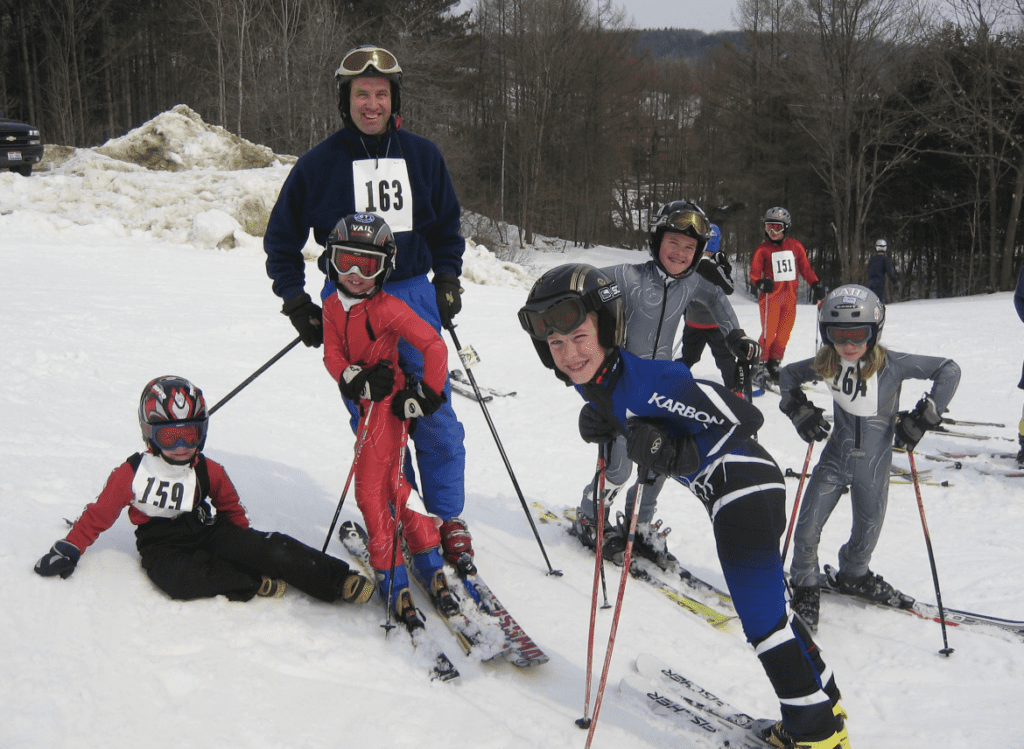
They got hand-me-downs and used race skis from the local shop. The kids learned to tune them so well that Andrew started a tuning business, inherited by youngest sibling Mary. Once all the kids were hooked, Martha banded together with three families and started their own academy at Holimont. The kids woke up early and worked through their home-school curriculum, while weekend coach Travis Widger stepped up to coach them during the week, after they’d done their studies.
The parents volunteered to run races and the club, and for away races, the kids piled into each others’ family cars, eating a lot of homemade meatball subs on the go. As they got more serious, Martha helped Widger put together affordable November trips to Colorado for the Holimont kids. “It’s not rocket science,” says Martha, of everything from starting the camp and the academy to organizing the travel. “If people realized they could do it, they might.”
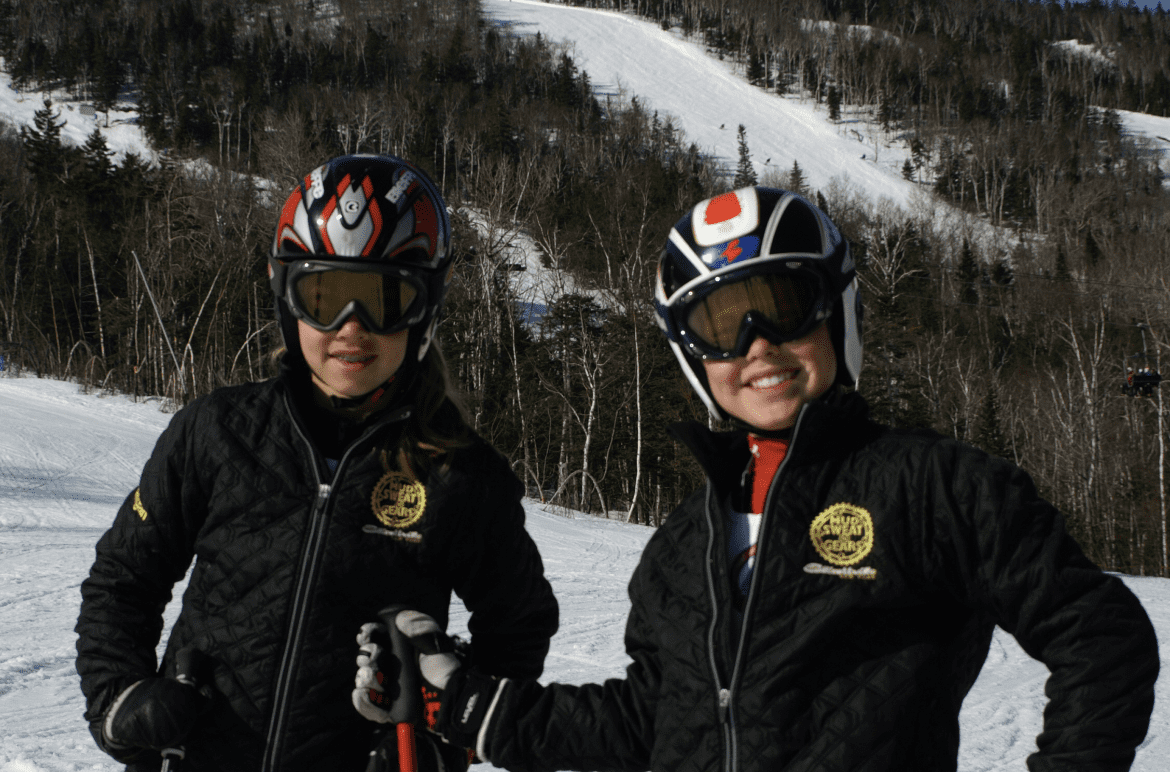
The club pooled race suits and a quiver of speed skis. Tricia remembers that a masters skier loaned her his skis each year for Easterns, and she won all her races on them. Soon thereafter she was sponsored by Rossignol. The vibe, however, was never about winning.
“My goal was never to be a prodigy,” says Tricia. “I like skiing and committing to something and working really hard and getting better at it.” In Tricia’s first year as a U16, she qualified for the junior nationals in Park City, and arrived with no coach and no clue what the U.S. Ski Team was all about, or really anything about the bigger pond beyond New York. “I knew there were kids in Vermont who skied all the time, but an academy was not in the picture.”
Neither was summer skiing. “They never asked about it,” says Martha. With a pool and a lake, a camp of their own to run and plenty of ways to cross-train, they had plenty to do without ski camps. The second time Tricia went to U16 nationals she was ready, and qualified for the U.S. Ski Team NTG before her first year FIS, just when she needed more exposure. “I lucked out with the timing,” says Tricia.
By then, the high school junior was used to doing school work on her own. “It was all about being a good student and communicating well,” she remembers. While the price tag for the NTG was big, there was no question she would make it work. In addition to her cut from Camp Mangan, the local ski community supported Tricia and hosted fundraisers. She also reached out for grants from NYSSEF, the Eastern region, T-2 and the Buffalo Sports Hall of Fame.
With six kids who ski raced, “you’ve got to be smart to make it work,” says Martha. “Our mentality was more to treat it as a lifetime experience.” Part of that experience, in Tricia’s mind, was always going to a good college. After graduating from high school, she raced full time on the U.S. Ski Team but also started Dartmouth in the spring. Eventually she would race for Dartmouth and part ways with the U.S. Ski Team, but not from her ultimate dream of competing on the World Cup.
The cost of racing independently at this level is staggering. “This was the first time she was daunted,” says Martha. “It’s a LOT of money.” As they always have, her parents assured her, they would all make it work. “My parents always helped us see the bigger picture, and realize we were lucky to be doing it.”
Tricia’s commitment to the sport, renewed through the challenges of racing independently, also gives her confidence, especially when seeking partnerships and support to compete at the highest level. “That’s still the goal, now more than ever,“ says Tricia. You can help Tricia by donating through World Cup Dreams, and if you want to learn from the Mangan tribe about how to run a summer camp in your own backyard, get their ebook at SCIMBY.com.
Stay tuned for more stories about “Breaking through without breaking the bank.” Have some thoughts on cost? Send a letter to the editor. If it’s good, we’ll publish it.
About the Author: Edie Thys Morgan