On a perfect night in Flachau, the Austrian crowd swelled with excitement as one of their own, Katharina Liensberger, carried a significant 0.75-second lead into the second run. Liensberger, the last Austrian woman to win a World Cup slalom—on December 3, 2022, in Åre, Sweden—faced immense pressure to end the nation’s victory drought in women’s technical events. Austria, a small country with an unparalleled history in Alpine ski racing, had been longing for a return to glory, and the fans eagerly anticipated what could be a historic night.
A New Champion in Flachau
For six years, Flachau had been dominated by Mikaela Shiffrin and Petra Vlhová. Tonight, the streak ended as a new champion stepped into the spotlight under the dazzling lights of the iconic night slalom.
Rast Holds the Lead
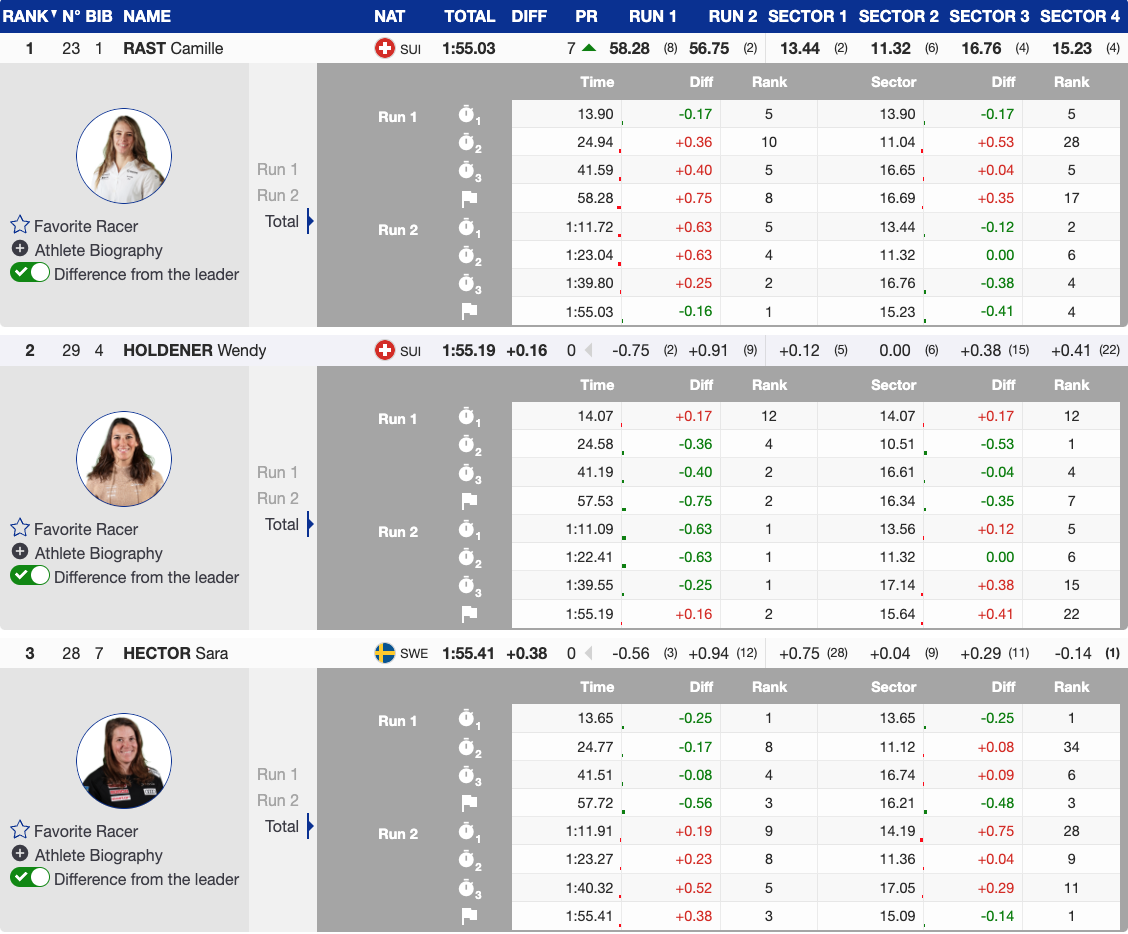
With only the fastest five skiers from the first run left to compete, Switzerland’s Camille Rast held a commanding 0.73-second lead over the Stifel U.S. Ski Team’s Paula Moltzan. First to challenge her was Rast’s teammate, Mélanie Meillard. Despite her best effort, Meillard fell 0.57 seconds short of taking the lead, settling into second place temporarily.
Click images to enlarge
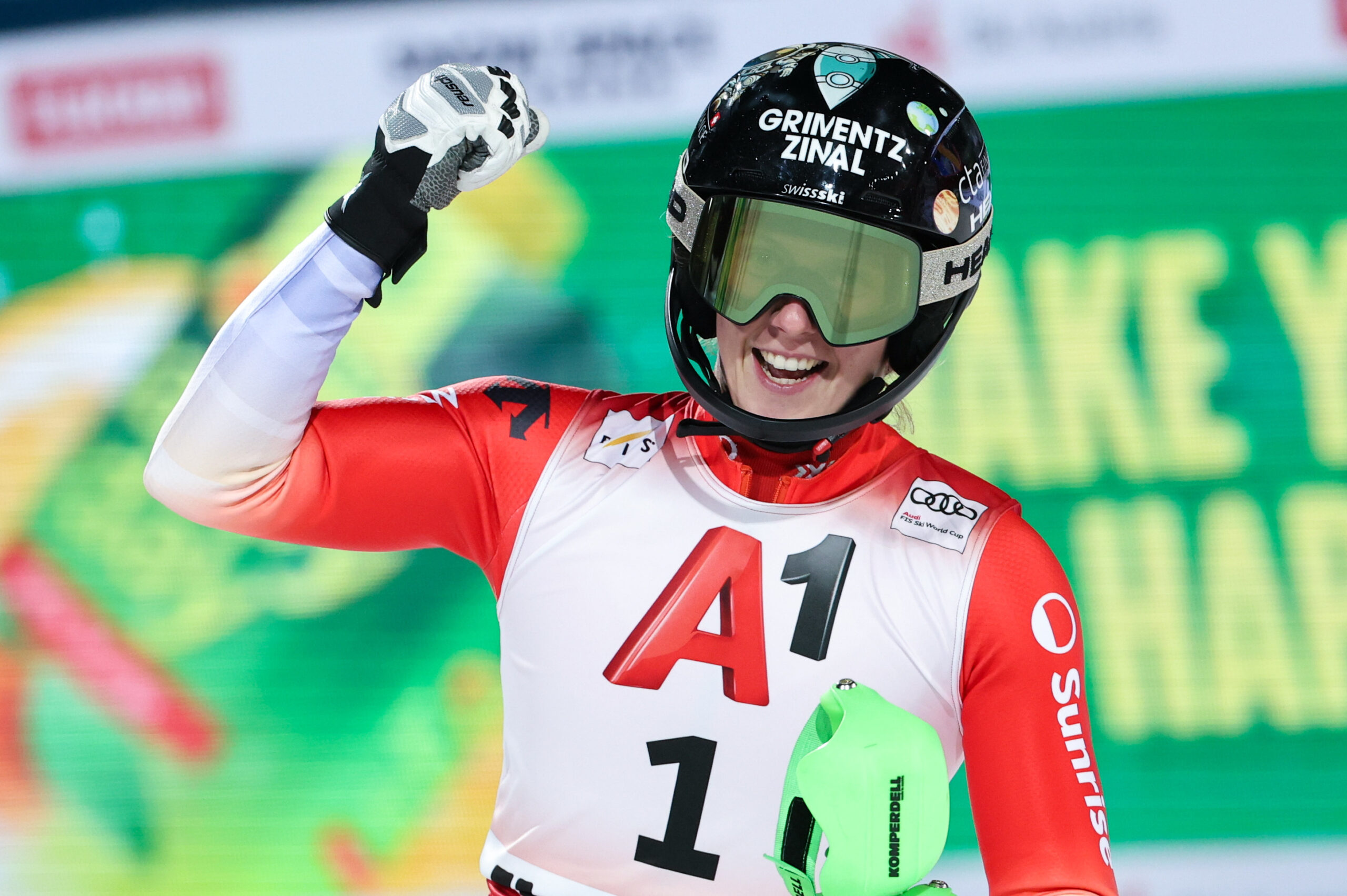
“I saw yesterday on Instagram that Mikaela and Petra won the last six races here, so I’m really happy to add a new name to that list,” said Rast. “From the start gate, I could hear the crowd, and their energy pushed me to the limit. Thank you to everyone—I couldn’t have done it without you.”
Veteran Dürr Falls Behind
Next to take on the course was Germany’s veteran star Lena Dürr. Known for her experience and consistency, Dürr struggled to match Rast’s pace and crossed the line 1.26 seconds back, well out of podium contention.
The Final Three Step Up
With only the top three from the first run remaining, all of whom were within a second of each other, the tension in Flachau reached its peak. Sweden’s Sara Hector was the first to challenge but couldn’t dislodge Rast, finishing in second place with two racers left to ski. At this point, Rast secured her spot on the podium, while Meillard still held a chance for third.
“I love everything about this race—the atmosphere, the slope, the energy—it’s just special,” said Hector, celebrating her second consecutive podium in Flachau. “I’ve been close to giving up slalom a few times, and I’m so happy I didn’t. Getting back here and standing on the podium makes all the hard work worth it. Winning would be crazy, but for now, I’m just proud of how far I’ve come.”
Swiss veteran Wendy Holdener followed and delivered a strong, composed run. While her effort was enough to move into second place, she couldn’t surpass her teammate Rast. With one skier remaining, Rast was guaranteed no worse than second, setting the stage for an electrifying finish.
“The comeback was harder than I thought, so I’m definitely happy with the progress I’m making,” said Holdener. “I feel like I’m on the right path, and that’s a great feeling.”
Liensberger Falls Short
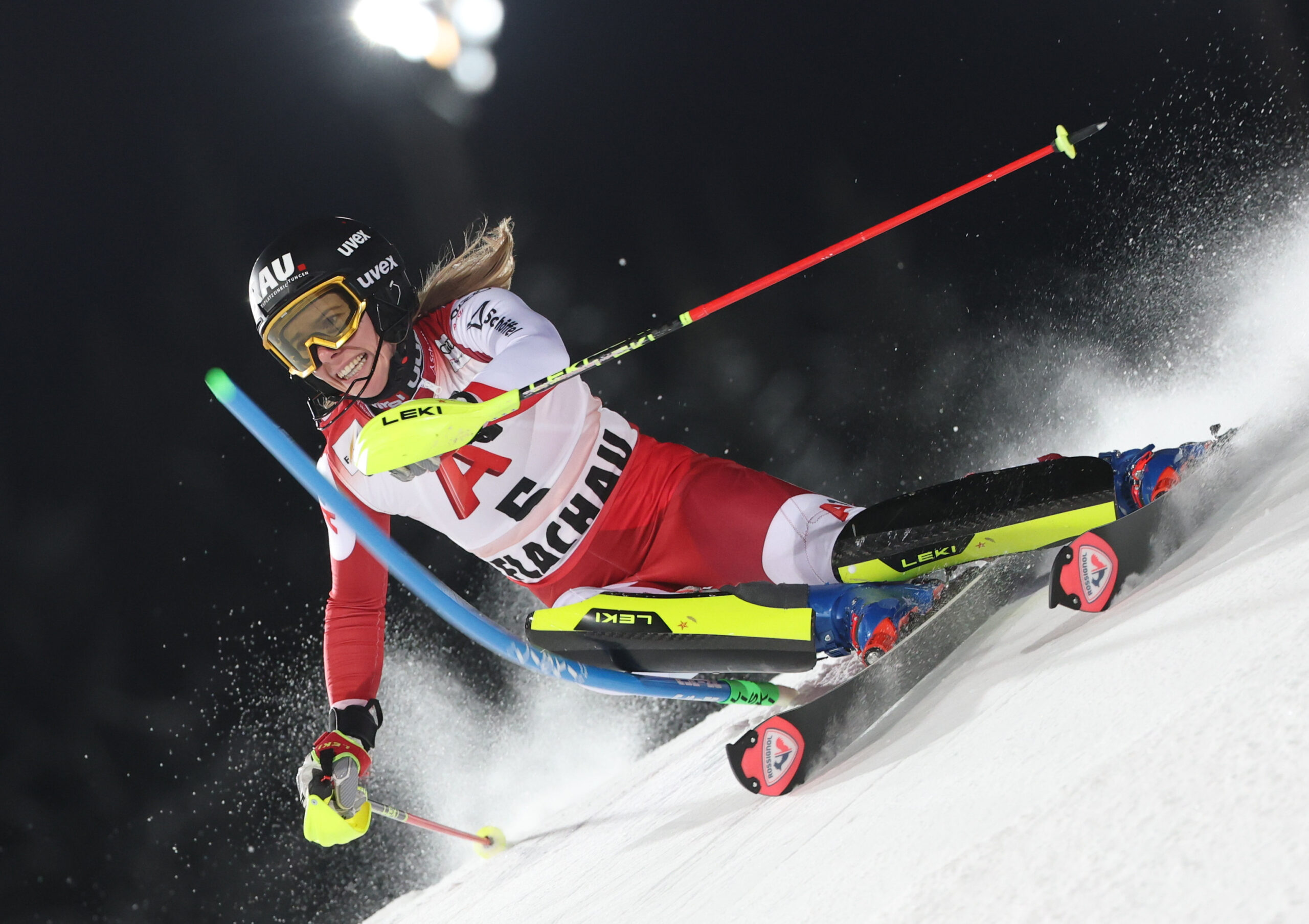
The crowd erupted as their home-country star, Katharina Liensberger, launched out of the start gate. As the fastest skier from the first run, Liensberger carried the weight of Austria’s hopes. The fans roared as she charged down the course, willing her to victory. However, Liensberger’s run, though solid, wasn’t enough. She crossed the line in fourth place, just off the podium.
Rast Rises to Victory
With Liensberger’s result confirmed, Camille Rast rose seven positions from her first-run placement to claim the second World Cup slalom victory of her career—and her second win of the season. Rast’s triumph capped a remarkable evening for the Swiss team.
Season Standings Shake-Up
The result also had significant implications for the season slalom standings. With Zrinka Ljutić failing to qualify after a challenging first run, Rast moved back into the lead for the crystal globe. Wendy Holdener’s strong second-place finish propelled her into second in the standings, making it a night to remember for Team Switzerland.
The Podium
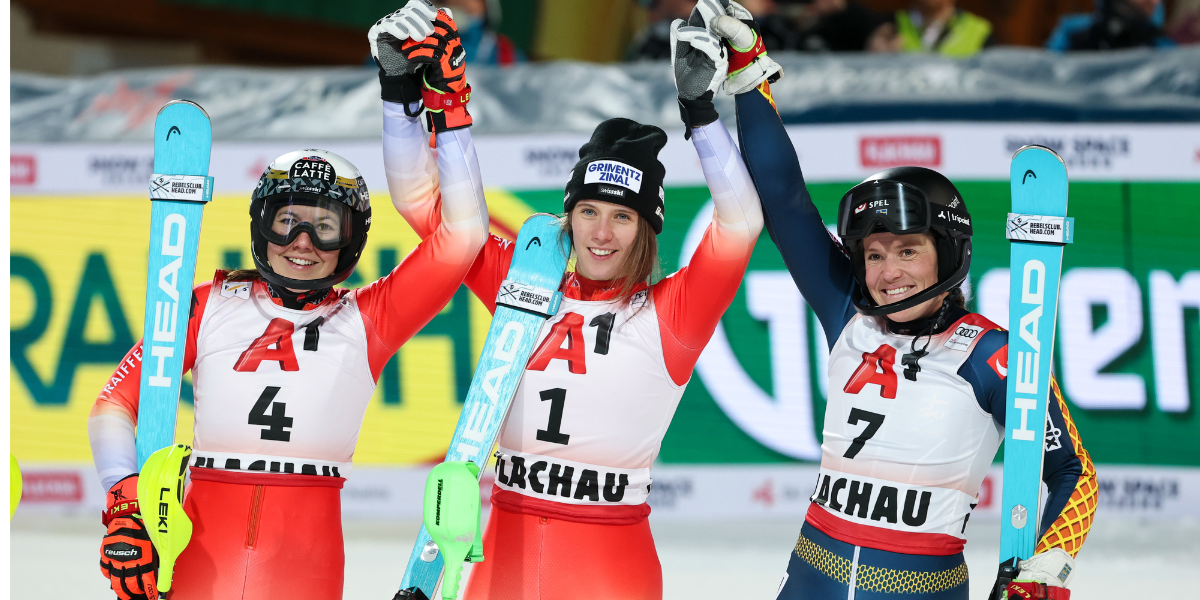
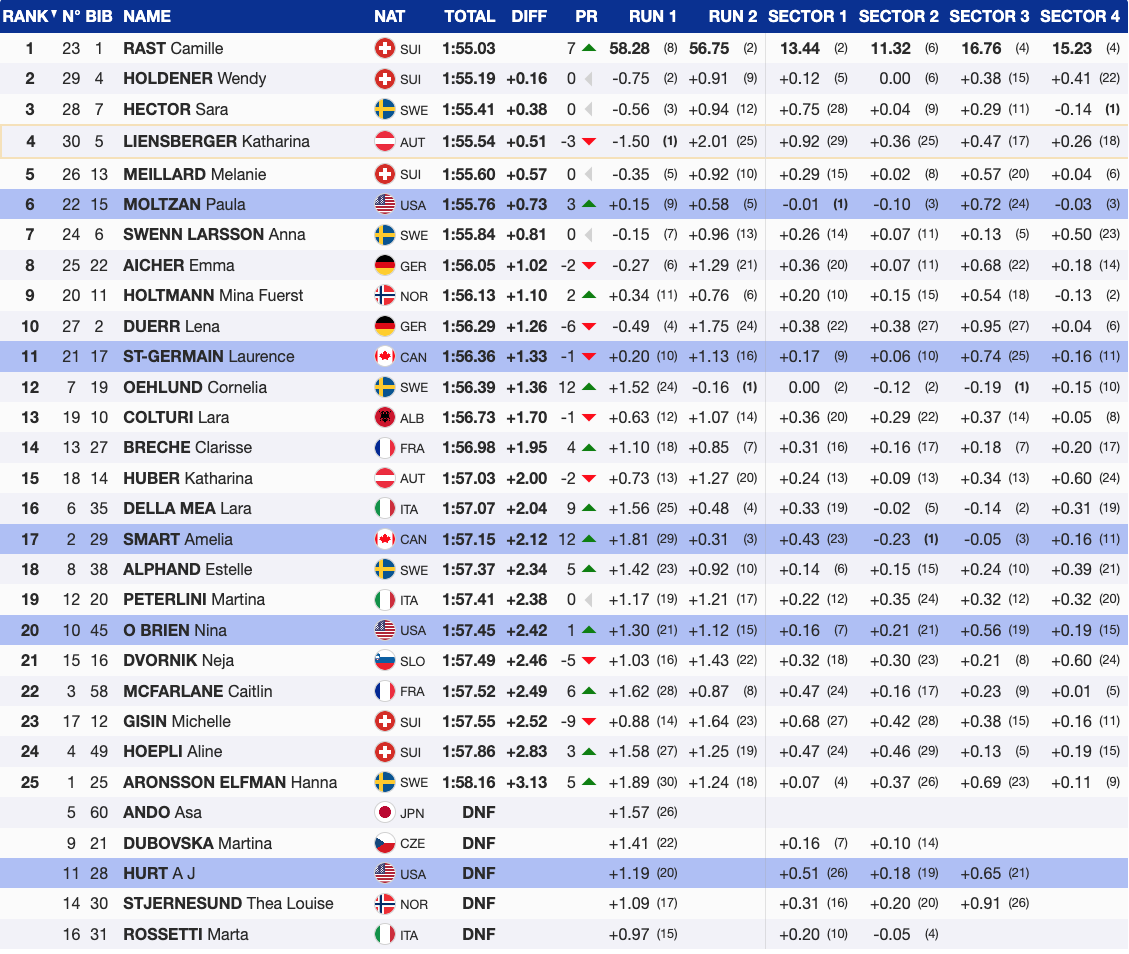
The podium was filled with world-class talent, led by Rast in first. Her teammate Wendy Holdener finished second, just 0.26 seconds behind, while Sweden’s Sara Hector secured third, 0.38 seconds back.

Smart’s Strong Second Run
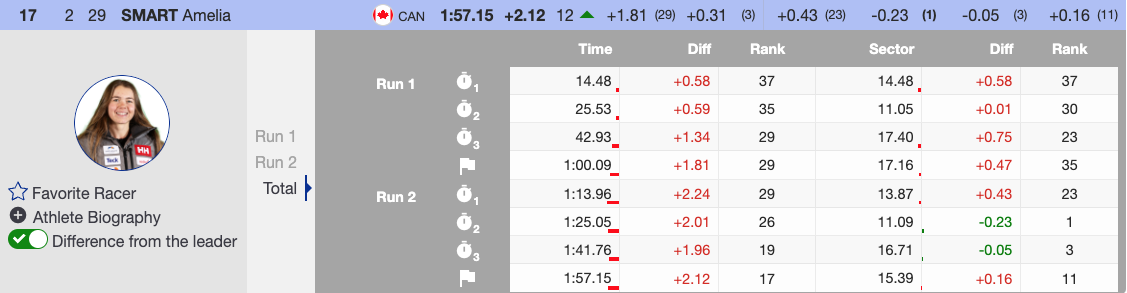
The first of the North American women to ski the second run was Canada’s Amelia Smart. Starting second, she delivered an improved performance from her first run, crossing the line with a 1.01-second lead and 28 skiers still to compete. Smart held the leader’s chair in the finish area for three racers before Italy’s Lara Della Mea edged ahead by just 0.08 seconds.
As the race progressed, Smart climbed 12 positions, ultimately finishing 16th, a personal best in Flachau.
Oehlund Takes the Lead
With ten racers in the finish and 20 left to compete, Sweden’s Cornelia Oehlund took the lead, with Della Mea 0.68 seconds back and Smart sitting in third. Smart had already moved up six spots thanks to her strong second run.
North American Challenges
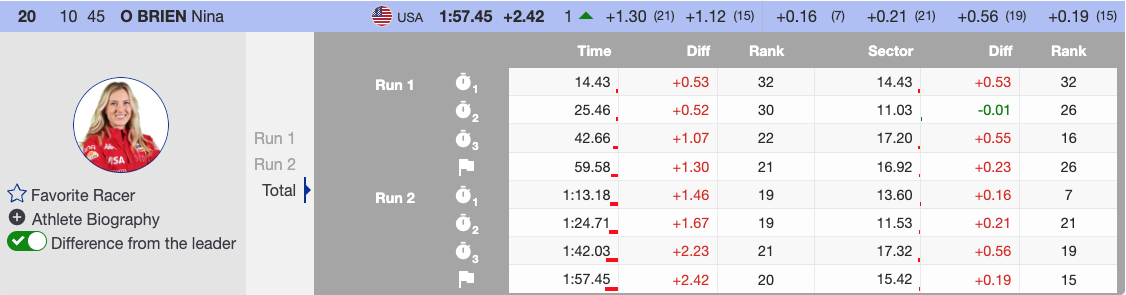
The second North American to ski was Nina O’Brien. Despite her determined effort, she crossed the finish line 1.06 seconds behind Oehlund. Her teammate AJ Hurt, unfortunately, was unable to complete the final timing sector and did not finish.
O’Brien is excited to score her first slalom points of the season. She managed to move up one position as the race progressed, finishing 19th, just outside the top 15.
“I’m definitely happy to score my first slalom points of the season,” said O’Brien. “It’s been a while since I’ve been in the points in slalom, and there were some tough days earlier this season, so I feel relieved and satisfied. I love the energy of this race and night slaloms in general, and I think that helped me relax and finally ski the way I’ve been in training.”
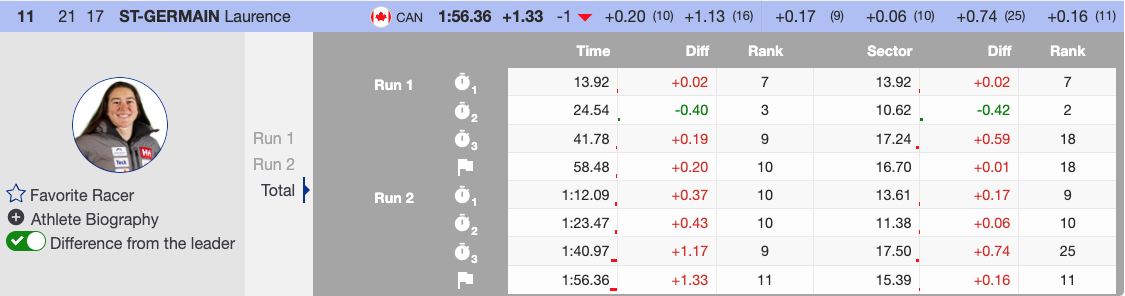
Canadian reigning World Champion Laurence St-Germain had a good first race back, starting 17th and finishing 11th. She had to skip the last slalom in Kranjska Gora, so seeing her return to her best is excellent.
Breaking Conditions Challenge Racers
With half the field having completed their second runs, Oehlund still led the standings. France’s Clarisse Breche had climbed into second, while Della Mea dropped to third. However, as the 16th skier attacked the course, it became evident that the surface was deteriorating, particularly in a two-gate vertical combination before a significant breakover. The conditions made it challenging—but not impossible—for the remaining skiers to find speed.
Holtmann Takes Over the Lead
With only the fastest 11 skiers from the first run left to compete, Oehlund held a 0.34-second lead over Albania’s 18-year-old Lara Colturi and a 0.59-second advantage over Breche.
Norway’s Mina Fürst Holtmann changed the standings when she delivered a confident run to overtake Oehlund and claim the leader’s chair with 10 racers remaining. Canada’s reigning world champion Laurence St-Germain followed, coming close but finishing 0.23 seconds behind Holtmann.
Rast’s Commanding Run
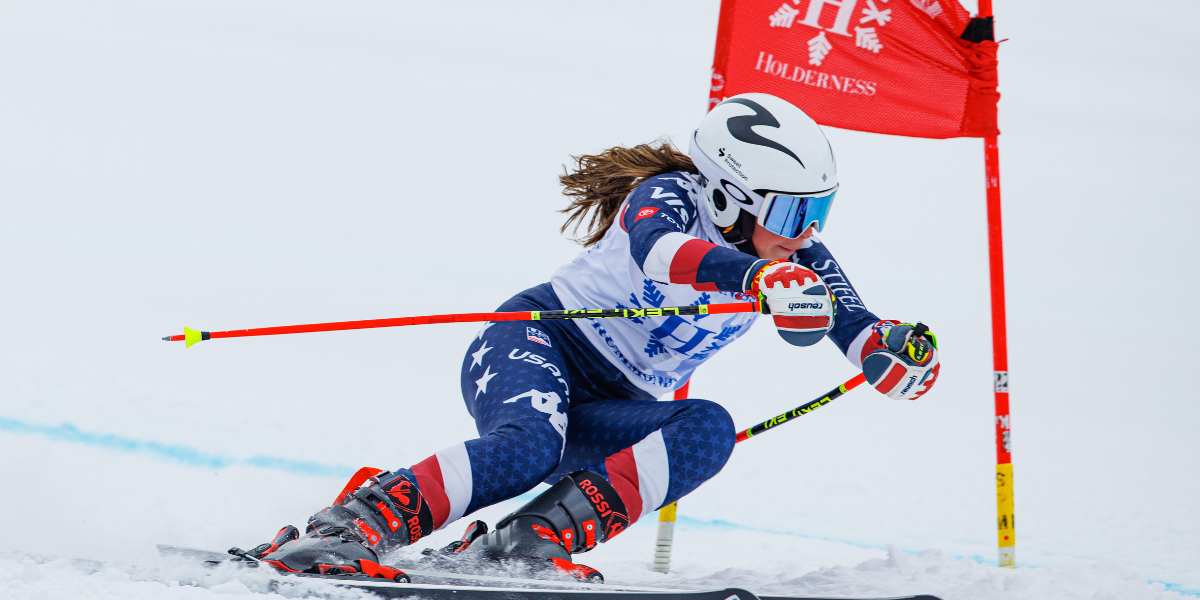
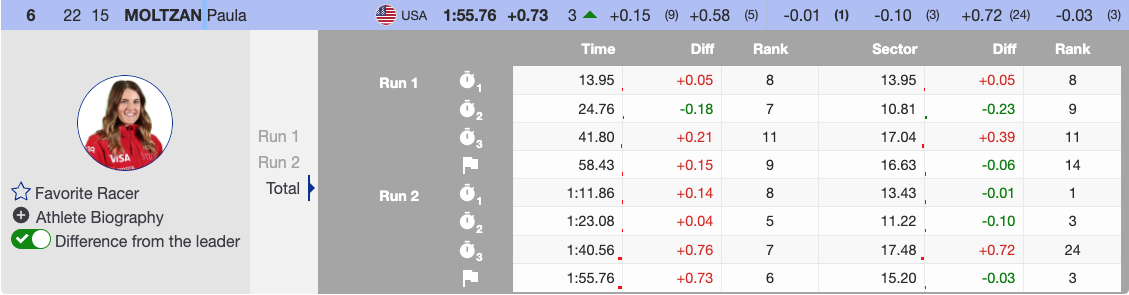
Moltzan was the next to challenge Holtmann and delivered a strong run to take the lead with a 0.37-second advantage. However, Switzerland’s Rast quickly answered, aggressively skiing to surpass Moltzan with a commanding 0.73-second lead. Sweden’s Anna Swenn Larsson followed but could only manage third at that moment, slotting behind Rast and Moltzan.
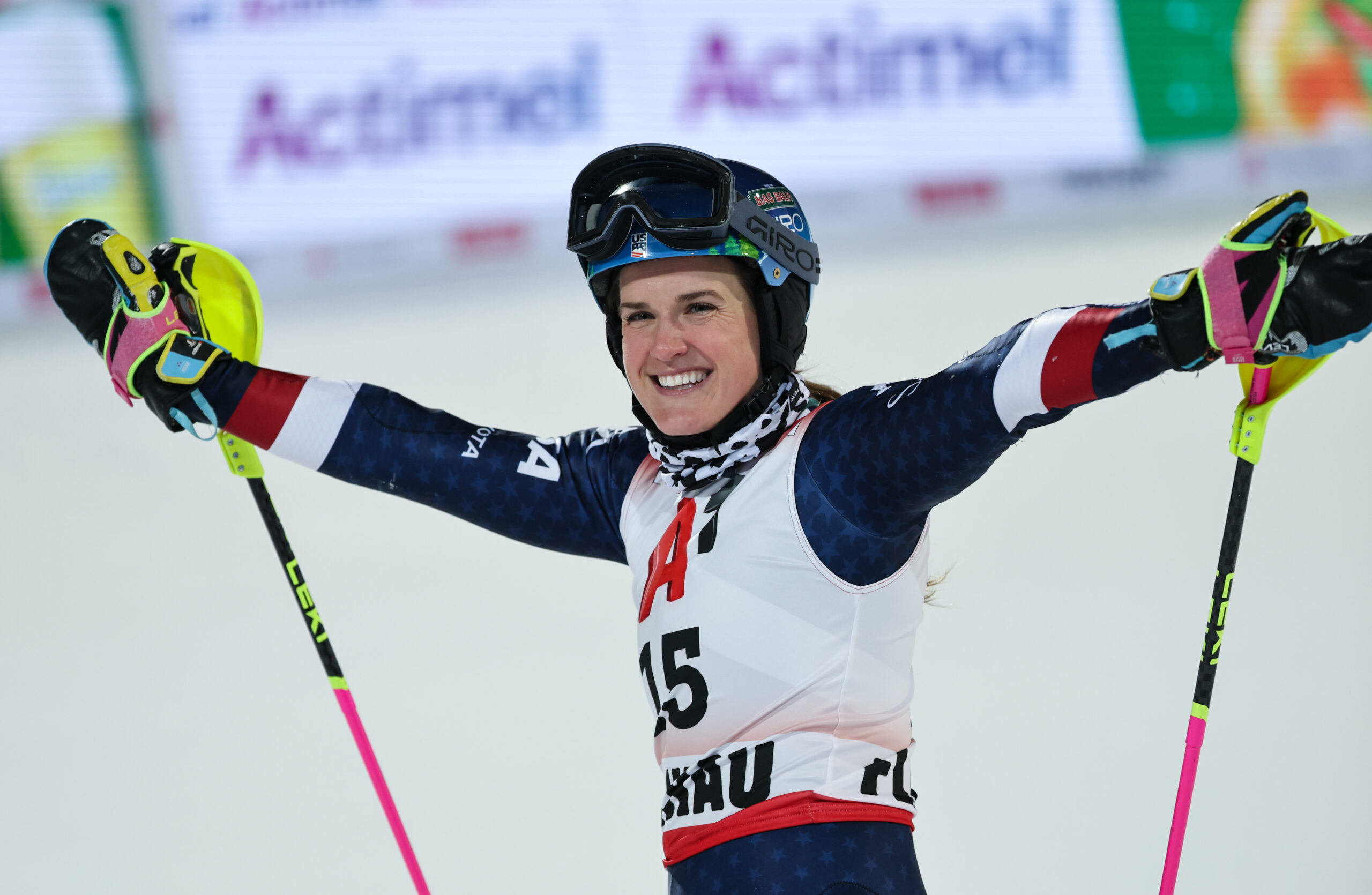
Moltzan managed to move up three positions as the race progressed, finishing sixth.
“I’m happy—I feel like I found a little piece of me again that’s been missing for a couple of weeks,” said Moltzan. “It feels so good to do it at night with my family here. Crossing the line and seeing the green lights was a great feeling. It’s been a minute since I’ve seen green, so I’m happy to have it back.”
The young German Emma Aicher, the sixth fastest from the first run, then took on the course. Despite her best efforts, she finished just outside the podium. With Aicher’s run complete, only the top five skiers from the first run remained to compete.
Click here for the first run story
Results
Click on Images to Enlarge
Fastest Three and North Americans: Race Analysis
About the Author: Peter Lange