Clement Noel Gürgl GEPA pictures
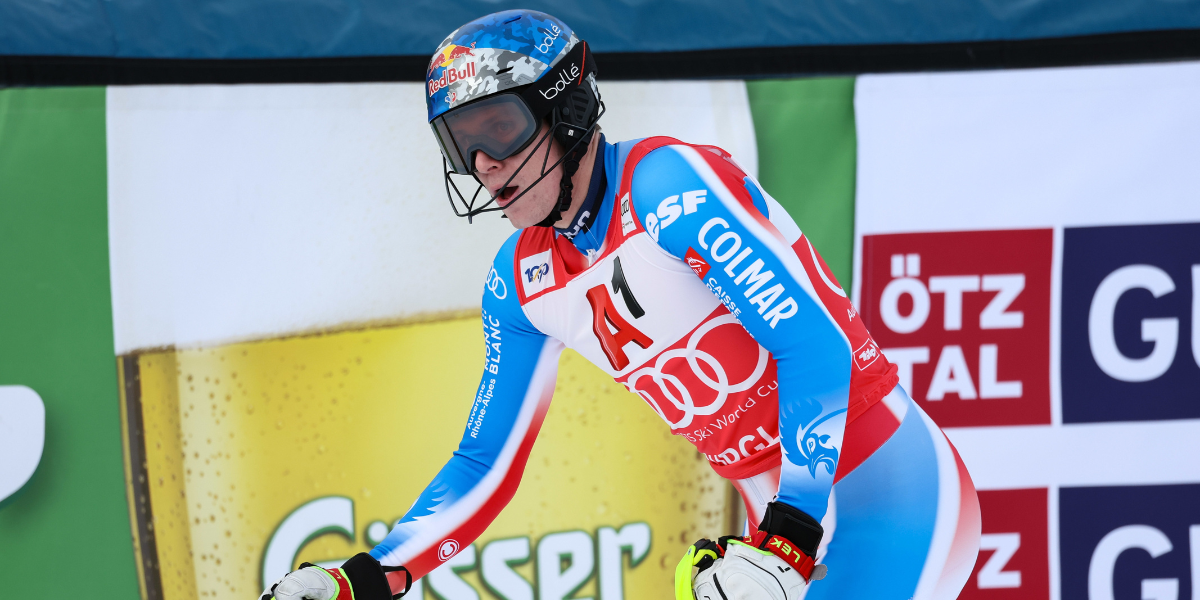
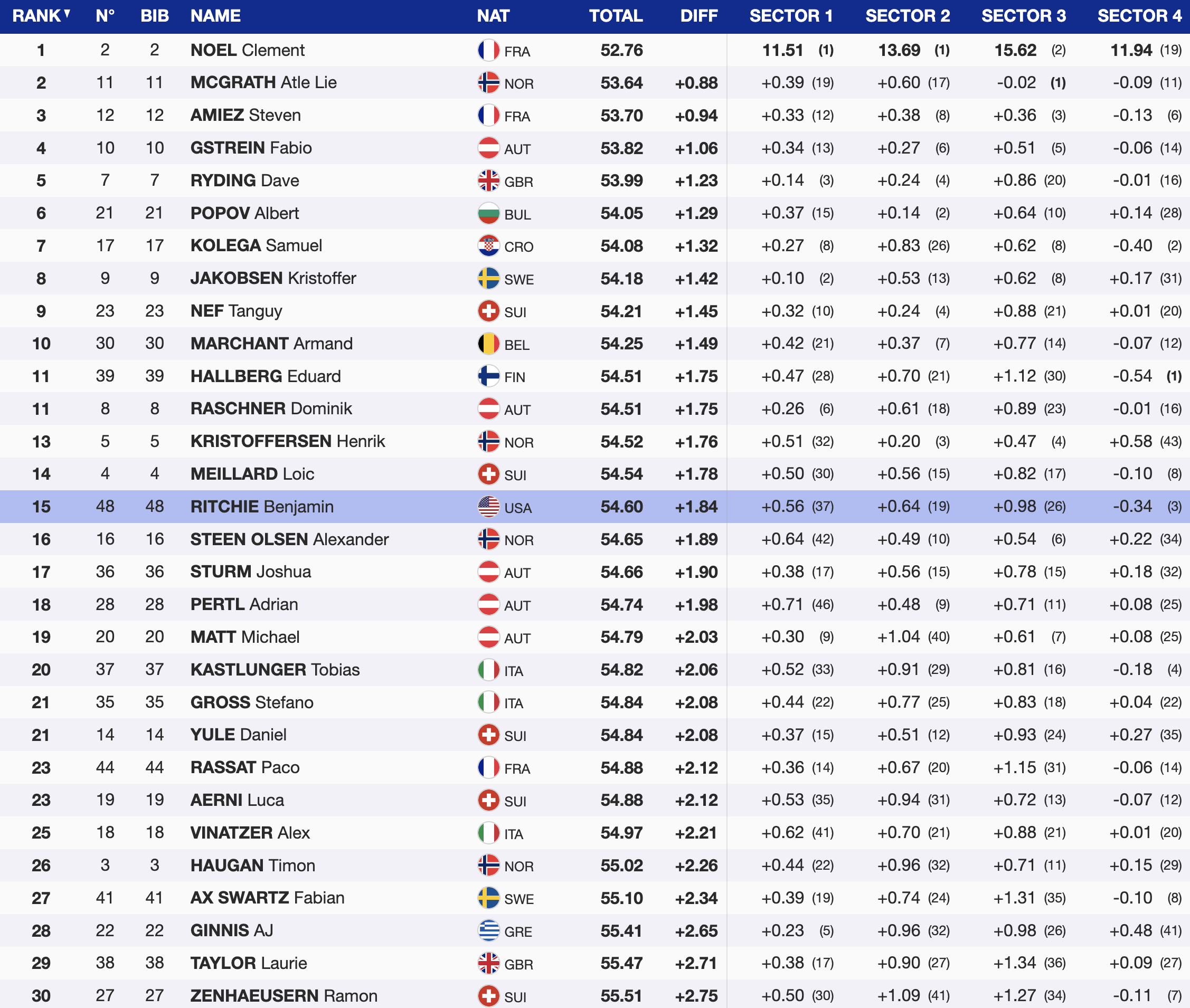
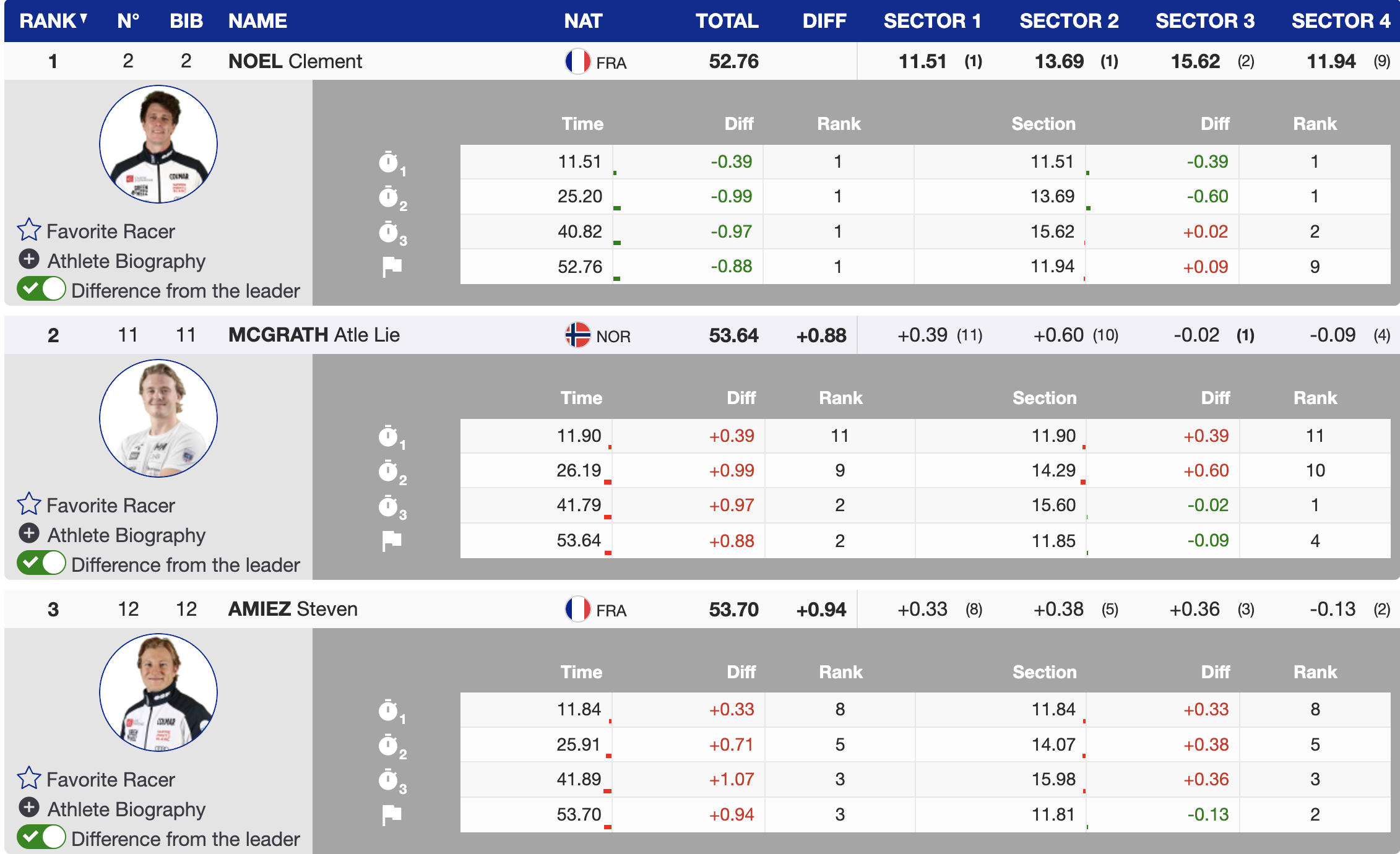
The men began the 2024 Gürgl slalom with overcast skies and ideal snow conditions. Men’s slalom has emerged as the most competitive discipline in the Alpine World Cup in recent seasons. Germany’s Linus Strasser, the first racer to start, quickly showcased the challenges of the Swiss coach’s course set but failed to qualify for the second run. France’s Clément Noël, the Olympic champion and Levi winner, followed with a commanding performance, making the demanding course look effortless. Noël finished an impressive 3.16 seconds faster than Strasser and will carry a 0.88-second lead into the second run, putting him in an excellent position to claim his second victory of the 2024-25 season.
Clément Noël Dominates Early Runs
One elite skier after another tackled the course, but none of the top seven racers could come within a second of Noël’s time. Wearing bib 7, Great Britain’s Dave Ryding came closest, finishing 1.23 seconds behind. Unfortunately, Austria’s Manuel Feller, the reigning World Cup and Gürgl champion, failed to finish, disappointing the home crowd. With two DNFs to start the season, Feller faces a tough challenge to match the success he enjoyed last year.
Close Competition Among the Top 15
After the first 15 racers completed their runs, Noël remained in the lead, with Norway’s Atle Lie McGrath in second, 0.88 seconds behind. Steven Amiez, Noël’s French teammate, held third, trailing by 0.94 seconds. The top ten skiers were separated by just 2.08 seconds, including two Austrians who gave the home crowd something to cheer about. Three racers failed to finish among the elite group, adding to the day’s drama.
Emerging Stars Break Into the Top Ten
The excellent icy conditions created opportunities for all racers, allowing emerging stars to break into the top ten. The standout among them was Bulgaria’s Albert Popov, wearing bib 21, who claimed sixth place, 1.29 seconds behind Noël. By the time the first 30 racers completed their morning runs, many top athletes had crossed the finish line in frustration, while five failed to finish.
Marcel Hirscher’s Tough Day
Wearing bib 32, former Austrian superstar Marcel Hirscher, now skiing for the Netherlands, took to the course. After failing to qualify for the second run in Levi, this race offered his first chance at redemption, and it came in front of adoring fans. Unfortunately, Hirscher did not finish, leaving him looking forward to the next competition, a giant slalom, for another opportunity to shine.

Ben Ritchie Leads North American Efforts
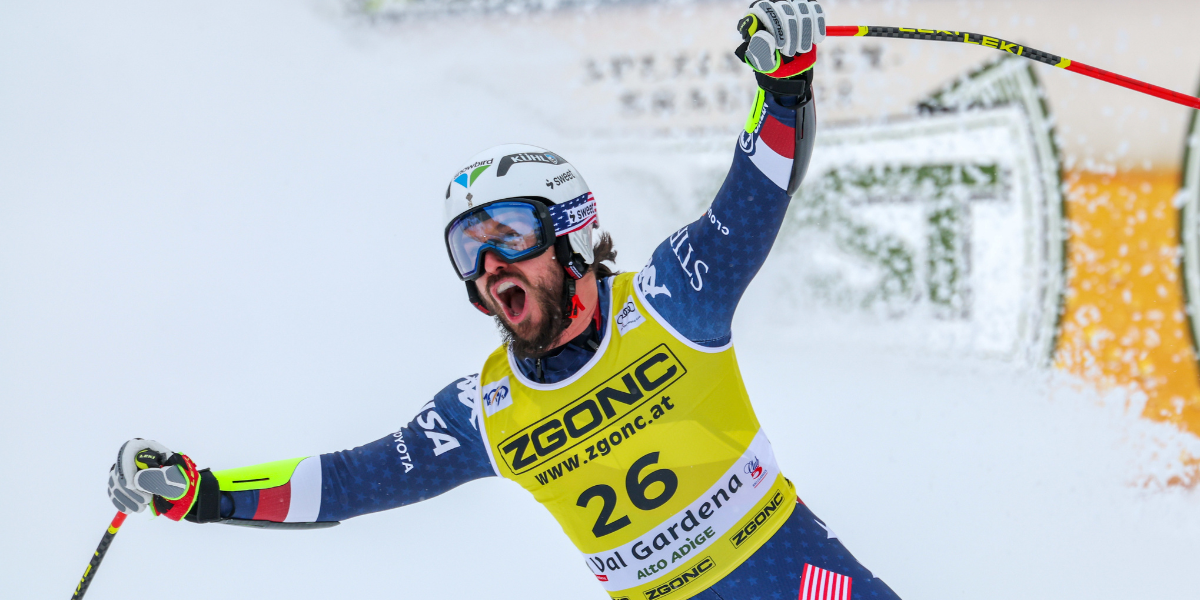
North American racers faced tough challenges on the demanding Gürgl slalom course, but Stifel U.S. Ski Team’s Ben Ritchie delivered an exceptional performance. After Jett Seymour straddled a gate and failed to finish, and Canadian independent racer Erik Read crossed the line well off the qualifying pace, Ritchie stepped up. Fresh from a standout performance in Levi, he attacked the course with skill and determination. Wearing bib 48, he charged into 15th place, easily securing a spot in the second run and proving once again that he’s a rising force in men’s slalom.
USA’s River Radamus also showed promise, skiing cleanly but lacking the speed needed to qualify. Luke Winters, the final North American to start, struggled significantly and fell short of making the afternoon finale. Despite these setbacks, Ritchie’s strong run kept North American hopes alive, showcasing his potential for continued success.
Eight Racers Qualify With High Bibs
Eight racers wearing bibs higher than 30 defied the odds to qualify for the second run in Gürgl. The fastest among them was Finland’s Eduard Hallberg, who, with bib 39, delivered an impressive performance to tie for 11th place, 1.75 seconds behind Clement Noel. Stifel U.S. Ski Team’s Ben Ritchie, wearing bib 48, was the last to qualify among this group. His strong run placed him 15th, just 1.84 seconds off the pace, highlighting his ability to excel under pressure.
First Run Top 30 Results and Analysis: Fastest Three and North American Qualifiers
Click images to enlarge
Analysis: Fastest Three and North American Qualifiers

About the Author: Peter Lange