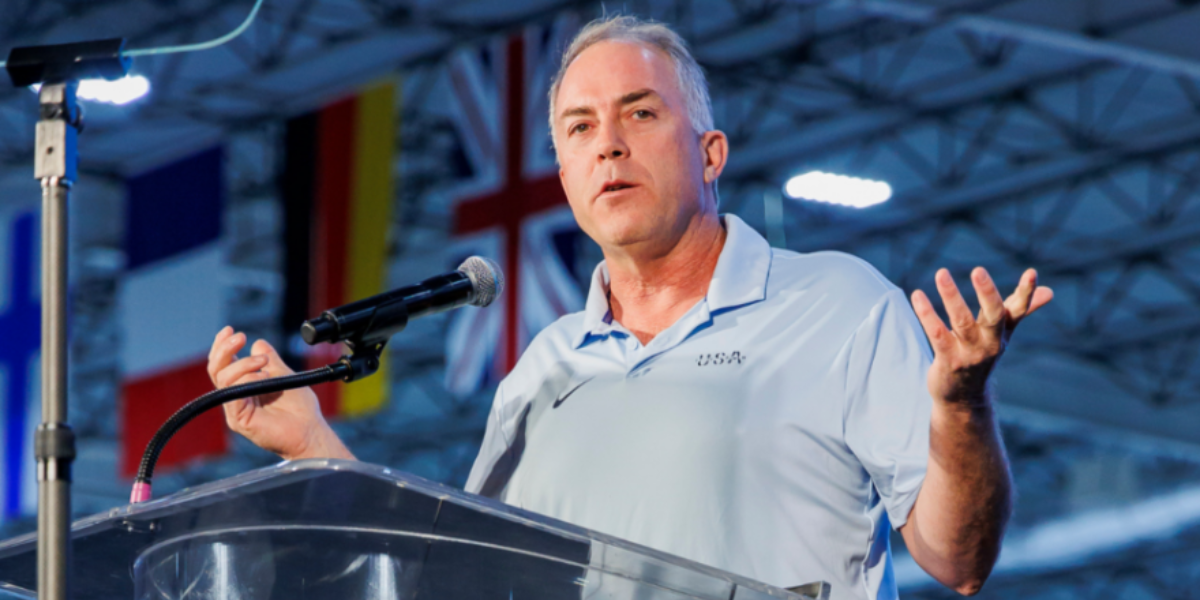
Utah Olympic Legacy Foundation President and CEO Colin Hilton receives the S.J. Quinney Award in recognition of his visionary leadership. Photo: KPCW Radio
Colin Hilton, the longtime president and CEO of the Utah Olympic Legacy Foundation and a central figure in Utah’s Olympic and winter sports community, has died at age 58.
Hilton died at his home in the Park City area on Aug. 20, according to the Utah Olympic Legacy Foundation. A cause of death has not been released, and his family has asked for privacy.
For more than two decades, Hilton helped shape what became of Utah’s Olympic venues after the 2002 Olympic and Paralympic Winter Games. Under his leadership, the Utah Olympic Legacy Foundation operated the Utah Olympic Park in Park City, the Utah Olympic Oval in Kearns and Soldier Hollow Nordic Center in Midway.
Rather than allowing the venues to become reminders of a past Games, Hilton pushed for them to remain active parts of Utah’s winter sports community, serving athletes, coaches, programs and families throughout the year.
That philosophy became what Hilton described as a “living legacy.” The three facilities now welcome more than 500,000 visitors annually while continuing to provide training and competition opportunities for athletes from Utah and around the world.
A lasting impact on winter sport
Hilton’s connection to winter sport began long before his career brought him to Utah. He grew up in Western New York and worked as a ski technician at a rental shop near Kissing Bridge. His career later included roles with the FIFA World Cup and the 1996 Summer Olympics in Atlanta before he joined the team behind the 2002 Winter Games in Utah.
Following the 2002 Games, Hilton spent several years working in economic development for Park City before returning to winter sports in 2006. He would go on to lead the Utah Olympic Legacy Foundation through a period of significant development and change.
His work extended well beyond maintaining Olympic venues. Hilton helped oversee efforts to strengthen the long-term financial future of the facilities while expanding the ways they could support athletes and the surrounding community.
Among those efforts was the development of the Residences at Utah Olympic Park, which provides subsidized housing for athletes training at the facility, coaches and foundation employees.
For ski racing, the continued operation and development of the Utah Olympic Park has helped preserve an important piece of the American winter sports infrastructure. The venue remains a training hub and a connection point between Olympic-level sport, development programs and the wider ski community.
Helping bring the Olympics back to Utah
Hilton also played an important role in Utah’s successful bid to bring the Olympic and Paralympic Winter Games back to the state in 2034.
His decades of experience with the venues and the Olympic movement made him an important part of planning for the Games’ return. Park City and the surrounding area are again expected to play a significant role when the Olympics return to Utah.
Utah 2034 said Hilton understood how to make an Olympic legacy useful long after a closing ceremony, pointing to the venues, programs and relationships that continue to serve athletes and communities across the state.
Brad Wilson, CEO of Utah 2034, said Hilton’s influence would continue to be felt throughout Utah and the Olympic and Paralympic community.
“His knowledge, energy, and commitment made our work better,” Wilson said.
Fraser Bullock, president and executive chair of Utah 2034, worked alongside Hilton dating back to the 2002 Games and described him as a friend of 27 years.
Bullock credited Hilton not only with helping Utah secure the 2034 Games but with elevating the state’s Olympic legacy and finding ways for its facilities to continue providing value to athletes and communities.
Remembered as a leader and mentor
Those who worked closely with Hilton remembered him as much for his mentorship and relationships as for the venues and programs he helped build.
Calum Clark, chief operating officer of the Utah Olympic Legacy Foundation, described Hilton as a longtime mentor, colleague and friend.
“I learned an enormous amount from him,” Clark said, adding that many people’s lives and careers were better because Hilton had been part of them.
Natalie Gochnour, chair of the Utah Olympic Legacy Foundation Board, credited Hilton with ensuring Utah’s Olympic legacy remained active and connected to the communities it was created to serve.
Clark will serve as acting president and CEO of the Utah Olympic Legacy Foundation until further notice, according to KPCW.
Hilton leaves behind a significant legacy in Utah winter sport. More than two decades after the 2002 Games, the venues he helped lead remain filled with athletes, coaches and young people training and competing. With another Winter Games approaching in 2034, much of the infrastructure and Olympic community Hilton spent his career building will again welcome the world to Utah.
Sources: KPCW and The Park Record
About the Author: SR Staff Report