Photo: María José Rienda Instagram
The holy grail is to create a sport that is accessible, universally rewarding and provides the opportunity for any participant to advance to the highest level their performance takes them without being constrained by personal resources.
In a recent conversation with Javier Gutierrez, the regional coach for the southern region of Andalusia in Spain, the contrast in ski racing cost in European countries with those in North America was again highlighted.
As the regional coach, Javier is responsible for identifying and training the very best racers in Andalusia. This year’s team includes four athletes, all U16 age, who have met strict selection requirements. The athletes are provided a year-round program of training and competition. Coaching and equipment preparation is provided by Javier and his assistant coach whose primary responsibility is conditioning. Training includes 50-60 days on snow during the preparation period and five days per week on snow all winter. Racing is local, national and international depending on the performance of the athletes. Partnering with other organizations, such as the University of Granada, sport psychology, medical, and conditioning facilities are provided to the program and its athletes.
For this all-inclusive year-round program, the selected athletes pay 300€ per month (Approximately $4,200 USD per year). All coaching, equipment preparation, professional services, airfares, rentals, meals, hotels, entries and lifts, etc. is included. The majority of costs are paid by the Spanish Sports Federation and the Andalusian Sports Federation. A small contribution is made by local sponsors.
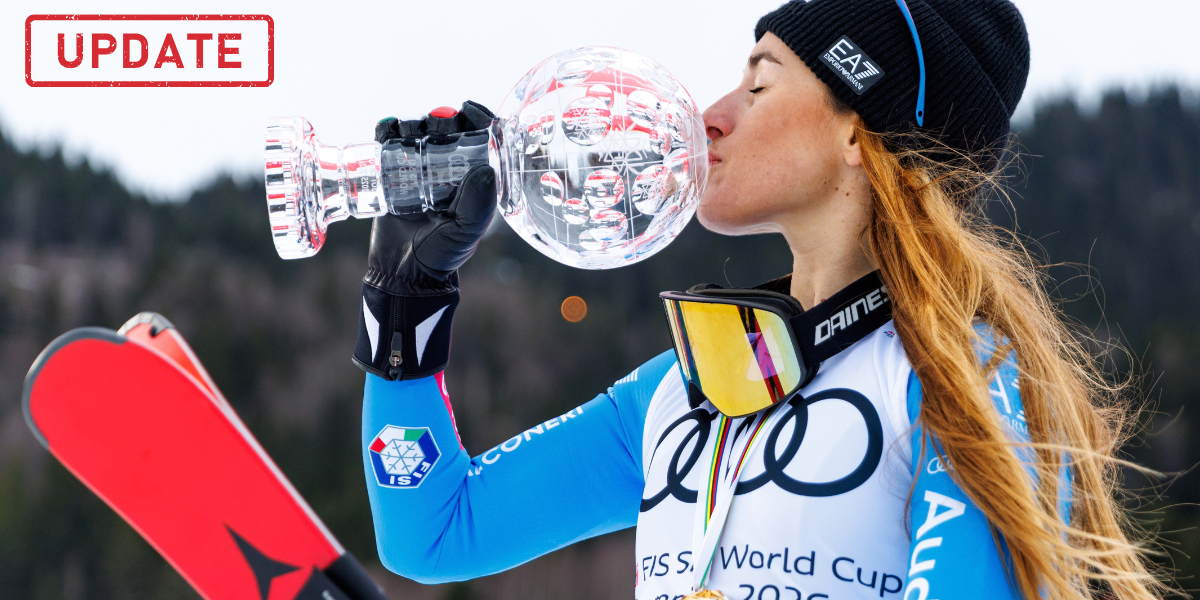
Prior to selection for the team, athletes got their start in the ski club at Sierra Nevada. According to Javier, the annual cost for the club is about 1000€. Support like this allowed Andalusians like six-time World Cup winner María José Rienda Contreras, whose father worked at the ski area, and Carolina Ruiz Castillo (also a World Cup winner and the daughter of a ski instructor) to be able to get started in ski racing and achieve success at the highest levels of the sport.
As stated by long-time Austrian ski racing coach Guenther Birgmann, “The cost of ski racing is the same everywhere around the world. What is different is how it’s paid for.” In the U.S., much of the expenses are individual and discretionary. In many other countries, the largest expenses are institutional and performance-based.
What’s important? What’s not?
Important: The most critical resource for ski racing is time on snow. From an early age, being in an environment where kids “learn” to ski experientially before they are taught with words creates skiers who are comfortable in an unnatural environment. Much of what defines any successful ski racer is learned on-snow, usually with their parents and friends, before they take a class or join a program.
Not: Traveling far and wide. Instead, make the most of every opportunity locally and seasonally before adding more expensive days of travel and in the off-season.
Important: A training program to learn the basic skills of ski racing offering regular training one to two days per week initially and five to six days per week during the teenage years. Coaches who are passionate, enthusiastic and encouraging.
Not: “Professional” programs with low athlete-to-coach ratios providing training that mirrors elite athletes. Adult athletes competing at a high level need superior quality training and highly skilled support staff. The physical demands of training at such a high level of intensity limit the volume of training that is productive. Developing athletes through their junior years benefit most from volume and focus on basics.
Important: Appropriate ski equipment fit and prepared properly. Proper tuning is the lowest hanging fruit to enhancing skill acquisition, and anyone can learn to do it properly.
Not: The most current, newest skis and expensive waxes. With young skiers needing new sizes annually, buying used equipment is far more economical than acquiring the latest new model. Training and racing skis are a luxury that does not become a necessity until far later than most assume. Specialty waxes are completely unnecessary until all other avenues for time improvement are exhausted. Gains are minuscule in nearly all conditions.
Important: An active lifestyle full of physical activity with family, friends and many different sports played recreationally.
Not: Highly specialized programs. While concentrating on skiing early is essential and a long-term benefit, broad based athletic experiences are invaluable. Sport-specific conditioning is critical at an elite or adult level, not for kids. Skiing a lot and learning to play and work hard are the stepping stones to specific training later on.
Important: Nearby race series that provide an appropriately competitive environment, incremental steps to reward-achievement, and new challenges.
Not: Chasing races around the country or around the world. Performance-based qualification serves both the individual by placing them in the appropriate level of competition and serves the sport by reducing the effect of financial resources on advancement.
Important: Fun. Ski racing is hard. Remember why we do it.
Not: Professionalism. Until an actual professional, don’t make ski racing a job. When a professional, keep it fun.
If the cost issue was simple, it would have been solved long ago, but the issue is not unsolvable. We just need to make it a priority. If all parties work together to reform the system at all levels, the price of participation can be significantly lowered.
Individual opportunities
There is a short-term benefit and apparent gains with the excesses some pursue. Early application of resources maximizes potential initially but limits the opportunity for improvements when it matters most. The ideal progression is for engagement and commitment to grow and adding resources and opportunities as they are earned over time. Parents have to examine their goals for participation in sports. If it is to capitalize on the “investment” of time and money with a college education or an athletic career, most will be disappointed.
Program opportunities
On average, program fees are the most significant contributor to the loss of accessibility and affordability for our sport. Clubs, teams and academies need to closely examine where they are most effectively and efficiently delivering on their mission and vision. Every decision on programming and reach has a financial impact. The willingness and ability of some participants to pay for additional services has the effect of raising the cost for everyone else and keeps unknown prospects from entering the sport. Programs need to be proactive in offering programming that is accessible to those who are currently NOT involved. When a program has an extraordinary performer we need to think about how we best support that athlete to go to the next step rather than hold on for the benefit of others.
NGB opportunities
Each Olympic Sport National Governing Body’s (NGB’s) function is to support a healthy pipeline from sport introduction to elite athletics and ultimately field national teams to compete internationally. US Ski and Snowboard (USS) is tasked to field national teams and provide world-class programming to the athletes representing our country. Domestically, it must oversee a system that provides broad access and a rewarding experience for all.
Common sense rules that define the pipeline and identify the athletes whose performance indicates a need to enter a larger competition arena reduce unnecessary travel and excesses. Just because someone can afford to travel and chase competition experiences around the country or around the world, doesn’t mean they should be allowed to until their performance locally indicates they are part of the very small number of athletes who need to travel further to find appropriate competition. The NGB and sport committees need to recognize that the huge majority of our members are not part of an elite athlete development pipeline. The exceptional outliers must have the critical opportunities that are needed to become internationally competitive but the needs of the few cannot drive the experience and expense of the many. USS’s oft repeated goal of “winning at every level” should drive our advancement philosophy at all levels.
Focus must be on creating meaningful and appropriate competitions as close to home as possible. Regional, national and international competition experiences are critical experiences for the very best but unnecessary drivers of cost for the majority. The NGB must provide the guardrails to keep the system accessible.
If selections are very selective and the number of selected athletes very small, the NGB, regions, divisions and programs can afford to provide the financial support to insure means don’t deter advancement.
We’re in this together
Local donor, community and foundation support for outstanding individual racers with limited resources is generous but doesn’t solve the greater issue. The only answer for true affordability is to reduce the cost of the sport for everyone. This responsibility rests on all stakeholders: US Ski and Snowboard; clubs, teams and academies; and individuals.
Imagine if our sport’s message to ski racing parents could be this: “Ski racing is an affordable lifetime sport that teaches great values and life skills to your children. If they have the passion, commitment and talent to advance, the system supports them with what they need to become the best in the world.”
About the Author: Aldo Radamus