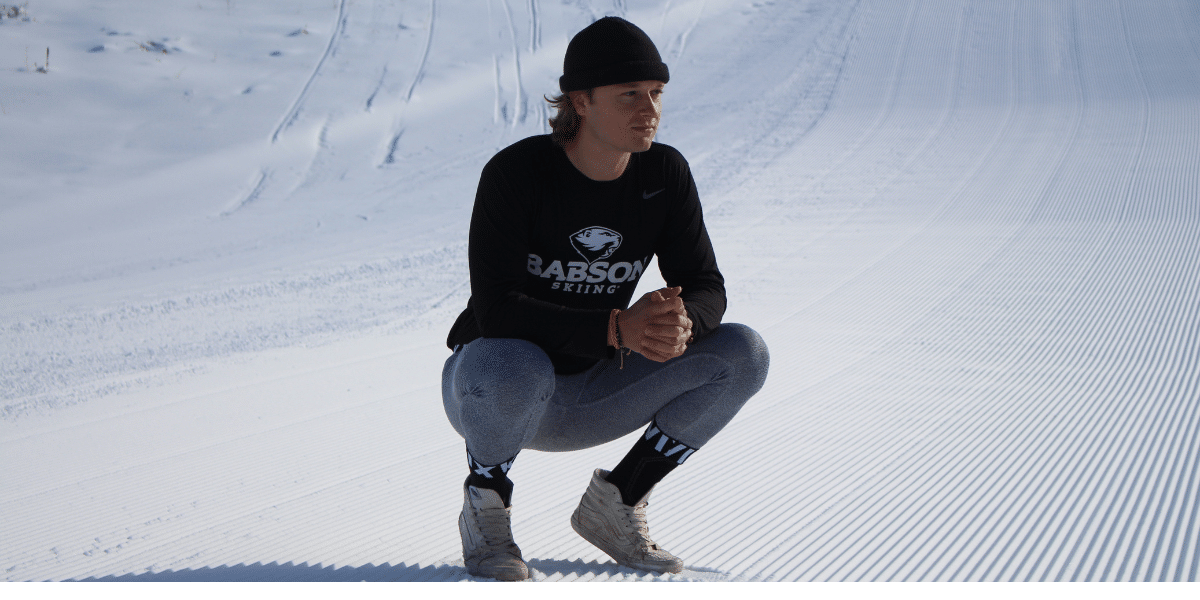
BROOKLYN, N.Y. — A near-fatal ski crash turned Victor Wiacek’s lifelong passion for racing into a mission to protect others. From that moment, he set out to eliminate one of the sport’s most dangerous and preventable injuries, founding VIX Protection and pioneering cut-resistant gear now trusted by World Cup athletes.
Victor Wiacek’s Mission: Turning a Preventable Injury Into a Relic
Ski edges can slice like scalpels. The forces in modern racing turn a small mistake into a life-threatening laceration. This season in Alpine, the International Ski & Snowboard Federation (FIS) requires cut-resistant lower-body garments rated three stars or higher—tested on the FIS machine—for Continental Cup and higher racing.
For Wiacek, that new rule isn’t the finish line. It’s where the next chapter begins..
From Racer to Relentless Problem-Solver
Wiacek grew up racing at Windham Mountain, driven by what he calls “type-two fun”—the kind that only feels good when you’ve pushed past fear and fatigue. As a college freshman, a seemingly minor crash turned catastrophic. His inside ski released and shot in front of him, and he fell onto the exposed edge. It opened his thigh to the femur. Coaches improvised a tourniquet with belts and a jacket. He lost a dangerous amount of blood but survived.
“I’m the last person you’d expect to be the safety guy,” Wiacek said. “But I knew if I didn’t address this, it would mess with me for the rest of my life.”
In a Brooklyn Workshop, A Standard Is Born
Back home, Wiacek went to work in his father’s roofing shop in Bushwick, Brooklyn. He taught himself to weld and built successive test rigs to mimic a ski-edge cut—speed, angle, force, friction, and temperature. He sharpened edges, struck fabric, logged results, and iterated. He sourced hundreds of textiles from around the world, narrowed them to a handful, then reverse-engineered what made the best swatches both protective and wearable.
That garage-grade test bench became the seed of today’s FIS protocol.
When FIS began early discussions on cut protection, Wiacek shared his design and data. “They made a more polished, more ‘German’ version of what I welded together,” he said with a grin. The result helped enable the current star-rating system used to approve race garments.
What the Stars Mean—And Why Five Isn’t a Luxury
FIS rates fabrics one through five stars based on how much force (in Newtons) a ski edge can apply across 20 centimeters without “cut-through.” One star equals 100 N in three orientations (0°, 45°, 90°); three stars equals 300 N; five stars equals 500 N. The lower-body rule requires at least three.
Wiacek argues the gap between three and five stars isn’t incremental. “It’s magnitudes,” he said. VIX’s newest textiles routinely pass five stars; one fabric, he added, has tested to about 700 N in his validation, well beyond the formal scale. “I wanted to set a bar so high it stays there—even if I’m gone from the industry.”
From Mandatory Minimums to Functional, Durable Armor
Early cut-resistant options often felt like chain mail. Wiacek’s obsession has been to combine top-tier performance with real-world comfort—stretch, softness, and thermal manageability—so athletes will wear them every day, not just to satisfy a rule.
Adoption at the Top—and Why the Conversation Changed
Interest surged after high-profile incidents put lacerations back in the sport’s conscience. “When Aleksander Aamodt Kilde got hurt in Wengen, so many other stories came out of the woodwork,” Wiacek said. “Everyone knew someone who had been cut.”
Wiacek estimates that roughly 68–72% of current World Cup athletes now use VIX garments. The entire Stifel U.S. Alpine Ski Team raced in VIX Protection last season and will again this year. He also confirmed a partnership supplying VIX-made, co-branded base layers to the Swiss Ski Team through X-Bionic.
Parents, Price, and Perspective
Safety gear can feel like just another line item in an expensive sport. Wiacek takes a different view. “This is the one injury we can almost eliminate,” he said. He encourages families to think of cut protection as the same kind of safeguard as helmets and back protectors—equipment that helps ensure racers come home healthy after every run.
Inside the Test: How FIS Certifies Cut Resistance
In FIS testing, a fabric sleeve stretches over a silicone-covered steel cylinder wrapped with a thin metal foil and plastic tape. A sharpened ski edge travels 20 centimeters at a set angle and speed. A “failure” occurs when the edge breaches the fabric just enough to contact the foil and complete an electrical circuit.
Wiacek respects the rigor but notes the system can flag micro-penetrations that wouldn’t translate to true skin lacerations. His takeaway: build to exceed the threshold by a wide margin.
Why He Keeps Going
Wiacek calls perfectionism both his fuel and his flaw. He channels it into materials, knits, and garment construction, always testing, always iterating. “Anything worth doing is worth overdoing,” he said. “If the standard is three stars, I want to make five feel like the new normal.”
Team VIX: Small, Focused, and Global
Besides Wiacek, all members of the current VIX team are new as of this season, reflecting the company’s rapid growth and renewed focus. His brother, Lucas, anchors sales operations and brings automation into ordering and customer support while preserving a personal touch. Brian, a longtime friend and college roommate, leads marketing and communications, shaping how VIX connects with athletes and the wider ski community.
A wide range of experts from both industry and academia, along with Wiacek’s father, have also contributed to VIX’s success—offering guidance on testing, materials, and product design. Their insights have helped transform an idea forged in a workshop into a globally recognized safety innovation.
Wiacek continues to oversee R&D, athlete collaboration, and product development—still approaching each challenge with the same hands-on curiosity that first sparked the company’s creation in Brooklyn.
What He Wants Every Skier to Remember
Edges cut. It’s physics, not paranoia. The FIS mandate—currently lower-body only—is a vital step, but Wiacek frames it as a cultural shift, not a checkbox.
“Wear protection because it lets you ski freer,” he said. “If you can stop thinking about ‘what if,’ you can chase what’s possible.”
About the Author: Peter Lange