
Dialing In Your Base Bevels at the Start of the Season
Hi! My name is Matteo Padoan, and I ski for Waterville Valley Academy and compete on Team Great Britain. Early in the season, you often work with freshly ground skis, or with skis directly from the factory. Whether they just came from the factory or out of a machine, it’s best not to assume the skis match the base bevel you requested — it’s always worth checking.
Small Angle Changes, Big On-Snow Feel
A 0.3° instead of 0.5° may sound like a tiny difference, but it can be very significant, especially in certain snow conditions. The challenge is that it can be hard to tell when a ski is too flat. A great coach might see it, or you may spot it during video. Luckily, there’s a more foolproof solution: check your base bevel regularly. I usually check every several weeks. Especially if I’m skiing on icy, abrasive snow, I’ll check every two weeks and maintain it accordingly.
How I Check and Reset My Base Bevel
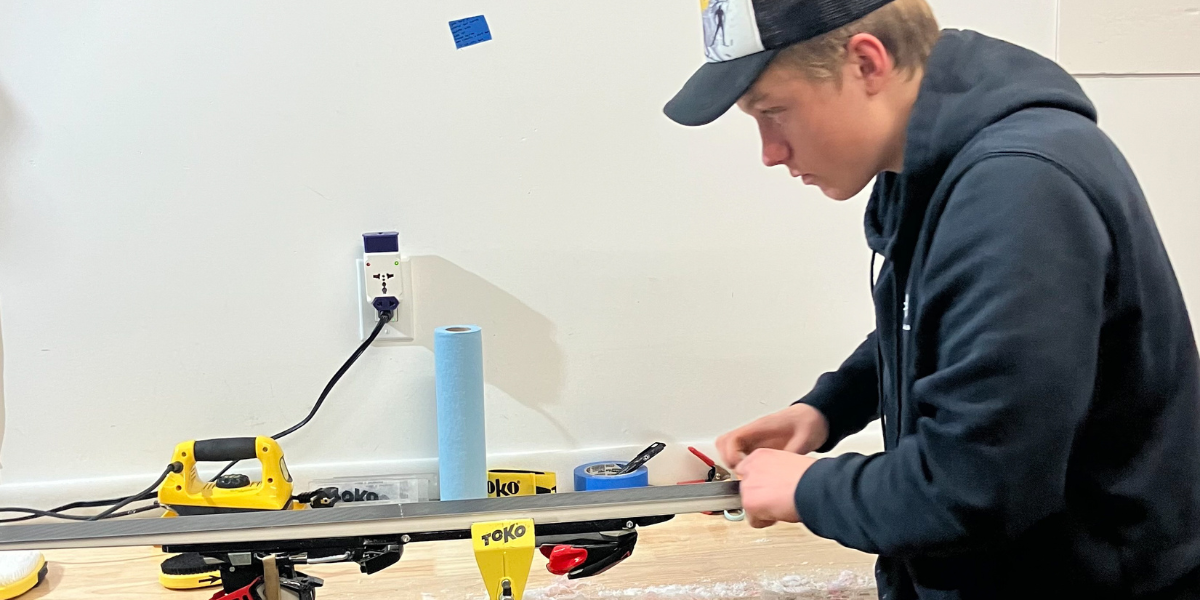
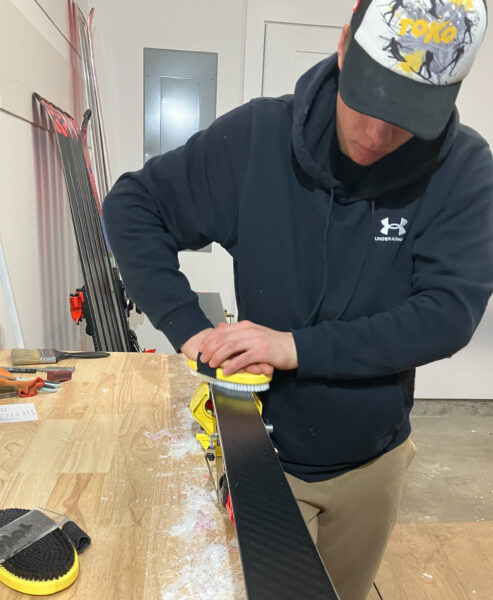
When I’m checking — or resetting — my SL base bevel to 0.5°, I use my WC FILE CHROME, 100MM EXTRA FINE, put it in the TOKO 0.5° BASE ANGLE WORLD CUP guide, and pull it down the base edge from tip to tail, starting with short strokes and finishing with longer, smoother passes. I let the guide sit flat on the base and allow the file to do the work, applying only very light pressure. If the ski is too flat, I feel the edge grab the file. If the file catches, it informs me the existing bevel is still less than 0.5° — which usually explains why the ski felt too tight on snow.
The Marker Test: A Quick Visual Check
Another simple trick is the marker test. I color sections of the base edge with a Sharpie, carefully avoiding the base material, along the length of the ski. Then, like before, I place the file in the base bevel guide — making sure the arrow points in the direction of travel — and make a light pass. If the file cuts marker dye only from the outer edge, the bevel is still flatter than the guide angle. If you’re removing the marker uniformly, the bevel is already at the guide angle. It’s a quick visual confirmation that backs up what you feel through the file.
Once you’ve established the correct bevel with the file, you can finish with a fine diamond file, such as a fine or extra-fine TOKO WORLD CUP DIAMOND FILE, in the guide. I make a few uniform, light passes.
Finishing the Bevel Cleanly
Once you’ve established the correct bevel with the file, you can finish with a fine diamond stone, like a fine or extra-fine TOKO WORLD CUP DIAMOND FILE, in the guide. I make a few consistent, light passes to clean everything up.
Early-Season Maintenance and Rock Damage
Something worth mentioning is early-season bevel maintenance. Specifically, a problem I’ve run into is hitting small rocks and picking up light dings on the base edge. My go-to in this situation is doing short, light passes with the coarse (200) TOKO WORLD CUP DIAMOND FILE to remove minor scratches. This can be to “clean” the base edge or prepare it for filing, as the file won’t cut cleanly if there’s damage on the edge. Just a small aside — but an important one.
When to Check — and Why It’s Worth It
Whether a shop freshly ground the ski or you skied it on abrasive early-season glacier snow in Europe, a tight (grippy) feel—or too much time since your last check—makes the base bevel a smart place to start. At this point in the season, checking your base bevels can make a meaningful difference and may give you a real edge.
About the Author: Matteo Padoan