2025 Breakout Season Fuels Olympic Ambition
PARK CITY, Utah — Elisabeth Bocock didn’t ease into World Cup ski racing; she jumped in wide-eyed with powerful turns and determination, knowing she belonged—long before the results proved it.
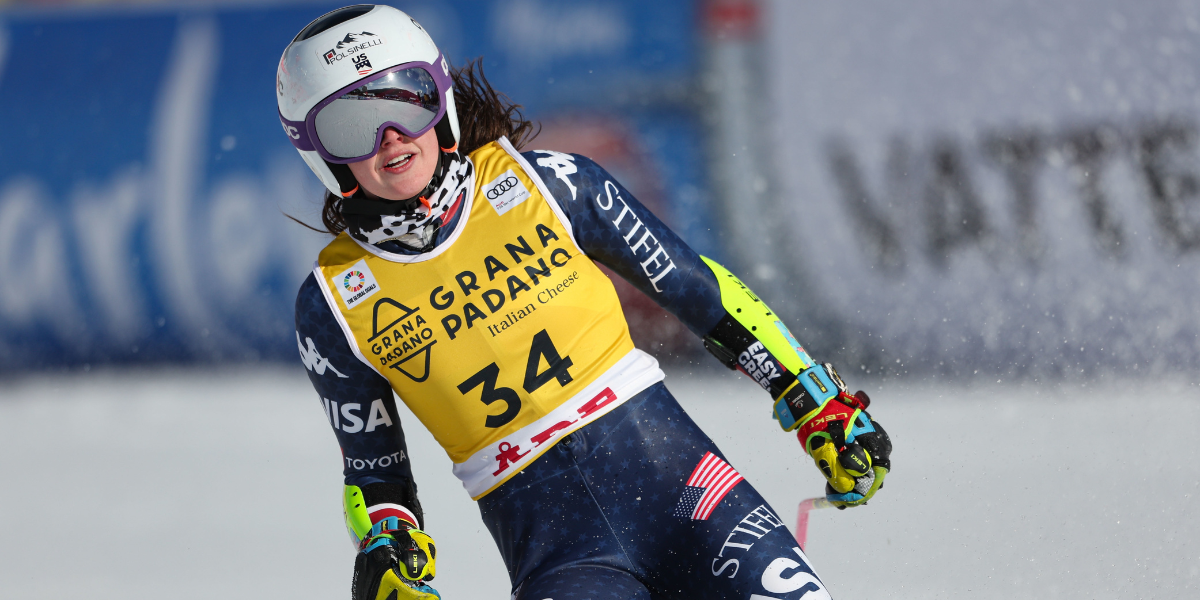
Last season, the 19-year-old from Salt Lake City scored her first World Cup points in front of a roaring home crowd in Killington, Vermont. While Sölden, not Killington, was the first giant slalom of the season, Bocock wasn’t selected to start there. So Killington became her season debut, and it marked a turning point. She landed in 8th after the first run, stunned herself, and finished inside the top 30 to notch her first World Cup result.
“It was so meaningful for me to perform my first race of the season in front of my family,” Bocock said. “I was totally surprised by the first run… it showed me some of my potential and raised my standards—and my expectations.”
Throughout the season, she qualified for four second runs and scored in three, culminating in a breakthrough 14th-place finish at the World Cup regular season final giant slalom in Åre, Sweden. The steady climb has put Bocock on the radar as a legitimate contender for one of four U.S. Olympic spots in giant slalom—a discipline that will likely be the hardest to qualify for heading into the 2026 Cortina Games.
But Bocock isn’t shying away from the pressure. She’s learning from it.
Learning From the Lows—and Climbing Back
Bocock’s season wasn’t all momentum. After her early success, she broke her hand in Killington and struggled to find consistency through the middle months. But her finish in Åre proved she could not only recover—but deliver.
“It just showed me that I can contend with the best in the world, not just when the conditions are perfectly suited for me,” she said. “That gave me more confidence… and got me excited for trying to qualify for the upcoming Olympics.”
Still, the experience taught her that surviving on the World Cup is about more than skiing fast; it’s about showing up mentally and physically strong, every day.
“You can’t just ski and make your way down—you have to push,” she said. “Everyone in the second run is pushing, pushing, pushing. If you get a good start position, that’s a huge opportunity. You have to take advantage of it.”
Staying Grounded While Aiming High
The Olympic season brings new intensity, and Bocock admits it sometimes weighs on her—especially when a challenging training session feels more consequential than it should.
“I can kind of get in my head about these things,” she said. “There’s a lot of pressure… but also that much more motivation.”
She knows what it will take to earn one of the coveted Cortina spots: consistent, fast skiing. But she also understands that the U.S. tech team is one of the most competitive in the world, with multiple women regularly finishing in the top 15.
“I’m definitely trying to be part of that conversation,” she said. “But I’m also keeping in mind this is a really hard year. If it happens, that would be great—but I’m still young.”

Training for Consistency and Versatility
Bocock plans to race full-time on the World Cup this season, with a focus on giant slalom, her strongest event. But she’s also determined to improve her slalom and keep super-G in the mix.
“It’ll probably prioritize GS first, slalom second, super-G third,” she said. “I don’t think I’ll be racing a ton of super-G, but I hope to race it at World Juniors, U.S. Nationals, maybe some Europa Cups.”
Her off-season preparation has followed a similar structure to last year, with strength coach Foreste Peterson targeting key areas based on physical testing results. Together, they’ve increased focus on core stability and mobility—critical for balance and control through long, demanding courses.
“We’ve done more core-focused exercises, which is good because I can get a little loose in the course,” Bocock said. “We’ve been working on staying balanced—and I’ve also been rehabbing a minor knee issue, so hopefully, I’ll be pain-free when I get back on snow.”
Domestic Success Paved the Way
Before she became a regular in World Cup start gates, Bocock made a name for herself on home soil. She won the 2025 Nor-Am giant slalom title—earning World Cup start rights for this season—and claimed the U.S. national GS title in a deep, exhausted field in Vail.
“That was a really exciting race,” she said of nationals. “It was such a long, tiring course at the end of a long season. To put down two good runs was exciting, and it was special to be on the podium with Nina [O’Brien] and AJ [Hurt]—two of my really good friends.”
Her Nor-Am points also gave her earlier start numbers in World Cup races—moving from the mid-50s into the low 30s—and that made all the difference.
“It’s just so hard when you’re starting late in the pack to think, ‘Okay, I have to move up 30 places to make the flip,’” she said. “When you’re starting earlier, it just makes it that much easier mentally.”

Delivering Under Pressure at Junior Worlds
Despite her World Cup season, Bocock remained focused on one major goal: earning an individual medal at the Junior World Ski Championships.
“I tried to do everything I could to be at my best level there,” she said. “So to be able to get a medal, especially after a mistake in the first run—that was really exciting. I was most proud of being able to perform with that pressure—because that race was my big goal all season.”
She also earned medals in the team event—an experience she treasures for different reasons.
“Winning as a team is so much fun. You’re not really the star of the show, but you’re celebrating everyone else too. It bonds you together,” she said. “Ski racing is an individual sport, and it’s just so fun to have the team event bring everyone together.”
Youngest on Tour—and Soaking It All In
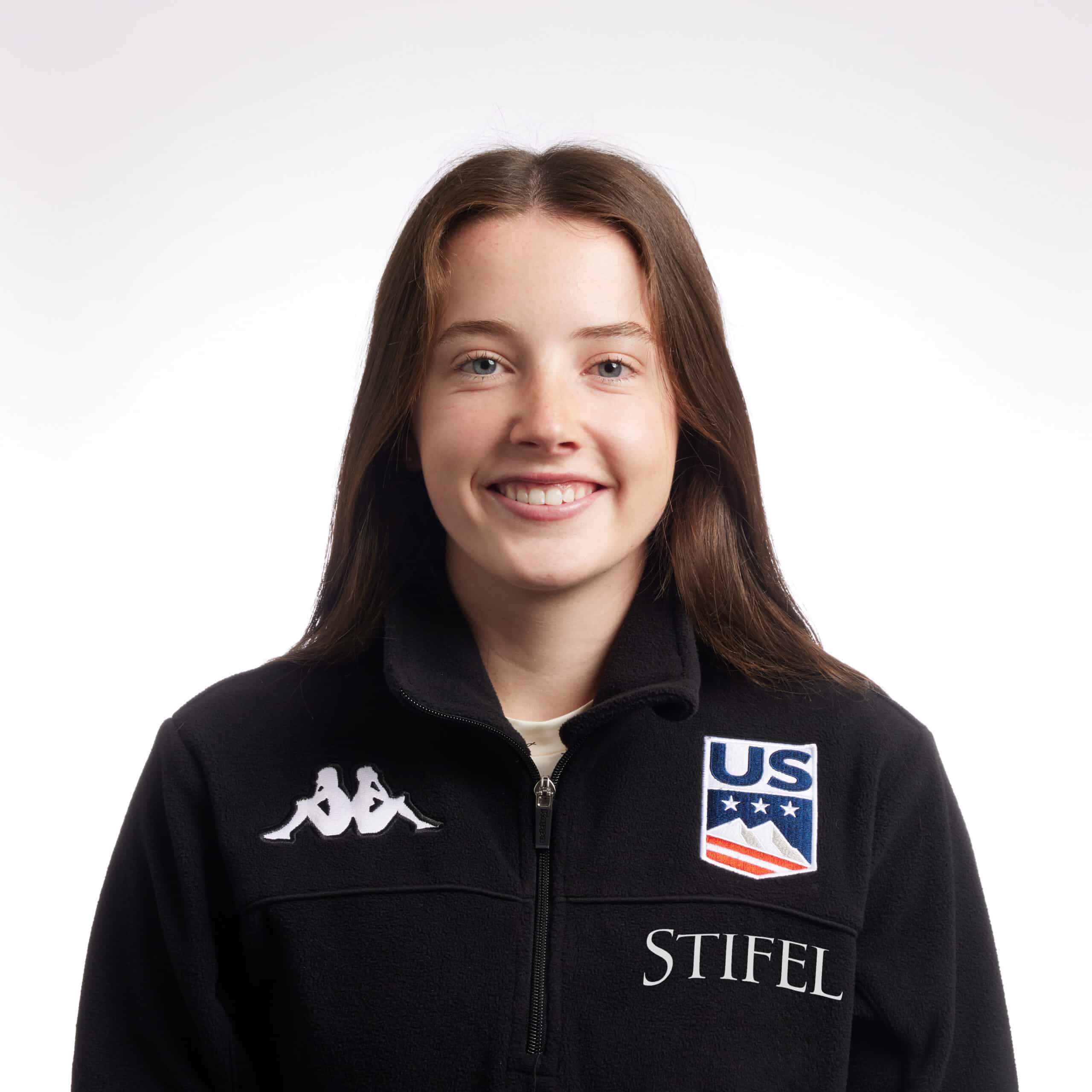
Bocock spent last season as the youngest member of a powerful and seasoned U.S. tech team. She noticed the experience gap right away—and embraced it.
“The next youngest girl on the team is AJ, and she’s five years older than me,” she said. “But they’ve kind of brought me in. AJ especially has taken me under her wing.”
And the holidays away from home? Tough at first—but her teammates stepped in.
“Paula [Moltzan], Nina [O’Brien], AJ, and Katie [Hensien] got Mary and me Christmas pajamas and showed us their traditions,” she said. “We baked cookies, went rodeling. They really helped make it fun when I was honestly super sad to be away from my family.”
Sister, Teammate, Best Friend
Her closest teammate is also her sister. Mary Bocock, a three-discipline World Cup skier, is Elisabeth’s training partner, motivator and confidante.
“Mary and I are best friends,” she said. “She knows when I’m sad—even if I don’t say anything—she knows what to do. We’ve been through the exact same things, and it’s so great to truly cheer someone on 100 percent.”
Mary’s intensity also sets the tone.
“She’s incredibly hardworking,” Elisabeth said. “Without her, I would’ve tried to take shortcuts. But she’s shown me that every little piece of effort counts.”
Balancing Books and Big Goals
Between World Cup races and training camps, Bocock is also a student at Dartmouth College, attending classes in fall and spring quarters.
“I really enjoy being busy,” she said. “Juggling multiple things makes you more productive. I worked out all the time with Mary and AJ—we had a routine, and we helped each other stick with it.”
The challenge, she admits, is the lack of actual downtime.
“You go straight from the World Cup to school, and then straight into dryland training,” she said. “It’s taxing. But most people’s lives are busy—it’s not that different.”
Still, she values the long-term perspective college provides.
“Skiing doesn’t last forever. I’m just trying to set myself up for life after the sport.”
Support Behind the Scenes
From her parents to her strength coach to the ski technicians preparing her equipment, Bocock knows success doesn’t happen alone.
“My parents have been incredibly supportive,” she said. “They’re huge fans of the sport. They took us to watch World Cups as kids, and they love traveling to watch our races. It just makes it more fun.”
Her proximity to the U.S. Ski & Snowboard Center of Excellence in Park City is another key asset. She trains there five days a week when she’s home, often with Foreste Peterson, who has guided her since her junior days.
“She’s helped me tremendously—physically, technically, and mentally,” Bocock said.
Last season, Bocock worked with both her longtime technician Jesús Calzada, with whom she shared a very successful partnership, and Tadej Kunc, who supports fellow World Cup skier Katie Hensien. With her full-time move to the World Cup team this year, she’ll now work primarily with the highly accomplished Kunc, and she’s excited to build on the strong foundation she created with Calzada.
“I worked with Tadej a bit last year,” she said. “Now that I’m full-time on the World Cup team, I’m really looking forward to seeing what we can do together.”
Still a Teen, Already a Threat
Whether it’s the violin she played through high school or the nerves she feels watching her sister race, Bocock is refreshingly grounded. But she’s also quietly fearless—and steadily climbing.
“I think I can be up there with the top of our girls,” she said. “I just want consistent races. Keep my feet on the ground, push hard, and keep progressing.”
With 13 World Cup starts over the last two seasons, a Junior Worlds medal, a Nor-Am title, and a national championship behind her, Bocock has proven she can compete.
The Olympic conversation has now begun.
About the Author: Peter Lange