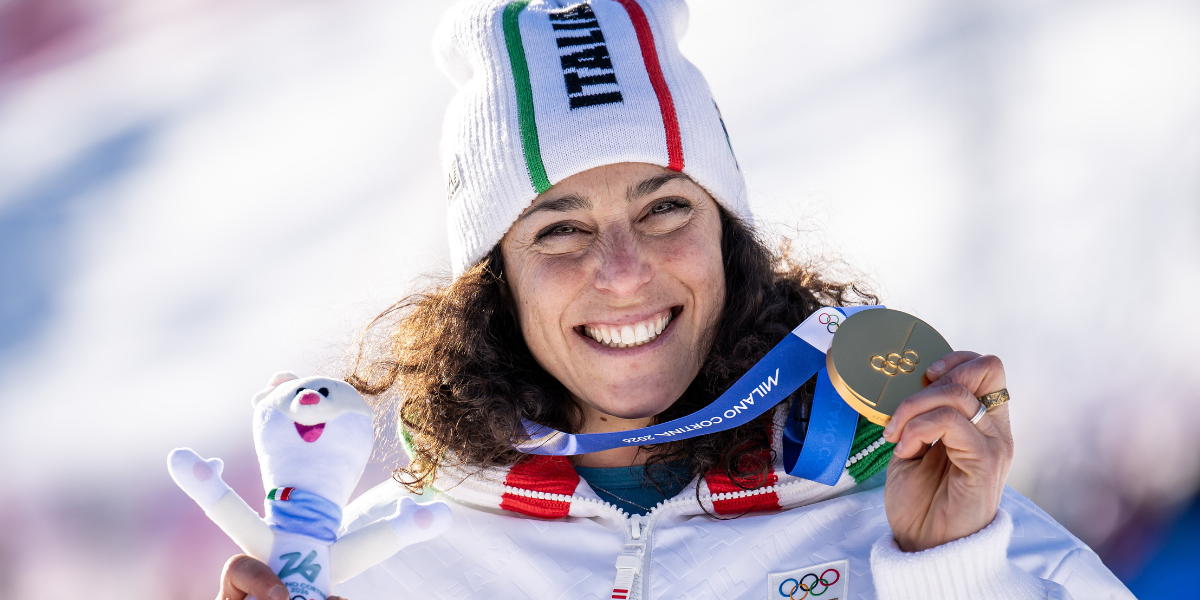
SOLDEU, Andorra — Federica Brignone arrived in the Pyrenees as a two-time Olympic gold medalist. She also arrived in pain.
According to information shared by the International Ski and Snowboard Federation (FIS) during a media session in Soldeu on Thursday, the Italian star is still managing the aftereffects of multiple leg fractures suffered in April 2025 — injuries that kept her off snow until late January, just weeks before the Milano Cortina 2026 Olympic Winter Games.
Now, less than a month removed from her home-snow triumph, Brignone is balancing celebration with reality.
“If I were healed, I’d be on cloud nine,” she said. “Instead, it’s happiness mixed with struggle. I would trade the two Olympic gold medals to go back to being uninjured.”
A Champion Still Managing Pain
Brignone revealed that she spent three days at J Medical following the Olympics to reassess her condition after leaving Cortina with renewed issues in her leg. Doctors drained her knee earlier this week and administered a hyaluronic acid injection, but improvement has been limited.
She completed the first downhill training run in Soldeu but did not start the second session the following day. She is also not listed on Friday’s official downhill start list, underscoring how carefully she is managing the situation. The decision reflects her commitment to avoid pushing beyond what the leg can currently handle.
“I’m still in quite a lot of pain and I struggle to put weight on it,” she said. “If I can’t truly stand on my leg, I have no intention of throwing myself down the mountain at 130 km/h.”
The 35-year-old emphasized that racing in Cortina was already considered a “bonus.” Anything beyond that must remain healthy and safe. For now, she is evaluating her participation in the Andorra weekend strictly day by day.
Competing at the Limit — With a Compromised Leg
Brignone has built her career on pushing the limit with strength, balance and fearless commitment. That mindset hasn’t changed. The circumstances have.
“I’m competitive by nature,” she said. “My hunger has always been about seeing how far I can go and pushing beyond my limits. Now the challenge is being competitive with this leg.”
Her preparation before Olympic Giant Slalom gold was minimal — just a handful of training days with limited runs. Yet she trusted the sensations she had built over recent seasons and delivered under immense pressure on home snow.
Executing at that level — without full preparation and while managing pain — underscores the mental and physical strength required to ski at the sport’s highest speeds. Alpine racing is performed at the limit. Mistakes cost time, runs or health. Brignone walked that edge in Cortina and came away with history.
Still, daily life remains difficult.
She cannot run or play tennis. If she skis in the morning, she limps the rest of the day. She is relying on anti-inflammatories. Surgery is not currently an option, as the tibia is not ready. Some of the damage, she acknowledged, will be permanent.
Soldeu: Joy vs. Reality
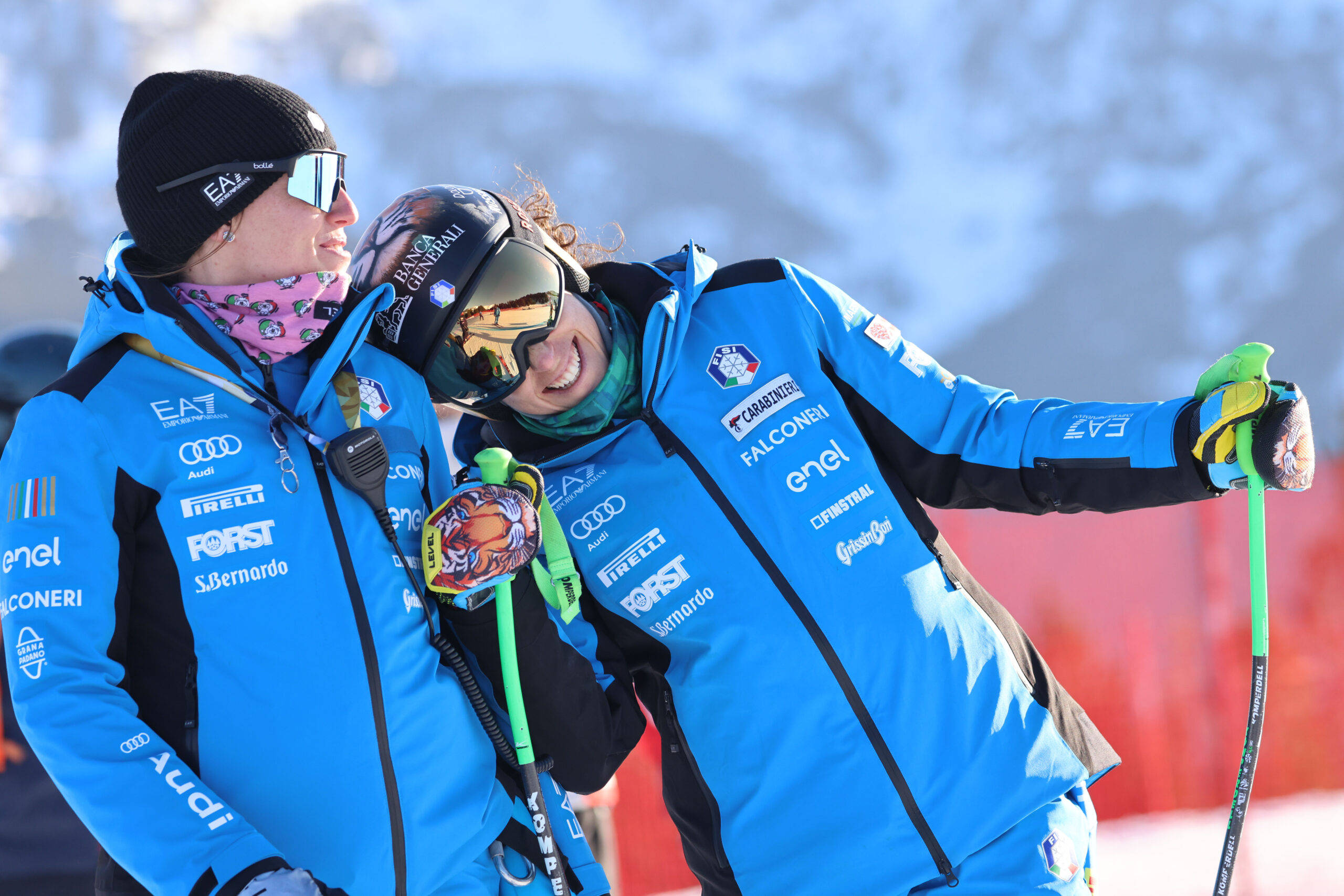
Brignone described the end of the World Cup season as her favorite stretch of the year — longer days, more light, a relaxed atmosphere on tour. Soldeu, she said, is one of her favorite stops.
“I asked myself what I truly wanted, and the answer was always: I want to go to Soldeu and ski,” she explained.
But there is a clear line.
“If it becomes torture because I’m in too much pain, I’ll make different decisions.”
The approach is simple: live in the present. Assess daily. Push only if the leg allows.
Processing Olympic Gold
Despite the physical toll, Brignone said she fully understands what she achieved in Cortina. Winning Olympic gold while undertrained and in pain still feels surreal — but not accidental.
“It was special to be able, mentally, to trust my sensations, to trust my leg, and to put everything together at the right moment, at home, with all that pressure,” she said.
After her Giant Slalom victory, Sweden’s Sara Hector and Norway’s Thea Louise Stjernesund bowed in respect — a gesture that quickly circulated worldwide.
“It was incredible,” Brignone said. “A huge sign of respect.”
She added that messages poured in from athletes across disciplines, many praising her quiet resilience and refusal to dramatize the recovery process.
“Believing in something that seems impossible is a huge motivation,” she said. “We are the architects of our own destiny.”
What Comes Next?
Whether Brignone races next season remains undecided. Her future depends entirely on her health.
“I don’t feel like I want to quit,” she said. “I’m tired of the pain — not of racing.”
For now, Soldeu represents something simpler: a chance to ski, if her body allows it.
Two Olympic gold medals proved she can still reach extraordinary heights. The next challenge is different — managing pain, respecting limits, and deciding each morning whether the leg is strong enough to push once more.
In Brignone’s world, it is no longer about next season. It is about today.
About the Author: SR Staff Report