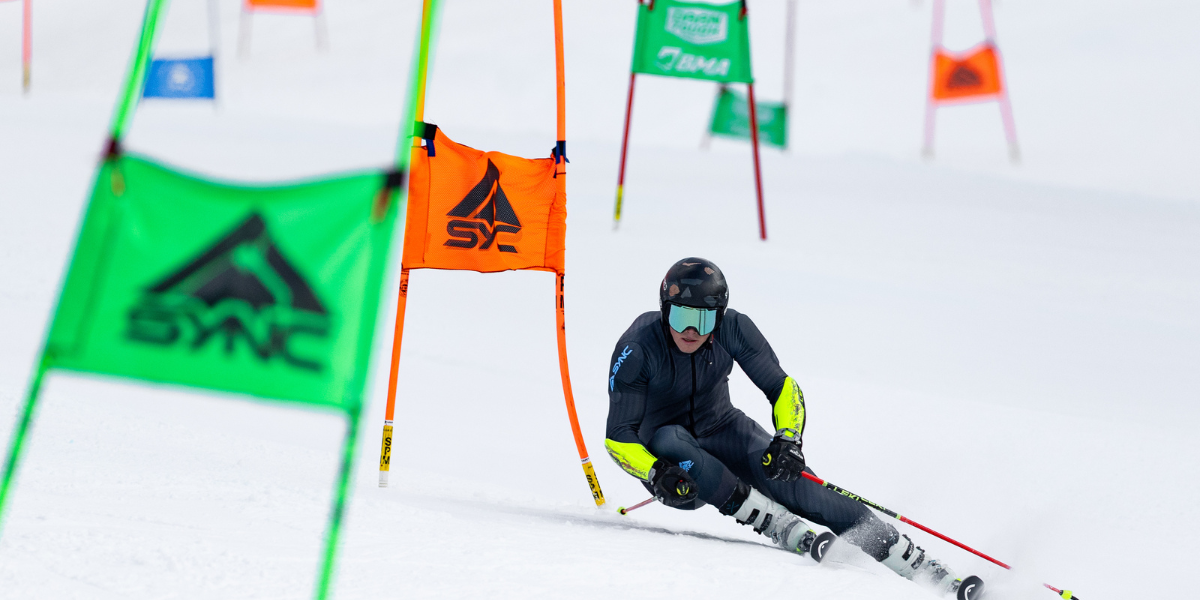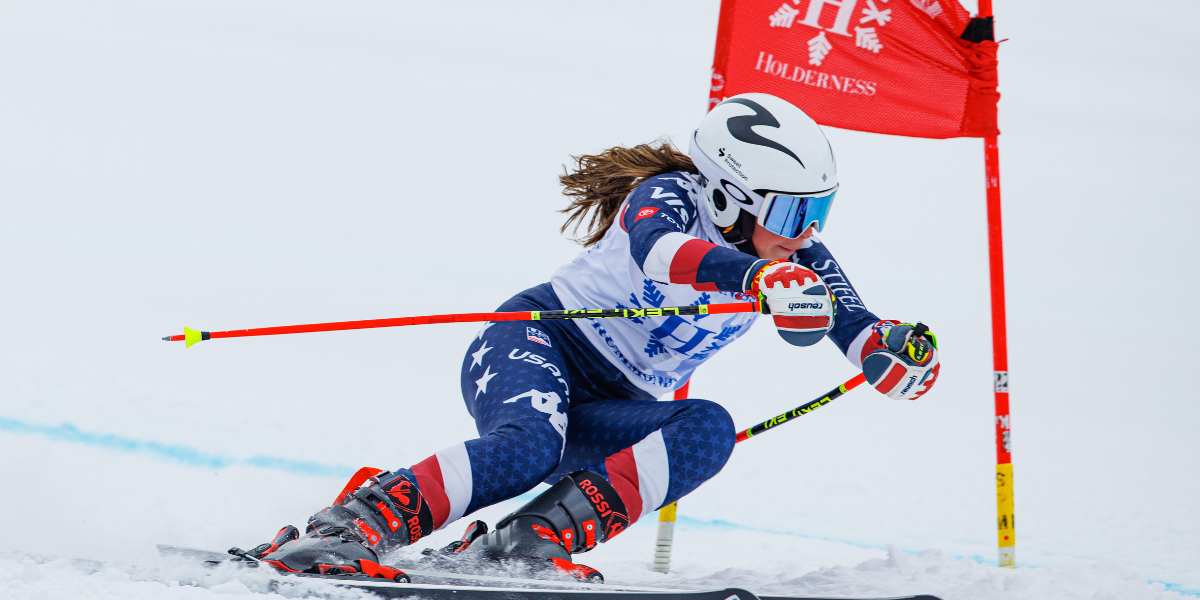
Lucas Braathen: Photo Credit GEPA
In December, I spoke at a ski racing conference in Alta Badia, Italy, during the men’s World Cup GSs. I had the opportunity to talk at length with Lucas Braathen (how’s that for name-dropping?) after his first run DNF in the second race. He is a bright, down-to-earth, and open guy (and he had smiley faces painted on his fingernails!). It was amazing that he was able to race at the World Championships after his appendix surgery a few weeks ago and was 2nd after the first run and finished 7th in the slalom.
I first asked Lucas if he worked with a sport psychologist. He said no because he felt he had his race day mental preparation down pretty well, so he didn’t need one (aside: with all due respect, Lucas doesn’t understand the far more comprehensive range of issues that people like me address). In any case, he did say that he worked with a “life coach” to help him maintain balance in his life as a World Cup ski racer. Their work focused on keeping perspective and ensuring that his ski racing stays a part of his life, not life itself.
Ski Racing Creates an Imbalanced Life
Everyone who ski races knows how all-consuming our sport can become. The time and energy required to be your best (whether you’re a World Cupper, college racer, or aspiring junior) can quickly put your life out of balance. Life can become overwhelming quickly between conditioning, on-snow training, ski tuning, video reviewing, travel, and mental training. What began as participation born of passion can become a stressful burden that sucks the joy out of ski racing (in other words, it becomes a job!), particularly as you climb the ranks and the stakes get higher.
The problem is that you can’t lead a balanced life while pursuing your own personal greatness as a ski racer. You have to have an “all in” attitude towards the sport. At the same time, maintaining such an intense devotion to ski racing will ultimately lead to physical and mental burnout and a loss of enjoyment in your ski racing experience.
Given the reality that pursuing your ski racing dreams can lead to an imbalanced life, the goal is to “find balance within the imbalance.” In other words, look for opportunities to regain brief periods of balance to tip the scale just enough so that you don’t fall off that tightrope you are constantly walking as a ski racer (apologies for the mixed metaphor).
Here are some ways you can restore your balance.
Maintain Perspective
Lucas told me that one of the most important things he focuses on involves keeping perspective when so much of our sport can cause him to lose perspective. This means having a long-term and realistic view of ski racing, with all its excitement, inspiration, setbacks and disappointments. Like life itself, ski racing has its share of highs and lows. This perspective lets you continue to feel passionate about and find enjoyment in our sport when things don’t go your way (as they didn’t for Lucas that day in Alta Badia or in the slalom in Courchevel). Perspective involves keeping competition, success, and failure in their rightful and reasonable place within the broader context of ski racing and life. In the big picture, this long and comprehensive view lets you keep ski racing in perspective, reminding you that it can be a big part of your life, not life itself.
Diversify Your Self-identity
Though he didn’t use these words, another insight that Lucas had was the importance of what I call ‘diversifying your self-identity.’ In other words, Lucas didn’t just want to be a ski racer; he was much more than that. Yet, a real challenge for every committed ski racer is feeling like that is all they are.
To create a more robust self-identity (and, thus, balance), you can recognize other essential areas of your self-identity that you may not pay much attention to, for example, family member, friend, student, or musician, and gain an appreciation for their roles in your life. In doing so, you aren’t putting your entire self-identity on the line when you slide into the starting gate. When you develop a more balanced self-identity, you shrink the size of the piece of the pie that ski racing assumes and, as a result, lessen its impact on your self-identity and your ski racing efforts.
Do Non-ski racing Stuff
One of the most effective antidotes to an imbalance in your ski racing life is having a life outside of your sport. You may not be able to devote a ton of time to it, but finding balance within the imbalance involves carving out brief periods when you set ski racing aside and immerse yourself in other activities that add meaning to your life and that you enjoy. One World Cupper I work with brings his guitar everywhere he goes, one is an avid online chess player, and another is working toward her college degree.
You can actively balance the imbalance by, for example, beginning a new hobby, taking an online class, creating a “great books” reading list, or learning to cook (the opportunities are endless!). In other words, ski racing will still be important to you, but because you gain meaning, satisfaction, and joy from other aspects of your life, it won’t be so important that it leads to an unhealthy overinvestment in your ski racing goals.
Take Care of Yourself
The imbalance that ski racing can cause can be particularly wearing as we are in the middle of the race season. You’ve been training, racing, and living ski racing pretty much 24/7 for several months now, and that grind can take its toll on you physically and mentally. It’s time to listen to your body (before it starts screaming at you!) to ensure that you are preparing it for a strong second half of the winter when the biggest races are on your schedule. There is nothing worse than what I call the “second-half slide,” in which your body, mind, and results head south because you are “cooked” now and don’t do anything to get out of the oven for a while.
Sleep may be the most important aspect of balance for you physically and mentally. First, to improve your sleep, try to maintain a disciplined sleep schedule that ensures adequate sleep (at least eight hours a night). Also, take lots of naps! Second, build one complete day off the snow into your weekly schedule. Third, vary the volume and intensity of your training so that every training day doesn’t exhaust you. Fourth, eat and hydrate well; you want to fill your tanks with rocket fuel, not McNuggets and Coke.
Take a break
It’s also important to create physical balance by taking up to five days off sometime in February to give your body time to rest and recover before the final push to the end of the race season. You may bristle at this idea because you would miss all that training! But I can assure you that you will get far more out of your time off snow than you would by continuing to train.
Ideally, this time off should be physical, geographical and mental. One racer I work with who trains and races mainly in Europe is taking a week off and spending time with his family on the southern coast of Spain, which is far from snow, literally and psychologically. Of course, not every racer has the luxury of flying to exotic beaches, so any change of scenery (e.g., your family home if you live at an academy) can be equally “therapeutic.”
If you create balance in the imbalance, you will better maintain your physical and mental energy throughout the race season. You’ll also stay motivated and be a whole lot happier. But, as I’ve suggested throughout this article, an imbalance is easier than balance, so you have to take active steps to find the balance in the imbalance of your life as a ski racer, so you can finish the season strong.
About the Author: Dr. Jim Taylor