GEPA pictures
A Loss That Shook the Sport
The global ski community has spent the fall reckoning with another tragedy. In September, Italian speed skier Matteo Franzoso died during a downhill training run in La Parva, Chile. He was 25 years old and only one day from celebrating his birthday. His crash became the fourth training fatality in 12 months, a heartbreaking streak that has stirred intense debate across the alpine world.
Franzoso’s passing hit Italy’s team especially hard. Many were still grieving the death of Matilde Lorenzi, who was killed in a training accident in Val Senales in 2024. Together, the losses have pushed athletes, coaches, and administrators to confront long-standing safety concerns—particularly at off-season speed venues where preparation, equipment, and oversight vary dramatically.
Mounting Pressure for Change
In the weeks after Franzoso’s accident, voices across the sport grew sharper. Athletes demanded accountability. Coaches questioned outdated protocols. Advocates emphasized that equipment and speeds have evolved, while safety practices at many training centers have not kept pace.
The central issue: World Cup venues operate with strict standards and large safety crews. Many summer and fall training venues do not.
A Two-Pillar Safety Plan
The International Ski and Snowboard Federation (FIS) responded with a sweeping two-pillar safety plan following its October 21 Council meeting. The initiative is designed to modernize downhill and super-G safety standards and shift the sport’s culture surrounding risk.
The plan includes:
- A global audit of homologated downhill training courses, to be completed by May 2026.
- Updated safety protocols for training and competition, covering course sets, hazard zones, and daily inspections.
- Mandatory use of airbags and other protective equipment at the highest levels during all race and training runs.
- A focused safety workstream, led by Chief Race Directors Markus Waldner and Peter Gerdol, to propose additional measures for 2026–27.
- Broad education initiatives, including safety clinics specifically designed for speed athletes and coaches.
In announcing the program, FIS made a notable acknowledgment: although the federation historically has had no formal responsibility for training environments, it will now take steps to set safety expectations for training venues similar to the standards required for FIS-sanctioned races. For many in the community, this marks a significant—and long overdue—shift.
FIS President Johan Eliasch described the initiative as the beginning of a cultural reset.
“Alpine skiing is, by definition, a high-risk sport — that will never change. What must continue to evolve is the safety culture surrounding it, at every level and in both competition and training.”
A Long-Standing Advocate Welcomes the Change
The Kelly Brush Foundation (KBF), one of the most influential safety organizations in U.S. skiing, welcomed the new measures. The foundation had issued a detailed set of recommendations to FIS in late September, many of which closely align with the federation’s plan.
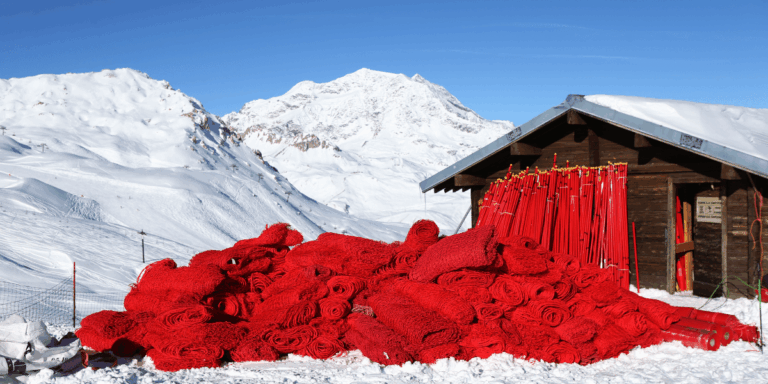
For nearly twenty years, KBF has helped U.S. clubs acquire more than 100 miles of safety netting, increased safety education in junior programs, and normalized the expectation that performance and protection must develop hand-in-hand.
“We are pleased to see FIS reacting so promptly and speaking out about the need to improve safety for all ski racers,” Brush said. “We look forward to working with FIS to implement these measures.”
Athletes and Coaches Call for Consistency
Even with the reforms, many in the sport stressed that implementation will be the true test. Italian speed specialist Guglielmo Bosca noted that risk is part of the athlete’s life, but preventable hazards are not acceptable. Former Olympian Lara Magoni argued that the technology shaping modern skiing has outpaced the systems meant to protect athletes from its consequences.
Coaches also pointed to the enormous manpower required to bring a venue up to World Cup safety standards. Many off-season training centers operate with limited staff and budgets, making large-scale net installations and course-safety adjustments difficult.
Elite coach Federiga Bindi summarized the concern: “Making a mistake in skiing is normal. Even Shiffrin makes a mistake every time. Safety features are there to save you.”
A Turning Point—If the Sport Follows Through
The upcoming FIS audit and new educational programs offer the clearest signal yet that safety expectations must extend beyond the World Cup circuit. Yet raising every training venue to those standards will require funding, staffing, and cultural reinforcement.
For the families, teammates, and friends of Matteo Franzoso and Matilde Lorenzi, the hope is that meaningful action—and not symbolic gestures—defines this next chapter in alpine skiing.
Information in this article was informed by reporting from SnowBrains.com.
About the Author: SR Staff Report