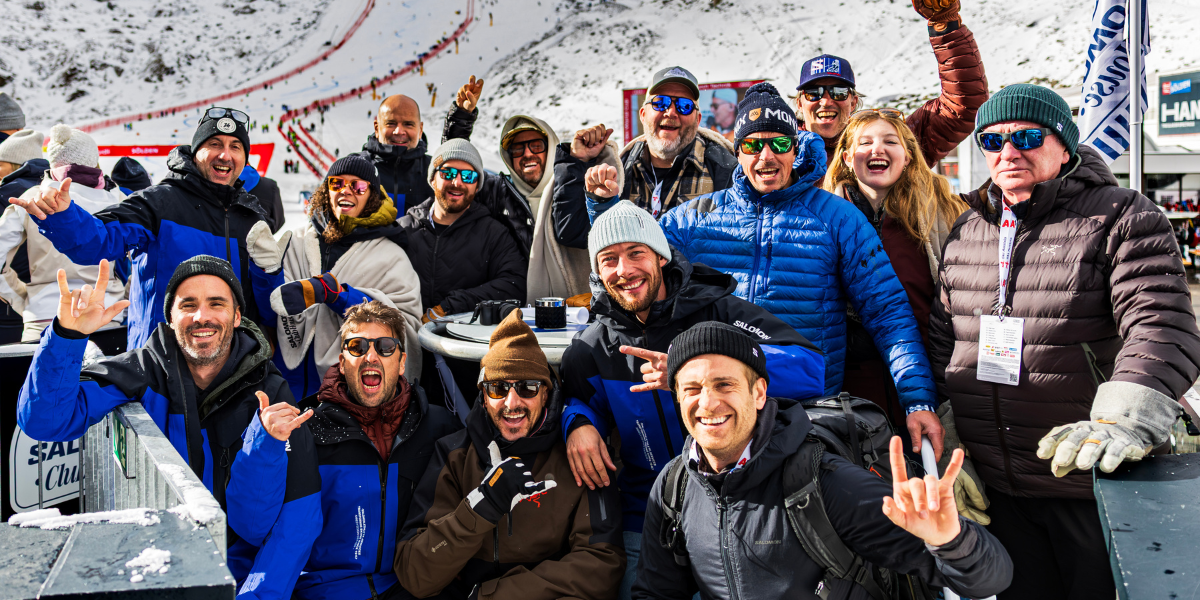
Featured Image: Lauren Samuels and the Salomon team at the 2025 Sölden World Cup. Photo courtesy of Lauren Samuels.
When Salomon stepped away from North American alpine racing, it left a noticeable gap. For a generation of athletes, coaches, and parents, Salomon wasn’t just another logo in the start gate—it was part of their development. Then, almost quietly, the brand disappeared.
Now it’s back.
At the center of its return is someone who understands exactly what that means.
Lauren Samuels grew up racing on Salomon. She wore the boots, trusted the skis, and built a connection with the brand over years of competition. Now, she has returned—not as an athlete, but as a leader shaping its future in North American racing.
“It’s full circle,” Samuels says. “I started on Salomon when I was young. Now we have the opportunity to bring it back—and do it right.”
A Strategic Return — Not a Splashy One
Salomon isn’t chasing headlines or signing the biggest name in the sport. Instead, the brand is taking a deliberate approach—rebuilding from the ground up.
“We’re not coming in trying to grab the number one skier in the world overnight,” Samuels explains. “We want to start at the grassroots level. That’s where loyalty is built. That’s where connection happens.”
This marks a shift in a sport often driven by podium visibility. Rather than building from the top down, Salomon is investing in the development pipeline—U14, U16, FIS athletes, and the coaches behind them.
That decision isn’t sentimental. It’s strategic. “I am exactly the person we’re trying to create going forward,” Samuels says. “Someone who started young on the brand and still believes in it years later.”

Product First. Always.
If there is one message Samuels repeats, it is this: in ski racing, product is not marketing, it is everything.
“You win or lose by hundredths of a second,” she says. “Equipment matters. The athlete has to trust it completely.”
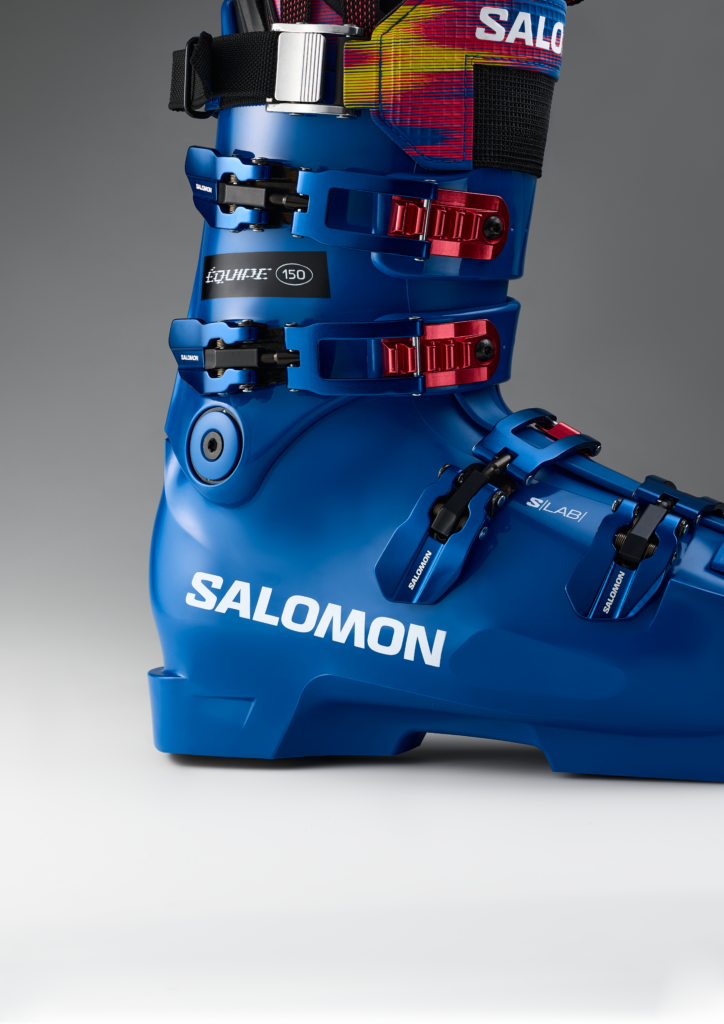
That philosophy is driving a full scale evolution within Salomon’s race department globally. Over the last several years, the brand has quietly reworked molds, sidecuts, constructions, and perhaps most notably, its race boots. The upcoming redesign moves away from an ultra-thin, hyper-demanding shell toward a thicker construction that offers more energy, rebound, and progression.
“The old boot could be incredibly fast for very strong, very direct skiers,” Samuels explains. “But we’re not trying to coach U16 athletes to ski like the most extreme World Cup line. We need equipment that supports smart skiing and progression.”
That nuance, understanding how equipment shapes development, reflects Samuels’ background as both racer and coach. It also signals a deeper shift. Salomon is not forcing product onto athletes. It is building product around them.
“We listen,” she says. “How are courses being set now? What are common conditions? How are athletes skiing today? That feedback drives development.”
Designed for Confidence
Even the new race collection’s visual identity reflects this athlete-first thinking.
Salomon brought in next-generation European athletes for focus groups, asking not just about flex patterns and plates, but about emotion.
How do you feel in the start gate?
What does the ski look like when you’re locked in?
What do you want the competitor behind you to see?
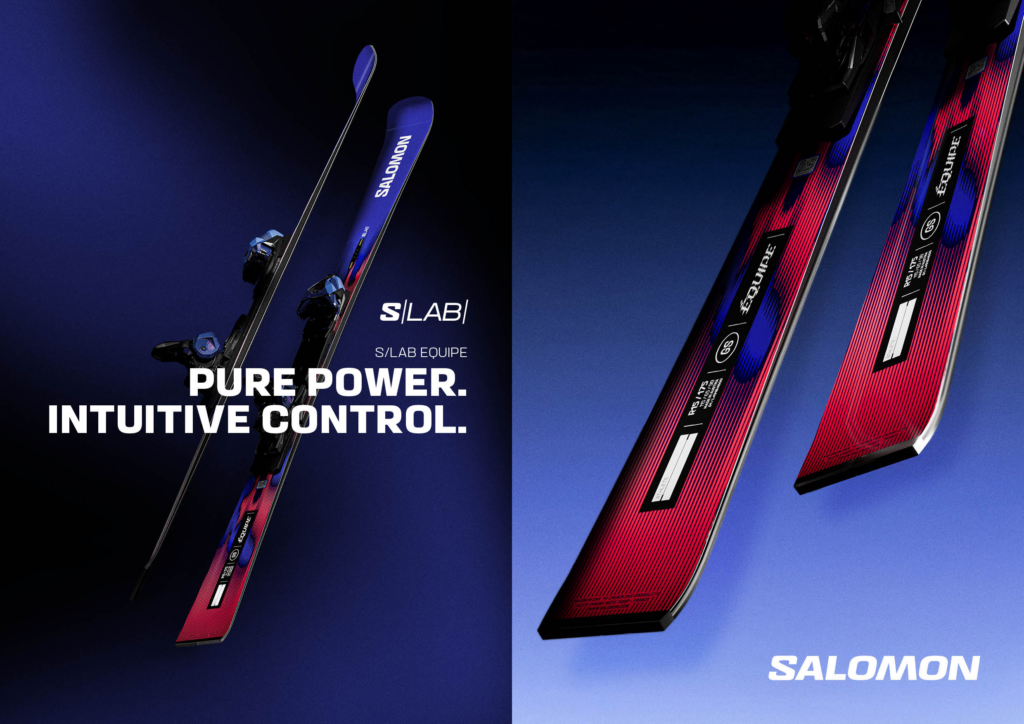
The result is a refined blue front section to eliminate distraction in the gate and a bold red tail that is visible to the athlete chasing you and represents aggression and internal fire.
“It’s about confidence without distraction,” Samuels says. “Serious when you look down. Intimidating when someone looks at you.”
In a sport where mental edge matters as much as physical strength, that level of detail matters.
Rebuilding Trust Through Presence
For Samuels, however, product innovation is only half the equation. The bigger task is rebuilding trust within the racing community.
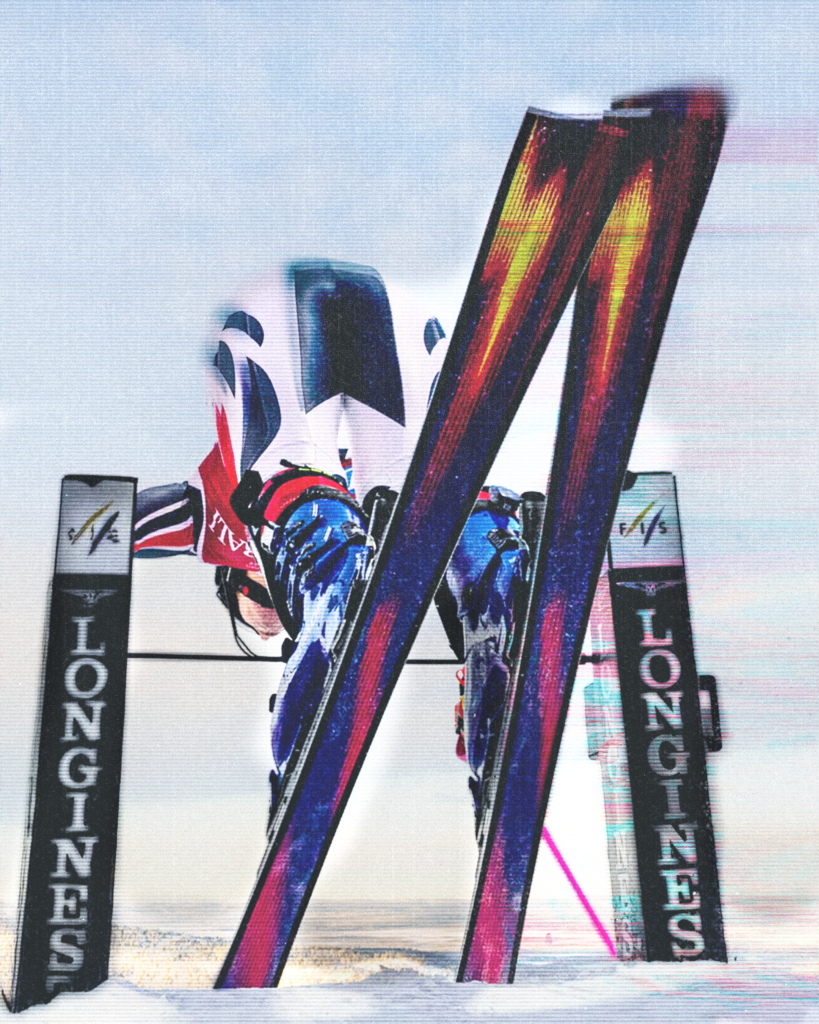
“I think a lot of the race world has felt ignored,” she says. “Ski racing is expensive. It’s hard. Brands have stepped away. So showing up matters.”
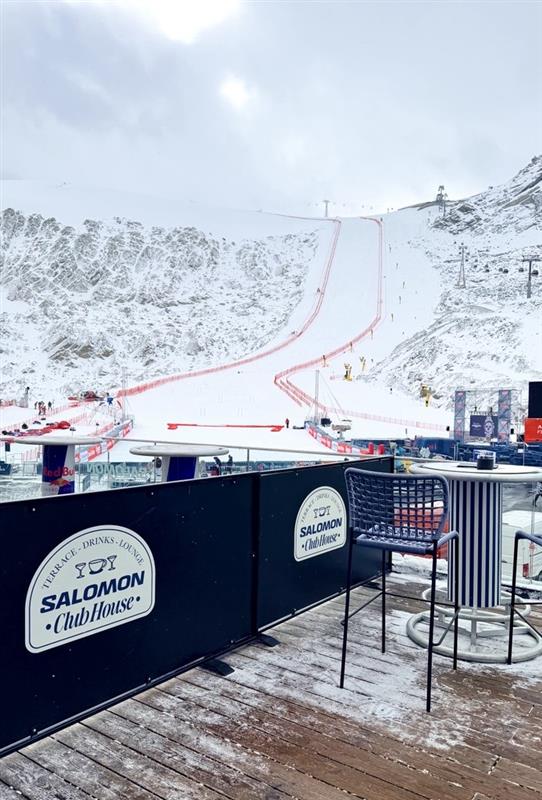
Salomon’s North American strategy reflects that belief: fewer splash campaigns, more hill presence. More test fleets. More coach conversations. More event visibility. In Canada, the brand has already been quietly rebuilding through on snow testing and club relationships. In the United States, the effort is accelerating, with structured testing plans at spring camps, regional hubs, and key development events.
“We’re adjusting our marketing spend to what actually matters in this space,” Samuels says. “It’s not digital impressions. It’s showing up with spare parts in your truck. It’s standing at the finish. It’s supporting athletes whether they win or lose.”
For coaches and retailers who’ve spent decades in the trenches of youth racing, that kind of commitment resonates.

The Timing Window
There’s another factor driving urgency: generational memory.
“There’s a very specific generation that remembers Salomon in racing,” Samuels says. “Three years younger than me? They don’t even know we used to make race skis.”
The athletes who raced on Salomon in its previous era are now coaches, parents, and decision-makers. That heritage window won’t stay open forever. “If we waited another five years, we might lose that legacy connection entirely,” she says.
Instead, Salomon is leveraging it by reconnecting with former athletes who are now leading programs across the United States and Canada. Word of mouth is spreading organically. “Coaches are texting me saying, ‘Rumor is Salomon’s coming back — when can we test?’”
That momentum isn’t manufactured. It’s relationship-based.
A Long-Term Play
Perhaps the clearest signal of commitment: Salomon is hiring a dedicated race manager in North America this summer. Infrastructure follows intention.
Globally, the brand continues to support and develop World Cup level athletes while building depth in Europa Cup and national team pipelines. Locally, Samuels stays focused on the bottom up approach, allowing global leadership to manage elite contracts while she builds community roots.
“We stay in our lanes and support each other,” she says. “That’s how this works.”
More Than a Relaunch
Salomon’s return isn’t a marketing campaign. It’s a recalibration.
It acknowledges that ski racing remains foundational to the broader ski industry, that many freeride stars started in gates, that technical skills are forged in early mornings and icy courses, and that brand loyalty is built young.
“I know how important racing is to the overall ski world,” Samuels says. “If you want to connect with core skiers, you enter through racing.”
For Ski Racing Media readers, the coaches, athletes, parents, and retailers shaping the sport daily, that message feels less like a pitch and more like recognition. Salomon isn’t trying to rewrite its history in North America. It’s picking up where it left off.
And this time, it’s listening.
About the Author: Katie Twible