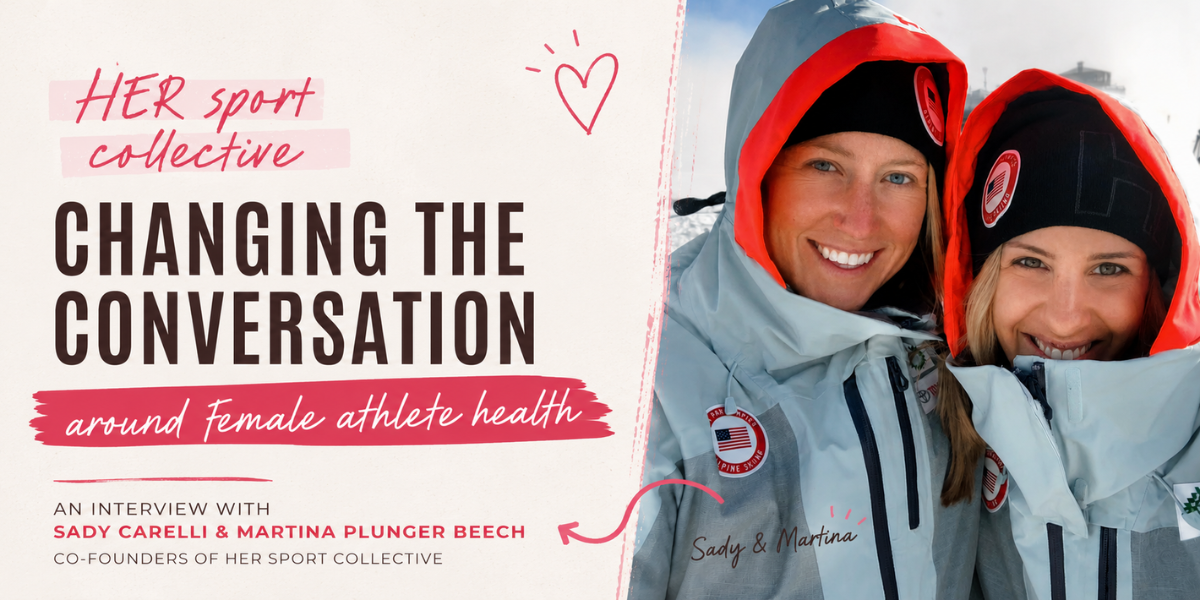
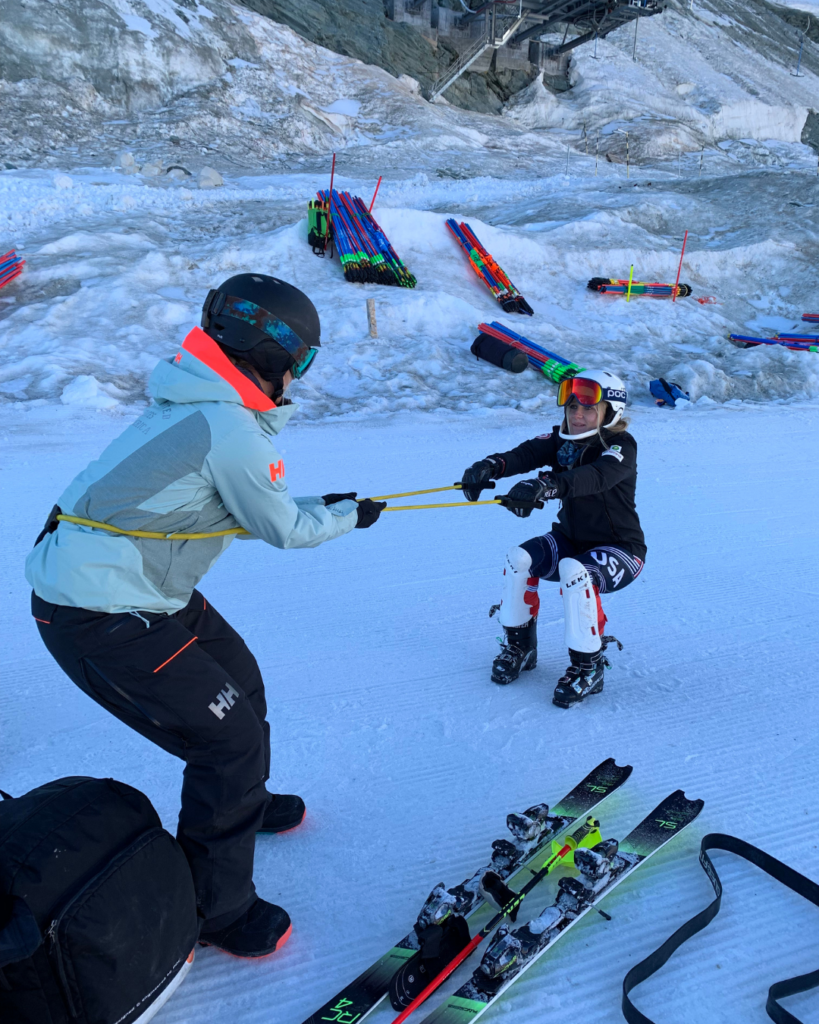
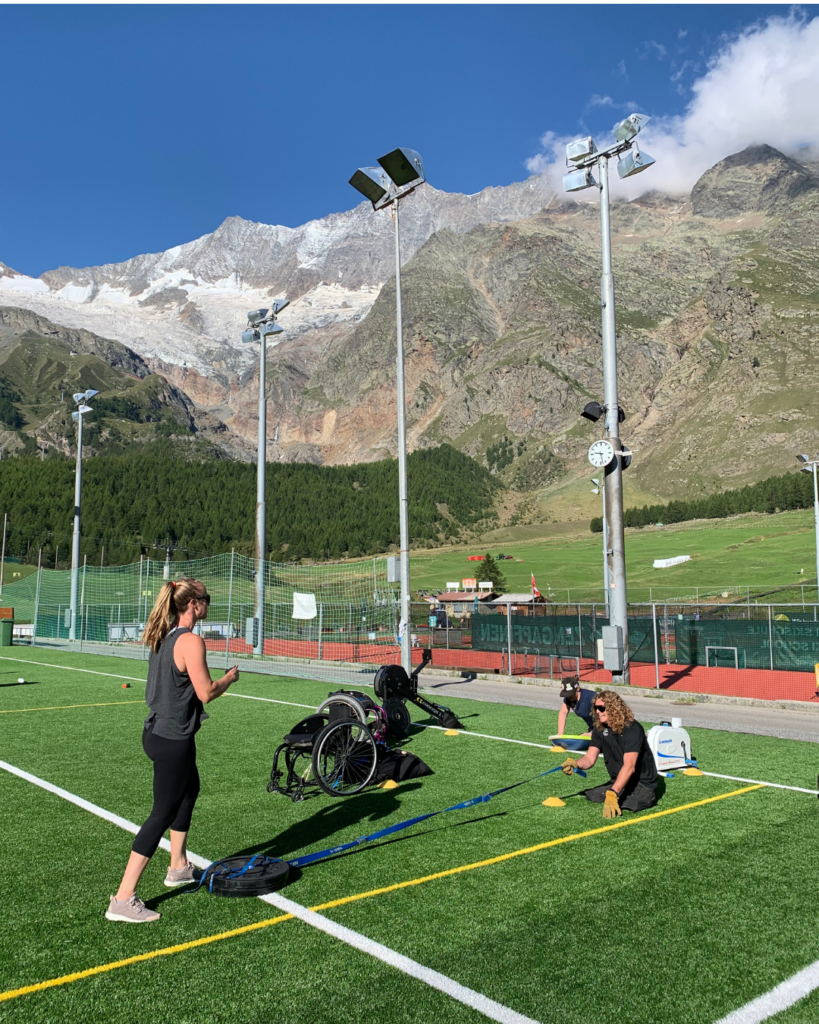
Featured Image: Sady Carelli and Martina Plunger Beech working with the US Para Team/ Provided by Sady Carelli and Martina Plunger Beech
When I sat down with Sady Carelli and Martina Plunger Beech, I expected we would spend most of our time talking about female physiology. I assumed our conversation would focus on hormones, menstrual cycles, Relative Energy Deficiency in Sport (REDs), nutrition, and the science behind female performance.
We certainly talked about those things.
What surprised me, though, was how often the conversation shifted away from physiology and toward something much simpler: communication. The science matters, but making sure athletes feel comfortable asking questions and coaches feel confident supporting them may be just as important.
That’s exactly why Martina and Sady created Her Sport Collective.
Although they come from different professional backgrounds, they both arrived at the same conclusion. Across every level of sport, female athletes were facing many of the same challenges, while the coaches, parents, and organizations around them often wanted to help but didn’t always have the knowledge or framework to do so.
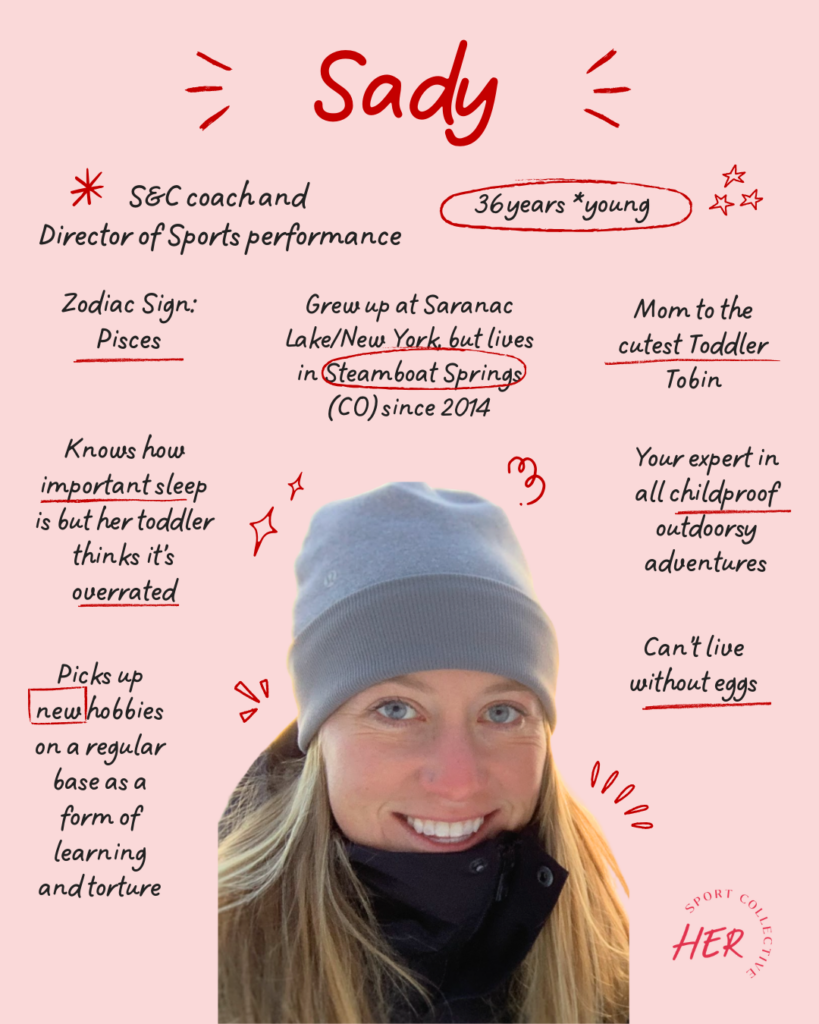
For Sady Carelli, a strength and conditioning coach, youth sports performance specialist, director of sports performance, and mother based in Colorado, the realization came after years of working with athletes.
“I had every physical development tool available and kept running into the same wall,” Carelli told me. “Martina and I met during our work for the U.S. Olympic & Paralympic Committee. We quickly identified the same gaps in both our fields, and it was clear we wanted to build something. Once we started, we went to the athletes and people in the field and built the framework from their answers.”
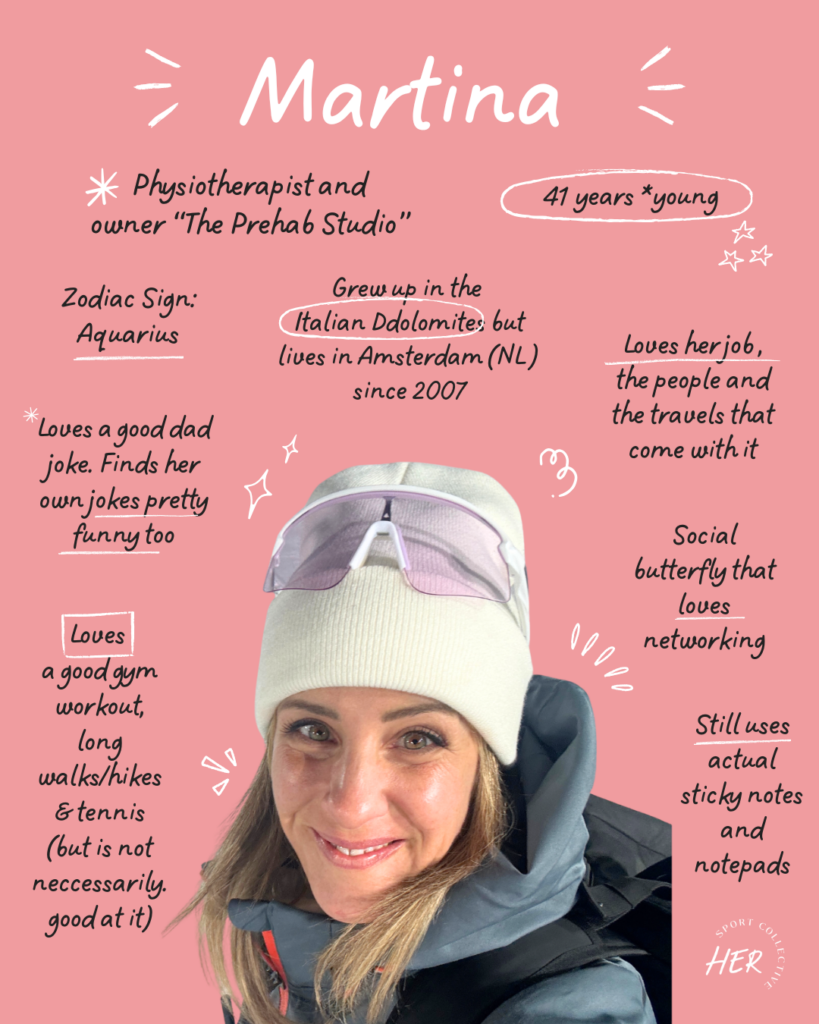
Martina Plunger Beech had been seeing those same gaps from a different perspective.
A physiotherapist since 2010 and owner of a clinic in Amsterdam, the Netherlands, she has worked with the U.S. Ski Team, the U.S., Dutch, and Australian Para Ski and Snowboard Teams, and most recently with Red Bull supporting Team Brazil. Whether she was treating athletes in the clinic or traveling with elite teams around the world, similar conversations kept coming up.
“In the clinic and on the road, I kept seeing the same patterns,” she said. “Female athletes were carrying questions they didn’t know how to ask, and coaches wanted to help but didn’t have the framework. Her Sport Collective is what I kept wishing already existed.”
Listening to both of them, it became clear that Her Sport Collective wasn’t created because they wanted to start another education company. It grew out of years spent working alongside athletes and recognizing that an important piece of the athlete development puzzle was missing.
Bridging the Gap Between Research and Reality
One theme came up repeatedly throughout our conversation: there isn’t a lack of research anymore. Sports science has made enormous strides in helping us better understand female athletes. We know far more today about female physiology, menstrual health, REDs, nutrition, and performance than we did even a decade ago.
The challenge isn’t creating more research. It’s making sure that information reaches the people who can actually use it.
“We realized there was this huge gap,” they explained. “The information was out there, but it wasn’t getting to athletes in a way that was practical.”
That word, practical, really stuck with me. Her Sport Collective isn’t trying to publish scientific papers or lecture coaches with information they can’t apply. Their focus is translating research into everyday coaching. They want coaches to leave a workshop with ideas they can use at tomorrow’s training session and athletes to leave with a better understanding of how to support their own performance.
Education Should Build Confidence
One of the things I appreciated most about Her Sport Collective’s philosophy is that they aren’t trying to overwhelm athletes with information. There is already an endless amount of content online about hormones, menstrual cycles, REDs, nutrition, injury risk, and recovery. While access to information is valuable, it can also leave athletes wondering if every change in their body is something to worry about.
That isn’t the goal.
Instead, Sady and Martina want athletes to better understand their bodies so they can train and compete with more confidence. Whether it’s recognizing the signs of low energy availability, understanding how the menstrual cycle may influence training, or simply knowing it’s okay to ask questions, education should leave athletes feeling more prepared, not more anxious.
Throughout our conversation, that philosophy never changed. Understanding your body shouldn’t become another source of pressure. It should become another tool that helps athletes perform at their best.

Coaches Don’t Need to Have Every Answer
One part of our conversation resonated with me as both a coach and a former athlete. Coaches already wear a lot of hats. They’re teachers, mentors, planners, technicians, problem-solvers, and often one of the most trusted adults in an athlete’s life. Adding female physiology to that list can feel intimidating, especially for coaches who don’t feel qualified to talk about it.
But that’s where Her Sport Collective takes a refreshing approach.
They aren’t asking coaches to become doctors, physiotherapists, or dietitians. They simply want coaches to understand enough to recognize when something may be affecting an athlete’s health or performance, create an environment where questions are welcomed, and know when it’s appropriate to bring in someone with more expertise.
I think that’s an important distinction. Most coaches aren’t avoiding these conversations because they don’t care. They’re avoiding them because they’re worried about saying the wrong thing. Giving coaches the confidence to start those conversations may be just as valuable as giving them the technical information itself.
Creating Better Conversations
One thing I didn’t expect going into the interview was just how often we would come back to communication. We certainly talked about physiology, nutrition, menstrual health, and performance, but almost every topic eventually led back to the importance of creating environments where athletes felt comfortable speaking up.
For a long time, many of these conversations simply didn’t happen. Coaches weren’t always sure how to bring up sensitive topics, athletes didn’t always know who to ask, and parents often didn’t know where they fit into the discussion. As a result, issues that directly affected performance and well-being sometimes went unaddressed until they became much bigger problems.
That’s what Her Sport Collective is trying to change. Whether they’re working with academies/clubs, national/provincial teams, parents, coaches, or athletes, their goal is to make these conversations a normal part of athlete development rather than something that’s only discussed after a problem appears.
As I listened to Sady and Martina, I found myself thinking about the athletes I coached over the years. How many questions went unasked simply because someone didn’t know how to start the conversation? We can’t prevent every challenge an athlete will face, but we can create environments where they feel comfortable asking for help when they need it.

Small Changes Matter
One thing I really appreciated about Her Sport Collective’s approach is that they aren’t asking organizations to completely reinvent the way they operate. They understand every club has different resources, budgets, and challenges. Instead, they encourage organizations to focus on practical changes that can improve the athlete experience.
Sometimes those changes are surprisingly simple. It might mean making sure athletes have access to bathrooms during training, providing menstrual products at camps, including educational sessions for athletes and parents, or creating more opportunities for honest conversations between athletes and coaches.
None of those ideas require a massive financial investment, but together they send a message that female athletes are being considered rather than expected to adapt to systems that weren’t always designed with them in mind. Sometimes meaningful change starts with paying attention to details that have been overlooked for years.
Better Coaching Benefits Everyone
As our conversation came to a close, another point became increasingly clear. While Her Sport Collective focuses on female athlete health and performance, the education isn’t just for female athletes. It’s for everyone involved in sport.
Many female athletes are coached by men. Fathers spend countless hours driving daughters to training and races. Club leaders and administrators make decisions that shape an athlete’s experience every day. When everyone has a better understanding of these topics, the responsibility no longer falls entirely on young women to educate the people around them.
I also don’t think this is separate from good coaching. The best coaches I’ve worked alongside were always curious. They never stopped learning because they understood that coaching evolves. Equipment changes. Training methods change. Sports science changes. The way we support athletes should evolve too.
Before we wrapped up our conversation, I asked Sady and Martina to leave coaches and athletes with one word.
Martina didn’t hesitate.
“Communication.”
Sady smiled before giving her answer.
“Collaboration.”
After spending an hour speaking with them, those two words felt like the perfect way to describe what they’re building. Not another program or another presentation, but a culture where athletes, coaches, parents, and organizations work together to better support female athletes throughout their careers.
If Her Sport Collective succeeds in its mission, these conversations won’t feel groundbreaking anymore. They’ll simply become another part of good coaching.
About the Author: Katie Twible