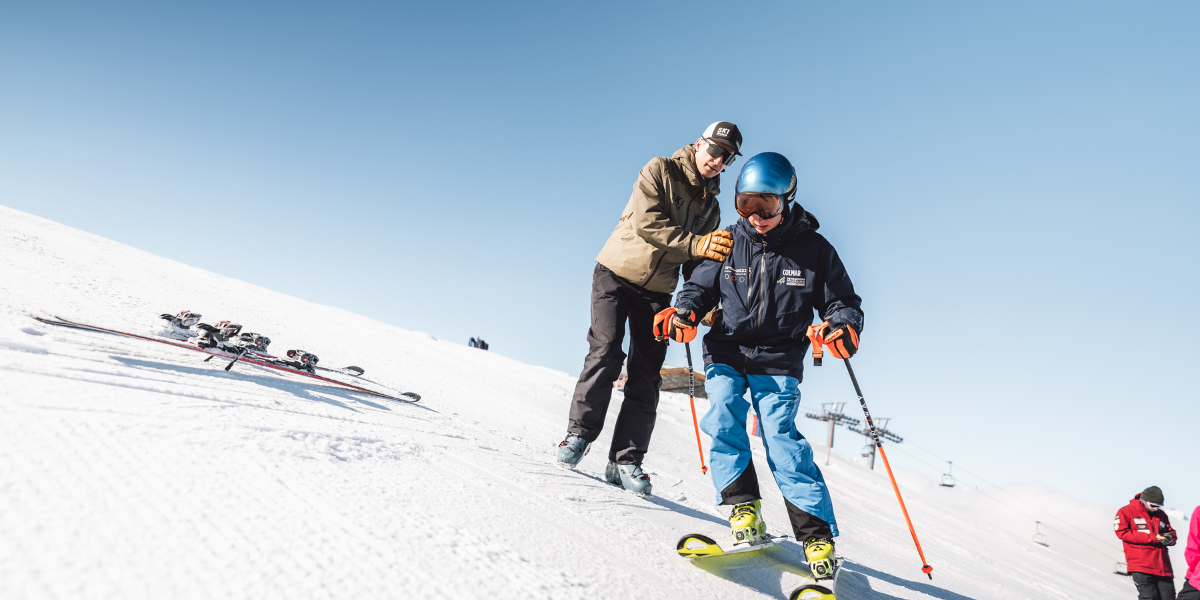
Featured Image: SkiTypes founder Eliot Arnold working with an athlete during an on-hill session. Photo credit: Jonny Raby.
World Cup athletes don’t all ski the same. Eliot Arnold believes understanding why may be one of the biggest opportunities in modern ski coaching.
Watch a World Cup slalom or giant slalom race and one thing quickly becomes clear. The fastest skiers in the world don’t all look alike.
Marco Odermatt attacks the hill differently than Henrik Kristoffersen. Manuel Feller’s movements are noticeably different from Loïc Meillard’s. Lucas Braathen brings another style altogether. Yet despite their differences, they all find speed and prove there is more than one way to ski fast.
That raises a question many coaches have wrestled with for years: If the world’s best skiers don’t all move the same way, why are we coaching every athlete as if they should?
It is a question that has shaped the career of Swiss sports scientist and coach Eliot Arnold.
Arnold is the founder of SkiTypes, an individualized coaching approach based on motor preferences designed to help coaches understand how athletes naturally generate power, process information and learn before trying to change their technique.
After studying sports science and coaching young Swiss ski racers, Arnold was introduced to motor preferences in 2019 through Benoit Pont, founder of ProKeyCoach. Pont’s approach was taught through the ActionTypes Approach in Switzerland, whose founders developed the original motor preferences methodology.
That encounter led Arnold to explore how motor preferences could be applied specifically to alpine skiing. Today, SkiTypes is the alpine skiing division of ProKeyCoach.
“Athletes can have very different motor profiles between one another,” Arnold said. “As long as you don’t know the profile of the person, you’re not really supposed to teach technique because you don’t know what that athlete needs.”
For Arnold, the idea is not that technique no longer matters. Rather, athletes may arrive at the same result through different movement strategies, and coaches should understand those differences before trying to change them.
Searching for an Answer
Arnold was raised near Lausanne, Switzerland, and studied sports science before taking his first full-time coaching position with a regional Swiss U16 team.
Like many young coaches, he initially believed technical instruction was the key to helping athletes ski faster. If he could demonstrate the ideal movement clearly enough, his athletes would eventually reproduce it.
Instead, some athletes responded immediately while others struggled to make the same changes, regardless of how many repetitions they completed.
“I had a mindset that was really focused on one ideal technical model,” Arnold said. “I was wondering why the kids in my team would not be able to ski like I would teach.”
A parent eventually introduced Arnold to Pont, who was already applying individualized coaching with professional hockey players and the Swiss national team. Through Pont, Arnold discovered motor preferences and began questioning his own assumptions about technique.
“I realized I had been coaching some athletes to become worse because of my technical beliefs,” he said. “As long as you don’t know the profile of the person, you don’t really know what technical intention will be efficient for the athlete.”
That realization eventually became the foundation for SkiTypes.
More Than One Way to Ski Fast
Watch enough World Cup skiing and the differences become impossible to ignore.
Some athletes remain tall through the turn, relying on elastic movement and rebound to create speed. Others ski with considerably more flexion, generating force from deeper positions.
Coaches may describe one style as technically cleaner than another, but Arnold believes some of those differences are natural movement strategies rather than flaws.
“If you ask an athlete to move in a way that doesn’t match how their nervous system naturally organizes movement, it might work on easy terrain,” Arnold explained. “But when the pressure increases in racing or the conditions are more challenging, they’ll almost always return to their natural preference.”
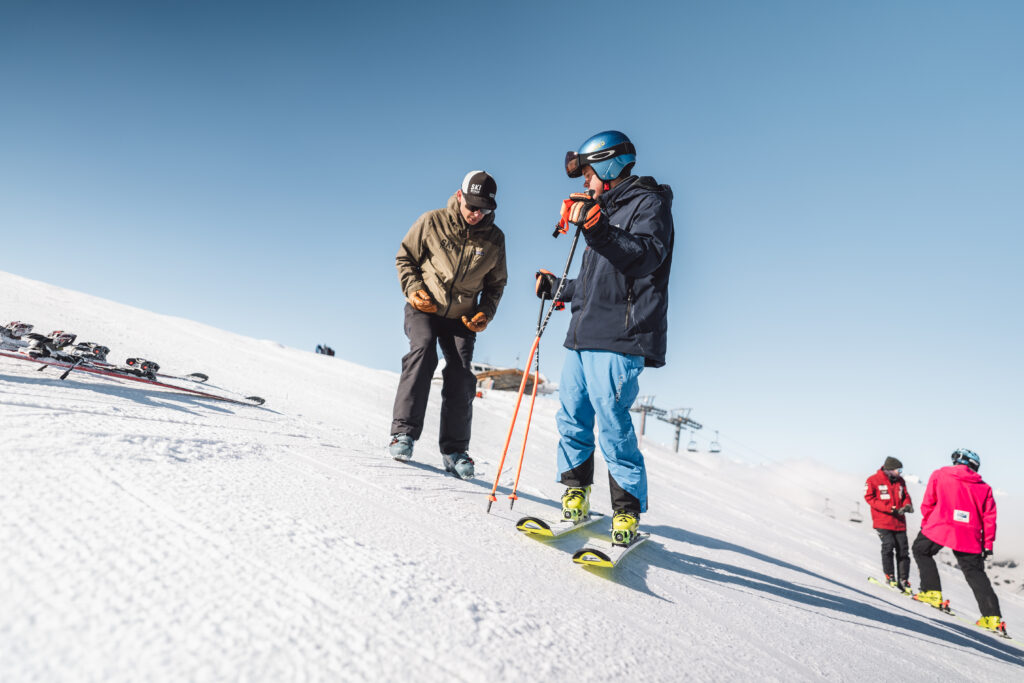
Instead of asking athletes to conform to one technical model, Arnold begins by identifying how they naturally organize movement.
“If you watch World Cup skiing, everyone agrees athletes are different,” Arnold said. “But when you listen to coaching, it’s often still the same cues for everyone.”
Coaching the Athlete
A SkiTypes assessment takes roughly 30 minutes and uses a series of movement and coordination tests to identify how an athlete naturally organizes movement.
From there, athletes receive individualized profiles that can influence technical instruction, communication, strength training and recovery. Arnold also looks at cognitive preferences, helping coaches understand how athletes best receive information.
Some athletes want detailed explanations before trying something new. Others perform better with short cues that allow them to react instinctively.
“I want coaches to become more athlete-centered,” Arnold said. “Sometimes the athlete is always the excuse. They’re too lazy or they can’t do this or lack grit. Instead, we should ask whether we’re coaching them in the right way.”
The goal is not to eliminate technical standards, but to give coaches more information about how an individual athlete may reach them.

Looking Beyond Technique
Arnold’s work has also led him into areas that ski coaches may not traditionally associate with technical development.
Vision is one example. He believes athletes naturally gather visual information differently, and during his work with members of the U.S. Ski Team found that something as simple as where an athlete wears their goggles could influence how naturally they perceive terrain.
Equipment is another area Arnold is exploring. Although he says more research is needed, he believes certain boot positions, ski alignments and equipment characteristics may complement different movement profiles.
Rather than copying the setup of the fastest skier on the team, Arnold wants athletes to better understand what allows them to move most efficiently.
Bringing SkiTypes to the U.S. Ski Team
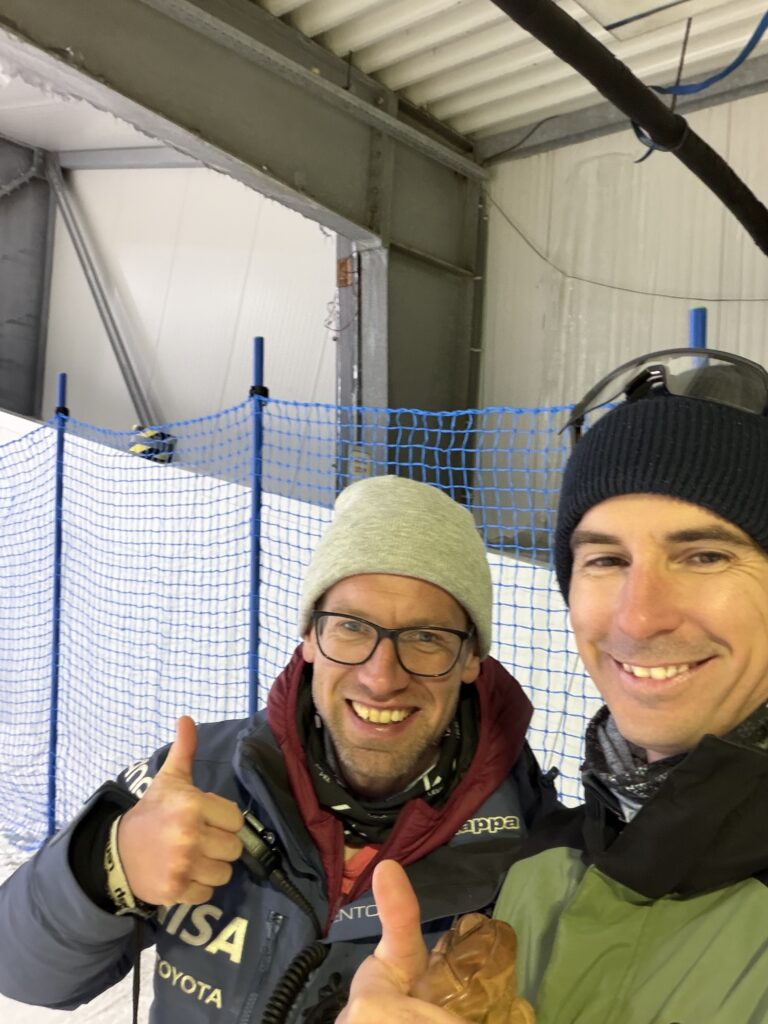
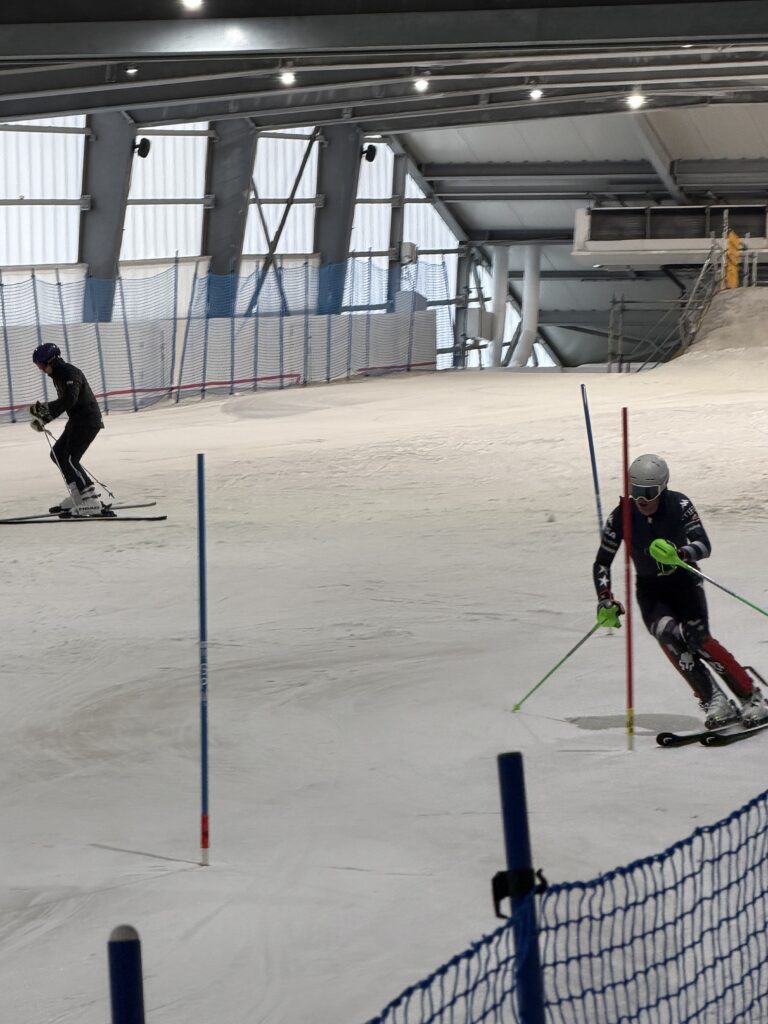
Arnold has worked with members of the U.S. Ski Team during glacier and indoor training camps, profiling athletes and collaborating with coaches to apply the information to training and performance.
U.S. Ski Team Alpine Director Sasha Rearick said the experience challenged him to think differently about athlete development.
“Eliot was able to show me why some athletes progress well with certain cues or environments while other athletes need something different. He has a method to test the athletes’ preferences so you can work as a team to coach to the athlete’s strengths. I have enjoyed being challenged by Eliot’s methods as it has made me explore new ideas.”
U.S. Ski Team athlete Ben Ritchie said the process helped him identify his strengths and understand where changes could make a difference.
“I really enjoyed working with Eliot. He was incredibly valuable in helping me identify my strengths and understand where I could make the right changes to improve,” Ritchie said.
What surprised Ritchie most was Arnold’s ability to assess the dominant muscle groups in his body and translate that information into practical ways he could improve on skis.
“We’ve continued to use Eliot’s framework throughout the offseason as a guide, and it’s been a really valuable part of my training,” Ritchie said.
For Cooper Puckett, the assessment also influenced how he thought about equipment and technical development.
“It was a really valuable learning experience, and my team and I not only understand my skiing better but also understand why certain equipment choices work better, and how I can most efficiently continue to develop my technique,” Puckett said. “It broadened my understanding of being an athlete and where you can improve on meaningful details.”
Those experiences illustrate what Arnold ultimately wants SkiTypes to provide: another layer of information that athletes, coaches and support staff can use when making decisions about technique, communication, physical preparation and equipment.
His vision also extends beyond a one-time assessment. Arnold hopes to remain involved through video analysis and follow-up meetings so the information continues to be applied throughout the season.
“The knowledge gets lost during the season,” Arnold said. “That’s why I want to stay connected with coaches, watch videos together and help them continue using the information.”
Rethinking Athlete Development
Arnold believes the same individualized philosophy has implications for younger athletes.
He worries ski racers are specializing too early and missing opportunities to develop broader movement skills through other sports.
“I think professionalism is killing the kids’ abilities,” Arnold said. “Science and neuroscience show you’re excellent when you’ve been exposed to different sports and different types of movement, so that you can learn to express your motor profile in various ways.”
Soccer, hockey, tennis, mountain biking and other sports all expose athletes to different movement problems. Arnold believes that adaptability transfers directly to skiing.
He takes a similar approach on snow, encouraging coaches to vary rhythm, terrain, offset, gate spacing and speed rather than simply repeating the same course.
“We tend to train repeating the same movement,” Arnold said. “But in reality, we never make exactly the same movement twice because every situation is different.”
The best skiers, he believes, are not simply repeating movements. They are solving problems.
A Different Way to Think About Coaching
Arnold understands that his approach challenges ideas that have been accepted in ski racing for decades.
Most coaches were taught to identify technical errors and correct them. Arnold is asking them to first consider why an athlete is moving that way.
That does not mean fundamentals no longer matter. Arnold believes strong fundamentals remain essential, but those fundamentals may be expressed differently from one athlete to another.
Instead of expecting every skier to look identical, coaches can begin recognizing the movement strategies that allow different athletes to achieve the same outcome.

Looking Ahead
Arnold’s recent work with the U.S. Ski Team reinforced his belief that individualized coaching has a place at every level of the sport.
His goal is to continue working with national teams, clubs and individual athletes while expanding the educational side of SkiTypes. Beyond profiling, he hopes to provide coaches with ongoing video analysis and consultation so individualized coaching becomes part of everyday training rather than a one-time evaluation.
Ultimately, Arnold is not trying to replace every existing coaching philosophy with another system.
He wants to give coaches another lens through which to understand performance.
The fastest skiers in the world have never all looked the same. Perhaps the future of coaching isn’t trying to make them look alike. Perhaps it’s understanding why they don’t.
About the Author: Katie Twible