How Steamboat Mountain School and Steamboat Springs Winter Sports Club Help Families Make Ski Racing Work

Students, alumni, parents and staff explain how coordinated academics, training and individual support help young athletes pursue skiing while preparing for what comes next.
For Lachlan Brady’s family, pursuing ski racing meant spending winters in two places. His father traveled with him to Steamboat Springs, Colorado, helping with breakfast, school and the daily logistics of training. His mother, Christa, and younger brother stayed home in Cincinnati.
Neither of his parents had grown up skiing. What began as family time at their local hill, Perfect North, eventually led to racing trips to northern Michigan. As Lachlan’s interest grew, the eight-plus-hour drives became difficult to sustain alongside school and family commitments.
The Bradys already knew and loved Steamboat from family vacations. When they began exploring options, they wanted Lachlan involved in choosing a place where he could develop as a skier and feel comfortable in the classroom.
“He really loved the smaller class sizes, the super close community,” Christa said. “He felt like it was a really good fit for the environment where he learns best from an educational standpoint.”
During middle school, the family coordinated seasonal schooling between Cincinnati and Steamboat. By high school, they were ready to consider boarding at Steamboat Mountain School.
Sending their son away was unfamiliar territory. Neither parent had attended boarding school, and they were balancing Lachlan’s racing with his younger brother’s competitive soccer commitments.
What reassured Christa was seeing her son welcomed into the community. She remembers dropping him off for an early preseason training session, nervous about how he would fit into a large group of athletes. Before she could worry for long, a boy who recognized Lachlan from an earlier visit greeted him with a hug and brought him into the team.
“And I drove out of the parking lot going, ‘Wow, I think we made the right decision and I think everything is going to be okay,’” Christa said.
Now a freshman at the University of Notre Dame following a gap year, Lachlan sees that experience as preparation for much more than racing.
“My time at SMS helped me build real confidence in myself. Now I trust that whatever comes up, I’ll figure it out,” he said.
His family’s experience illustrates how Steamboat Mountain School and Steamboat Springs Winter Sports Club connect academics, athletic development and daily support to help young racers pursue their goals.
A School and Club Connected by Community
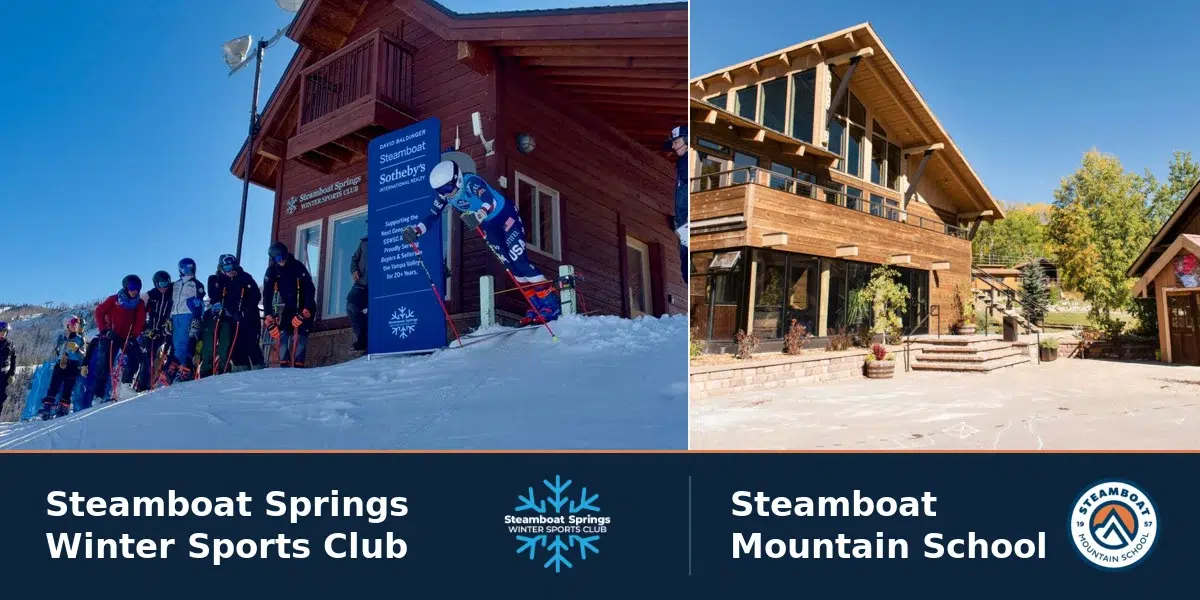
Steamboat Mountain School is a private day and boarding school serving students with interests that extend from competitive snow sports to outdoor education and global studies. Through its partnership with Steamboat Springs Winter Sports Club, students pursue academics alongside year-round athletic development.
Founded in 1914, SSWSC has helped generations of winter athletes develop, including 108 Olympians, and has earned U.S. Ski & Snowboard’s Club of the Year honor five times.
The school and club have separate responsibilities. SMS provides academics, boarding and student support. SSWSC provides coaching, training, competition planning and sports performance programming. Scheduling, transportation and regular communication connect the two.
David Stewart, SSWSC’s athletic director, describes the relationship as a “seamless integration of a boarding school and a ski club.”
Alice, SMS’s director of communication and marketing, said that coordination begins before a student arrives.
“From the beginning, our partnership starts in the application process. It’s all one application and that includes tuition assistance,” she said.
Once students enroll, the school’s ski and ride coordinator works with families, athletes, teachers, coaches and club directors. That can mean responding to a practice change or planning for a week away at races. School staff are included in team messages and email chains so information about travel, injuries and training reaches the adults supporting the student on campus.
For families, that addresses some of the biggest questions involved in pursuing competitive skiing: Who will get their child to training? How will they keep up while traveling? Who will know when plans change?
Tyler Shepherd, SSWSC’s Alpine Competitive Program Director, said finding the right fit remains central to those conversations.
“At the end of the day, we still want to make sure it’s the right fit for both us and the family and the kid,” Shepherd said.
Discovering an Option Closer to Home
For Kate Starrett and her son, Thacher, now a student at Steamboat Mountain School, it started with a stop at the school’s tent during a race at Howelsen Hill. That conversation led to a campus tour, still in their ski gear.
Thacher had grown up skiing in Crested Butte, where Kate had also been his coach. He wanted more teammates who shared his commitment to racing and an environment that would challenge him. Boarding school appealed to him, and the family had considered options in the East.
Kate, a former University of Utah racer and longtime coach, had attended Holderness herself. But getting from Crested Butte to a school in New Hampshire would mean a much more involved trip than driving to Steamboat.
“I don’t think either of us realised that we had this right here,” Kate said.
Staying in Colorado made it easier to remain connected as a family. More importantly, Kate felt the school could provide the academic challenge she wanted for her son, alongside a club she had watched closely from the race hill.
“I wanted to make sure the educational piece was there for him because he is smart and he gets good grades and he’s motivated,” she said.
Her coaching background gave her a view of how different programs operated. Steamboat’s organization, communication and coaching stood out.
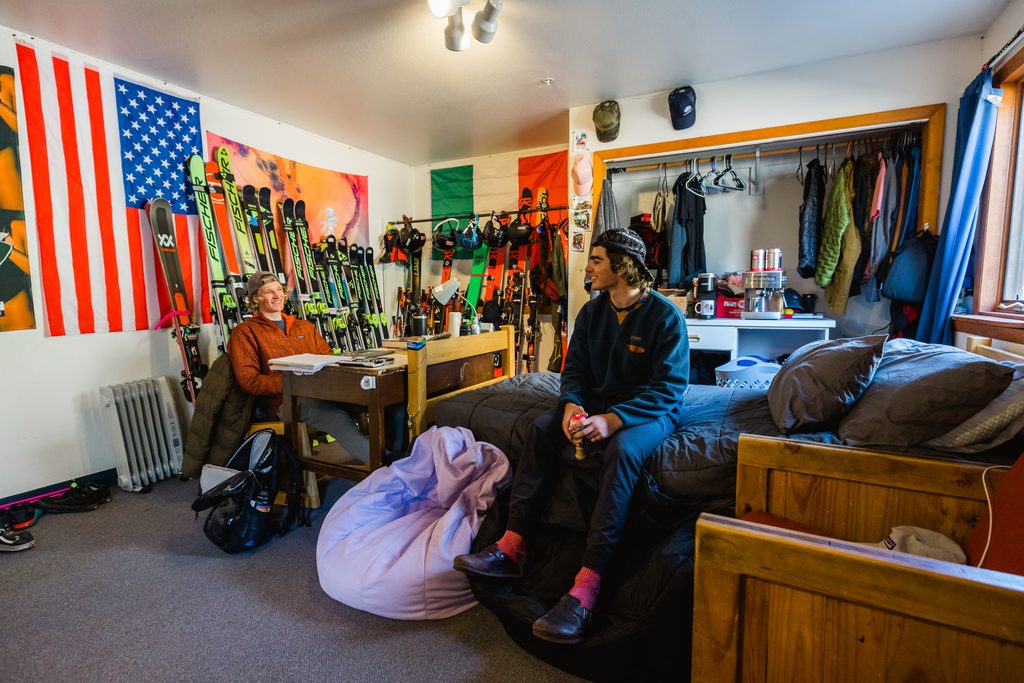
For Thacher, now in his second year at SMS, the appeal has grown beyond skiing. Boarding has brought friendships with students from places including Germany, Spain, Alaska and Hawaii.
“I just get to live with my friends and it’s so fun,” he said.
An Opportunity a Local Family Had Not Considered
Gardner Flanigan already knew the Winter Sports Club well. A longtime Steamboat resident, he had coached with the club for about a decade. But he and his wife, Millie, initially assumed Steamboat Mountain School was financially beyond their reach.
That changed when a teacher who served as a liaison between the school and club asked whether their son, Bode, would consider attending. The conversation introduced them to scholarship opportunities they had not known existed.
“I don’t think people think an academy is attainable, but we were able to do it,” Gardner said.
Both Bode and his sister, Merritt, attended SMS while skiing with SSWSC. Gardner remembers teachers and coaches communicating about academic responsibilities, travel and study time on the road.
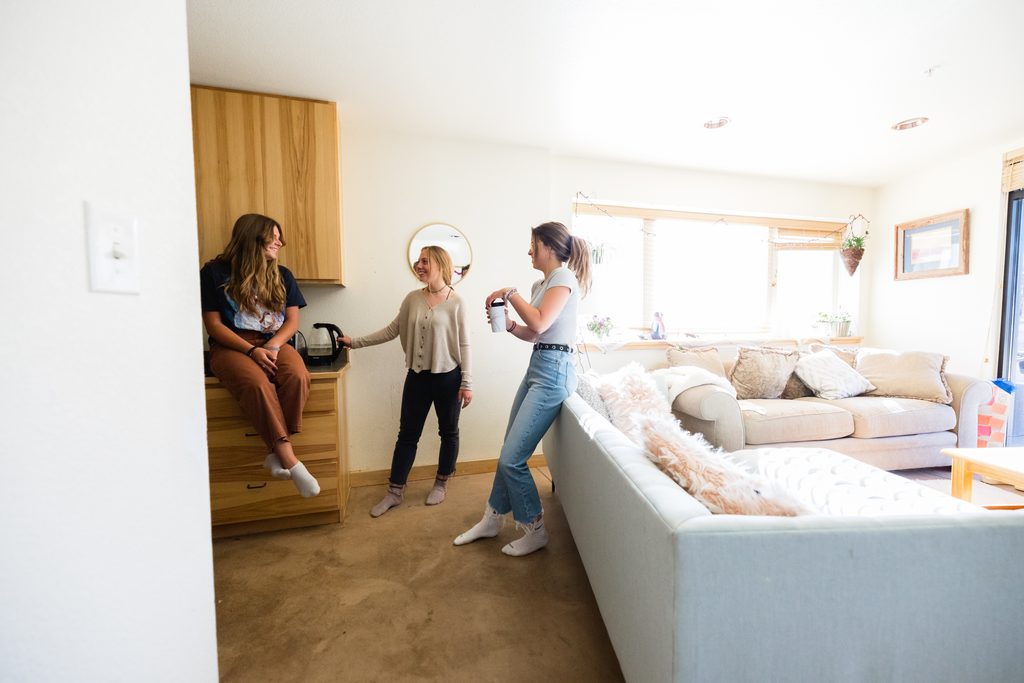
Bode remembers that structure as part of an ordinary winter day. He arrived at school, completed morning chores with classmates and teachers, attended classes and boarded a school bus around noon for afternoon training. As a day student, he returned home afterward.
The adults helping him get to the hill were also teaching him and following his progress. Their understanding extended beyond knowing his race schedule. They could recognize a result he felt disappointed with, or a difficult result that still represented progress.
“They take the time to see the person and help the person behind the results or the grades grow,” Bode said.
Academics that Adjust to the Race Calendar
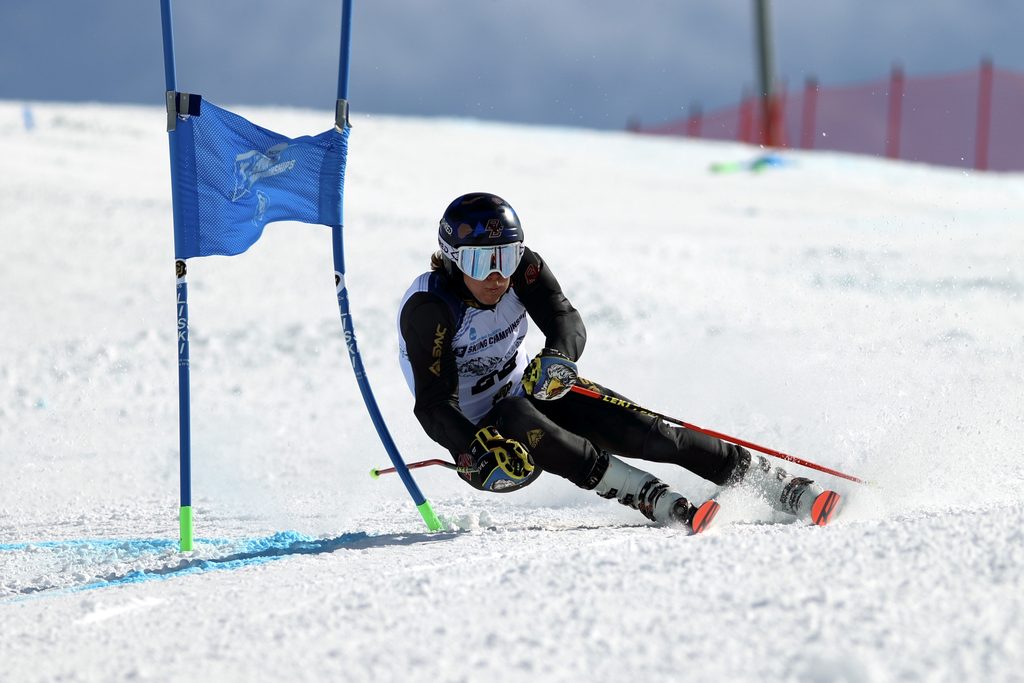
SMS’s modular academic schedule allows students to organize coursework around training and competition. Alice explained that the structure evolved from an earlier model in which competitive winter athletes carried a reduced winter course load and made up coursework during a dedicated spring period.
As training and competition calendars expanded beyond winter, the school needed more flexibility throughout the year. The modular system allows students to adjust their course load around their busiest travel periods, often focusing on one or two classes at a time.
Teachers can then adapt assignments, deadlines, testing and syllabi to individual schedules.
“We want our students to succeed in whatever their discipline is and to perform at the highest levels, and that requires missing school,” Alice said.
Academic support depends on the student and the course. It might include teacher-provided notes, a recorded lab, a phone call to review material or changes to assignments. Students also learn to communicate about the work they need to complete, with expectations evolving as they grow older.
For Cooper Puckett, an SMS alumnus who now skis with the U.S. Ski Team, that support helped him pursue national team development opportunities and an international race schedule while preparing for Dartmouth.
“The close relationship and small class sizes at SMS allowed me to continue to go to all of the pre-season national team development camps as well as race in a packed international winter race schedule without compromising my education,” Puckett said.
He credits teachers with customizing his syllabus around travel. His math and physics teacher, Brick Root, helped him navigate particularly challenging conflicts involving his schedule and makeup work.
“I couldn’t have made it through high school without him,” Puckett said.
Charlie Welch, an SMS alumnus who went on to ski at St. Lawrence University, remembers learning to plan conversations with teachers before leaving for races. Early on, a school liaison helped facilitate communication. As he grew older, more of that responsibility became his own.
He learned to explain when he would be away and ask what he needed to complete. Recorded lessons also helped him study while traveling.
“You learn to dedicate your time pretty well, and if you don’t, you come back and you’re behind immediately and you know it,” Welch said.
Working Through the Practical Challenges
Making academics and athletics fit together still requires adjustments.
Shepherd said staff bring the school into discussions when the club considers substantial training changes. School staff transport students to on-snow and dryland sessions. During the fall, when a heavier academic schedule prevents students from reaching the club’s usual strength sessions, a coach goes to campus.
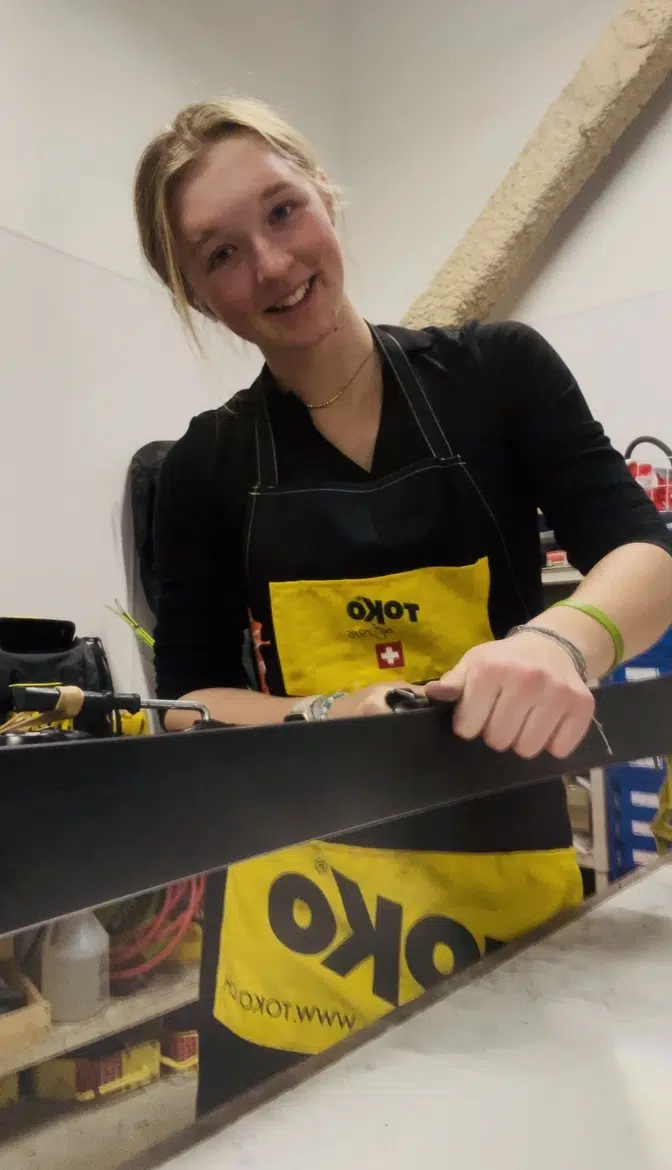
For the Starretts, coordination has also meant speaking up when something was not working. When school requirements conflicted with time Thacher needed to tune skis and prepare for travel, Kate contacted both organizations. School staff met with him and allowed exceptions for those responsibilities. They also discussed additional academic support when training took him away from class.
“No schedule is perfect, but it’s just trying to make sure it works for each kid,” Kate said.
After a recent training trip to Lithuania, Thacher returned with unfinished schoolwork. He said teachers gave him time and support to catch up, and he completed the work before the academic module ended.
“I got it all finished before the mod ended and it worked out great and I got all the help I needed,” he said.
Training Venues Close to School
The relationship also benefits from the facilities within Steamboat.
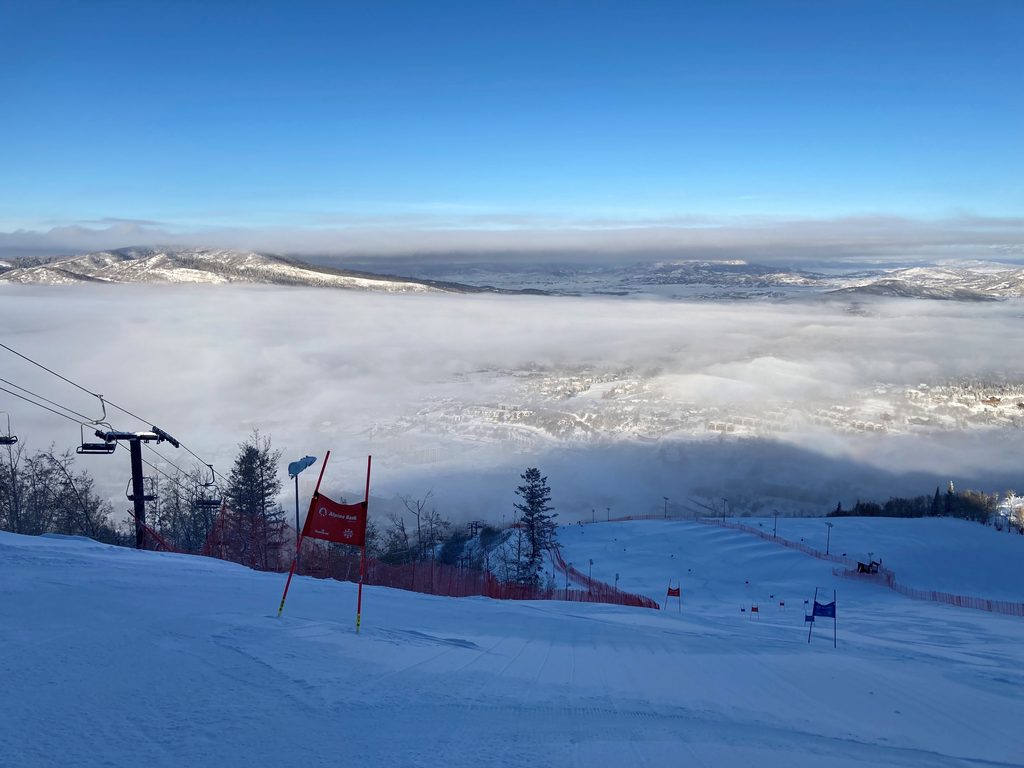
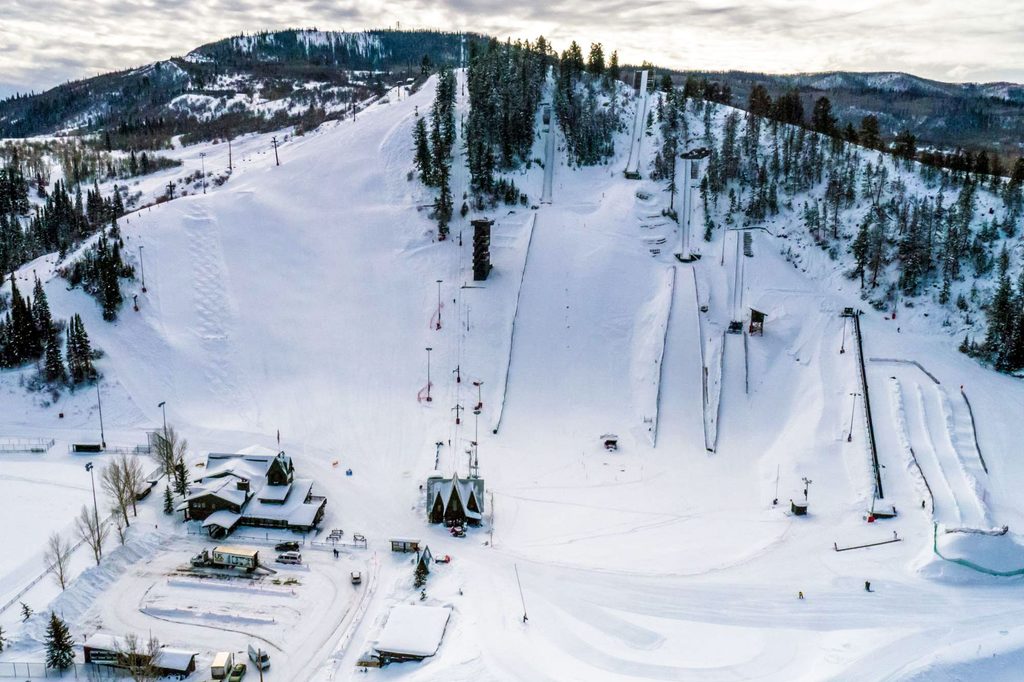
Howelsen Hill, approximately 15 minutes from the school, is home to SSWSC and provides a lighted, full-length slalom training and race venue. Its broader facilities include ski jumps, cross-country trails, a mogul course, terrain park and beginner terrain, bringing athletes from several disciplines together.
At Steamboat Ski Resort, the Stevens Family Alpine Venue provides dedicated full-length giant slalom and slalom training. Other club disciplines use facilities including the Maverick’s Halfpipe and Travis Mayer Mogul Course.
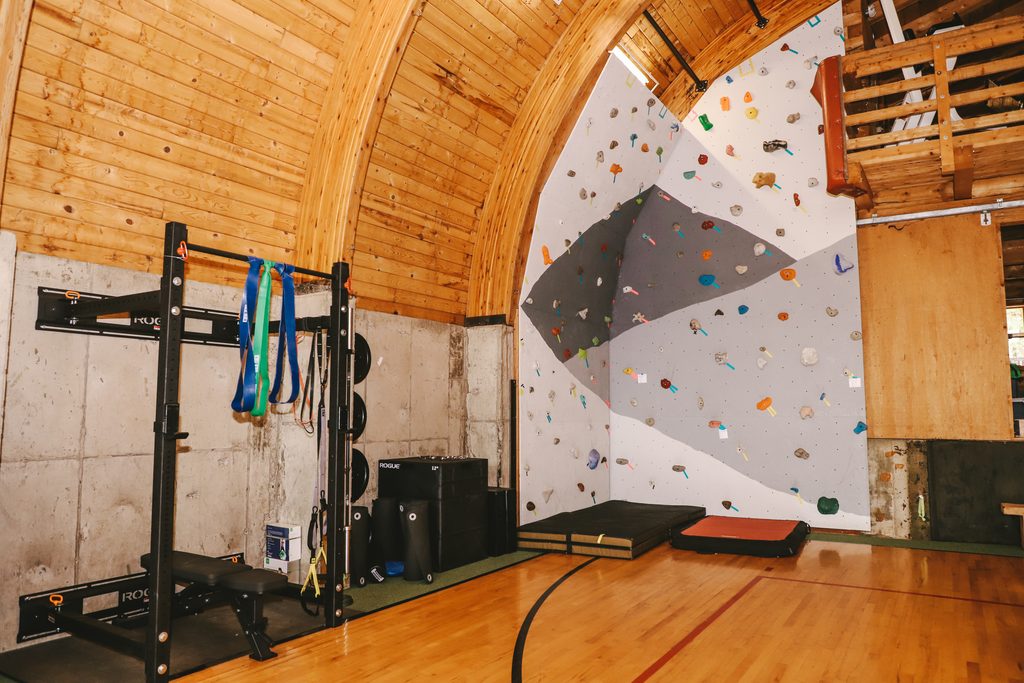
Off snow, SSWSC operates the David L. DeHaven Strength Center at Howelsen Hill. The Liman Mountain Center at the resort base provides space for program operations, instruction and pre- and post-training video sessions.
Further projects are in development. SSWSC is working with the city on a new youth sports facility at Howelsen Hill, while a relocated water ramp and trampoline facility at Steamboat Ski Resort is planned to open in summer 2027.
For alpine families, the immediate benefit is access to training and support close to school and home. Shepherd also emphasizes Colorado’s spring and fall training opportunities, considering both the developmental value of camps and the cost of travel.
A Culture Built Through Daily Work
For Shepherd, long-term development depends on athletes wanting to continue. He wants teammates who enjoy training together, challenge one another and look forward to traveling together.
The club’s year-round sports performance program is part of that approach. Time in the gym builds physical preparation and relationships that carry onto snow.
Thacher has noticed that connection firsthand. He described getting stronger through consistent training and feeling more capable on skis. Kate has seen his improvement, but she pays just as much attention to whether he wants to keep participating.
“I just feel happy he’s engaged in a sport and he’s outside and he’s loving it and he’s continuing to improve,” she said.
Puckett credits coaches including Erik Gilbert, Jeff Hostetler, Emily Collins, Chris Puckett, Caroline Lalive, Noah Freed, Mike Bansmer and Scott Wilson with shaping him as a racer and a person.
“SSWSC has a really special culture of community built on hard work, discipline, and strong fundamentals in skiing,” he said.
Some of his most lasting lessons came from freeskiing and doing drills through Steamboat’s trees behind his father, Lalive and Gilbert. He believes those technical fundamentals and feel for the snow, combined with the discipline of dryland training, continue to benefit his racing.
Bode remembers a similar continuity as he progressed through the club. Coaches knew the athletes coming through, and relationships continued after a skier moved into a new age group. Sharing Howelsen Hill with younger athletes, other disciplines and accomplished racers helped him keep perspective.
“You’re working on the day in, day out stuff, controlling what you can control and having fun doing it,” Bode said.
Support continues when athletes cannot train normally. Stewart described an injured-athlete program that coordinates medical providers, physical therapists and sports performance staff, with mindset and nutrition support also available.
“When they’re in the highest need, we have the highest level of support for those athletes,” Stewart said.
Finding Belonging Away From Home
For Lachlan, knowing his ski teammates helped with the move from Cincinnati to boarding school. Still, the first few weeks away from his parents were difficult.
The school’s opening backpacking expedition helped him settle in. Students traveled in small groups they did not choose themselves, building friendships beyond familiar teammates.
Once those relationships developed, dorm life became a highlight.
“I like to compare boarding school to hanging out with your best friends 24 hours a day, seven days a week,” Lachlan said.
For Christa, knowing there were adults who could recognize when her son needed support made the distance easier. She credits residential staff member Margie with developing a relationship that helped him feel comfortable and cared for.
“He could always call me if he was struggling, but he also had someone right there who could notice when he had a lot going on,” Christa said.
That support extended beyond campus. Families they had met through school and skiing checked in on Lachlan and invited him over for dinner. With another child pursuing his own demanding sports schedule, the Bradys could not visit frequently.
“It was just very comforting for us to be able to say, ‘Okay, he’s got a community, a support system, people there who really care about him,’” she said.
Alice said that support involves the people students encounter throughout the day, including teachers, residential staff, advisors, the school nurse and coaches. She also sees value in athletes sharing classrooms and living spaces with students whose interests differ from their own.
“You’re going to have a roommate or classroom peers who have a diversity of experiences versus just the ski track,” she said.
Room for Interests Beyond Racing
Outdoor activity is part of the school’s broader experience. Through its Physical and Outdoor Pursuits programming, students participate in activities such as climbing, hiking, running and mountain biking. Other opportunities include theater, internships and sports through the local high school.
Welch continued playing soccer while attending SMS. Thacher plays lacrosse for Steamboat Springs High School and has an interest in becoming a pilot.
In her senior year, Merritt Flanigan continued training with SSWSC while participating in SMS’s global studies program, which took her to India, her father said. Combining those opportunities required choices about travel and training, but exploring another part of the world was something she wanted in her final year.
For Kate, giving Thacher room to determine his own direction is essential.
“I already had my experience. I raced at Utah. I did what I was going to do. Then I went into the ski industry,” she said. “I just want him to have his own journey.”
Preparing for College and What Follows
Bode’s experience at Boston College included an NCAA slalom podium and recognition as Eagle of the Year. But when he talks about what prepared him for college, he begins with study habits, time management and relationships with teachers.
“When I left Steamboat Mountain School, I felt incredibly prepared when I got on campus at BC,” he said.
A short trip from SMS to training became a much longer drive from Boston. Managing that schedule required planning sleep, meals and schoolwork. He also arrived comfortable approaching professors and explaining his commitments.
The school and club community helped with recruiting, too. Bode remembers alumni returning for panels about college skiing. Once he was in college, he could offer the same perspective to younger Steamboat athletes and help connect them with coaches.
Welch’s move to St. Lawrence began with a connection from SMS. A classmate encouraged him to visit, and two former school classmates became college teammates.
For Lachlan, now studying finance at Notre Dame, the confidence to approach professors and manage life away from home has carried into college.
Christa sees that preparation in the way he handles unexpected problems. One moment stands out: flight delays left him in Minneapolis while his team continued to Chile.
By the time they spoke, he had already worked with club staff and coaches to rebook his flight, organize a hotel and arrange transportation to meet the team.
“And he wasn’t phased by any of it,” Christa said.
For her, that confidence developed through years of managing schoolwork, travel and competition, with adults helping him learn to take responsibility.
“Long after the last exam or the last race, it’s amazing as a parent to look at the lasting impacts that both of those programmes have had in shaping who Lachlan is today,” she said.
The Confidence to Choose a Different Path
For Merritt, her time at SMS gave her the confidence to make a choice that took her away from racing.
After growing up in Steamboat and pursuing ski racing throughout her childhood, she chose the University of Virginia. It surprised some people in her life, but a visit to campus left her with a feeling she trusted.
“I really believe that my time at Steamboat Mountain School gave me the confidence and agency to trust my gut,” Merritt said.
Taking charge of her education, advocating for herself during busy race seasons and stepping into leadership roles helped her feel ready to build a life far from home. She also brought a lesson that has stayed with her through a substantial change in classroom size.
“Steamboat Mountain School taught me that I add value to the communities I am a part of,” she said.
At SMS, Merritt attended classes with as few as four students. At UVA, her largest class has more than 400. Yet the relationships she developed with her high school teachers gave her the confidence to participate and get to know her professors.
“My teachers at SMS were invested in what I had to say, and I always knew I had teachers ‘on my team’ who truly wanted me to succeed,” she said.
Her father sees that growth in both of his children.
“What made it worthwhile was seeing both of them thrive as individuals and critical thinkers and learning how to question what’s going on around them,” Gardner said.
That is also what Kate hopes Thacher takes from his time in Steamboat. His racing goals matter, but she wants the experience to prepare him for whatever comes next.
“I just want him to learn how to do hard things and believe that he can,” she said.
The families arrived with different needs. Some wanted a boarding option that would make training and school manageable. Others discovered an opportunity within their hometown. Their children have gone on to collegiate racing, national team opportunities and academic paths away from the mountains.
Across those experiences, the connection between school and club helped students learn to manage demanding schedules, ask for support and take responsibility for their own direction.
Asked what he would tell another young skier considering the move, Lachlan’s answer was simple.
“I would say take the risk.”
About the Author: Katie Twible
Related Post