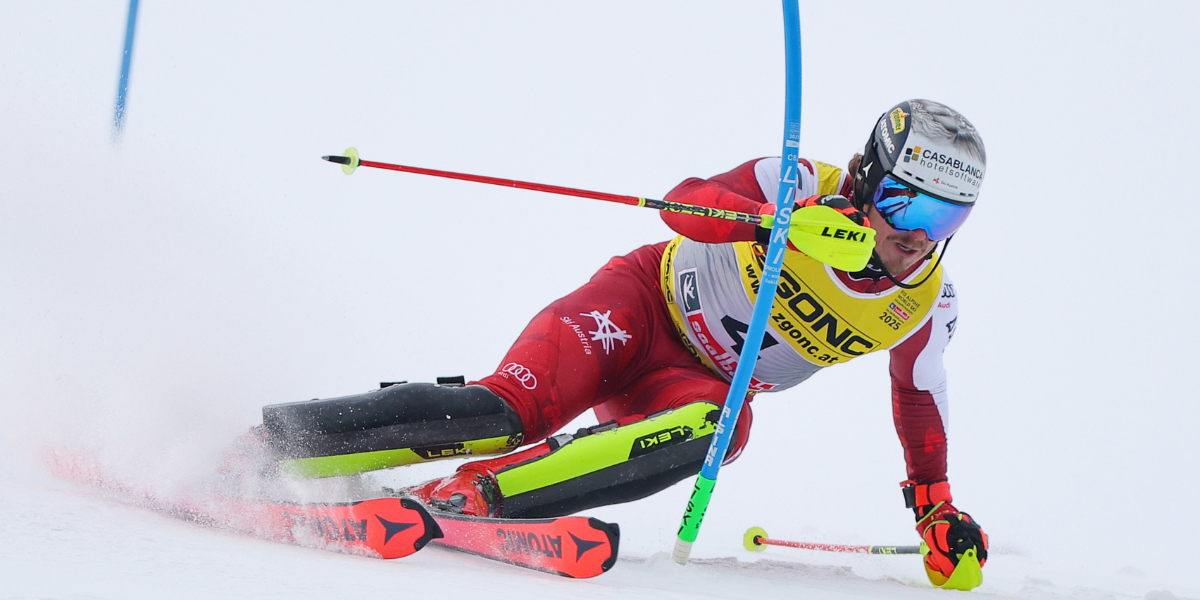
Manuel Feller 2024 World Cup slalom champion constantly attacking never afraid to fail: GEPA pictures
Get Rid of Woulda, Coulda, Shoulda From Your Ski Racing
Over the last few decades, I have worked with many ski racers—from juniors to World Cuppers. I have noticed one thing that stands out. I don’t offer your typical mental training that covers positive thinking, mental imagery, routines, and how to stay intense and focused (though those mental tools matter). Instead, I focus on the attitudes racers hold toward ski racing. No matter how strongly you maintain your mental muscles and mental toolbox, you will not ski your fastest without the right attitude.
Attitudes Beyond Mental Training
This article focuses on several key attitudes you should develop about your ski racing to ski your best and, just as importantly, to enjoy your racing and reap the most benefits from your competitive experiences.
Emotions on the Slopes
I see racers express many different emotions after races. After a good result, I see joy, excitement, pride and inspiration. After less successful races, I see frustration, anger and sadness. Yet, I consider regret the worst emotion a ski racer can experience. Regret means wishing you had done something differently. The sad reality proves that life lacks dress rehearsals; no “way back” machine exists for do-overs. You get one shot in a race, so you might as well embrace it or else face a whole lot of “woulda, coulda, shoulda” when you glance in your race-day rearview
Racing Regrets
When have you felt regret in your ski racing? If you are like most racers, you feel regret when you hesitate in a race, hold back, and ski tentatively to finish and get a result. You cross the finish line, check your time, and kick yourself for not going all out. When I speak to racers, I ask whether they prefer to ski safely and finish or go all out and DNF. Racers almost unanimously say, “I would rather attack the course and see what happens.” Yet, many admit, somewhat sheepishly, “I usually ski cautiously.” The irony remains: If you ski just to finish, you hardly stand a chance of having a good race. Ski racing demands you push yourself to the edge of your ability to ski fast. Before you leave the starting gate, you want to finish, but when you finish and are slow, you wish you had given it everything—even if you did not finish. To ski your fastest, you must commit to going all out before you leave the starting gate..
Risk, Fear and Reward
What prevents racers from giving it their all when they know they should? Fear of failure tops the list. I urge you to read my four-part series about the fear of failure. This potent force creates a mindset that works against everything you need to think, feel and do to ski fast and achieve your racing goals. To ski your best, you must take risks—attacking the course or choosing a straighter line through a challenging section. When you take risks, your chances of DNFing increase because risks carry uncertainty. Fear of failure often stops racers from taking those risks because they focus more on avoiding failure than pursuing success.
I don’t know many racers who regret going all out even when it doesn’t work out, although disappointment follows a DNF. I know many racers who regret not giving it their all on the hill when the opportunity arose. When you play it safe, regret follows.
Embracing the Opportunity
You should go for it in every race. Many opportunities might not end well; that’s the uncertainty of ski racing. You naturally feel disappointment when things do not turn out as planned, but that disappointment is mild and short-lived compared to the intense, long-lasting regret you feel when you do not ski all out. Along with the sadness of a missed opportunity, you gain pride in knowing that you gave it your all—because that is within your control. As the saying goes, “If you don’t take the shot, you can’t score.”
Regret often gnaws at you with every missed opportunity to leave it all out there. You wonder what could have been. You cannot gaze into a crystal ball and see what might have happened if you had let go of fear just gone for it. Good things do not always happen when you put yourself out there, but I argue that more good things happen when you go for it rather than playing it safe. As another old saying puts it, “It’s better to make errors of commission than errors of omission.” Even if things do not work out as planned, at least you tried, learned what happened, and avoid spending your days wondering what could have been.
Final Thoughts
At the end of a race day, season, career, or even on your deathbed, I want you to look back on your ski racing—whether you won Olympic gold, raced in college, or just had a ton of fun—and say, “I left it all out there.” You achieve that only if you do not fear failure. One way to conquer that fear is to believe that regret hurts far more than failure. Based on my experience as a ski racer, person and sport psychologist, I can assure you it does. By the way, there is a valuable life lesson here that goes beyond ski racing.
About the Author: Dr. Jim Taylor