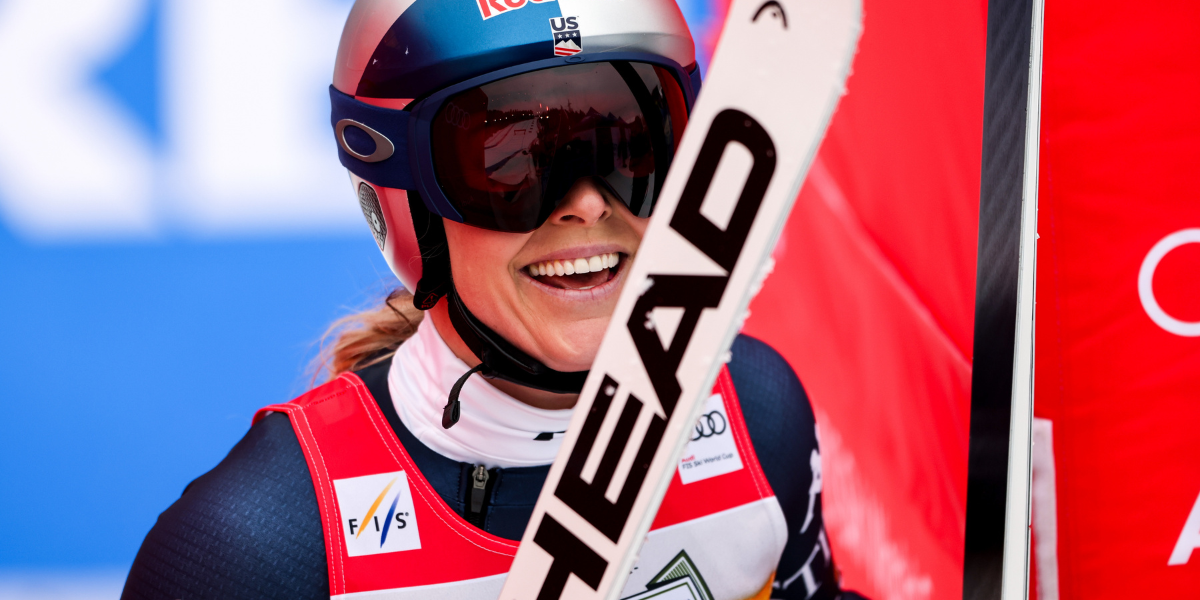

Sabrina Simader Cortina: GEPA pictures
Olympic-Bound Kenyan Skier Sabrina Simader Retires Over Lack of Support
A heartbreaking farewell from alpine skiing’s most unique trailblazer
Alpine ski racing has lost one of its most inspiring figures. Sabrina Simader, the only Kenyan World Cup ski racer and the athlete with the symbolic FIS code 6,000,000, has announced the end of her career at age 27.
More accurately, Simader had no choice. Broken promises and a lack of financial support from her home nation forced her to give up her dream of racing at the 2026 Winter Olympics in Cortina d’Ampezzo—on her favorite course, no less.
“After eleven formative and heart-filling years in international skiing, it is time for me to gratefully close a chapter,” Simader wrote on Instagram.
A Journey Fueled by Passion and Determination
Born in Kenya and raised in Austria from the age of three, Simader discovered skiing thanks to her Austrian father, Josef, and Kenyan mother, Sarah. Josef taught his daughter to ski in St. Johann, where the family settled after a stay in Kenya.
Although she grew up in Austria, Simader proudly represented Kenya on the international stage. She raced at the 2016 Winter Youth Olympic Games in Norway, made her World Championships debut at age 18 in St. Moritz in 2017, and went on to compete at three more World Championships. In 2018, she became Kenya’s lone alpine skier at the PyeongChang Winter Olympics.
Simader competed in 23 World Cup races and became a familiar face to international media, who often gravitated toward her powerful story and positive energy.

Financial Reality Ends an Olympic Dream
Simader’s dream of racing in the 2026 Olympics has come to a painful end—just months after she had already secured qualification. The decision wasn’t about performance; it was about finances.
“It breaks my heart. Also because the slope in Cortina d’Ampezzo is my absolute favorite,” she told skinews.ch. “But that’s just how it is.”
In June, Simader traveled to Kenya with her partner to work on aid projects for children and young mothers. The visit reminded her of the privilege and opportunity her platform as an athlete once provided. But without national backing, the cost of competing became impossible to sustain.
“A ski season costs around 100,000 euros,” Simader explained. “Without support from the national association or the Kenyan Olympic Committee, it’s simply not financially viable.”
Promises Broken, Support Disappears
Simader described years of difficulty working with Kenya’s sporting authorities. Elections were repeatedly postponed by court orders, and promised funds failed to materialize.
Before leaving Kenya in June, officials downplayed the situation. But once back in Austria, it became clear she could no longer count on their support—despite previous assurances.
Running her own ski program became a full-time challenge. “It’s stressful when you always have to chase after funds,” she said. “You’re never fully free in your head as a ski racer. The thought that an injury could end everything is always there.”
Eventually, she ran out of energy to keep going. “I’m grateful for what I’ve achieved with the resources available,” she said. But she doesn’t hide the fact that her career ended at a financial loss. “My most important values have always been authenticity and honesty. In the last few weeks, I’ve realized I don’t have the strength to keep preparing financially for another season.”
What Comes Next
Simader holds a business degree from a commercial academy in Austria and has trained as a business administrator. Her professional path remains open.
“There are many projects,” she said. “I could work as a brand ambassador for companies that supported me in the past. The aid projects in Kenya are close to my heart. I want to work in Europe to help secure urgent support for these initiatives.”
She also hopes to ease the path into winter sports for athletes of color and those from smaller nations. Her lived experience gives her a clear voice and a unique perspective.
A Lasting Impact Beyond Results
Sabrina Simader stood out—not just for what she accomplished, but for what she represented. Her farewell message captured that spirit.
“I hope I was able to leave a few inspiring traces in the hearts of those I met along the way. My greatest motivation was to show that the most important thing is to show your uniqueness. It doesn’t matter what others say or think.”
The response was overwhelming. Fellow racers like Isabella Wright (USA), Nicole Schmidhofer (Austria), Ricarda Haaser (Austria), and Marte Monsen (Norway) sent messages of support and admiration.
Sabrina Simader may no longer be on the start list, but her presence in the sport—and the inspiration she offered—will not be forgotten.
About the Author: Peter Gerber Plech