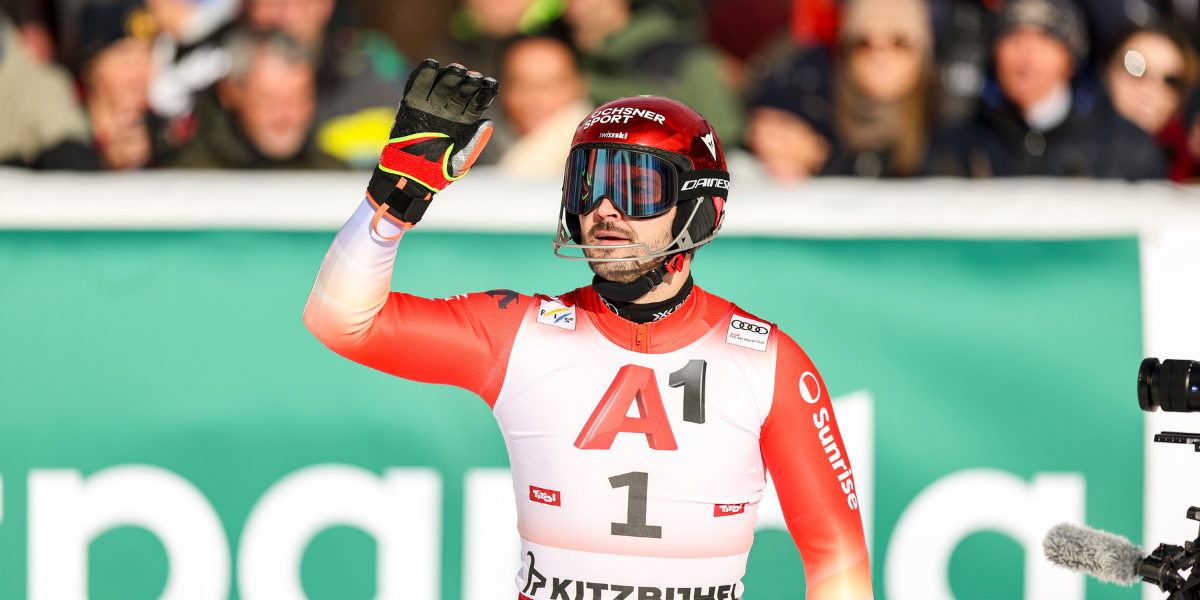
Loïc Meillard / Kitzbühel first run / GEPA picture
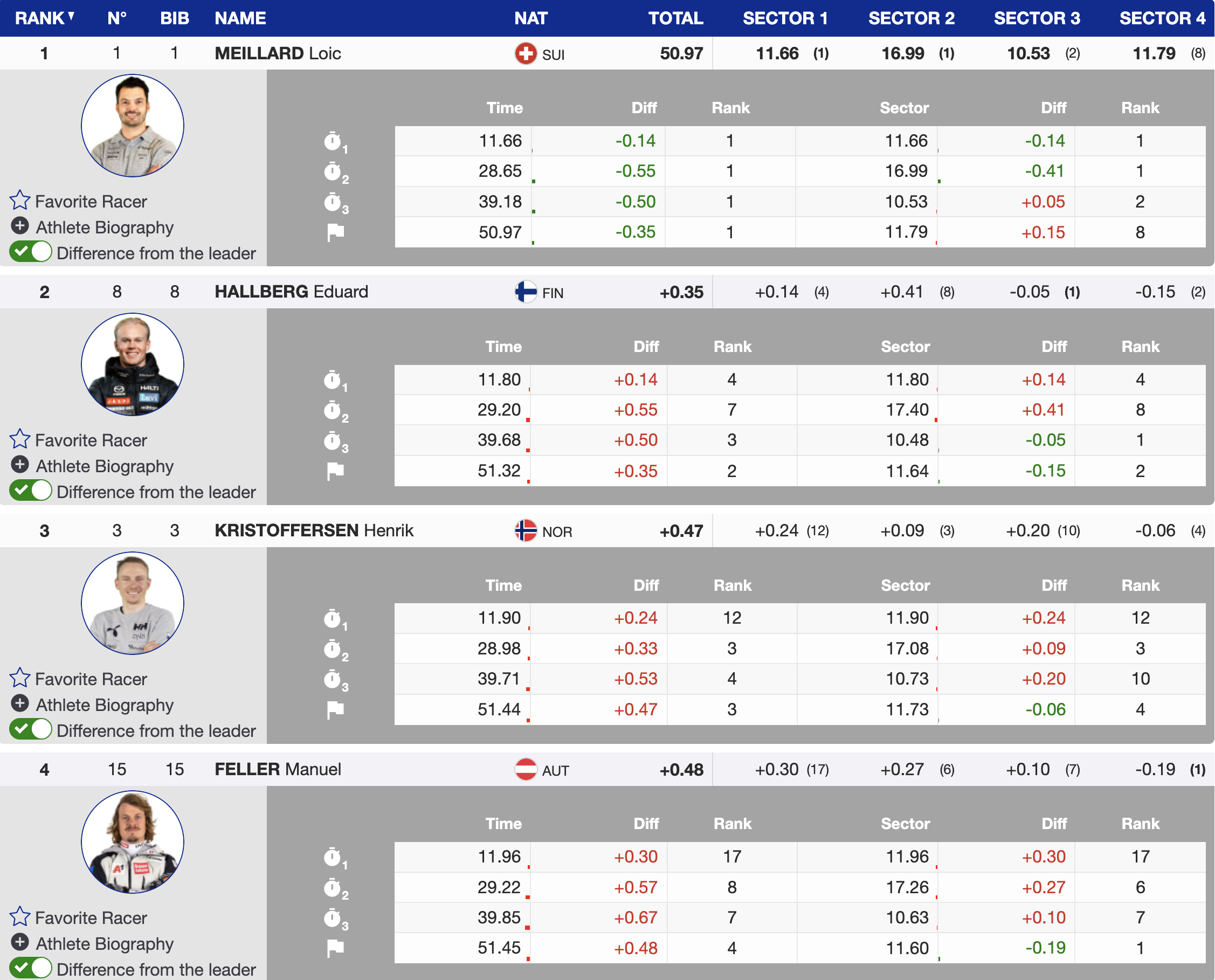
World Champion Loïc Meillard seized control of the Kitzbühel men’s slalom from the opening gate, delivering the most complete run of the first run on the Ganslern and positioning himself as the clear favorite heading into the second run.
In excellent conditions where execution mattered far more than start number, Meillard combined rhythm and aggressive timing through the rolling terrain and sharp breakovers that define this classic slope. His opening statement immediately separated him from the field — even as the margins behind him remained brutally tight.
Top 6 Podium Contenders — First Run (Kitzbühel Men’s Slalom)
- 1st — Bib 1 — 🇨🇭 Loïc Meillard — YOB 1996 — 50.97
- 2nd — Bib 8 — 🇫🇮 Eduard Hallberg — YOB 2003 — +0.35
- 3rd — Bib 3 — 🇳🇴 Henrik Kristoffersen — YOB 1994 — +0.47
- 4th — Bib 15 — 🇦🇹 Manuel Feller — YOB 1992 — +0.48 — Atomic
- 5th — Bib 10 — 🇧🇪 Armand Marchant — YOB 1997 — +0.49 — HEAD
- 6th — Bib 13 — 🇨🇭 Tanguy Nef — YOB 1996 — +0.52 — Atomic
With six skiers packed inside just over half a second, the podium picture is already coming into focus — and mistakes will not be forgiven when the start order reverses.
Second-Seed Depth Shapes the Race
Much of the pressure on Meillard comes from outside the top seed. Finland’s Eduard Hallberg continued his breakout season with another composed, efficient performance, showing the late-run speed that has defined his winter.
Belgium’s Armand Marchant delivered one of the most balanced runs of the day, staying clean through every transition and minimizing time loss across the slope. Swiss teammate Tanguy Nef backed that up with a confident attack that keeps him firmly in the podium conversation.
Austria found its voice through Manuel Feller, whose run ignited the loudest reaction of the first run. While Feller remains very much in contention, he enters the second run as part of the chase rather than the driver of the race.
Why the Ganslern Rewards Execution
The Ganslern is not defined by long, punishing, steep pitches, but by its constant terrain and rhythm changes. Sharp breakovers, quick transitions, and uneven terrain demand exceptional balance, timing, and athleticism. On a day with stable snow and visibility, the slope has rewarded skiers who ski proactively and decisively—not those who rely on start position.
USA: Ritchie Delivers from a High Bib
Bib 31 — 🇺🇸 Benjamin Ritchie — YOB 2000 — 14th (+1.44) — HEAD
Starting from bib 31, Ritchie delivered a composed, confident run and currently sits 14th (+1.44), making him the fastest of all high-bib starters and the only U.S. skier advancing to the second run. In a season where U.S. slalom results have been difficult to find, Ritchie’s execution stands out — especially on a day when conditions rewarded skill over draw.
GBR: Mixed Picture in a Critical Month
- 19th — Bib 19 — 🇬🇧 Dave Ryding — YOB 1986 — +1.82 — HEAD
- 28th — Bib 33 — 🇬🇧 Billy Major — YOB 1996 — +2.24 — HEAD
Great Britain will send two skiers into the second run. Dave Ryding remains inside the top 30, while Billy Major also qualified despite starting deep in the field.
January remains the most decisive stretch of the men’s slalom season — Madonna di Campiglio, Adelboden, Wengen, Kitzbühel, and Schladming consistently define momentum and outcomes — and the second run in Kitzbühel will carry real weight.
Bottom Line
- Meillard controls the race
- Feller is relevant but chasing
- Hallberg, Marchant, and Nef define the depth of the podium fight
- Ritchie is the key U.S. storyline from a high bib
With conditions holding and margins razor thin, the second run is set up for a pure execution test on one of alpine skiing’s most demanding stages.

First Run top thirty
Click images to enlarge
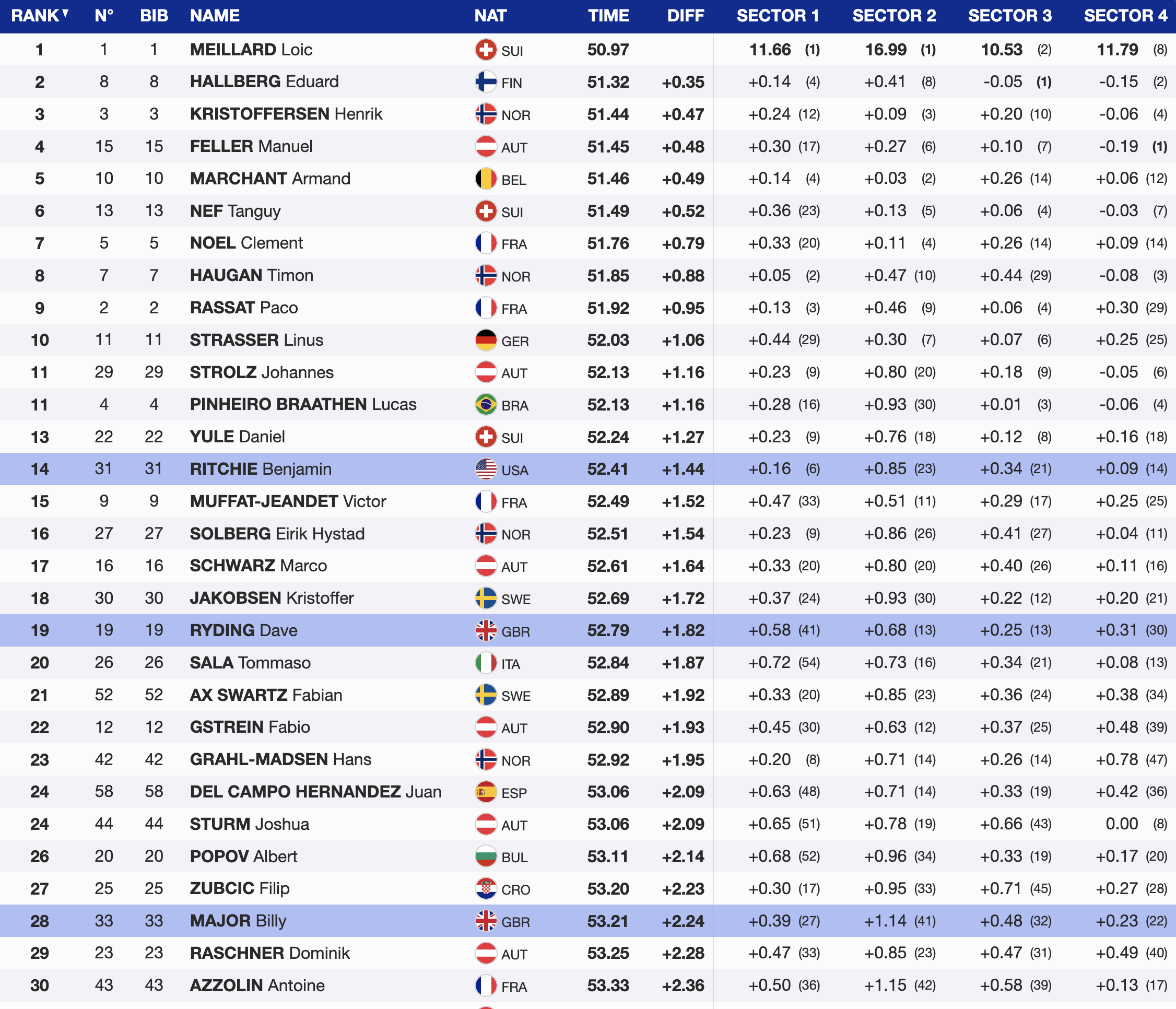
First Run Analysis of the fastest, North American and British Qualifiers



About the Author: Peter Lange