Lara Colturi isn’t changing because she has to but because she believes there’s another level she can reach.
At 19, the Albanian skier has already completed four World Cup seasons, stood on seven World Cup podiums, and established herself as one of alpine skiing’s brightest young racers.
Her rise has not been sudden. It has been steady. Colturi earned her first three World Cup podiums during the 2024-25 season. Then she raised her level again in 2025-26, adding four more podiums while continuing to prove she belongs among the world’s best in slalom and giant slalom.
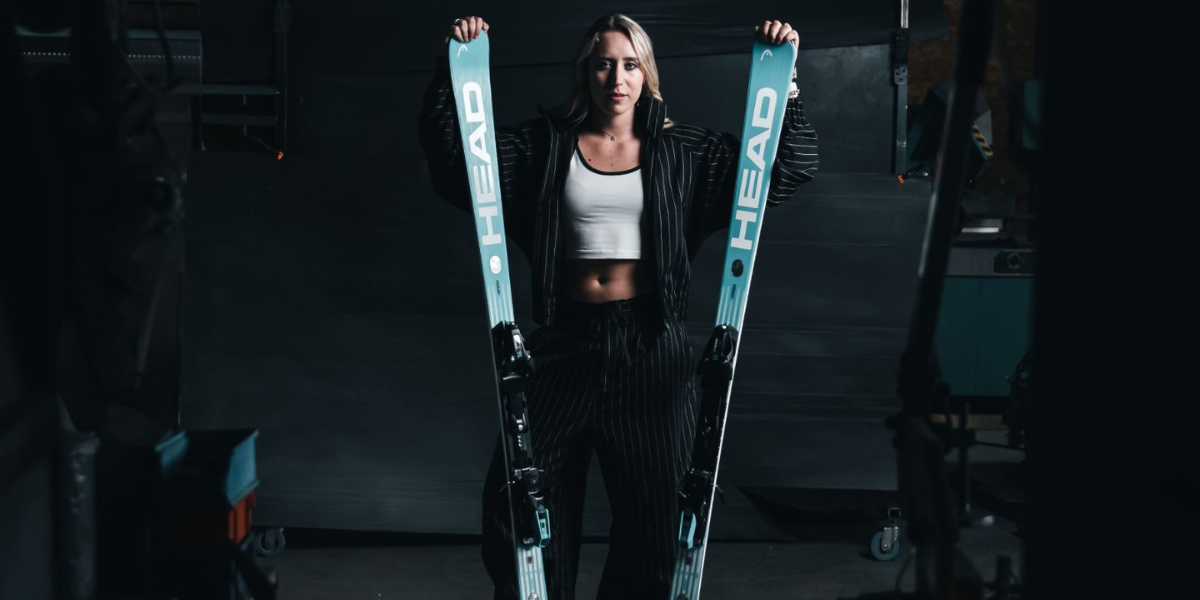
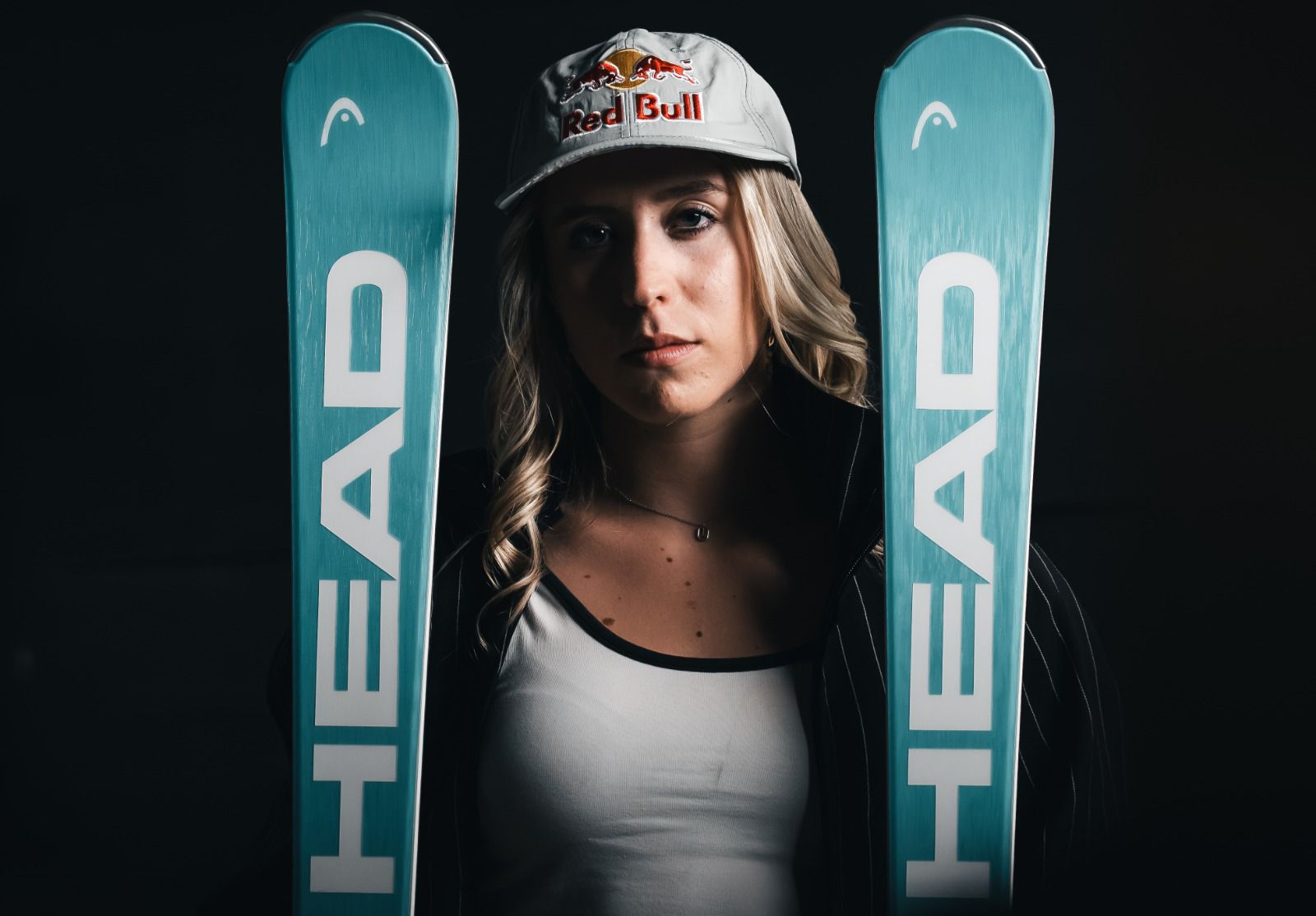
That is what makes her decision to join HEAD so compelling.
After four years on the World Cup tour and the completion of her first Olympic cycle, Colturi has chosen to begin a new chapter with one of ski racing’s most successful brands.
For Colturi, the decision wasn’t about starting over. It was about continuing to move forward.
Colturi’s curiosity wasn’t accidental. In her view, HEAD had established itself as one of alpine skiing’s benchmark racing brands, making the opportunity to test impossible to ignore.
“I have had a long-standing cooperation with Tecnica Blizzard, but I had the opportunity to test HEAD as well, and I was curious,” Colturi said. “HEAD has proven to be the leading company in racing in recent seasons.”
A season of progress and lessons
Colturi described her 2025-26 season as a positive one, particularly because of the way it began in slalom.
“It started really well, especially in slalom,” Colturi said. “I felt very solid and could ski well, especially at the beginning of the season, when we find conditions with a hard snow surface.”
The highlight came in Levi, where she finished second in the slalom on her 19th birthday.
“It’s been really amazing,” she said.
Still, the season wasn’t without challenges. Colturi battled illness for several weeks and even raced in Kronplatz with a high fever. Strong first runs didn’t always translate into the results she believed were possible.
Even so, she never questioned the commitment she had made throughout the season.
“Generally, I am satisfied because I gave it my all, and I am motivated to do better,” Colturi said.
“They say you win or you learn, and I had several races of learning,” she continued. “I risked more in some races to find the limit. In past seasons, that’s not often been the case. And despite being on the tour for four seasons, I am still a rookie. I am 19 years old. There is still much to learn.”
That learning process won’t be limited to the technical disciplines. After earning the FIS points necessary to secure favorable World Cup start positions, Colturi plans to bring super-G back into her program next season, another step in her long-term development.
A different path through the World Cup
Colturi’s journey has never followed the traditional path.
Born into one of Italy’s best-known ski racing families, she has represented Albania throughout her FIS career, allowing her to build a close-knit program around the people she trusts most.
“I am most thankful because I could and I can continue skiing with my parents,” Colturi said. I’ve experienced a lot of development with the federation, with the Albanian audience in general, who are now more interested in winter sports. That is a very positive thing.”
Behind Colturi is a close-knit team. Her parents, Daniela Ceccarelli and Alessandro Colturi, continue as her coaches, supported by longtime serviceman Andrea Vianello, osteopath Martino Delleani, slalom coach Claudio Ravetto and performance specialist Luisa Finotti.
One important addition this offseason is athletic trainer Martin Hager, who previously worked with Alexis Pinturault and now leads Colturi’s physical preparation as she prepares for the next stage of her career.
It is a small team compared with the traditional alpine powers, but it is also personal, familiar and built around trust.
That same feeling carries over to life on the World Cup tour.
“I enjoy life on the World Cup tour a lot,” Colturi said. “It’s very cool for me to be able to travel around, see new places, and meet new people.”
Because her family is often with her, the constant travel has never felt as isolating as it might for many young athletes.
“Even if I’m far away from home, I’m kind of always home,” she said.
Olympic memories and a difficult build-up
The 2026 Olympic Winter Games marked another major milestone in Colturi’s career.
She hoped to approach the Olympics like any other race. It didn’t take long to realize that wasn’t possible.
“It was a great experience,” Colturi said. “I wanted to live it like any other race, but then you realize it’s not a normal race.”
Her preparation was far from ideal. Colturi arrived in Cortina after several difficult weeks battling illness, including a cold, fever, lung problems weakness and exhaustion.
Even so, the experience left a lasting impression.
“I particularly loved the slope in Cortina and the atmosphere at the finish area,” Colturi said. “It was always good weather and the scenery was amazing.”
One memory stands above the rest.
“When I crossed the line of the GS first run with the best time, it’s a memory I will never forget,” she said.
Representing Albania on the Olympic stage felt special, but it wasn’t unfamiliar. Having joined the Albanian Ski Federation in 2022, she already considered Albania her team.
“The Olympics were not an exception,” she said.
Why the timing made sense
Equipment changes are among the biggest decisions an alpine skier can make. For Colturi, the timing felt natural.
“The Olympic cycle ended, and also my first four years on the tour,” Colturi said. “I think these two factors can be considered good timing.”
The decision also came at a point when Colturi believed her skiing was evolving. After two consecutive seasons of steady progress, she wasn’t looking for a dramatic change. She was looking for another advantage.
Following the World Cup Finals, she remained in Norway to test HEAD’s slalom and giant slalom equipment.
“We tested both GS and SL,” Colturi said. “The team of HEAD proposed different solutions, and run after run, we focused on what worked better for me, after my feedback and some analysis.”
Colturi didn’t rush the process.
“I took some time to evaluate things and make a decision,” she said. “It’s important that more elements align, and it’s a strategic decision that has a big impact on my skiing.”
For Colturi, the decision extended well beyond the equipment itself.
“The fact that there is knowledge and experience at a high level is key,” she said. “Then there are aspects about the feeling and performance with the equipment on the snow and the feeling with the team of people of the company. They are major aspects.”
Her first impression was immediate.
“I was very positively impressed since the beginning,” she said.
Ultimately, the decision became clear.
“Several aspects aligned and it became clear that skiing with HEAD would be the best decision for me,” Colturi said.
Confidence in HEAD’s racing culture
Few brands in alpine skiing can match HEAD’s success across every discipline. That track record—and the knowledge gained from working with many of the world’s best athletes—played an important role in Colturi’s decision.
“I am confident they can bring effective solutions and advantages, not only based on my skiing, but on their huge knowledge and background with other skiers,” Colturi said.
The move has also brought renewed enthusiasm heading into the new season.
“It gives me extra motivation, for sure, to be able to get the right feeling quickly and push myself to do better than I have done till now,” Colturi said.
Maintaining continuity during such a significant equipment change was equally important. Andrea Vianello, who has served as Colturi’s serviceman for the past three seasons, will continue in that role.
“It’s very positive that we continue with my serviceman Andrea Vianello, securing continuity in the team and with the equipment,” she said.
Building the body—and the program—for the next step
Changing equipment is only one part of Colturi’s offseason transformation. She has also made significant changes to her physical preparation.
She is spending an extended block focused on dryland training in Austria, where her new athletic trainer, Martin Hager, is based. She plans to train at Red Bull’s facilities before returning to snow in Europe—likely Saas-Fee—then continuing in New Zealand.
She didn’t take much time away from skiing after the World Cup Finals. Instead, she continued testing, training and racing super-G.
Her final race came April 22, the last day of the alpine calendar.
“I was happy to be able to do that, as I finished on a high note and secured the FIS points I needed to compete in the SG World Cup next season,” Colturi said. “The plan is to compete in some of them.”
For the first time since her 2023 injury, Colturi plans to bring super-G back into her World Cup schedule. Her World Cup point total has earned her a favorable start position, but she’s approaching the discipline with patience rather than expectation.
“It’s a positive thing, but my goal is to perform at my best, not overdoing it, but advancing step by step into SG,” Colturi said. “I know I have to gain experience on the course, on everything, and I put no pressure on myself for bibs.”
This measured approach reflects the philosophy that has guided her career. Colturi isn’t looking for shortcuts. She is focused on steady, long-term progress.
Still moving forward
After a demanding season, Colturi finally found time to slow down. In May, she traveled through Albania in an RV, visiting many parts of the country for the first time.
“It was a great trip, even if the weather wasn’t always perfect,” Colturi said. “I really enjoyed being off from training and racing.”
Away from skiing, she enjoys traveling, playing tennis, spending time with friends, relaxing by lakes and rivers, and the occasional barbecue—simple moments that help her recharge before another long winter.
Now her attention has turned back to racing.
She is especially looking forward to returning to Killington after missing last season’s races. She also hopes to race super-G in Val di Fassa, where she is based during the winter.
“Every race has something special,” Colturi said.
That simple observation says a great deal about where Colturi stands today.
Seven World Cup podiums, four seasons on the World Cup tour, and an Olympic appearance have established her as one of the sport’s brightest young talents. Yet she still speaks with the curiosity and hunger of an athlete convinced her best skiing lies ahead.
With HEAD, a renewed training structure, and the return of super-G to her World Cup program, Colturi is not trying to reinvent herself.
She is trying to become more complete.
About the Author: Peter Lange