Logan Grosdidier’s World Cup Debut Delivers Proof, Not a Result
For Logan Grosdidier, 17, the youngest athlete on the alpine Stifel U.S. Ski Team, a first World Cup start came down to a simple, unforgiving truth of slalom racing: the clock does not care how old you are, where you start, or how long you have waited for the chance.
It only measures how you ski.
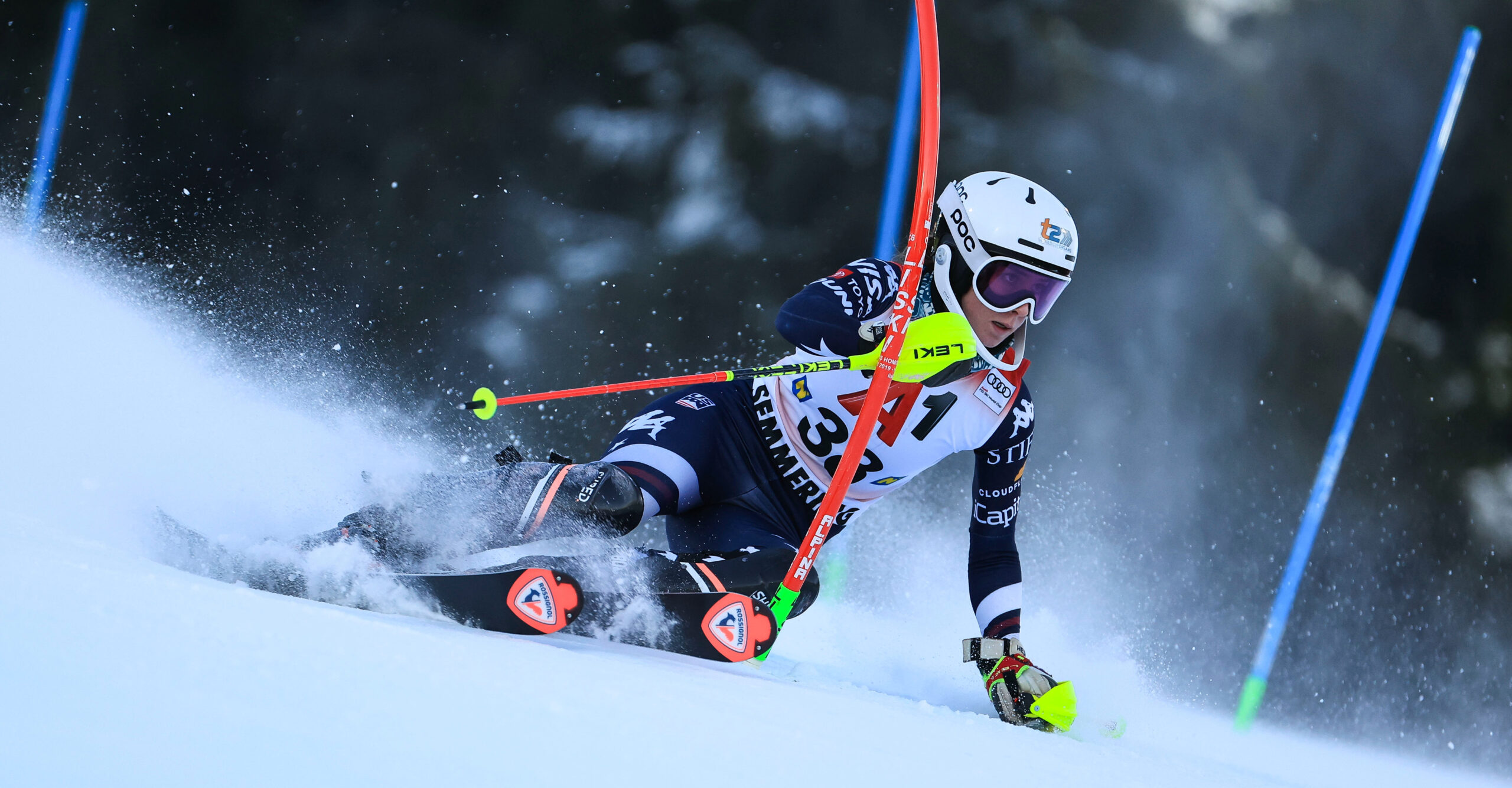
In Semmering, Grosdidier skied herself into the race.
Starting 38th on a slalom track that deteriorated rapidly, Grosdidier built her run with composure and intent. She improved her sector ranks at every intermediate timing split and was solidly inside the top-30 cutoff required to qualify for the second run before a late mistake in the final sector ended her run early.
The result line shows a DNF.
The run showed belonging.
Progress That Finally Showed on Race Day
Grosdidier arrived at her World Cup debut with confidence earned the hard way. Throughout the season, her training had begun to translate into cleaner execution and stronger race-day belief.
“It’s been really exciting to see my training and hard work show up in my skiing this season,” she said. “At the same time, I know there’s still a lot I can improve in my skiing, which motivates me to keep pushing toward my goals.”
That mix of satisfaction and hunger framed her entire approach to the opportunity.
When the Possibility Became Real
Strong performances at the Copper NorAm helped put a World Cup start on the radar, but Grosdidier said it never became a fixation. As she transitioned into Europa Cup racing in Ahrntal, the focus remained squarely on skiing well where she was.
“The Copper NorAms definitely added to the consideration for a start in Semmering and made it feel a bit more realistic,” she said. “But it was still more of a back-of-the-mind possibility going into the Europa Cups.”
Her coaches kept the message consistent. Perform in the present. Let everything else take care of itself.
Finding Out at a Low Point
The moment Grosdidier learned she would start her first World Cup came during lunch in Ahrntal — and not after a breakthrough result.
She had just recorded her second DNF of the Europa Cup series and felt frustrated. At the same time, teammate Liv Moritz had won that day, adding another emotional layer to the moment.
“When my coach told us I would be starting in Semmering, I was honestly a little in disbelief given how the previous races had gone,” Grosdidier said.
Her teammates changed the tone instantly.
“They were incredibly excited for me, which helped turn that moment into something really positive.”
Excitement mixed with nerves, but she made a deliberate decision to manage expectations and keep pressure low.
A Clear Plan From Bib 38
With her parents unable to travel to Europe, Grosdidier leaned on messages and calls from home, which arrived immediately after the race and underscored how meaningful the opportunity was.
On race day, her mindset stayed simple. Starting deep in the field on a breaking surface, she avoided result-based goals and committed to skiing the way she had trained.
“I didn’t want to have strong result-based goals that would put too much pressure on myself,” she said. “I just wanted to ski to the best I could.”
Rather than trying to prevent mistakes, she focused on reacting naturally.
“I wanted to go into the run feeling loose, reacting to problems when they occurred, not trying to stop the problems before they even happened.”
Skiing Into Second-Run Position
Her pre-run course report proved accurate. Two holes in the upper hairpins demanded strength and aggression. Beyond that, the snow opened up and rewarded commitment.
“That helped me stay focused and not overthink the course,” Grosdidier said. “Once I got past the upper section, I felt like I could really attack and ski more freely.”
Despite a few early bobbles, Grosdidier gained momentum as the run developed. Her run ranks improved steadily — 31st at the first intermediate, 16th at the second, and 13th at the third — placing her firmly inside the top-30 qualification zone with only the final sector remaining.
“At the start of my run, I had a few bobbles that pushed me to ski stronger,” she said. “By the middle of the run, my skiing felt a bit smoother, but overall it was still a little inconsistent, so it was hard to really gauge how fast I was going.”
One Mistake After the Hardest Work
Then came the ski-out.
With the most difficult sections behind her and qualification within reach, Grosdidier made a small mistake late in the run and went off course.
“In that moment, I was definitely angry and disappointed in myself,” she said. “I knew I had made it past the most difficult portions of the course and only had a small section left.”
Coming off two Europa Cup DNFs, the frustration felt magnified.
The Real Takeaway
Once emotions settled, the most important realization emerged.
After reviewing her splits and video, Grosdidier saw how natural her skiing looked at World Cup speed.
“What stood out most to me was how natural and confident my skiing looked,” she said. “It showed me that I don’t need to push myself into extra gears.”
Instead, the key was restraint and trust.
“If I just ski relaxed and stay within myself, I can ski well.”
At the same time, she identified specific details to refine — improvements she now knows are possible at the highest level.
A Debut That Delivered Belief
Grosdidier leaves Semmering without points, but with something far more valuable for a first-time World Cup racer: confirmation.
“I’m really grateful for the opportunity to compete at the top level and for the ongoing support I’ve received,” she said. “The experience gave me confidence in my skiing and also highlighted areas I can continue to improve.”
For the youngest athlete on the Stifel U.S. Ski Team, the official result reads DNF.
The run ranks — and the skiing — say she is already racing where she belongs.
About the Author: Peter Lange