A Vibrant Atmosphere on Canalone Miramonti
After a tremendous effort by the local race crew and FIS officials to clear 40 centimeters (16 inches) of wet snow, the Canalone Miramonti race slope is in excellent condition with a hard, solid surface. As is customary for the night slalom, the grandstands are packed, and spectators line the sides of the course, creating a vibrant atmosphere that extends well up the slope.
First Run Sets the Stage
The first run of an Alpine tech race serves two key purposes: qualifying for the second run and determining the start order. The top-ranked skiers kick off the action, with the best seven starting first, followed by those ranked eighth through 15th. Within each group, the start order is randomly assigned, adding an element of unpredictability.
Top Seeds Face Early Challenges
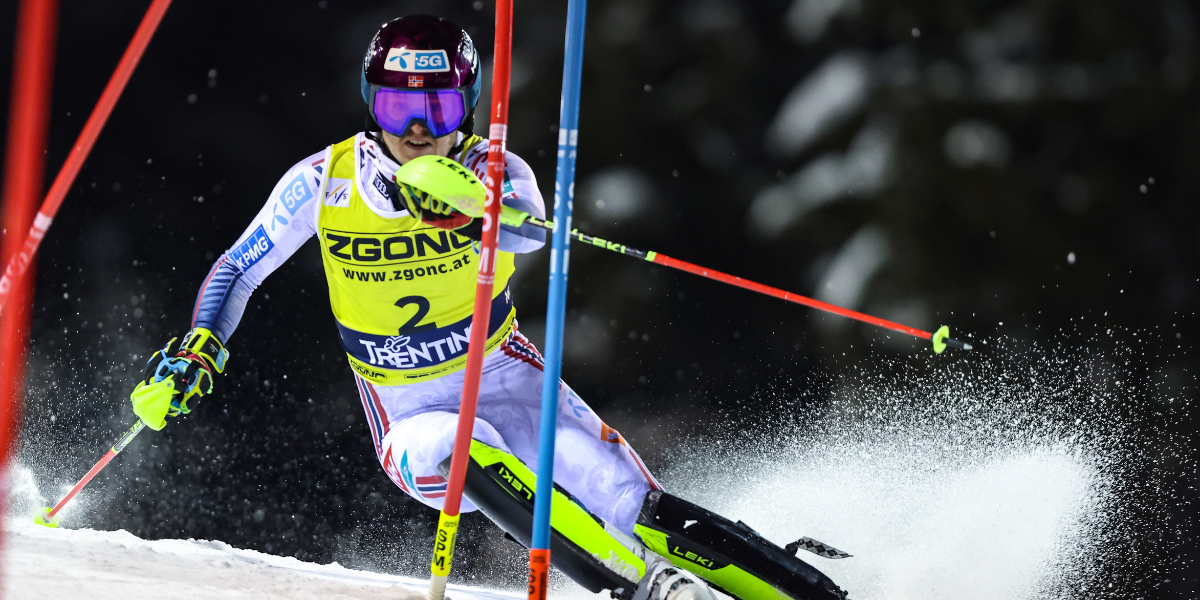
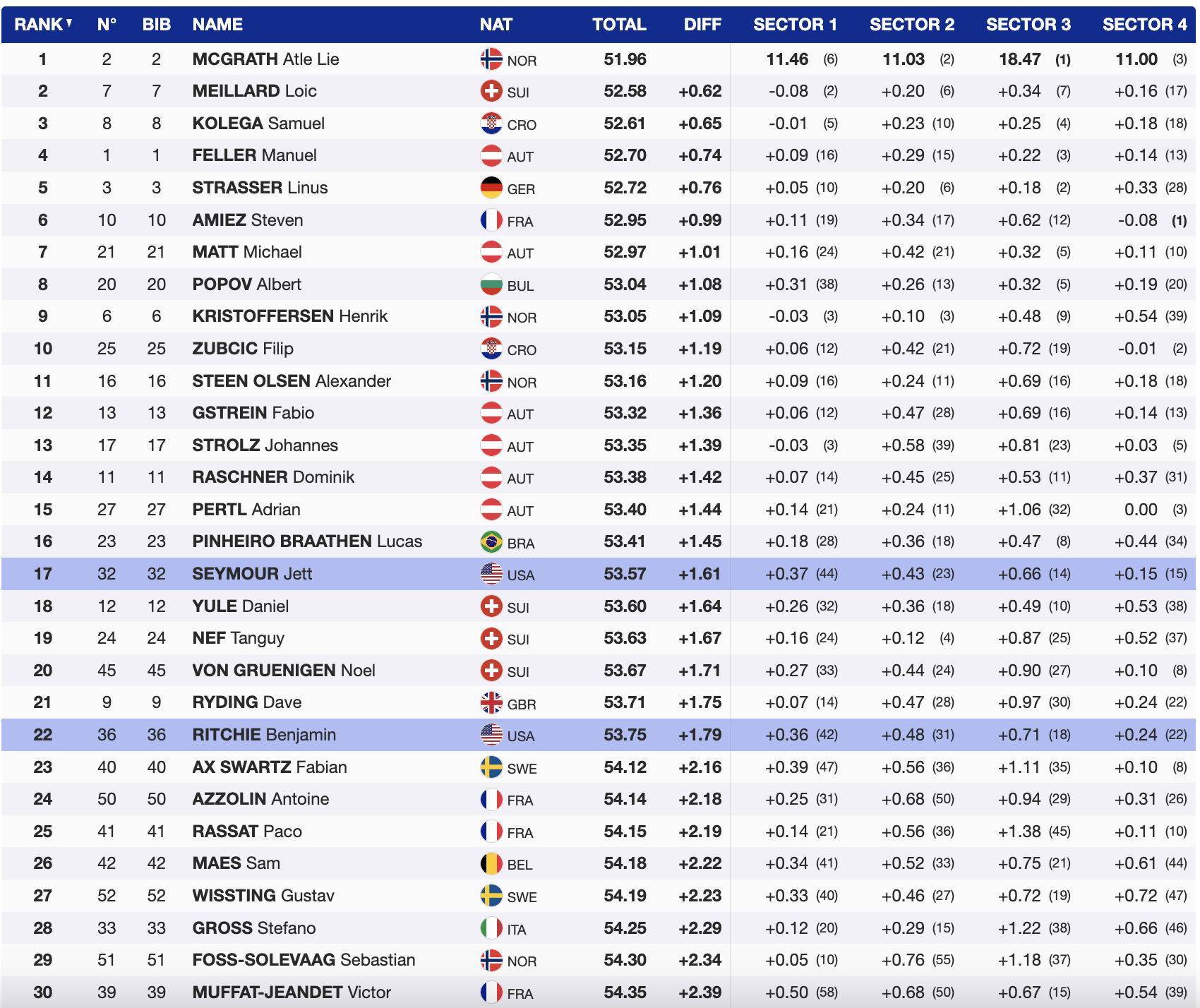
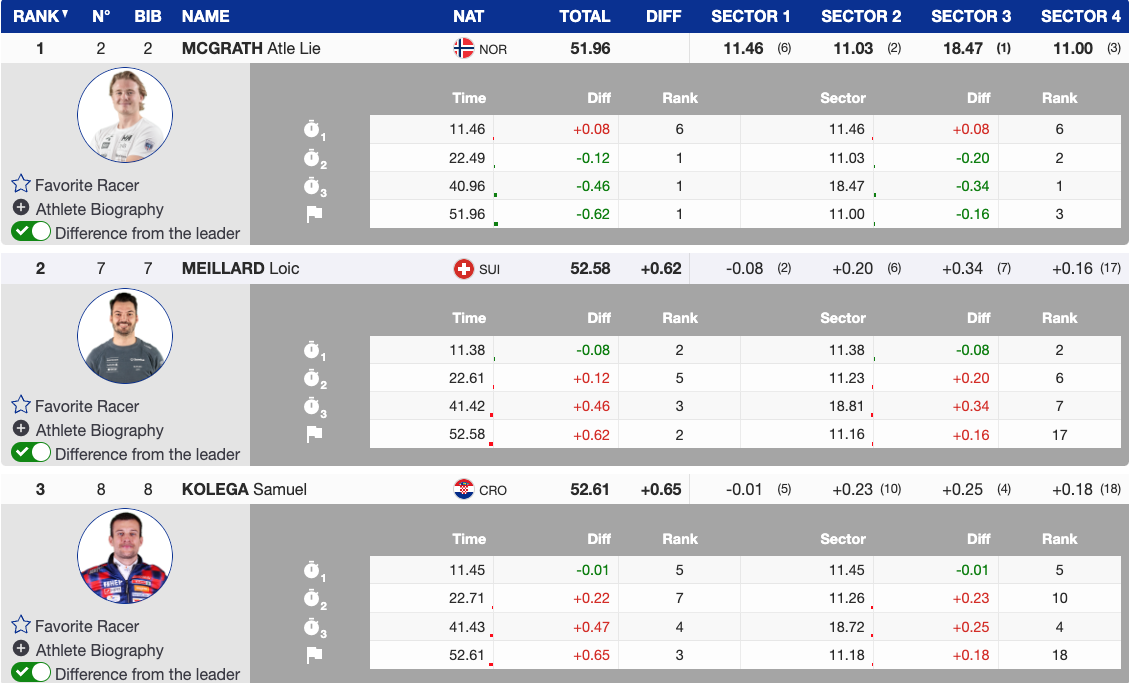
The biggest surprise among the top seven starters was the early exit of France’s Clément Noël, winner of the first two World Cups of the season, who failed to make it through the first sector. Norway’s Timon Haugan, the Alta Badia winner, showed promise through the first two timing sectors but was also unable to finish the course. After the highest-ranked seven completed their first runs, Norway’s Atle Lie McGrath, born in Vermont, held a commanding lead, 0.62 seconds ahead of Switzerland’s Loïc Meillard and 0.74 seconds faster than Austria’s Manuel Feller, last season’s slalom champion.
Strong Performances Among the First 15
Lie McGrath remained in the lead when the first 15 skiers completed their runs. Croatian skier Samuel Kolega posted the third-fastest time, just 0.03 seconds behind Meillard in second. The challenging Canalone Miramonti course proved demanding, with three DNFs among the first group. The time spread among the 12 who finished was 3.01 seconds, with five skiers from five countries within a second of Lie McGrath’s leading time. The stage is set for an electrifying second run.
Notable Runs Among the Favorites
Last season’s Madonna di Campiglio winner, Austria’s Marco Schwarz, faced the same fate as Clément Noël, going out in the first timing sector. However, Brazil’s Lucas Pinheiro Braathen, the 2023 World Cup Slalom Champion, managed to cross the line 14th fastest, with most of the field yet to race. By the time the first 30 had finished, Braathen had slipped to 16th.

Opportunities for Higher Bibs
With six skiers failing to finish (DNF) and one disqualification among the first 30, along with several finishers who struggled significantly, the well-maintained course surface provided a valuable opportunity for higher bibs to deliver strong performances and secure a spot in the second run. It wasn’t until bib 39 that 30 racers had successfully finished, but the significant time spread of 3.01 seconds left room for numerous higher bibs to qualify.
Impressive Runs from North American Athletes
Stifel U.S. Ski Team’s Jett Seymour delivered an impressive performance from a later start position, crossing the finish just 1.61 seconds behind Lie McGrath to secure his spot in the night’s finale. Seymour’s teammate, Benjamin Ritchie, also put together a strong run, qualifying 1.79 seconds off the lead. However, neither of the independent Canadian skiers, Erik Read or Simon Fournier, managed to qualify for the second run. Seymour’s teammate Luke Winters came agonizingly close but missed the cutoff, finishing in 31st place.
Eleven racers with bibs higher than 30 managed to qualify for the second run. Leading the group was Stifel U.S. Ski Team’s Jett Seymour, who secured an impressive 17th place. The final qualifier was Sweden’s Gustav Wissting, who earned 27th with bib 52.
First Run: Top 30 Results
Click on Images to Enlarge
Fastest Three and North Americans: First Run Analysis


About the Author: Peter Lange